Tuesday, December 31, 2024

What Does Natural Gas and Spider Webs Have In Common?


Natural Gas. So many people rely on this invisible commodity for cooking, warmth, heating water, and so many more things. Our everyday lives rely on it for things we don't even realize. The food we purchase from the grocery store as well as prescription drugs and merchandise we buy have most likely used natural gas somewhere along the way of getting to our homes.

Picture by Whoisjohngalt 

You might think that natural gas has been in use since the early 1900's or even perhaps the 1800's. And that would be true here in the United States. However, in Europe it was 1792 when the Scottish inventor, William Murdoch harnessed natural gas through metal pipes to light his own home. When that worked, he then ran pipes to his neighbor's to light his home as well. Proving the concept worked Murdoch then brought his invention to London in 1802, selling the idea for safer lighting than candles. 

The United States business magnates were always looking for ways to improve their lives, businesses and pocketbooks. The idea of running gas through metal pipe didn't go by unnoticed. In 1802 a proposal was sent to President Thomas Jefferson, explaining how natural gas would be invaluable for lighthouses and streetlamps. By 1817 the first United States gas company was established in Baltimore. 

Picture by Jebulon

That seems amazing when you think that twenty-six years after we became a country, when we were still moving and exploring and settling the west, the east coast was looking at having gas streetlights!

The use of natural gas was well in swing by the time the industrial revolution came around, allowing Carnegie, Morgan, Rockerfeller, and Vanderbilt to take advantage of the new-found power that helped the industrial revolution explode. 

Though, William Murdoch was the first inventor to harness natural gas through metal pipes in 1792, he was not the first to pipe natural gas. It might surprise you to know that using natural gas been around for thousands of years. The Chinese used bamboo to pipe natural gas over miles into homes around 2500 years ago!

Picture by Mbrickn

It wasn't until the 1930's that the concept of drilling down to capture natural gas became a reality. When accessing the gas became easier, the use of it exploded. Today we have over three million miles of pipelines across the United States. So what do natural gas lines and spider webs have in common? Nothing really other than a visual picture of the lines run across the continent.  


In some ways we've come a long way, but it isn't all our new-found knowledge. We can thank people from 2500 years ago for our ability to turn a button to cook and heat our homes.


He couldn’t very well hear God if he wasn’t listening. He needed to lay his life before God and let him direct it instead of trying to manipulate things to his liking.

Kirsten Macleod is in a bind. Her father’s last will and testament stipulates that she must either marry, lead the plantation into a first-year profit, or forfeit it to her uncle. But marriage is proving no easy option. Every suitor seems more enamored with the land than with her. Until her handsome neighbor sweeps into her stable to the rescue… of her beloved horse.

Silas Westbrook’s last year at veterinary school ends abruptly when he is called home to care for his young orphaned sisters. Troubles compound when he finds an insurmountable lien on the only home they’ve ever known, and the unscrupulous banker is calling in the loan. The neighbor’s kind-hearted and beautiful stable girl, Krissy, provides the feminine influence the girls desperately need. If only he had a future to offer her. But to save his sisters from poverty, he should set his sights on Krissy’s wealthy relative Kirsten Macleod, the elusive new heiress. Surely this hard-working and unassuming young lady and the landowner could not be one and the same?


Debbie Lynne Costello is the author of Sword of Forgiveness, Amazon's #1 seller for Historical Christian Romance. She has enjoyed writing stories since she was eight years old. She raised her family and then embarked on her own career of writing the stories that had been begging to be told. She writes in the medieval/renaissance period as well as 19th century. She and her husband have four children and live in upstate South Carolina with their 4 dogs, 4 horses, miniature donkey, and 12 ducks. Life is good!


Monday, December 30, 2024

December 2024 Book Day


START THE NEW YEAR WITH A NEW BOOK


UNPUZZLING THE PAST

1990s Cozy Mystery

Edited By Mary Davis, Written by Mary L. Chase

When secrets and lies are uncovered, will Mar be able to put the pieces together to learn the truth? A year after her mom’s death, Margaret “Mar” Ross discovers the proverbial skeleton in the closet. Most families have a secret or two. Some are best left in the dark. Others need to be brought into the light of day to heal old wounds. With the help of her best friend, a lawyer, and a handsome doctor, Mar is determined to hunt down all the facts. When she does, will she find what she’s searching for? Or should she let this puzzle R.I.P.?


SWORD OF FORGIVENESS

By Debbie Lynne Costello

When her father died, she had promised herself no man would own her again, yet who could defy an edict of the king? After the death of her cruel father, Brithwin is determined never again to live under the harsh rule of any man. Independent and resourceful, she longs to be left alone to manage her father’s estate. But she soon discovers a woman has few choices when the king decrees she is to marry Royce, the Lord of Rosencraig. As if the unwelcome marriage isn’t enough, her new husband accuses her of murdering his family, and she is faced with a challenge of either proving her innocence or facing possible execution.


WHEN MEMORY WHISPERS

By Johnnie Alexander

Marie Wyatt longed for fame and fortune and found herself in wartime London working as an Allied courier. But when a routine mission turns deadly, a mysterious German agent becomes her unlikely savior. Yet the line between duty and loyalty blurs when the German agent is imprisoned in a Florida POW camp with Axis soldiers who consider him a traitor. Marie embarks on a desperate mission to save him before he’s fatally injured. Plummet into a heart-wrenching tale of courage, treachery, and a love that defies all odds.


EVEN IF WE CRY

By Terrie Todd

NEW RELEASE! “It's so nice to read a book based out of Canada as we don't get those very often. The attention to detail makes you drift into this world as you read, almost like you are there! History, family, love, loss, determination, friendship, and forgiveness are just a few words that comes to mind when describing this story. One of how God works even when we don't see it. Highly recommend you picking this one up. Terrie Todd has been added to my list of authors to look for!” (from a Goodreads review)


LOVE AND CHOCOLATE

BY Linda Shenton Matchett

She just needs a job. He wants a career. Is there room in their hearts for love? Ilsa Krause and her siblings are stunned to discover their father left massive debt behind upon his death. To help pay off their creditors and save the farm, she takes a job at Beck’s Chocolates, the company her father despised and refused to supply with milk. Then she discovers her boss is Ernst Webber, her high school love who unceremoniously dumped her via letter from college. Could life get any more difficult?


TITANIC: LEGACY OF BETRAYAL

A Time-Slip Novel

By Kathleen E. Kovach, et al.

A secret. A key. Much was buried on the Titanic, but now it's time for resurrection. Follow two intertwining stories a century apart. 1912 - Matriarch Olive Stanford protects a secret after boarding the Titanic that must go to her grave. 2012 - Portland real estate agent Ember Keaton-Jones receives the key that will unlock the mystery of her past... and her distrusting heart. Review: “I told my wife to move this book to the top of her reading list... This titanic story is more interesting than the one told in the Titanic movie... She will absolutely love it.”


ALL WE THOUGHT WE KNEW

By Michelle Shocklee

Ava must put her life back together after her husband is killed at Pearl Harbor. A job at Camp Forrest provides income, but it also puts her in contact with Enemy Aliens interned on the military installation. Can she trust the German medical student whose friendship means more to her than it should? Mattie ran away from the pain when her brother was killed in Vietnam. Now she’s back in Tullahoma facing another devastating loss. Yet it is the bundle of WWII letters Mama insists she reads that makes her question everything she thought she knew about herself.


EL JIREH - THE GOD WHO PROVIDES

Compiled by Living Parables of Central Florida

Mary Dodge Allen, contributor

In A Mother’s Desperate Prayer, Mary Dodge Allen shares her struggle with guilt and despair after her son is badly burned in a kitchen accident. When we are at the end of all we have, El Jireh shows His hand. God doesn’t always give us what we want or when we want it, but He perfectly provides all we need at the right time. The stories, poems, devotions, and essays in this collection demonstrate the various and mysterious ways God is El Jireh—the God who provides—to His children.


MONTANA GOLD SERIES BOXED SET

By Janalyn Voigt

Love Wild West romance? Read the Montana Gold boxed set!

1. Hills of Nevermore – Can a young widow hide her secret shame from the Irish preacher bent on protecting her?

2. Cheyenne Sunrise – After her wagon journey goes terribly wrong, a woman disillusioned in men must rely on a half-Cheyenne trail guide.

3. Stagecoach to Liberty – A Hessian woman must decide whether to trust a handsome stranger or remain with her alarming companions.

4. The Forever Sky – A young woman with no faith in love wonders if she can trust the man who broke her heart.

Sunday, December 29, 2024

Music For Our Souls - Life-Changing Hymns of Isaac Watts

Where would we be without music? When God created us with the desire for song, to invent an endless array of instruments and rhythms, He knew that such a gift would speak to us in a million ways, and that sometimes we would actually need music in order to speak the deep things of our hearts. We use music to express praise, joy, sorrow, longing, hope, blessing--pretty much every emotion we can name can also be expressed with music. There many verses of Scripture which tell us the benefits of music and list occasions for singing or "making melody". Ephesians 5: 18-20 says it most clearly.

"Do not get drunk on wine, which leads to debauchery. Instead, be filled with the Spirit, speaking to one another with psalms, hymns, and songs from the Spirit. Sing and make music from your heart to the Lord, always giving thanks to God the Father for everything, in the name of our Lord Jesus Christ."

Oftentimes, when I'm working on writing a novel, a hymn or other piece of music will pop into my thoughts that helps me to express the heart of my story--or better said--the heart of my characters. And why not? Since music offers such vitality of spirit to our lives, wouldn't it imbue a character's life also?

In my recent release, Courting the Country Preacher - Four Stories of Faith, Hope, and Falling in Love, my hero Everett Shepherd (The Angel and the Sky Pilot) preaches a sermon to a rough and tumble logging crew in which he uses the lyrics of a beautiful hymn to express what God did for him. Overcome with humble passion for Christ's transforming power, Isaac Watt's hymn At Calvary describes Everett's own conversion story.


Isaac Watts himself, was the author of hundreds of hymns, some of which the only record is the title, but many others we still enjoy today. He was born July 17, 1674 in Southampton, Hampshire, England, the son of a schoolmaster. He was already writing verses at seven years old. At the age of sixteen, he became a student in the non-conformist academy of an independent minister, Reverend Thomas Rowe. Watts preached his first sermon when he was 24 years old, and went on to become a pastor in London in 1702.

His first published hymn, written at age twenty, is said to have been composed for religious worship. It was titled Behold the Lamb. While Watts's writings included sermons, treatises, poems, and hymns, and he developed a very large collection, it was for the writing of psalms and hymns that he is best known. His published hymns alone number more than eight hundred.


Watts died November 25, 1748. He was known by his friends as a man of great learning and piety, with generousness and largeness of heart. He was buried in a Puritan resting place at Bunhill Fields, but a monument was erected in his honor in Westminster Abbey. Many other monuments have been erected this famous Christian writer over the centuries. 

But it might be said that the best monument of all, is the monument raised in song whenever we sing or play one of his many rich hymns.

Photo: Isaac Watts, Westminster Abbey Memorial, Wikipedia Commons (14GTR)
__________________________________________

Read into the New Year with
Four Stories of Faith, Hope, and Falling in Love

Meet Everett and Angeline in The Angel and the Sky Pilot

Can a new preacher earn the respect of hard-living men—and still respect himself—after a trader's daughter joins the all-male congregation?


HAPPY NEW YEAR, AND HAPPY READING!

Saturday, December 28, 2024

Dashing Through The Snow – By Donna Schlachter – with giveaway


Sleigh Ride Wikipedia


Welcome back to my final post of this calendar year. I thought it would be fun to look at some of the history behind how we dash through the snow, since so much of the music of Christmas seems to be about wintertime activities. 

Travois design Wikipedia

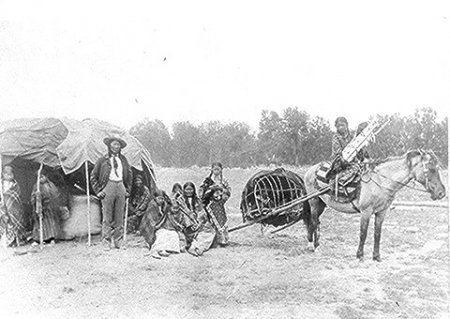
Horse-drawn travois Wikipedia

One of the earliest forms of transportation is the travois (properly pronounced trav-wa). The Canadian French name applies to an A-frame construction to carry goods and or people, and is dragged along the ground on its narrowest point. Native women built and maintained the travois, including training the dogs used to pull them. Aspen and cottonwood were the main wood types used, both because they were easily available and sturdy. 

Dogs pulling travois Wikipedia


Lewis and Clark both adopted the travois to carry their supplies on their westward exploration. The main difference was they used horses to pull, allowing larger travois with heavier loads. Ruts can still be seen as their paths were heavily used.

So why not use wheels? First, travois were developed before the invention of the wheel in many cultures, and secondly, the terrain was often not favorable to wheel transport. Plus, dogs could be used in areas where wheels would have caught in brush or broken on rocks. This was roughing it before there were established roadways. Travois adapted well to use on dry or snowy terrain, and needed little adaptation for the seasons.

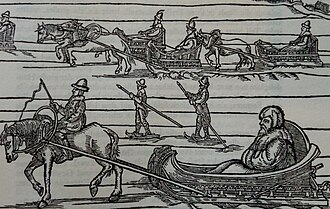
Traveling by sleigh Wikipedia


Sleds, or sleighs, on the other hand, were obviously a snow or ice mode of transport. Some designs included runners that could be removed and replaced with axles and wheels, but most were a winter-season transport only. The word sled comes from a Middle English word sledde which means sliding or slider.

Depending on the size and style, they were also known as a skid or a sledge. Any type of sled can be used to transport passengers or cargo across relatively level ground. Some styles are made to go downhill for recreation. Toboggans fall into this category.

Sledges were often roughly hewn lumber that was pulled by one or two horses into the woods, and hewn trees were loaded onto it. This could be for firewood or building materials.

The origins of sledges is thought to be in Egypt and were used to construct public buildings, as these vehicles worked well on hard-packed sand. Sometimes, they rolled the sledge over a rustic conveyor-belt consisting of de-limbed trees.

Sleds and sledges were also found in the Oseberg “Viking” ship excavation. Unlike wheeled vehicles, they were exempt from tolls. 


Russian Troika Wikipedia


As expected, sleds were important in the perpetual winter of Russia and Siberia, but their use was limited to royalty and bishops. A local design called the troika uses three horses, and is attributed as being the world’s only harness combination with different gaits of the horses. The center horse trots, while the outside horses canter. Originally developed in the 17th century, troikas were used for speedy mail delivery before coming into common usage for passenger and cargo.
Dog sled Wikipedia


British explorations to the Arctic and Antarctic used human-pulled sledges, while other nations preferred dog sleds.
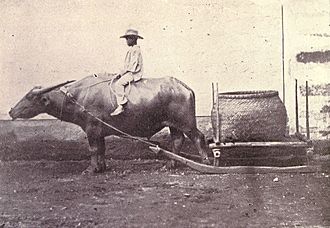
Kangga in Philippines Wikipedia


Many sleds can be used in mud, marshes, and even hard ground, particularly if the runners are greased. Even the Philippines, which has no snow, has its own design, a kangga, which is used in rough terrain and steep hills.

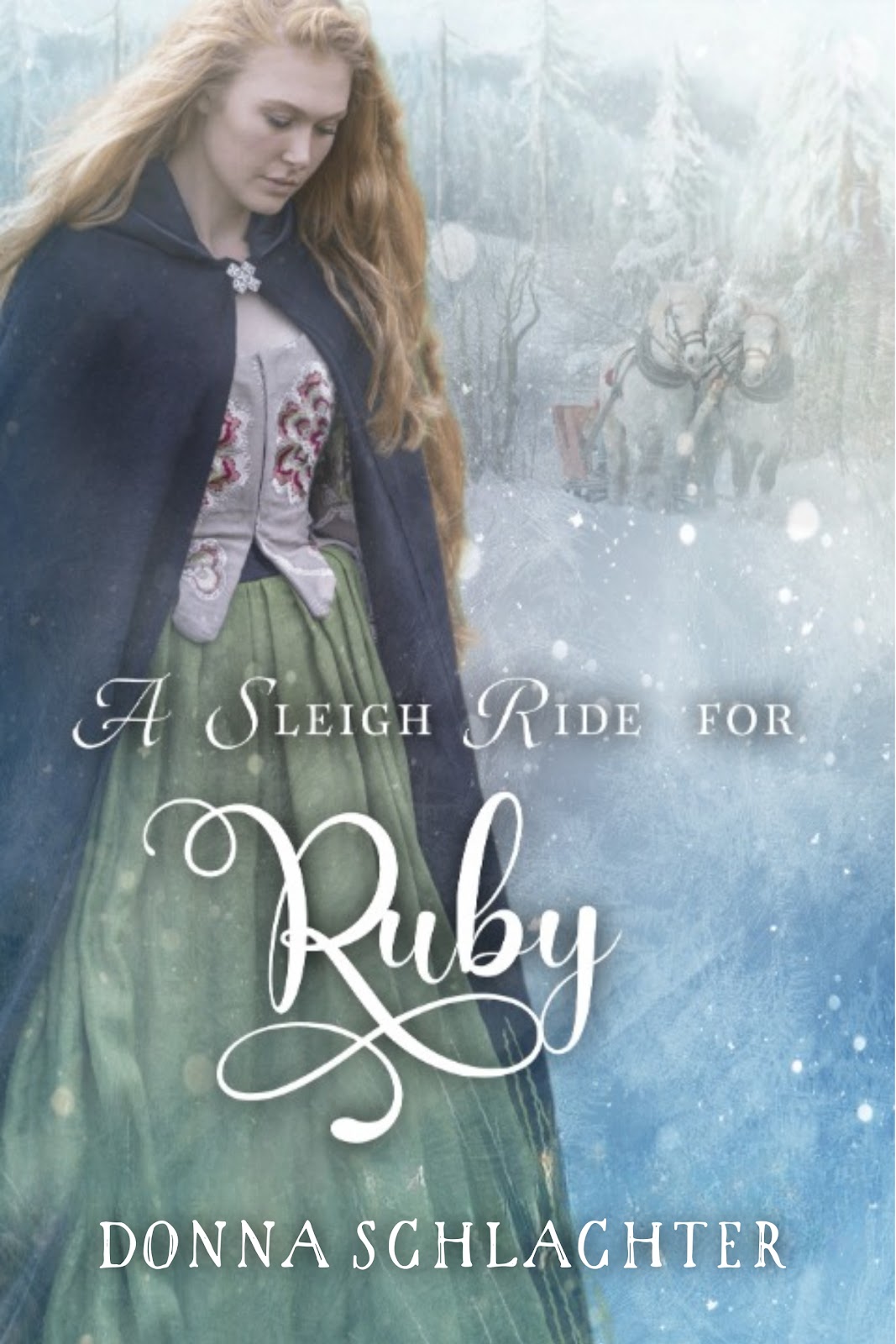
In my recent release, Sleigh Ride for Ruby, a young woman inherits her father’s sleigh business. She soon realizes that somebody in town is determined to put her out of business. But who can she trust? The Pinkerton agent who shows up on the scene? But is he really who he says he is? Check out the book here: https://www.amazon.com/Sleigh-Ride-Ruby-ebook/dp/B0D2LVRSPZ


Leave a comment to enter a random drawing
for a free ebook copy of Sleigh Ride for Ruby.


About the book:

After Ruby Wakefield inherits her father's touring business, she soon learns that not everybody thinks it right or proper that a woman should run a business normally operated by a man. However, she has no choice—she cannot give up on her father’s dream. But somebody in town is unhappy, and Ruby's business falls prey to mishaps such as broken traces, injured horses, and avalanches.

Clarke Everly, a Pinkerton operative, falls into Ruby's life when he hires her sleigh to take his fiancee for a ride in the winter wonderland of Snowflake, Colorado. But when Ruby won't convey them across a frozen lake, his fiancée kicks up a fuss and leaves him cold.

Can Ruby and Clarke figure out who is trying to ruin her business? And will working together show them the warmth of love and the kindness of their Heavenly Father?

About Donna:

A hybrid author, Donna writes squeaky clean historical and contemporary suspense. She has been published more than 60 times in books; is a member of several writers' groups; facilitates a critique group; teaches writing classes; and judges in writing contests. She loves history and research, traveling extensively for both, and is an avid oil painter. 


She is taking all the information she’s learned along the way about the writing and publishing process, and is coaching committed writers. Learn more at https://www.donnaschlachter.com/the-purpose-full-writer-coaching-programs Check out her coaching group on FB: https://www.facebook.com/groups/604220861766651

www.DonnaSchlachter.com Stay connected so you learn about new releases, preorders, and presales, as well as check out featured authors, book reviews, and a little corner of peace. Plus: Receive 2 free ebooks simply for signing up for our free newsletter!

www.DonnaSchlachter.com/blog

Facebook: www.Facebook.com/DonnaschlachterAuthor

Books: Amazon: http://amzn.to/2ci5Xqq

Bookbub: https://www.bookbub.com/authors/donna-schlachter

Goodreads: https://www.goodreads.com/search?q=donna+schlachter

The Purpose-Full Writer: https://www.facebook.com/groups/604220861766651

Need a writing coach? https://www.donnaschlachter.com/the-purpose-full-writer-coaching-programs


Resources:

https://en.wikipedia.org/wiki/Troika_(driving)

https://en.wikipedia.org/wiki/Horse-drawn_vehicle

https://en.wikipedia.org/wiki/Sled

https://en.wikipedia.org/wiki/Travois


Friday, December 27, 2024

The Gregorian Calendar: Even Better than the Julian Calendar

In last month’s post, I wrote about the Julian Calendar, a huge advance in timekeeping technology that was introduced in 45 B.C. It was far more accurate than its predecessor, the Roman Calendar, which was based on a lunar year with extra days added in whenever a committee decided they were needed. The Julian Calendar wasn’t the first solar calendar ever made, but it was the first to be widely adopted across Europe. It had a standard year of 365 days, with a leap year of 366 days every fourth year.

That sounds an awful lot like the calendar we use today, doesn’t it? Well, almost, but not quite. It turns out that one leap year every four years is just a smidge too much. A tropical year—the time it takes the earth to complete exactly one revolution around the sun—is 365 days, 5 hours, 48 minutes, and 46 seconds. This means that, once standard and leap years have been averaged together, the Julian Calendar year is longer than an actual tropical year by around 0.0077 days, or 11 minutes.

That may not seem like much time, but it adds up. Over the course of a thousand years, the Julian Calendar will drift almost 8 days ahead of the tropical year.

And so it did. By the late 16th century, the calendar used by most of the Western world was 10 days at variance from the actual orbit of the earth.

It was time to make a change to a more accurate solar calendar. The motivating force behind the switch was Pope Gregory XIII, acting on concerns about errors in calculating the date for Easter. A reform commission was assembled, and after considerable study and consultation with expert mathematicians, its members agreed on a new calendar with a small but significant change. Unlike the Julian Calendar, the Gregorian Calendar has a leap year every four years except for years which are divisible by 100 but not by 400. Those years are common years of 365 days.

The reason most people in the Western world today aren’t aware of these centennial common years is that we’ve never experienced one. The most recent centennial common year was in 1900, and the next one will be in 2100. The year 2000 was a leap year, because 2000 is divisible by 400.

The Gregorian Calendar went into effect in October of 1582 by means of a papal bull, which had no authority beyond the Roman Catholic Church and the papal states. That same year, Philip II of Spain decreed that the switch be made in his dominions, comprising not only Spain but also Portugal and much of Italy. The Polish-Lithuanian Commonwealth also adopted the new calendar.
By Aloysius Lilius - Biblioteca del Vaticano


Protestant, Eastern Orthodox, and Oriental Orthodox Churches continued with the Julian Calendar, as did Protestant nations, who resisted what they saw as a Catholic innovation. The British ultimately found a work-around with their Calendar (New Style) Act of 1750, which established a system for the computation of Easter that achieved the same result without referencing Pope Gregory XIII. Britain and the British Empire, which at that time included the eastern part of the future United States, adopted the new calendar in 1752. Sweden followed in 1753.

Alert readers familiar with American history will notice that 1752 was just a little bit before the French and Indian War. If you've done any reading about that conflict, you've probably come across some parenthetical adjustments between the date systems used in different parts of Europe. During this period, the Julian Calendar was 11 days at variance from the Gregorian. So the birthdate of George Washington, who was born under the Julian Calendar, can be written as February 11, 1731/32 (Old Style, depending on whether the writer is using the English or Continental start to the new year), or as February 22, 1732 (New Style).

At various times throughout the following centuries, other nations in Europe and worldwide adopted the Gregorian Calendar, with Saudi Arabia being the most recent addition in 2016. Ethiopia continues to use its own calendar of 13 months, which is 7-8 years behind the Gregorian and has a new year that falls in the Gregorian September. Nepal uses a lunisolar calendar 56-57 years ahead of the Gregorian calendar, with a new year in mid-April.

Today’s world is far more tightly interconnected than that of the sixteenth century. A uniform system of global timekeeping has clear advantages across many sectors, including international finance and trade, transportation and logistics, telecommunications and internet, science and research, military and defense, emergency and disaster response, and education and academia. The Gregorian Calendar didn't altogether unite the world in a global timekeeping standard, but it went a long way toward streamlining operations and ensuring clarity in planning, record-keeping, and communications.


Kit Hawthorne makes her home in south central Texas on her husband’s ancestral farm, which has been in the family for seven generations. When not writing, she can be found reading, drawing, sewing, quilting, reupholstering furniture, playing Irish pennywhistle, refinishing old wood, cooking huge amounts of food for the pressure canner, or wrangling various dogs, cats, horses, and people. Visit her at https://kithawthorne.com/.

Thursday, December 26, 2024

Gardening for Victory by Cindy Regnier


Any gardeners out there? I admire you and cheer you on but I am not one of you. And yet, I may have been if I had lived back in the time of the World Wars. Ever heard of a Victory Garden? What were they and how did it all work?

Victory gardens, also known as war gardens or food gardens for defense, were vegetable, fruit, and/or herb gardens planted during World War I and World War II to aid the war effort. It was something many could do that weren’t able to serve with troops or join the depleted work force. There were several ways a simple backyard garden or even a community garden plot could make a difference.

The most obvious benefit was to increase the production of fresh fruit and vegetables, even if the production only benefited one family. That was one less family who had to use ration cards for those items at grocery stores. The increased production reduced pressure on the home front food supply as well as reducing demands on commercial farms. Not only that but the communication of patriotism and the morale boost from the gardening were important benefits as well.
 The idea of war gardens came about during World War I, then by World War II the US government began promoting them, appropriately naming them “Victory Gardens.” The government provided instruction, and seeds, sometimes even land, to individuals and communities for the purpose of growing food.
 

Victory gardens were planted in backyards, churchyards, city parks, playgrounds, vacant lots, and even the edges of baseball diamonds. A spot of unused land suddenly became a place to promote patriotism. If a family grew more than they could use, the surplus was stored and preserved for distribution to families, schools, welfare agencies, and for local emergency food needs. The Department of Agriculture and the War Production Board came up with a special Victory Garden fertilizer for home use. Pamphlets were printed to show people how to grow enough food to feed their family for a year. A government promotional poster said that by planting gardens, ordinary Americans could "Sow the seeds of Victory" and "plant and raise your own vegetables" - helping the war effort both literally and symbolically. Pretty cool idea – huh?

 Americans got behind the effort in a big way, According to archived USDA fact sheets, there were more than 20 million victory gardens in 1943, which produced 10 billion pounds of food. By 1944, gardens provided around 40 percent of the U.S. vegetable supply. Traditionally, victory gardens included foods high in nutrition, such as beans, beets, cabbage, carrots, kale, lettuce, peas, tomatoes, turnips, squash, and Swiss chard. Victory Gardens freed up agricultural produce, packaging, and transportation resources for the war effort, and helped offset shortages of agricultural workers. The effort even reached overseas to war torn countries short on food supply.

Victory Gardens introduced people to gardening and to unfamiliar crops like Swiss chard and kohlrabi. Some also raised chickens in their gardens, providing eggs, meat, and also insect control. Community Victory Gardens provided more than a plot of dirt: One newspaper reported that “War news was shared. Recipes and remedies were shared. And gossip too” Many who grew up with Victory Gardens continued gardening throughout their lives and introduced it to their children.

What about you? Would you have planted a Backyard Victory Garden or perhaps been a part of a community garden effort during a World War? Big or small - it all mattered!


Scribbling in notebooks has been a habit of Cindy Regnier since she was old enough to hold a pencil. Born and raised in Kansas, she writes stories of historical Kansas, especially the Flint Hills area where she spent much of her childhood. Her experiences with the Flint Hills setting, her natural love for history, farming and animals, along with her interest in genealogical research give her the background and passion to write heart-fluttering historical romance.


Wednesday, December 25, 2024

Who Was St. Nicholas?


 By Jennifer Uhlarik


MERRY CHRISTMAS! Thank you for carving out a few minutes from family, cooking, gifts, and whatever else your Christmas Day may hold to stop by and visit with us here at Heroes, Heroines, and History. I’m sure I speak for all of us when I say we wish you the best holiday possible!


A few days ago, my husband stumbled across an article that said that archaeologists and researchers have found what they hope to be the real sarcophagus of Saint Nicholas in Demre, Antalya, Turkey. This might be a surprising development to you (just as it was to me), since his bones are thought to be held in the Basilica of San Nicola in Bari, Italy—but they were originally buried in his hometown of Myra and later stolen by Italian sailors and moved to the Bari location. Supposedly, this find in Turkey is thought to be the original sarcophagus he was buried in before his bones were moved. Those connected to the find hope they will see his name written or engraved in the sarcophagus to prove that it was, in fact, his.


Anyway, all this got me thinking, and I realized that I’ve long known Saint Nicholas was the inspiration for our modern-day Santa Claus, but I don’t know much about the historical figure of St. Nicholas. So…in case you’re like me, I thought I’d share a few details on this Christmas day. 


Victorian image of Santa Claus,
(Found on: Graphics Fairy)


Accounts of Saint Nicholas’s life were not recorded for centuries after his death (thought to be on December 6, 343 A.D.), so most of what we know may be embellishments of the truth. Traditionally, Nicholas was said to have been born on March 15, 270 A.D., in what we know today as the Antalya Province of Turkey. His parents, Theophanes and Nonna, were devout Christians who yearned for a child. One source says they prayed and wept for thirty years before Nicholas was born to them. His parents raised him well and set the example of charitable giving to those in need.


His early life, in my findings, is mostly lost to history, although it is known that he had an uncle, also named Nicholas, who was an abbot for the local monastery. Young Nicholas looked up to his uncle and spent much time with him and the monastery monks as they did their daily chants and other religious tasks. It is thought that his parents died of some sort of plague, and upon their deaths (when Nicholas was a young teen), he went to live with his uncle. His parents had apparently left him a good inheritance.


Nicholas followed in his uncle’s footsteps by taking a pilgrimage to The Holy Land. He supposedly boarded a ship, and quickly, he had a dream of a storm befalling their ship. He told the sailors of his dream, but they dismissed his concerns. Almost immediately, a storm did arise, and as the sailors fought to keep the ship from ruin, Nicholas prayed for the tempest to be calmed. Miraculously, it did grow calm, but not before one sailor fell to the deck from a mast and died. Again, taking to prayer, Nicholas stormed heaven until the sailor was raised from the dead. They made it to their destination, Nicholas walked the Holy Land, and visited many sites where Christ had been in the gospel accounts, including Golgotha—where Jesus was crucified.

Portrait of Bishop Nicholas,
painted by Jaroslav ÄŒermák


Upon his return home, Nicholas became the bishop of Myra, supposedly in a rather miraculous way. The old bishop had died, and the others were seeking God for who should replace him. God spoke to one man and said that the first young man to enter the door for the sunrise service the following morning was the one to replace the deceased bishop. The word of God was even so specific as to include the name of the young man. As it turns out, it was Nicholas. The following day, Nicholas, son of Theophanes and Nonna was the first to arrive and was promptly told that he was to become the next bishop. He insisted he was not worthy of such a position, but the men of God at Myra would hear none of it, and Nicholas became the bishop at a young age.


He is best known as the patron saint of children and sailors, but he also was known for secret gift-giving and for miracles that came from his intercession, so much so that he became known as Nicholas the Wonderworker. So what sorts of secret gift-giving or miracles was he known for? Again, these stories may very well be embellishments of true happenings, but they make great stories, even if they aren’t completely accurate.


In one instance, Nicholas learned of a man with three daughters. The man had once been rich but had fallen on hard times. So hard, in fact, that he would not be able to pay the dowries expected for his daughter to marry well, leaving the three young women uncertain lives of prostitution or other slavery. Nicholas took some of his own inheritance and threw it into the window of the impoverished family’s home. As chance would have it, the money landed in a damp sock that had been left near the fire to dry. Come morning, the father found enough money to marry off his oldest daughter. Not long after, Nicholas returned to the house and again pitched a sizeable bag of money into the window, affording the middle daughter a dowry and assuring her a good marriage. By this time, the father was determined to know who this secret supporter was and waited days until a third bag of money was tossed through the home’s open window. The father rushed out to find Nicholas and thank him, though Nicholas asked the man to keep the secret of his unexpected provision. (Of course, with the first money landing in the sock put near the fire, it is thought this was the basis for our Christmas tradition of leaving gifts inside of stockings hung near the fire).


St. Nicholas at Greek Orthodox
Church (Photo by Petr Kratochvil)

A second incident tells of a time of famine, when Nicholas was greatly concerned for the people of Myra. In one version of the story, Nicholas was praying for grain for his people, and he appeared to a ship captain’s dream, promising him three gold coins if he would bring his shipment of grain to Myra. When the man awoke, he found the three promised coins already in his hand, and went to provide what was requested in the dream. In another version of the same miracle, Nicholas went to a merchant, asking for grain from each of his ships—but the merchant refused because his grain was already weighed, and he would be held accountable for any shortfall. Nicholas assured him there would be no shortfall if he provided grain for the people of Myra. Finally, Nicholas prevailed. The merchant sold him the grain—a hundred bushels from each ship—and went on to report to the buyer. Upon weighing the shipments, there was no shortfall whatsoever, and the grain sold to Nicholas for Myra lasted the full length of the famine, as well as provided enough to plant a good crop.


Nicholas’s life is marked by other such stories of justice, faith, and miraculous happenings, making him a beloved figure in the history of the world—and because of them, it is easy to see how he could have become the model, despite the over-commercialized version of our modern-day Santa Claus figure. No matter what, Nicholas was a man of God we can look up to for his love and giving nature.


I hope you enjoyed learning a few small facts about this historical man who became legend. And I hope you will have a blessed and merry Christmas and a very Happy New Year! 


Jennifer Uhlarik discovered the western genre as a pre-teen when she swiped the only “horse” book she found on her older brother’s bookshelf. A new love was born. Across the next ten years, she devoured Louis L’Amour westerns and fell in love with the genre. In college at the University of Tampa, she began penning her own story of the Old West. Armed with a B.A. in writing, she has finaled and won in numerous writing competitions, and been on the ECPA best-seller list several times. In addition to writing, she has held jobs as a private business owner, a schoolteacher, a marketing director, and her favorite—a full-time homemaker. Jennifer is active in American Christian Fiction Writers, Women Writing the West, and is a lifetime member of the Florida Writers Association. She lives near Tampa, Florida, with her husband and fur children.


Available for Pre-Order (Coming April 1, 2025):


Love and Order by Jennifer Uhlarik


Separated as children when they were adopted out to different families from an orphan train, the Braddock siblings of Callie, Andie, and Rion have each grown up and taken on various jobs within law enforcement and criminal justice. When the hunt for a serial killer with a long history of murders reunites the brother and sisters in Cambria Springs, Colorado, they find themselves not only in a fight for justice, but also a fight to keep their newly reunited family intact. How will they navigate these challenges when further complicated by unexpected romances?