
by Kimberly Keagan
When you think of a bicycle, you probably picture a leisurely ride through the park or a way to get exercise. (Or something you have to watch out for when you're driving!) But in the 1890s, bicycles were so much more than that. They weren’t just a mode of transportation—they were a cultural revolution on two wheels!

Bicycle Outfits, The Delineator, April 1894
Although the bicycle first appeared around 1818, the vehicle as we know it today with equal sized wheels and a chain drive, was invented in 1885. By the 1890s, bicycling was a craze in both Europe and the United States. Not only was the bicycle a form of exercise and leisure, it was a mode of transportation for many. More importantly, it played a crucial role in women's independence.
During the 1890s, a social phenomenon known as the "New Woman" emerged. Women were advocating for more rights, better education, and increased independence. One of the biggest symbols of this newfound freedom? The bicycle. Bicycles allowed women to move about without needing a chaperone or relying on a carriage. They could travel to work, school, or social gatherings on their own terms. This newfound mobility wasn’t just about convenience—it was about autonomy. Women were no longer bound by rigid social expectations that kept them dependent on others for transportation.

From the author's collection
The bicycle also changed fashion. Traditional women’s clothing—heavy skirts, corsets, and layers of petticoats—was impractical for riding. Enter the bicycle suit, a more practical outfit that included shorter skirts or bloomers, allowing for easier movement. While bloomers were controversial, they symbolized a shift toward practicality over strict social norms.
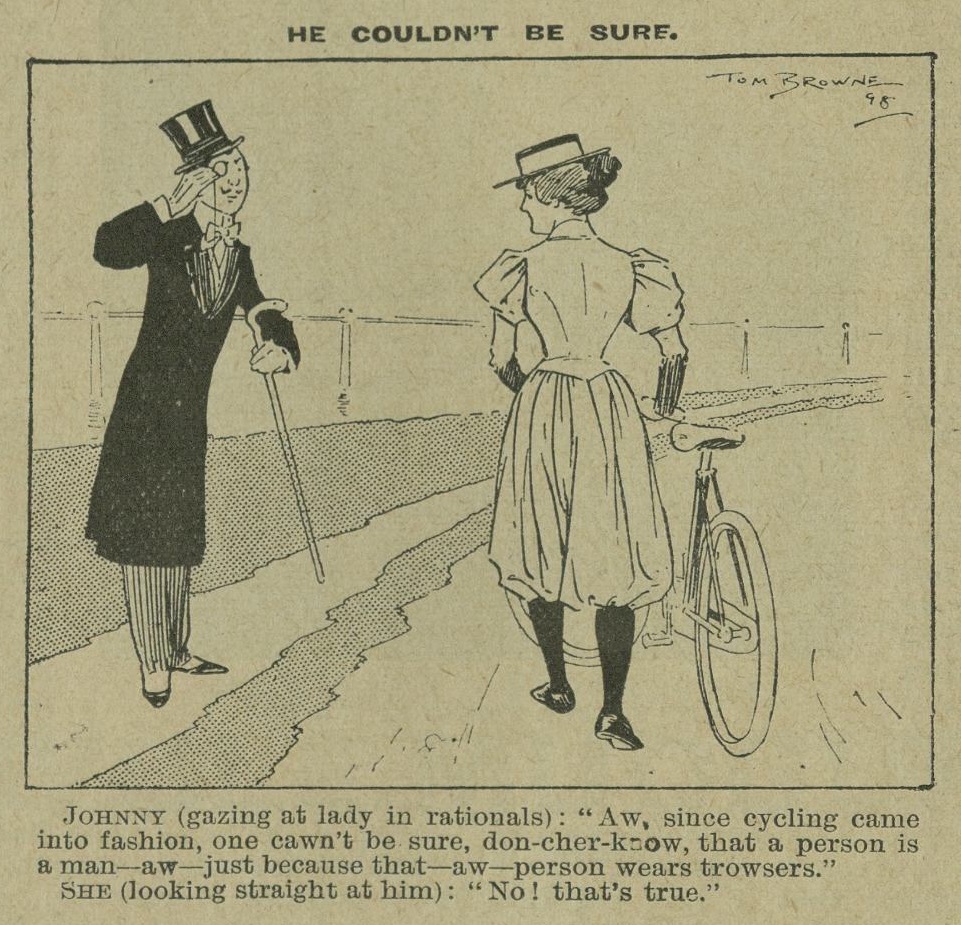
Photo courtesy of warwick.ac.uk.com
Of course, not everyone was thrilled about these changes. Many critics claimed that cycling was unladylike, dangerous, or even immoral. Some doctors warned that too much bicycling could cause “bicycle face,” a supposed condition where a woman’s features would become permanently strained from the exertion. (Thankfully, history has since debunked that one!)
Despite the naysayers, women kept riding. The bicycle wasn’t just a trend—it was a tool of progress. It gave women a taste of freedom, adventure, and control over their own lives. As Susan B. Anthony noted in 1896, "I think [the bicycle] has done more to emancipate women than anything else in the world. It gives a woman a feeling of freedom and self-reliance. The moment she takes her seat she knows she can't get into harm unless she gets off her bicycle, and away she goes, the picture of free, untrammeled womanhood."

Kimberly Keagan is a former investor relations consultant and corporate financial writer (not very romantic) who now crafts historical romances filled with strong heroines, swoon-worthy heroes, faith, and a touch of humor. Her latest novel, Risky Business, released in February of 2026 and is the third book in her Hearts on Display series. When not reading or writing, Kimberly enjoys baking, gardening, watching sports, and researching her family tree. Sign up for Kimberly's newsletter and receive a free Gilded Age Romance at www.kimberlykeagan.com.

Thanks for posting. We don't give the bicycle enough credit, I guess!
ReplyDelete