

Throughout the years since its inception, live theater has gone through its ups and downs. From exquisite performances, delightful to the literary ear, to irreverent political entertainment, offensive to the elite.
In an effort to control the narrative, the London Licensing Act of 1737 became the enforcer. It served to censor plays that parodied prominent figures, in particular Sir Robert Walpole, the de facto first Prime Minister of Great Britain (1721-1742).
 |
| Royal Opera House Covent Garden, London c1900 |
- Political themes: No parodying of government issues or political figures.
- Religious content: Nothing that challenged beliefs or morality.
- Social issues: Poverty, class struggles, and gender roles were often sanitized or omitted.
The office of Examiner of Plays was created in the early 1700s. This person was given immense power over the playwright and answered only to the Lord Chamberlain. The Examiner would visit theaters to evaluate their safety and comfort. He saw to it that the rules were followed to the letter. Often, he’d appear when a law case regarding licensing needed to be enforced. As of 1911, he was required to read plays, examine playbills, and write a Reader’s Report to be turned in to the Lord Chamberlain.

One notorious examiner, George Coleman, used excessive slashing of anything he personally deemed inappropriate. Because of his actions, the House of Commons appointed a select committee to review the licensing laws and censorship in 1823.
Novelist Edward Bulwer-Lytton chaired the committee which moved to abolish censorship and remove the office of examiner. It was all for naught as Parliament rejected the motion. So firm was the ruling, that the Examiner and the authority of the Lord Chamberlain remained in power until the Theater Act of 1968, also known as the Theatres Regulation Bill, which abolished both roles.
Until then, the Lord Chamberlain’s wings were clipped somewhat, and he could only prohibit the performance of plays that were likely “to do violence to the sentiment of religious reverence”—in other words, to be indecent—or “to be calculated to conduce to crime or vice” *. Where before he had full autonomy, he would now occasionally consult the Archbishop of Canterbury. A copy of the play’s script and the Reader’s Report were held at the Lord Chamberlain’s office, and they are still housed by the British Library.
In all, between 1738 and 1968, there were a total of 21 Examiners of Plays.
Creative expression could not be curtailed, nor could the playwrights’ opinions. Unlicensed theaters popped up. They often escaped surveillance by performing in pantomime, using music during the action. Thus, melodrama became popular.

The Reform Bill of 1832 essentially gave the power back to the people, or the middle class. A new system was established called the Theaters Act of 1843. Now, “free theater” could explore what had been squelched before, breaking free of the patented theaters. However, the expected flood of new building didn’t happen for sixteen years. This was attributed to the plethora of illegal theaters already operating.
The creative heart had to fight to survive, nearly drowning in suppression. However, it fought valiantly and continued to bobble to the surface until it became the dramatic entertainment we enjoy today.
* Shellard, Dominic; Nicholson, Steve; Handley, Miriam (2004). The Lord Chamberlain regrets: a history of British theatre censorship (1. publ ed.). London: The British Library. ISBN 978-0-7123-4865-2.
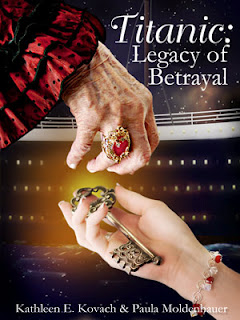
A TIME-SLIP NOVEL
A secret. A key. Much was buried on the Titanic, but now it's time for resurrection.
To buy: Amazon


This has been interesting to follow. Thanks for posting.
ReplyDelete