Showing posts with label #goldmining. Show all posts

Sunday, July 20, 2025

A Day in the Life of Fannie Quigley: Pioneer Cook of the Klondike

Fannie Quigley used a dog team for transportation and freighting, as seen in the above photograph of her packing supplies to a mine in 1915. (Public Domain Image)

Imagine the brisk Alaskan dawn in the late 1890s—pine-scented air, wooden buildings dusted with frost—and in the midst of a mining settlement on Clear Creek stands Fannie Quigley, a real-life cook tent owner and prospector. Known as “Fannie the Hike,” she carried a sled with stove and provisions into remote camps to feed weary gold-seekers.


Rise and Shine

Fannie began each day before sunrise, hauling her portable stove and supplies across frozen terrain. She’d set up camp, build a fire strong enough for a hearty breakfast, and inspect ingredients—flour, salt pork, sometimes a handful of fresh eggs or meat she’d hunted herself. Fannie hunted, trapped, and gardened to supplement her meals .

Breakfast for Prospectors

Once the fire was roaring, she’d fry salt pork or bacon, whisk together sourdough pancake batter, and serve up steaming coffee. Prospectors, tired and hungry, would flock to her tent. They needed nourishment and warmth to fuel long days panning gold.

Midday Travel

After breakfast, Fannie cleaned her cook area, packed up, and made her way to the next mining spot—sometimes miles away—cooking lunch along the route: perhaps a stew from preserved beans, wild game, or vegetables from her own garden .

Supper Time

Come evening, Fannie set up again, preparing supper for miners returning to camp. She’d cook over a roaring fire under a canvas shelter, and then dish something hearty, like hot stew and fresh bread—bringing comfort to men far from home.

Life Beyond the Cook Tent

Fannie wasn’t just a cook—she staked mining claims, ran a roadhouse, served as a nurse during the Spanish flu epidemic, and hosted travelers, including Jack London. She embodied resilience, independence, and warm hospitality in the harsh Alaskan wilderness. Fannie Quigley’s story illustrates how a cook in the Wild West served as far more than a provider of meals--but also as a caretaker, a sustainer, and a pillar of the mining community.

Honoring Wild West Cooks Through Fiction

In the pages of Hills of Nevermore (Montana Gold, Book 1), readers meet America Liberty Reed, a fictional young widow with a newborn in her arms, alone and desperate. Like real-life pioneers such as Fannie Quigley, America faces daunting odds—but her story takes a hopeful turn when she’s hired by another resilient widow, Addie Martin, to help in a mining camp cook tent.

Under Addie’s steady guidance and amidst the daily work of preparing meals for a camp full of hungry miners, America begins to rebuild her shattered life. While tending to her infant and learning the rhythms of camp cooking, she discovers unexpected purpose and the quiet strength that comes from serving others with compassion.

Enter Shane Hayes, the blue-eyed circuit preacher America can't seem to avoid.

If stories of strong frontier women and redemptive new beginnings speak to you, you’ll find much to love in Hills of Nevermore, the first book in the Montana Gold series. Learn more.

About the Author

Janalyn Voigt fell in love with literature at an early age when her father read chapters from classics as bedtime stories. When Janalyn grew older, she put herself to sleep with tales "written" in her head. Today Janalyn is a storyteller who writes in several genres. Romance, mystery, adventure, history, and whimsy appear in all her novels in proportions dictated by their genre. Janalyn Voigt is represented by Wordserve Literary.

Learn more about Janalyn Voigt.


Tuesday, July 8, 2025

John Bidwell: Soldier, Farmer, and Lovelorn Beau

 by Martha Hutchens

image by mikeledray, deposit photos

John Bidwell traveled to California in 1841 at the age of 22. He soon became John Sutter’s business manager and was among the first to learn of the gold discovery at Sutter’s Mill. Shortly after, he found gold himself at the Feather River.

At that time, California was under Mexican control. Bidwell became a Mexican citizen to purchase land legally and received a land grant for Rancho del Arroyo Chico in 1844. But in 1846, the Mexican-American War broke out in Texas and quickly spread across the Southwest. Bidwell joined the California militia and served under John C. Frémont. When the war ended in 1848 with the Treaty of Guadalupe Hidalgo, Bidwell was honored with the title General.

After the war, Bidwell focused on agriculture, developing vineyards and orchards on his land. He created his own almond variety and was one of the first to harvest a commercial raisin crop in California. By the 1850s, he owned 30,000 acres and grew everything from wheat to melons.

In 1865, Bidwell was elected to the United States House of Representatives—an achievement that would change the course of his life.

Annie Kennedy was 26, considered past the usual age of marriage. Small and delicate in build, she devoted herself to good works, especially women's suffrage, temperance, public education, and other reform causes. Her father, the superintendent of the U.S. census, held many social responsibilities that Annie and her mother helped manage. Marriage, she believed, would require her to give up her mission.

General Bidwell became a frequent guest at the Kennedy home during his time in Washington, but Annie was shocked to receive a letter from him in January 1867.

image by ronstik, deposit photos
“I never could marry unless I loved,” he wrote, “and I never loved till I came here, and then with an intensity that seemed to me to equal if not surpass any tale of fiction.”

Startled, Annie dashed off a quick and rather stern refusal. But later that day, her conscience pricked her. She sent another note, softer in tone:

“Do not think me ungrateful if obliged to write that which may grieve you. Be assured I am deeply grieved myself. Grieved that I should be the cause of pain to you.”

Though heartbroken, the General thought he sensed not rejection, but fear. Not fear of him, but of change.

“I will try to see you often while I stay in Washington,” he replied. “But Annie, unless you tell me your heart and hand are betrothed to another, I shall live in hope as long as life shall last.”

Bidwell was on a deadline—he would return to California in March. Annie forbade him to approach her parents with a formal courtship. He sent more letters, but she remained firm. He returned to California heartbroken, yet undeterred.

Over the following year, they continued their correspondence across the miles. Though letters took weeks to arrive, their unusual courtship endured. At last, Annie gave the General permission to speak to her father. They were married on April 16, 1868.

Annie need not have feared sacrificing her life's work. Instead, she gained a partner who shared her values. Bidwell ran for president in 1892 as the candidate for the Prohibition Party. While the land he farmed originally belonged to the Mechoopda people, Bidwell—unlike many of his contemporaries—hired many of them and sought to protect them when the state of California later forced Native communities onto reservations. He also spoke publicly for the rights of Chinese immigrants, advocating for their fair treatment.

image by phb.cz, deposit photos
While General Bidwell took up many of Annie’s causes, she shared in his as well—becoming an amateur botanist.

General Bidwell died in 1900 at the age of 81. Annie lived until 1918. She never remarried.

The Bidwells had no children, so Annie left the land near Chico to the town her husband had founded. That land is now known as Bidwell Park. Her mansion served for a time as dormitories for a normal school, continuing her belief in public education. The home was acquired by the State of California in 1964. Sadly, on December 11, 2024, an arson fire destroyed the mansion.

Best-selling author Martha Hutchens is a history nerd who loves discovering new places and times to explore. She won the 2019 Golden Heart® for Romance with Religious and Spiritual Elements. A former analytical chemist and retired homeschool mom, Martha occasionally finds time for knitting—when writing projects allow. Her debut novel, A Steadfast Heart, is now available.


When his family legacy is on the line, rancher Drew McGraw becomes desperate for someone to tame and tutor his three children. Desperate enough to seek a mail-order bride. But when the wrong woman arrives on his doorstep, Drew balks.

Heiress Kaitlyn Montgomery runs straight from the scandal chasing her toward a fresh start on a secluded ranch. She strikes a bargain with Drew—a marriage convenient for both of them.

But the more Kaitlyn adapts to ranch life and forms a bond with Drew’s children and their enigmatic father, she realizes that this ranch is where she is meant to be. And then her past catches up with her…


Sunday, August 4, 2024

How Immigrants Birthed and Influenced Colorado's Mining Industry in the Gilded Age

By Donna Wichelman 

(Note: For those who have enjoyed the WWII series I began in November 2023, I will return to the series after my Gilded Age historical romance is released in December 2024 by Scrivenings Press. In the meantime, I hope you will enjoy the blog series on the Territory of Colorado.)

Looking back on the beginnings of the United States of America, one might say we've always been a nation of immigrants. Before the fifteenth – sixteenth centuries, when the Spanish and French arrived on North American soil and established settlements, indigenous populations roamed the land for millennia. But once word spread about the vast land of North America with its abundant resources, more and more English and Europeans arrived seeking personal prosperity, escaping oppressive governments, and desiring religious freedoms.

The same values that brought men and women to a new continent drove the Revolutionary War toward the end of the eighteenth century, because men like George Washington and Thomas Jefferson perceived the loss of those principles at the hand of King George III of Great Britain, which had birthed the first thirteen United Colonies. Jefferson wrote a Declaration of Independence on July 4th, 1776, collected fifty-six signatures, and proclaimed those values—life, liberty, and the pursuit of happiness—to be self-evident, and a new nation was born.

Over the following century, immigrants filled with hopes and dreams of a new and better life streamed to the United States of America, where it was rumored the streets were paved with gold. Each new boat that arrived contained people in pursuit of life, liberty, and happiness.
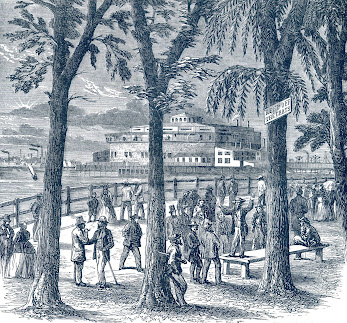
Castle Gardens, Battery Park, New York: First Official American Immigration Station Opened March 1855
19th Century Illustration1357311458.jpg Dreamstime.com

Castle Clinton Museum, aka Castle Gardens, New York
Dreamstime_l_198086920.jpg

But while the entire eastern seaboard belonged to the United States, territories across the continent, like Colorado and Louisiana, still belonged to the Spanish and French. It wasn’t until 1846, when the United States went to war with Mexico, that a treaty was finally reached in 1848, giving the Territory of Colorado to the United States.

Most Easterners still avoided the Rocky Mountains, deterred by the rough terrain. Trappers and others who were brave enough to move west took advantage of the system of trade set up by the Spanish with the Native American tribes of Utes, Arapahos, and Cheyenne and established trading posts, allowing for easier travel west.

But then a different report regarding gold arose, only this time it was of the shiny metal kind found along the rivers and streams on the plains and in the mountains.

In 1850, a party of Georgians, heading west during the California gold rush, found a meager supply of gold on Ralston Creek near present-day Golden, Colorado. But it wasn't until 1858, when William Green Russell organized an expedition and camped along the confluence of the Cherry Creek and South Platte Rivers (now the heart of downtown Denver), that they found profitable deposits. Russell's men established a small settlement named Auraria that later became Denver.
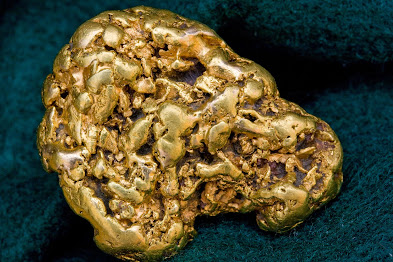
One troy ounce California placer gold nugget - Natural gold specimen


George Jackson, a member of Russell's party, reasoned that gold on the plains flowed down from the mountains. He ventured into the Clear Creek gorge where the valley opened up at Floyd Hill. Following the path to present-day Idaho Springs, he discovered his first gold on January 7, 1859. Rumor spread, and prospectors flocked to the mountains, where they found significant amounts of placer gold along rivers and creeks. 

Gold discoveries also sparked fierce competition for claims and available resources, and prospectors moved west. 

Two brothers in Russell’s party, George and David Griffith, deterred by the competition, moved up the valley to the confluence of the Main and South Clear Creeks. Having learned by experience in California to look for hard rock veins called lodes on the sides of the valley, they were not disappointed. And though they also found a silver vein, they initially ignored it for the gold.

More prospectors descended on the area, establishing camps that evolved into settlements. The one near the West and Main Forks of Clear Creek became known as George’s Town.

The gold bubble burst in 1864, when the constant need for more investment capital never paid off. Investors, including George Griffith, pulled out.

But in the fall of 1864, three prospectors—Robert Steele, James Huff, and Robert Taylor—discovered an extremely rich silver lode eight miles south of Georgetown on Mount McClellan at 13,200 feet. They headed to Central City to assay their samples, discovering a value of two to five hundred dollars per ton. The silver boom was on.
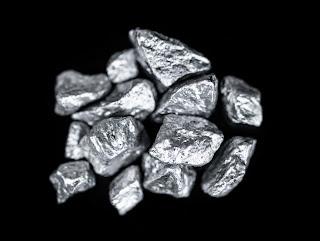
Silver nuggets isolated on black background close-up


By the summer of 1865, Eastern prospectors flocked to the region, and by September 1866, Clear Creek County was declared “indisputably” rich in ores by Central City’s Weekly Miners’ Register. Georgetown flourished. The town built a post office, and William Barton—a Bostonian—started construction on a two-story hotel. New clapboard buildings housing banks and business enterprises sprung up in a growing business district.

Remains of an Old Mine Near Silver Plume, Colorado: Donna's Gallery 2019

The thriving community also needed the infrastructure required, and soon, eastern missionaries created churches, lawyers established law offices, and Georgetown’s first newspaper, the Colorado Miner, ran its first edition in May 1867. On January 28, 1868, the Territory of Colorado legislature declared Georgetown an official town.

Easterners weren’t the only ones investing in the mines. Attempting to raise capital to build smelting plants, mine owners pursued investment from abroad. Robert Orchard Old—a native Englishman who had moved to America—was one man who banked on the silver industry. In 1868, he formed a joint-stock company—the British and Colorado Mining Bureau—with its main offices in London and branches in Colorado. The company shipped ores to England for smelting with the plan to open smelting works in Colorado. His bureau remained prosperous until 1873.

According to historian Christine Bradley in The Rise of the Silver Queen, “The town’s early rustic appearance [in 1872] gave way to fine homes, level sidewalks, a few trees, and elegant fences … The streets of Georgetown were packed with new arrivals from every point of the globe …” including Cornish, Welsh, and German miners, Italian retailers, Irish workmen, and the Frenchman Louis DePuy, who turned a small bakery into the elegant and now historic Hotel de Paris. It was also a town where formerly enslaved people could earn a living and invest in mines. All these elements coincided to create international flare and intrigue as people descended upon Georgetown to make their mark in the mining community.”
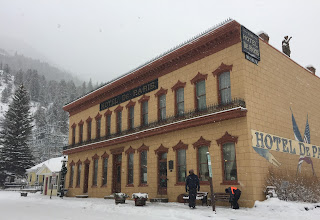
Modern View of Hotel De Paris, Georgetown: Donna's Gallery, December 2019

In September's blog, we’ll look at how one immigrant group made its mark on the mining industry of Colorado.


Weaving history and faith into stories of intrigue and redemption grew out of Donna's love of travel, history, and literature as a young adult while attending the United World College of the Atlantic--an international college in Wales, U.K. She enjoys exploring people and cultures of the world and developing plots that show how God's love abounds even in the profoundly difficult circumstances of our lives. Her stories reflect the hunger in all of us for love, belonging, and forgiveness.

Donna received her master's degree in mass communication, journalism from San Jose State University and became a communications professional before writing full-time. Her short stories and articles have appeared in inspirational publications. She has two indie-published romantic suspense novels, Light Out of Darkness and Undaunted Valor, in her Waldensian Series. Her Gilded Age historical romance, A Song of Deliverance, will be released by Scrivenings Press in December 2024.

Donna and her husband of forty years participate in ministry at their local church in Colorado. The love spending time with their grandchildren and bike, kayak, and travel whenever possible.