Showing posts with label #medieval. Show all posts

Friday, May 3, 2024

New Steps and Old Monuments

As I advance in years, my perspective progresses. I attempt to lean not on my own understanding, but to seek wisdom and discernment. On a lighter note, I am working on margin in my schedule for the unforeseen, all the while praying for direction. Why employ this opening to the blog today?

It is often unplanned experiences, side streets, and extra stops that can bring the most joy in life and in travel. Yet still we tend to aim for the main events and major attractions. Why is that the case? Do we have fomo (fear of missing out)? Do we think that because people deem an occasion or site worthy, we must explore the possibility or location? Whatever the reasons, I suggest consideration of alternatives. 

For a writing research trip with Cindy Stewart (former HHH blogger and author of Abounding Hope), we planned months in advance the sites we would visit. As is often the case, our schedule changed. These alterations are some of my favorite portions of the trip. What did I learn? Leave space in life for the unexpected. Be flexible. Above all, abide. This leaves room for God's plans. As I discovered in recent years, His are better than any I could design.


Additional stop #1 on our trip - Amiens, France. This is a small town located just 112 km (70 miles) north of Paris. It is northwest of Caen, which appears in prior posts. Amiens is a magnificent medieval village that offers a cathedral, views of the Somme River, and interesting tidbits to delight history enthusiasts. Oddly enough, it is not listed in the guidebook for France I used. Perhaps less attention lends itself to the quaint ambiance?


Cathédrale Notre-Dame d'Amiens featured in the image at top and three below, is a Unesco Heritage Site. It is the largest Gothic cathedral in the world. In fact, two Notre Dame de Paris could fit inside the 200,000 cubic meter structure. It soars 42 m (137.8 feet) in height. Three master builders completed this edifice from 1220 - 1288. The elevation, sculptures, and stained glass allow this cathedral to serve as a model for Gothic architecture. It did influence many Gothic cathedrals built in the succeeding centuries. Notice the intricate and plentiful figures on the exterior. We could not take photos inside. Imagine the beautiful interior or plot a visit to Amiens to peek for yourself.


Key aspects of this monument are additions and alterations over the years that retained the nature of the structure. At the end of the 13th to the beginning of the 14th century, chapels constructed between the buttresses did not affect the interior. Over the proceeding years restorations occurred that offered enhancement. The cathedral survived religious wars, the French Revolution, and for the most part, both World Wars. Listed as an Historic Monument in 1862 and inscribed with Unesco in 1981, this site remains protected for future generations.

Continuing on and strolling through Amiens offers a glimpse into medieval life as well as current adaptions. The Quai Bélu (below) in Saint-Leu once supported the area's milliners, tanners, and weavers. Now, this lively strip serves diners at shoppers. Can you imagine women with baskets over their arms, collecting fish from the monger and produce from the farmers? 


What shoes did they wear on these cobbled streets? What about their clothing? Since the dyers supported this location, did they sport a variety of colors? While little changed in this landscape, attire and goods evolved many times since the 1200s. 


Now for a few whimsical notations, take a gander at this photo at right. "Where everybody knows your name..." 

In the subsequent photos, do you see "L'Homme sur sa bouée?" The Man on His Buoy? As visitors cross le Pont de la Dodane, they observe a statue nestled in the Somme River. Phase one originally made of wood got a makeover and now consists of a more durable option in stainless steel. Stephan Balkenhol, a German artist created the piece in 1991. The Amiens museum team worked to design the updated version. I read a piece stating Amiens students dress him up on occasion for fun. He modeled t-shirts, hats, bags, a buoy (ironically), and even another statue dangling from his shoulders. 

Can you recall a time in your life where the day unfolded contrary to what the calendar required, and the results are cherished memories? Did you take a trip that opened new horizons that were not in the guidebook? Please comment and share your stories.

As a child, Rebecca loved to write. She nurtured this skill as an educator and later as an editor for an online magazine. Rebecca then joined the Cru Ministry - NBS2GO/Neighbor Bible Studies 2GO, at its inception. She serves as the YouVersion Content Creator, with 118 Plans on the Bible.com app, in 44 languages.

Rebecca lives near the mountains with her husband and a rescued dog named Ranger. If it were up to her, she would be traveling - right now. Visits to their two grown sons would be first. As a member of ACFW and FHLCW, Rebecca learns the craft of fiction while networking with a host of generous writers. 

Connect with Rebecca: Facebook Goodreads Instagram Pinterest X (formerly known as Twitter)


Saturday, November 4, 2023

How One French Family Turned a Medieval Chateau into a Wine Empire

By Donna Wichelman 

In this fifth and final blog in the series on the châteaus of France, I provide one more way the French have reinvented their châteaus. As you will recall from the beginning of this blog series, many of France’s forty-five thousand châteaus have seen various transformations over the last millennium. While many have been restored and are national historical monuments, others have been repurposed as hotels, restaurants, cultural centers, and music venues. 

During a recent research trip to France in October, a friend took me to a winery with forty-four hectares (more than one hundred and eight acres) of vineyards surrounding a magnificent château. I was in awe as we drove by acres and acres of vineyard and through the ornamental wrought iron gate.

Château Saint-Georges Côte Pavie sits almost two miles (three kilometers) from the medieval village of St. Emilion in the Bordeaux region of France—a geographical area well-known for its exceptional wines. It’s impossible not to be astounded by the many “Châteaux” or wineries in the Bordeau region—7,000 of them with 57 appellations (designations), 87% of which are red blend made primarily from Merlot, Cabernet Francs, and Cabernet Sauvignon. Many have been in the same family for hundreds of years; some have turned an actual château into their administrative offices. Château Saint-Georges Côte Pavie is one of them.

Château Saint-Georges Côte Pavie: Donna's Gallery, October 2023

Château Saint-Georges's Hectares of Vineyards: Donna's Gallery, October 2023

Medieval Village of St. Emilion, France: Donna's Galley, 2023

Château Saint-Georges’s luxurious property has a long history dating back to the third century when excavations in the nineteenth century exposed a sarcophagus and Gallo-Roman pieces on the south side of the property. Beautiful mosaics also uncovered at the site proved a Gallo-Roman villa existed in the third to fourth century, overlooking a vineyard, which was owned by Latin poet Ausone. Perhaps Ausone understood what vintners would discover more than a millennium later—that the land contained all the elements—the terroir—necessary to produce some of the best wines in the world.

The château and parish of Saint Georges was constructed in the Middle Ages and established as a Barony under Henri IV. In 1602, Henri sold the property to Jean Barbot, a lawyer at the Parliament of Bordeaux, who bought it for 1,500 pounds.
In 1770, Mademoiselle de Rabar bought the estate as a dowry to Sir Bouchereau, the King’s councilor. Sir Bouchereau commissioned Louis XVI’s renowned architect, Victor Louis, in 1772 to give the château a face-lift. Having designed the Grand Théâtre de Bordeaux and the galleries of Palais Royal in Paris, the château took on the elegance of its regal presence with its four towers reminiscent of its feudal past and a neoclassical façade.


Friend Catherine Gaiotto near Château Saint-Georges's Ornamental Wrought Iron Gate: Donna's Gallery, October 2023

Two of Château Saint-Georges's Four Feudal Towers: Donna's Gallery, October 2023
 

Then, the French Revolution threw France into turmoil. Estates like Saint-Georges belonging to the nobility were seized and turned into national property. Peasants who now owned land and had seen their standard of living increase along with access to education demanded to be rid of the last vestiges of feudalism and receive their full rights as landowners. The revolution changed the cultural landscape and gave people greater latitude for personal freedoms.

Thus, Château Saint-Georges passed from hand to hand during the nineteenth century until Mr. Petrus Desbois bought it in 1891 as a summer residence. By then, the estate and its vineyards were in ruins. But Desbois determined to save it from a Phylloxera invasion—a disease that had affected most vineyards in Bordeaux.

Mr. Desbois replanted the entire estate, regenerating the vineyard by grafting French plants over American roots. His son of the same name took on the estate in 1926, and Château Saint-Georges Côte Pavie has been in the family ever since, continuing the traditions of a hundred fifty years of wine-making—a Bordeaux blend of primarily Merlot, then Cabernet Francs, and Cabernet Sauvignon.


Cellars of ChâteauSaint-Georges: Donna's Gallery, October 2023

Château Saint-Georges's Label: Donna's Gallery, October 2023

Bottle of 2015 Château Saint-Georges's Distinctive Red Blend: Donna's Gallery, October 2023

In 2013, Philippe Janoueix became a major stakeholder, joining the Desbois family in maintaining its traditions. Mr. Janoueix is currently working with local businesses to renovate the facade, vestibule, outer walls, grape pickers’ houses, and watch towers—once more refreshing this centuries-old castle and estate winery, not unlike a remodel project you or I would do on our own modest châteaus.

Renovation Project of Château Saint-Georges Front Steps: Donna's Gallery, October 2023

Donna's Husband, Son-in-law, and Friend Dean, Rebuilding our Deck During COVID, Summer 2020

Now for a sneak preview of Donna's blogs to come in 2023 and 2024: Many of you know my next writing project is a slip-time or dual-timeline novel with protagonists experiencing circumstances during the Nazi occupation of France in World War II and contemporary America and France. Stay tuned for more information in November. 

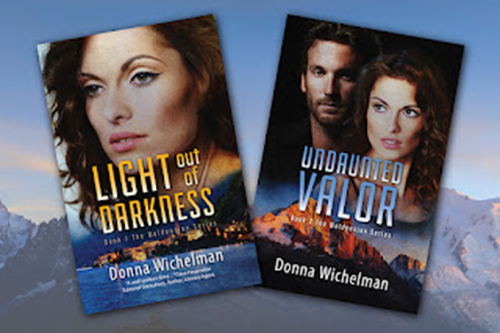
Donna worked as a communications professional before turning to full-time writing. Her short stories, essays, and articles have appeared in various inspirational publications. She also has two indie-published Christian contemporary suspense novels in her Waldensian Series Light Out of Darkness and Undaunted Valor.


Weaving history and faith into stories of intrigue and redemption grew out of her love of history and English literature as a young adult while attending the United World College of the Atlantic--an international college in Wales, U.K. She loves to explore peoples and cultures of the world and enjoys developing plots that show how God's love abounds even in the profoundly difficult circumstances of our lives. Her stories reflect the hunger in all of us for love, forgiveness, and redemption in a world that often withholds second chances. You can find out more about Donna Wichelman at www.donnawichelman.com.


Friday, November 3, 2023

Château de Chenonceau - Inside Out, Part II


Welcome back! Grateful you returned to view additional rooms inside this beautiful castle. In case this is your first visit with Château de Chenonceau, you could read Part I. The post displays a brief history, the approach, main door, stairway, tile floors, the Gallery, second floor hall, and a bit about the interior.

Today we will peek inside some of the bedrooms, the well-appointed kitchen, and what was once a hospital with full apothecary. During WWI, the kitchens were outfitted to serve as a hospital as well as portions of the farm buildings.

The first bedroom open for discussion is Cesar of Vendôme’s - photo below at left. Caesar was the son of King HenriIV and Gabrielle d’Estrées, also uncle of Louis XIV. He owned Chenonceau beginning in 1624. Notice the visible joints on the ceiling. The tapestries date from the 17th century, while the furniture is from the Renaissance. 


Catherine de’ Medici became regent when King Henri II her husband died. She required his mistress, Diane de Poitiers to trade Chenonceau for Chaumont. Catherine proceeded to add a gallery, gardens, and outbuildings. The tile floor and bed in the photo above at right were from the Renaissance. Notice the carvings in the coffered ceiling. H is for Henri and C for Catherine. The painting on wood to the right of the bed is by Correggio. While the 16th century tapestry depicts proverbs and fables from The Life of Samson.

Louise of Lorraine was married to King Henri III. She retired to Chenonceau after he was assassinated. The royal protocol for mourning in 1589 was to dress in white. Incidentally, she was referred to as the White Queen. Her bedroom remains decorated for mourning and houses furniture is from the 1500s. Louise wanted the Capuchin nuns near her as she meditated and prayed. They stayed on the third floor until the 17th century. After, they returned to their convent.

Next on our tour are the kitchens. They are housed in the two huge bases of the castle, the piers in the River Cher. The pantry had several purposes. The staff used this for their dining area. It also holds the largest fireplace and a bread oven. Within the pantry you will find the butchery. Hooks and chopping block are still in place. Produce was stored in the larder. Imagine all the staff necessary to care for the inhabitants of a castle this size. Not to mention staff to maintain the structure. Quite an operation from top to bottom.


See the piers in photo below.


Fireplace and bread oven.


Staff dining within the pantry.                         Additional table in the larder.

 
Butcher block above. I never considered the origin of that term before. Bread oven at right.


Notice the bells? Here are the back stairs the staff used to trek to the upper floors and serve.


Hand pump and sink. There was also an additional larger pump. Spit at right.


Look at those pots! Also my writing research travel partner, Cindy Kay Stewart. 


I wondered if the rope at the window above was for raising produce and fish from the river boats into the kitchen. It would have been handy for sure.

The last part of Chenonceau to explore today is part of the outbuildings that functioned as a hospital in WWI. In the photo you can see an example of the beds and also the nurses who tended patients. Take a gander at the apothecary. I have been unable to ascertain if these are the original cannisters or reproductions. Whatever the case, they are stunning. What do you think?


This was an amazing visit. It is no wonder tourists flock to the area. If you are ever in the Loire Valley, stop by and peruse this stunning château. You will be thinking about it and those who traversed the floors and opened the doors long after you cross the river.

As a child, Rebecca loved to write. She nurtured this skill as an educator and later as an editor for an online magazine. Rebecca then joined the Cru Ministry - NBS2GO/Neighbor Bible Studies 2GO, at its inception. She serves as the YouVersion Content Creator, with over 100 Plans on the Bible.com app.

Rebecca lives near the mountains with her husband and a rescued dog named Ranger. If it were up to her, she would be traveling - right now. As a member of ACFW and FHLCW, Rebecca learns the craft of fiction while networking with a host of generous writers. She is working on her first fiction novel. This story unfolds from the 1830s in Northern Georgia.

Connect with Rebecca: Facebook Goodreads Instagram Pinterest X


Wednesday, October 4, 2023

How Carcasonne the Game is Like Real-Life Medieval History

 By Donna Wichelman

You may have heard of or have played the Rio Grand Game, Carcassonne, a Spiel des Jahres (Game of the Year) in 2001. Our family owns the game and has played it often. In Carcassonne, players develop Medieval towns and the land around them, adding roads, fields, and cloisters around the larger fortified town of Carcassonne. They also position thieves, farmers, knights, and monks to control and score points. 


While the game can keep you occupied with fun for hours, did you know that Carcassonne is an actual place in southern France about eighty kilometers (fifty miles) east of Toulouse? Indeed, Carcassonne is considered an outstanding example of a fortified Medieval city and a UNESCO World Heritage site. Known as the largest city in Europe with its walls still intact, Carcassonne’s massive defenses encircle the enormous Château Comtal (Count’s Castle), streets and buildings, and an impressive Gothic cathedral.

Carcassonne has existed as a fortified hill town called Carsac—a Celtic name—since the sixth century B.C. on a trade route between the Mediterranean Sea and the Atlantic Ocean. The Romans recognized its strategic position around 100 B.C. and fortified the town even further, establishing it as an outpost or colony.

The lower defensive wall of Carcassonne was built during Gallo-Roman times. But by 462 A.D., Rome ceded Carcassonne to the Visigoth king Theodoric II. Theodoric added more fortifications and began the forerunner to the cathedral that now stands as the Basilica Saint Nazaire. Over the following centuries, several groups conquered and ruled Carcassonne, including the Franks, the Muslims, and the Berbers. I cannot help but compare the rivalry of the game my family plays to the real-life family factions and violent clashes in medieval history.

In 1067, Raimond-Bernard Trencavel, viscount of Albi and Nimes, became the landholder. The succeeding generations allied at different times with the counts of Barcelona and Toulouse and built the Château Comtal (Count’s Castle) and the Basilica of Saints Nazarius and Celsus. Pope Urban II blessed the foundation stones of the basilica in 1096. 


Then, in the eleventh century, Carcassonne became front and center in a doctrinal dispute between the Catholic Church and the heretical Christian sect called the Cathars, who made the southern France region of Languedoc their home. The differences between the Catholic Church and the Cathars would lead to the Albigenesian Crusades two centuries later.

The Cathars were dualists. Their gnostic beliefs stated that two opposing deities existed—one benevolent and one malevolent. They considered the good deity to be the god of the New Testament and the creator of the spiritual world. The evil deity, the god of the Old Testament, created the physical world and was called Rex Mundi (‘King of the World’) or Satan. The cosmic battle between these two deities explained the existence of good and evil.

Cathars believed that since the physical body was sinful, they had to free themselves of it, renouncing the temporal world and denying themselves physical pleasures. Purifying the body could only be achieved by fasting, purging, and abstaining from sexual intercourse—that only separation from the world would prevent human spirits from being condemned to an eternity of reincarnated earthly bodies surrounded by sin.

According to Cathar doctrine, Jesus was not God but a fallen angel who took on human form as an illusion. He could not have atoned for sin in a resurrected body, because he didn’t have a physical body to resurrect. Nor could Jesus have died on the cross because such a torture device in the physical world was evil.

The Catholic Church considered Cathar doctrine antithetical to theirs. The Church held there was only one omnipotent, all-sovereign God, who created both physical and spiritual realms. Satan was not a god but a fallen angel who tempted humans to sin. The only way one’s sins could be erased was if God, through Jesus Christ the Messiah, having made atonement on the cross, paid the price for our sins. His physical body had resurrected from the grave, and those who believed in him could know for certain that we would also live in eternity in the presence of God.


Good vs. Evil: Compliments of Pixabay

For nearly two centuries, the Catholic Church had tried to peaceably convert the Cathars by denouncing their heretical theology. While Raymond Roger de Trencavel was not a Cathar, he tolerated them. But Pope Innocent III was not so generous.

In August 1209, Abbot Arnaud Amalric led the crusade on the order of Pope Innocent III to forcibly make citizens surrender. Viscount Raymond-Roger de Trencavel was imprisoned and tried to negotiate his release. But three months later, he died under mysterious circumstances. The people of Carcassonne were allowed to leave, but they could take nothing with them. Simon de Monfort, a mighty military leader in the crusade, was appointed the new viscount and later added more fortifications. The crusades against the Cathars continued over the next century and a half.

Medieval Knight: Compliments of Pixabay

Trencavel’s son hoped to reacquire Carcassonne in 1240, but the city came under the rule of France in 1247, becoming a border town between France and Aragon. In the seventeenth century, the Treaty of the Pyrenees brought the border province of Roussillon under French rule, and Carcassonne’s military significance waned. Its fortifications were abandoned, and the city became an economic center for the woolen industry.

During Napolean Bonaparte’s time, Carcassonne fell into disrepair. But in 1849, the writer Prosper Mérimée led a campaign to preserve the fortress as a historical monument, and in 1853, the architect Eugène Viollet-le-Duc, already in the process of restoring the Basilica of Saints Nazarius and Celsus, was commissioned to renovate the city. Work continued throughout the following years, and upon Viollet-el-Duc’s death in 1879, his pupil Paul Boeswillwald continued the restoration.

Finally in 1997, UNESCO added Carcassonne to its list of World Heritage sites because of its “exceptional preservation and restoration.” Today, Carcassonne thrives on tourism and the winemaking industry for its economic success instead of the clashes and wealth of kings and kingdoms. Yet, it will always be for me that place made up of fantasies and historical fiction in the city name of a popular game called Carcassonne.

Donna worked as a communications professional before turning to full-time writing. Her short stories, essays, and articles have appeared in various inspirational publications, and she has two indie-published Christian contemporary suspense novels in her Waldensian Series, Light Out of Darkness  and Undaunted Valor.  

Weaving history and faith into stories of intrigue and redemption grew out of her love of history and English literature as a young adult while attending the United World College of the Atlantic--an international college in Wales, U.K. She loves to explore peoples and cultures of the world and enjoys developing plots that show how God's love abounds even in the profoundly difficult circumstances of our lives. Her stories reflect the hunger in all of us for love, forgiveness, and redemption in a world that often withholds second chances.

You can find out more about Donna Wichelman at www.donnawichelman.com.