

 |
| WikiImages |
However, it is the often-overlooked Elizabeth Cady Stanton who was the impetus behind the 1848 Seneca Fall Convention that was created for the singular purpose of addressing women’s rights. Additionally, Stanton was the primary author of the Declaration of Sentiments signed at the event. At first a point of contention, the concept of giving women the right to vote soon became the central tenet of the women’s movement.
On November 12, 1815, Elizabeth Cady was born into a well-to-do family, the seventh of eleven children. Her father was thought to be one of the richest landowners in New York where he eventually became a justice in the Supreme Court. One site indicates that the family was wealthy enough to employ twelve servants.
Unusual for the times, she received an extensive education, attending Johnstown Academy until she was fifteen years old. Records indicate she took advanced classes in math and languages, later winning second prize in the school’s Greek competition. She is also said to have become a skilled debater by this time (a skill used extensively after she took up the cause of suffrage).
The turning point for her interest in women’s rights perhaps came after the death of her last surviving brother. When she attempted to comfort her parents over the loss, her father supposedly said, “Oh my daughter, I wish you were a boy.”
Elizabeth finally married the thirty-five-year-old Henry Brewster Stanton at the age of twenty-five.
 |
| WikiImages |
Two weeks after the Seneca Falls Convention, she traveled to Rochester for a similar event. When she wasn’t traveling, she spent hours researching and writing speeches, pamphlets, and petitions. It is said that Susan B. Anthony would watch Elizabeth’s children so she’d have time to write. In addition to suffrage, other causes of importance to Elizabeth were a woman’s right to divorce, the ability to remove herself from an “unhealthy marriage,” temperance, and the abolition of slavery.
When one reads some of what Elizabeth wrote, it becomes apparent that she felt suffrage was appropriate for certain women (white, educated, and privileged), and it would be this philosophy that became a bone of contention between Elizabeth and others. In 1869, she and Susan B. Anthony formed the National Woman Suffrage Association in response to the founding of the American Woman Suffrage Association by Lucy Stone, Julia Ward Howe, and others.

The two organizations were often at odds, but both moved women’s suffrage forward in their own way. For the rest of her life, Elizabeth continued to travel as a lecturer and publish pamphlets and books including a multi-volume set of The History of Women’s Suffrage. In 1898, she published her autobiography Eighty Years and More. She passed away on October 26, 1902, eighteen years before the passage of the amendment for which she so vehemently fought.
Have you ever heard of Elizabeth Cady Stanton?
PLEASE VISIT THE BLOG TO COMMENT ON THIS POST
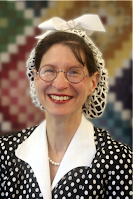 Linda Shenton Matchett writes about ordinary people who did extraordinary things in days gone by. A volunteer docent and archivist for the Wright Museum of WWII, Linda is a former trustee for her local public library. She is a native of Baltimore, Maryland and was born a stone’s throw from Fort McHenry (of Star Spangled Banner fame). Linda has lived in historic places all her life, and is now located in central New Hampshire where her favorite activities include exploring historic sites and immersing herself in the imaginary worlds created by other authors. Learn more about Linda and her books at http://www.LindaShentonMatchett.com
___________________________
Maeve’s Pledge (Coming March 21, 2023)
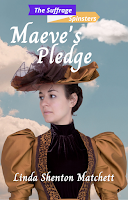 Pledges can’t be broken, can they?
Finally out from under her father’s tyrannical thumb, Maeve Wycliffe can live life on her terms. So what if everyone sees her as a spinster to be pitied. She’ll funnel her energies into what matters most: helping the less fortunate and getting women the right to vote. When she’s forced to team up with the local newspaper editor to further the cause, will her pledge to remain single get cropped?
Widower Gus Deighton sees no reason to tempt fate that he can find happiness a second time around. Well past his prime, who would want him anyway? He’ll continue to run his newspaper and cover Philadelphia’s upcoming centennial celebration. But when the local women’s suffrage group agrees that the wealthy, attractive, and very single Maeve Wycliffe act as their liaison, he finds it difficult to remain objective.
Maeve’s Pledge is part of the multi-author series Suffrage Spinsters but can be read as a standalone story. Grab your copy today and curl up with some history, hope, and happily ever after.

Finally out from under her father’s tyrannical thumb, Maeve Wycliffe can live life on her terms. So what if everyone sees her as a spinster to be pitied. She’ll funnel her energies into what matters most: helping the less fortunate and getting women the right to vote. When she’s forced to team up with the local newspaper editor to further the cause, will her pledge to remain single get cropped?
Widower Gus Deighton sees no reason to tempt fate that he can find happiness a second time around. Well past his prime, who would want him anyway? He’ll continue to run his newspaper and cover Philadelphia’s upcoming centennial celebration. But when the local women’s suffrage group agrees that the wealthy, attractive, and very single Maeve Wycliffe act as their liaison, he finds it difficult to remain objective.
Maeve’s Pledge is part of the multi-author series Suffrage Spinsters but can be read as a standalone story. Grab your copy today and curl up with some history, hope, and happily ever after.
Pre-order Link: https://amzn.to/3Ehqbwh


