Showing posts with label Christmas eve. Show all posts

Wednesday, December 25, 2013

General Robert E Lee and Santa Claus


Merry Christmas, everyone! I hope you all are having a wonderful day with family and friends. Thank you for taking a few minutes to share with me and the CFHS bloggers.


I recently came across an interesting Christmas-y story about General Robert E Lee. I am not sure the story is true, but I found it interesting, so I thought I would share it with you. The story was written about by Louise Clack in her 1867 book titled General Lee and Santa Claus: Mrs. Louise Clack’s Christmas Gift to Her Little Southern Friends.

As the story goes, sometime after the end of the Civil War, three young southern girls were confused as to why no Southern children received toys at Christmas during the war years. Their aunt suggested that the reason was because General Lee would not allow Santa to cross the lines into territory held by the South. The inquisitive girls took it upon themselves to write General Lee and find out if, in fact, this was the case. They greased the wheels by complimenting Lee, saying he was the “goodest man that ever lived” and that he “always spoke the truth.” Their letter continued as follows:

“Please tell us whether Santa Claus loves the little rebel children, for we think he don't; because he did not come to see us for four Christmas Eves. Auntie thinks you would not let him cross the lines, and we don't know how to find out unless we write and ask you. We all love you dearly, and we want to send you something; but we have not anything nice enough; we lost all our toys in the war. Birdie wants to send you one of our white kittens—the one with black ears; but Auntie thinks maybe you don't like kittens. We say little prayers for you every night, dear General Lee, and ask God to make you ever so happy.”

They signed the letter with “Your little friends, Lutie, Birdie, and Minnie.”

According to Mrs. Clack, General Lee wrote the little girls back, thanking them for their prayers, and explaining to them what happened to their toys. His letter stated the following:

“The first Christmas Eve of the war I was walking up and down in the camp ground, when I thought I heard a singular noise above my head; and on looking to find out from whence it came, I saw the queerest, funniest-looking little old fellow riding along in a sleigh through the air. On closer inspection, he proved to be Santa Claus.

Halt! Halt!, I said; but at this the funny fellow laughed, and did not seem inclined to obey, so again I cried Halt!. And he drove down to my side with a sleigh full of toys. I was very sorry for him when I saw the disappointed expression of his face when I told him he could go no further South; and when he exclaimed, Oh, what will my little Southern children do! I felt more sorry, for I love little children to be happy, and especially at Christmas. But of one thing I was certain—I knew my little friends would prefer me to do my duty, rather than have all the toys in the world; so I said: Santa Claus, take every one of the toys you have back as far as Baltimore, sell them, and with the money you get buy medicines, bandages, ointments, and delicacies for our sick and wounded men; do it and do it quickly—it will be all right with the children.”

Lee continued his letter, stating that Santa saluted, drove away, and returned before dawn with not only the requested supplies, but much more for the sick and wounded men, and that Santa did this every Christmas Eve during the war. Lee closed his letter by inviting the three girls to write him again and signed off with, “Your true friend, General Robert E. Lee.”

I have no proof that these letters were ever truly written or exchanged. Whether they were real or simply a work of Mrs. Clack’s imagination, I thought they gave an interesting perspective on that period in our nation's history. I hope you enjoyed the story as much as I did.

© Jenny Rollo
And I pray you all will remember the true meaning of Christmas, as detailed in the Bible in Luke Chapter 2. It is my family’s long-standing tradition to read the story of Christ’s birth on Christmas morning and consider the greatest gift we’ve ever been given—a baby in a manger, who would grow into the Savior, crucified to pay the price for our sin, in order that we can have relationship with God.

“Glory to God in the highest, and on earth peace, goodwill toward men!” (Luke 2:14 NKJV)

Jennifer Uhlarik discovered the western genre as a pre-teen, when she swiped the only “horse” book she found on her older brother’s bookshelf. A new love was born. Across the next ten years, she devoured Louis L’Amour westerns and fell in love with the genre. In college at the University of Tampa, she began penning her own story of the Old West. Armed with a B.A. in writing, she has won the 2012 CWOW Phoenix Rattler, 2012 ACFW First Impressions, and 2013 FCWC contests, all in the historical category. She is also the winner of the 2013 Central Florida ACFW chapter's "Prompt Response" contest. In addition to writing, she has held jobs as a private business owner, a schoolteacher, a marketing director, and her favorite--full-time homemaker. Jennifer is active in American Christian Fiction Writers and lifetime member of the Florida Writers Association. She lives near Tampa, Florida, with her husband, teenaged son, and four fur children.

Thursday, December 19, 2013

CHRISTMAS IN GERMAN TEXAS


by Laurie Kingery

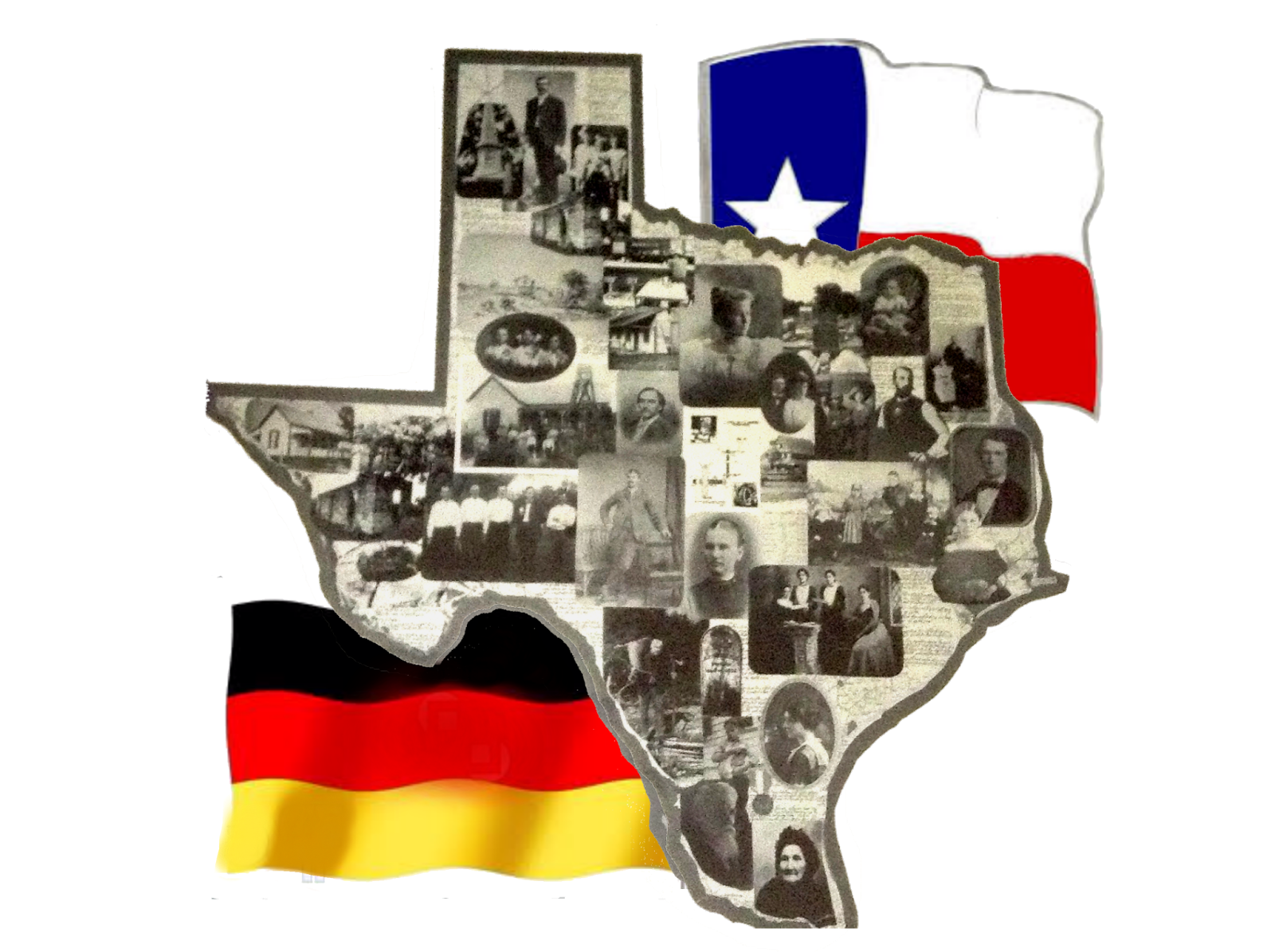
Since it's getting very close to Christmas and the stories I write usually take place in the Hill Country, and since a large part of my heritage is German, I thought I'd talk about how the Germans who colonized central Texas affected Christmas customs there. And if you stick with me to the end and make a comment, you'll be entered in a drawing for my latest book HILL COUNTRY CATTLEMAN, since last month's winner never claimed her prize….:/


Germans first came to Texas in 1831, when Texas belonged to Mexico, but the movement really gained momentum in the 1840's, when the Adelsverein, whose longer name translated to the "Society for Protection of German Immigrants in Texas" assisted Germans to move to this promising land. In 1848 there was a revolution to unify Germany, and many of the German activists ended up in rocky, hilly central Texas and founded such towns as New Braunfels and Fredericksburg. They brought their language with them, which gradually evolved into a dialect known as Texasdeutsch, which was widely spoken in the area until World I made all things German rather suspect.


Arguably no other nation had as much effect on how we celebrate Christmas as did Germany. From them we get the Christmas tree, which was probably proceeded by decorating fir trees in the wild and the Christmas pyramid such as the one pictured here in Fredericksburg. John O. Meusebach, the head of the Fredericksburg settlement, brought the Christmas tree to Texas even before Queen Victoria popularized it in England. From Germany we also get the custom of the Advent wreath and Calendar, and many of our beloved Christmas carols such as "Silent Night." Germans enjoyed putting together Krippenspiel or Nativity scenes, and holding Christmas markets, such as are still held in Germany today and in Fredericksburg on Thanksgiving weekend.

In German, Christmas is known as Weihnacten, and the Christmas tree the Weichnactsbaum.  Christmas Eve, or Heiligabend,  was really thought of as the holiday. The tree was often decorated while the children were in church. After attending church and before or after a simple meal, a bell was rung to signify the departure of the gift-giver, who was deemed to be the Christ child, or Christkind, by
Germans of southern, mostly Catholic origin, or the Wehnactsmann or St. Nicholas by northern, mostly Protestant Germans. The  Bescherung or gift exchange time was then held, and the children were delighted by gifts of dolls and balls, oranges and chocolates. A much more elaborate meal was held on what we think of as Christmas Day, and the Christmas tree could then be plundered of its tied-on candy and cookies by the eager children.The German-Americans also boasted the first artificial trees by dyeing turkey feathers green and wiring them together. :)


What country or countries make up your ancestral heritage? How have the customs of that land affected the way you celebrate Christmas? What dishes do you make that originated in other countries, such as German Stollen?


As I said, I am giving away a copy of my latest Love Inspired Historical, HILL COUNTRY CATTLEMAN to one lucky commenter. Please check your email and the Christian Fiction Historical Society blog's sidebar in a day or two to see if you won. As always, if you've already read this book, you can check my book list to see which other of my books you want.

                             Blessings, Laurie Kingery


Sunday, December 1, 2013

Papa Noel and the Christmas Eve Bonfires: Celebrating Christmas on the Louisiana Bayou


by Kathleen Y'Barbo


In many respects, Christmas on the Louisiana bayou is like Christmas anywhere else. Families gather, carols are sung, and children are put to bed with the anticipation of gifts and celebration on Christmas morning. However, there are a few things that make a Cajun holiday special.

Papa Noel instead of Santa Claus
The jolly man most of us recognize as Santa Claus is not who the Acadians of South Louisiana look to as the deliverer of gifts on Christmas Eve. Papa Noel, the Cajun version of Saint Nick, makes his rounds in a pirogue--a shallow Louisiana boat--pulled by eight alligators. In some versions of the story, Papa Noel--or Pere Noel as the Cajuns say--is dressed in muskrat hides instead of his traditional red garb as he pilots his boat. Always his sack of toys holds special gifts for good boys and girls, and sometimes he offers up lumps of coal for those who were not so nice.

Bonfires on the levees on Christmas Eve
How does Papa Noel find his way to the homes of those children who live in the deepest recesses of the bayou? Long ago, the natives of this part of the country began building bonfires on the levees, teepee-shaped log structures that, when lit, could guide the way for anyone seeking to deposit gifts under Christmas trees. Although legend has it that these bonfires may have been used to light the parishioners' way to Christmas Eve services, the idea of a nautical landing strip for the fabled Papa Noel brings a smile to children's faces.

Christmas eve bonfires are not a new idea. Many Europeans, including those of German and French descent, have traditions that include these fiery towers. That Louisiana is a melting pot of these cultures--and more--makes it likely that settlers from these areas brought this aspect of the celebration with them.

The Mississippi River town of Lutcher, Louisiana holds a Christmas bonfire celebration every Christmas eve. At 7pm sharp on December 24, over one hundred 30-foot tall bonfires are lit along the river to guide Papa Noel into the town. In the rare event of rain, the lighting of the bonfires is moved to New Years Eve. In St. James parish, the Festival of the Bonfires offers another opportunity to see this Louisiana tradition in action. All down the river road, plantations such as Oak Alley and Madewood hold similar celebrations.

Wherever you go in South Louisiana, you will find a Cajun Christmas is very much like yours and mine. And very different at the same time!

Joyeaux Noel, Y'all!

_______________________________________________


KATHLEEN Y'BARBO is the bestselling author of over 50 books with more than one million copies of her books in print in the United States and abroad. A Romantic Times magazine Top Pick, Reviewer's Choice nominee, and Career Achievement nominee, Kathleen has been a finalist in American Christian Fiction Writer's Carol Awards and Romance Writers of America's RITA competition.

She and her hero in combat boots husband make their home north of the Red River. To find out more about Kathleen's books or to connect with her on Facebook or Twitter, check out her website at www.kathleenybarbo.comwww.kathleenybarbo.com.