Showing posts with label Oregon coast. Show all posts

Sunday, June 1, 2014

The Daddy Train Comes to Gearhart, Oregon

Gearhart, Oregon beach
Gearhart, OR beach
Janet Chester Bly

As waves rolled in, they watched an empty sea for ships on the horizon. Peace and quiet faded to long days of tense waiting for supplies that never came. The 1805-1806 Lewis and Clark Expedition now made plans to winter on the Oregon coast. In the spring, they tackled the long journey home by land.

One hundred years later, fiction character, Stuart Brannon, lingered nearby the same spot along Gearhart, Oregon beach. Lost in the mesmerizing waves as though he also expected his ship to appear, he pondered the end of the Old West and trying to cope with New West ways.

His friend, Lord Edwin Fletcher, remarked: “I’ll bet you wish you were back there with them.”

Brannon, an old Arizona rancher of fifty-eight, out of his element wearing suit, tie, hat and boots, had to agree. "I'm not ready for auto cars and telephones and moving pictures." He raised a leather case. "I'm not even sure about this new-fangled take-down Winchester rifle."

Coastal towns such as Gearhart, Oregon owed its existence and well-being to adventurers like Lewis and
Gearhart, OR early 1900s family vacation
Family finds leisure at Gearhart
Clark, and fighters for law and justice such as Brannon, as well as good times for Portland citizens who spent a lot of cash there at the close of the nineteenth century.

State sponsored tourism followed this new wealth. Portland celebrated the 1905 centennial of Lewis and Clark arriving at the Pacific, the end of their cross-country journey.  

All this cash made a broader sponsorship of people willing to invest in the interesting idea of leisure time. The Oregon coast provided many places of leisure for sale.

Just about all resorts at the turn of the century were destination resorts, so a hotel was an important necessity. The first hotel in Gearhart was built in 1890 and stood just off the town's main streets.

A second hotel, far grander, rose about a mile away and closer to the ocean in 1910.  By 1915, both had burned to the ground. In 1923, a new hotel emerged. It was demolished in 1973 to make way for a concrete hulk for tourists Gearhart residents called Attica.

Gearhart, OR Daddy Train
The Daddy Train, Gearhart, OR
Many families spent the full summer in the early Gearhart days. Women and children stayed for weeks at a time and the men came back from Portland over the weekends. This novel new way of living was made possible by a world moving fast enough to make more people mobile. For five bucks and over five hours, a train arrived at the Gearhart Park Station, in the center of a recent clear cut. It got nicknamed the Daddy Train.

A boardwalk near the station led to the hotels, the beach, the boarding houses, the campgrounds or to the homes along Ocean Avenue, known as Gin Ridge. In the 1920s, there were about 120 permanent residents, swelling to 1000 or so during the summer.

Vacationers and residents then and now take on the challenge of clamming for the delicious razor clam. Clickhttp://www.blybooks.com/2011/12/bear-steak-clam-chowder/
Gearhart, Oregon Razor Clam Chowder
Razor Clam Chowder
here for a razor clam recipe:

The Gearhart Golf Course is a true links course that rolls and dips among mounds of grass-covered dunes. A breezy adventure, the ocean remains out of sight, although it can be heard and felt. Throughout the course, narrow ridges and other topographical features carom balls every which way.

Gearhart and nearby towns are perfect for beach walks and gallery browsing. A scenic stretch of coast tucked between crashing surf and Pacific forests, that portrays a number of Lewis and Clark historic sites.

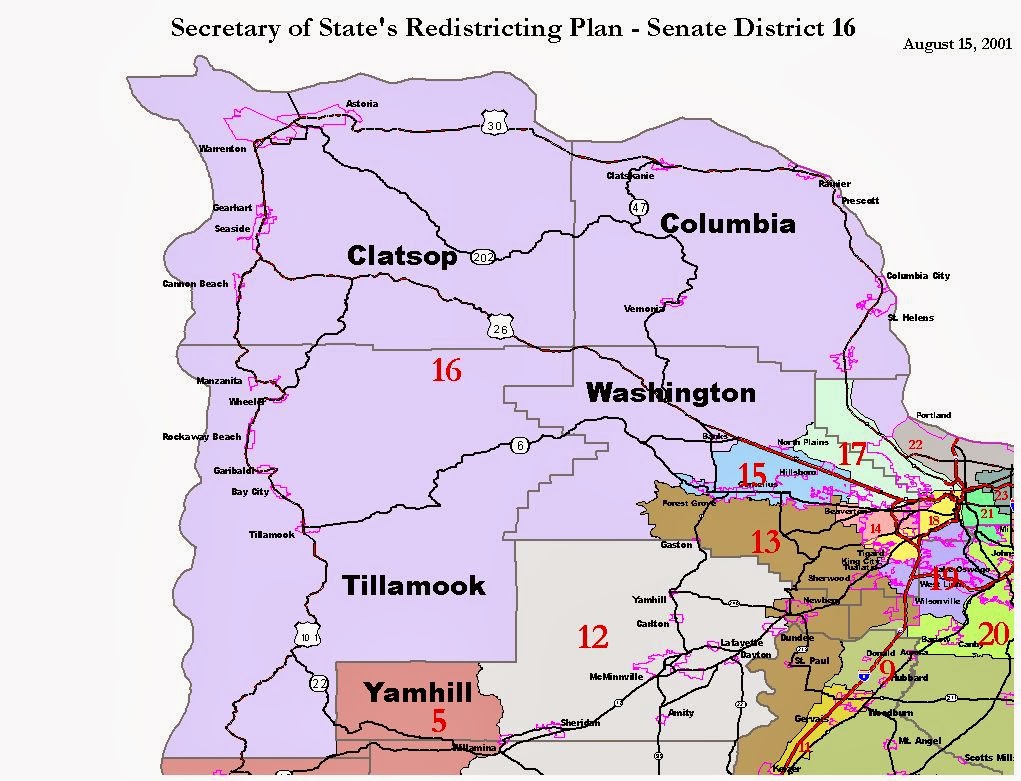
This community is located in Clatsop County, south of Astoria, between Warrenton and Seaside along Highway 101. Gearhart is also positioned near the Lewis & Clark River while overlooking the Pacific Ocean.
~~~~~~~~~~~~~~~~~~~~~

Janet Chester Bly
 Janet Chester Bly is the widow of Christy Award winning western author Stephen Bly. She has written and co-written with Stephen thirty-one fiction and nonfiction books, including Stuart Brannon's Final Shot. Janet and her three sons finished this last novel of Stephen's for him, which was a Selah Award Finalist. Janet is working on a new novel series and nonfiction releases.
Click here for the story of the Bly family writing project:  http://www.blybooks.com/2012/03/coping-with-loss/

For more info about Janet and her books, click: http://www.blybooks.com/

Sign up for Bly Books Almost Monthly Newsletter for devotionals and book news: http://bit.ly/1i82Kah ... random free book drawing each month for new subscribers.

~~~~~~~~~~~~~

Stuart Brannon's Final Shot
Stephen Bly with Janet Chester Bly, Russell Bly, Michael Bly, and Aaron Bly

In 1905, two orphans flee from Oregon's Tillamook Head. One is branded a hero. Will they tell the truth and
Stuart Brannon's Final Shot
risk the wrath of a dangerous man?

Meanwhile, legendary lawman Stuart Brannon searches for a missing U.S. Marshal at the request of President Teddy Roosevelt. That means leaving his beloved Arizona Territory to attend the Lewis and Clark Centennial Exposition in Portland. He also grapples with the game of golf on behalf of a Gearhart, Oregon celebrity tournament sponsored by his friend, Lady Harriet Reed-Fletcher.

Find Stuart Brannon's Final Shot here: http://www.blybooks.com/product_category/historical-western-novels/

~~~~~~~~~~~~~

Thursday, May 1, 2014

National Speaker, Small Town Heroine: Narcissa Kinney

Gearhart, Oregon's Narcissa Kinney
Narcissa Kinney - younger years
 Narcissa Kinney by Janet Chester Bly

One of Gearhart, Oregon's most prominent citizens in the nineteenth century was Narcissa Kinney. A devoted Christian, an active member and remarkable national speaker for the Woman's Christian Temperance Union, she insisted the Gearhart City Council proclaim the city a 'dry town.' She had a great heart affected deeply by the wrongs inflicted upon defenseless women and children by the liquor traffic. So powerful was her influence, no liquor could be sold in Gearhart for more than seventy years after her death.

She twice visited the Pacific coast as an orator for temperance and did her most effective work in Oregon and Washington. During these tours, she met Marshall J. Kinney, at that time the proprietor of several of the largest fish canneries on the Columbia River. In 1888 she left the lecture tour to marry Mr. Kinney.

Narcissa Kinney gravestone of Gearhart, Oregon
Chautauqua Stamp
Born in 1851 (family members say the date on her stone is wrong) and died in 1901, she passed away a few years before the Gearhart story begins in the Stephen Bly novel Stuart Brannon's Final Shot. However, her influence is felt on most every page. She graduated from the State Normal School of Pennsylvania with high honors and had already distinguished herself as a writer and speaker. She showed such marked ability as a teacher she was elected principal of the training school in Edinboro, Pennsylvania.

In Gearhart, she did more than oppose liquor. She sponsored a Chautauqua, part of the cultural movement of the times. The Chautauqua events brought a broad swath of U.S. intellectual and aesthetic entertainment to the Oregon coast. Narcissa organized 200-acres of prime forest land to be set aside for Gearhart Park. This included an auditorium with arched entrance, belfry, double hip roof and clerestorey, to be used for traveling circuit speakers and amusements of all sorts.


Gearhart, Oregon aerial view
Narcissa was an early day conservationist. She made sure the development scheme for the Chautauqua protected the Ridge Path, a principal byway grande promenade through the area's sand dune meadows, as well as many other natural features.

Because of Narcissa Kinney, Gearhart became the first planned coastal resort community in the state of Oregon.

Gearhart residents and visitors enjoyed classic plays and Broadway hits, opera stars and glee clubs, as well as bands such as John Philip Sousa’s. Fiery orators and activists, crusaders and preachers took advantage of this forum for their diverse messages.
Narcissa Kinney - later years

More than 400 other cities across the country sponsored these same events. President Theodore Roosevelt called them, “the most American thing in America.” This movement thrived in the day before movie theatres and TVs.

Narcissa inspired the fictional Lady Harriet Reed-Fletcher to sponsor her own benevolence project in the city of Gearhart. Lady Harriet and Narcissa compare in strong will, leadership and influence on the men in their lives to get involved in their causes.

Marshall Kinney
Narcissa's husband, Marshall, founded the local links golf course, one of the oldest in the West. I'm sure Narcissa would have been delighted to know Lady Reed-Fletcher sponsored a celebrity tournament at the Gearhart Golf Course in 1905 to raise money for the Willamette Orphan Farm.
~~~~~~~~~~~~~

Janet Chester Bly has authored 31 nonfiction and fiction books, 19 she co-authored with Christy Award winning author Stephen Bly. Titles include The Hidden West Series, The Carson City Chronicles, Hope Lives Here, and The Heart of a Runaway. She resides at 4200 ft. elev. on the Idaho Nez Perce Indian Reservation. She and her 3 married sons, Russell, Michael and Aaron, finished Stephen Bly's last novel, Stuart Brannon's Final Shot. For more about the Blys check http://www.BlyBooks.com
~~~~~~~~~~~~~~~~~~~~~~~

Most of Stuart Brannon's Final Shot happens in or near Gearhart, Oregon in 1905. Find the book here:  http://www.blybooks.com/product_category/historical-western-novels/
Stuart Brannon's Final Shot by Stephen Bly
Stuart Brannon's Final Shot
by Stephen Bly
with Janet, Russell, Michael & Aaron Bly

Saturday, February 1, 2014

A Most Important Journey

Oregon Map Clatsop County
Oregon Map

Oregon Coast 1905

Janet Chester Bly 

When my three sons and I determined to finish the novel Stuart Brannon's Final Shot my late husband Stephen Bly began, we had quite a challenge. Could a committee create fiction? We had the passion and four months to find out.

That included research, crafting the rest of the story, and turning in the manuscript of 77,000 words.

So we divvied out the 1905 research. 

The Places

I toured the Oregon coast, from Seaside to Astoria to study the sights, smells and sounds and historical details. The law enforcement. The layout of the town sites. The Salt Works Lewis & Clark memorial. How to catch razor clams and the greens and fairways of the Gearhart golf course.

I also learned all I could about gray whales, snakes and wild horses. Even discovered the rare presence of a cougar around 1905 through old newspaper accounts.

Lewis & Clark
I ventured to Fort Clatsop where explorers Meriwether Lewis and William Clark wintered in 1805 and scanned their journals. Found transcripts in a museum of an interview with a family member who had lived on that site. I investigated the Portland Lewis and Clark Centennial celebration of this event in 1905.

Each of the sons probed at least one other topic. Choices included Europe and assassinations. England's weddings and royalty. Goldfield, Nevada with its mining and labor unions. Panama and the canal project, with connections to France, Nicaragua and Colombia.

The controversy and intrigues of the Panama Canal project formed a large part of the plot.

“I’m going to make the dirt fly,” President Theodore Roosevelt proclaimed.
And he did.

It's alleged he supported a revolution that pressured support of that project when Congress balked. Then there was the war to win against malaria and yellow fever, as well as gold to be mined.

We learned once more that on-location research is vital to save making fatal research mistakes.

Two weeks before deadline, we learned we had to make a substitute for the island we'd chosen for a major scene. Any old island would do for us. But we discovered none existed off the Oregon coast. No islands anywhere, only rock outcroppings. After some time of panic, we considered the Tillamook Head promontory near Seaside, a late addition to our landscape scheme. I hiked it, studied the history, asked questions of local historians, and made the change.

The People

We settled on the Clatsop tribe for the Indian characters.

We gathered biographies on famous golfers and historical persons, such as Theodore Roosevelt, Wyatt Earp, Buffalo Bill Cody and W.C. Fields.

We needed to know about orphan farms and Roosevelt’s Rough Riders.

We also had to study horse behavior, to determine the hero's interaction with his out-of-control black stallion.

Gearhart pioneer Narcissa Kinney died before our story begins, but her presence permeates the city. For one thing, she made it a dry town, which it remained more than seventy years after her death.

Narcissa also brought culture in the form of a 200-acre Gearhart Park that included an auditorium for traveling circuit speakers and fiery orators, Broadway hits and bands such as John Philip Sousa's. Inspired by the Chautauqua movement, more than four hundred cities across the country sponsored these same events. President Theodore Roosevelt called them, “the most American thing in America.”

Narcissa’s husband, Marshall Kinney, instigated the links golf course on the north side of Gearhart. My husband loved playing on the grass-covered dunes so much he determined to set a story there. Gearhart Golf Links opened circa 1892 and ranks the second oldest course in the west.

Products and Inventions

Early 1900s auto horn
We found ads about cigars and cigarettes, clothing styles and golf equipment in old newspapers. We had to learn western genre basics like types of guns and knives, about flashlights and lawnmowers, telephones and walking sticks. 

In our study of trains, we uncovered railroad land controversies. We searched out transportation, such as motor cars and boats, bicycles and fire trucks. We wondered if 1905 autos had horns. Found out a few did.

The main scene begins on a train. The railroad opened up more tourists for the seacoast village of Gearhart, Oregon, tucked between crashing surf and Pacific forests.        

Culture and Events

We delved into Victorian era artwork and books, plays and music, crimes and diseases and also the politics of 1905. We studied the Spanish-American War, especially the U.S.S. Maine explosion in the Havana, Cuba harbor.
         
Creating a historical story begins with facts, the truth in fiction.

~~~~~~~~~~~~~~~~

Janet Chester Bly has authored 31 nonfiction and fiction books, 19 she co-authored with
Janet with sons: Aaron, Michael, Russell
Christy Award winning western author Stephen Bly. Titles include The Hidden West Series, The Carson City Chronicles, Hope Lives Here, and The Heart of a Runaway. Stuart Brannon's Final Shot was a Selah Award Finalist. She resides at 4200 ft. elev. on the Idaho Nez Perce Indian Reservation. Her 3 married sons, Russell, Michael and Aaron, live down the mountain in Lewiston with their families.

~~~~~~~~~~~~~~

 Stuart Brannon's Final Shot by Stephen Bly with Janet Chester Bly, Russell Bly, Michael Bly, 
Stuart Brannon's Final Shot
and Aaron Bly


Book blurb: 
Two orphans flee Tillamook Head. One of them is branded a hero. Dare they tell the truth and risk the wrath of a dangerous man? 
Meanwhile, ex-lawman Stuart Brannon searches for a missing U.S. Marshal at the request of Teddy Roosevelt. Who can deny the president of the U.S.? 
And his old friend Lady Harriet Reed-Fletcher convinces him to grapple to learn the game of golf on behalf of a celebrity charity tournament.