Showing posts with label Rural America. Show all posts

Tuesday, October 13, 2026

Keeping the Faith—and Keeping Cool: Church Before Air Conditioning

Imagine a July Sunday morning in a rural Kentucky church in the 1930s. Despite the heat, women wear their best Sunday dresses, while many of the men have put on white shirts, dark suits, and ties. Farmers who own no suit may have donned freshly pressed overalls and a plaid shirt.

Through the large, open windows, flies and an occasional bee buzz in and out. The preacher’s booming voice competes with the chirping of birds and the occasional creaking of a passing wagon. The still air inside seems hotter than outside, heavy with the scent of perfume and sweat.

And above it all comes another sound—the soft, steady flutter of dozens of cardboard fans moving back and forth throughout the congregation.

Miller Funeral Home in Ashland, KY,
sponsored this church fan depicting
Christ on the Mount of Olives.
By the late nineteenth century, advertising fans had become a familiar sight in American churches, and they remained common well into the twentieth century—especially in churches without electricity or air conditioning. A flat wooden handle was glued or stapled to printed cardboard, allowing the user to wave the fan to provide a cooling breeze. Three-panel folding fans with no handle were also produced.

Although Carrier Air Conditioning, founded in 1915, offered cooling mechanisms for industry, it wasn’t until the 1930s that window air conditioners became available—for a steep price. Many rural churches, especially in the South, did not have electricity available until decades later, and when they did, less expensive ceiling fans were the first choice to provide relief from the heat.

Some church fans with an advertisement on the back
were made in a three-panel folding style without
a wooden handle, like this one picturing
The Last Supper.

But the humble cardboard fans remain a vivid reminder of Sunday mornings before air conditioning changed the church-going experience.

Many featured religious artwork—Jesus, the Good Shepherd, praying hands, biblical scenes, flowers, or inspirational sayings. Others carried scenic or patriotic images.

The most interesting aspect was who paid for them. Fans offered inexpensive, useful advertising that could remain in the church for a long time. Funeral homes became especially associated with them, but banks, insurance agents, drugstores, grocery stores and other businesses advertised on them as well.

The religious picture faced the worshipper while the business advertisement appeared on the reverse. The arrangement could produce an amusing contrast. A worshipper might gaze at Jesus the Good Shepherd while the person in the pew behind stared at the name of a nearby funeral director.

This fan advertised a funeral
home in 
Chattanooga, TN.

During World War II, insurance companies and
banks often promoted War Bonds on the backs
of handheld church fans.

Today, those advertisements can be more than curiosities. Surviving fans may preserve the names, addresses, telephone numbers, and proprietors of funeral homes and other businesses that received little attention in newspapers or official records, especially in Black communities. A humble piece of cardboard intended to keep worshippers cool can therefore become a small historical document.

When I started looking for a fun memento to promote my historical novel, Moonshine River, I wanted something that might have been familiar to people living in my characters' world. A church fan seemed perfect, especially since one was used in a scene in the novel.
The fan I used to promote my novel was
reminiscent of church fans from the early
20th Century.

Do you remember seeing these fans in church or at other locations, or have you actually used one? And do you remember what was advertised on the back? I’d love to hear your stories.


Sources:

Fisk, Sammy, "OH032 Bobby Allen Oral History" (2025). Land Between the Lakes. 2. https://digitalcommons.murraystate.edu/oh-lbl/2

A time when hand fans cooled church-goers - Auction Finds

Holding on to Americana | Our State

Collection of church fans represents Southern hospitality

Air Conditioning History, Facts & Overview of Air Conditioners

Church Fans: Keeping It Cool Old School - WorthPoint

Curator's Corner - Preserving African American History and Material Culture: Church Fans


Multi-award-winning author Marie Wells Coutu finds beauty in surprising places, like undiscovered treasures, old houses, and gnarly trees. All three books in her Mended Vessels series, contemporary stories based on the lives of biblical women, have won awards in multiple contests. She is currently working on historical romances set in her native western Kentucky in the 1930s and ‘40s. Moonshine River, the first book in her Between the Rivers Legacy series, released in September 2026. Learn more and sign up for a free historical short story at www.MarieWellsCoutu.com.


She'll break the law to save her mother. He'll uphold it to save her soul.

After her father’s sudden death, Naomi Ross is left with an impossible choice: let her ailing mother go without desperately needed treatment—or take over the illegal whiskey business she never wanted.

Then Cullen Downs comes home.

Naomi has loved the preacher’s son since childhood, but Cullen is no longer the young man who left Golden Pond. Disgraced by his own mistakes, he’s returned determined to reclaim his faith and fight the liquor trade that nearly ruined his life.

That puts him squarely against the woman he can’t seem to stop loving.

With Prohibition crumbling and danger closing in from moonshiners, a corrupt lawman, and Chicago gangsters, Naomi’s desperate choices threaten more than her freedom. They could cost her Cullen—and the future she never dared believe could be hers.

In the rugged hills of Depression-era Kentucky, two people on opposite sides of the law must discover whether love can survive betrayal, whether good intentions can justify wrong choices, and whether God’s grace is big enough to redeem them both.





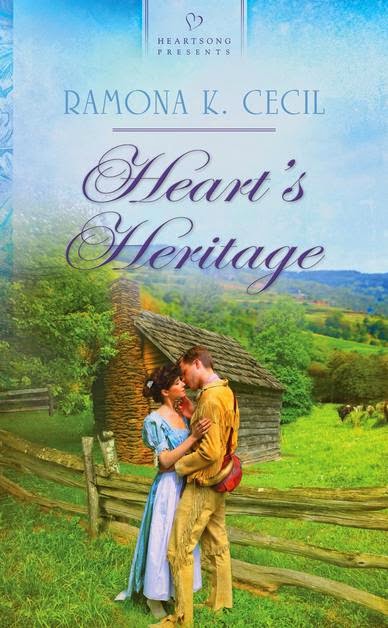
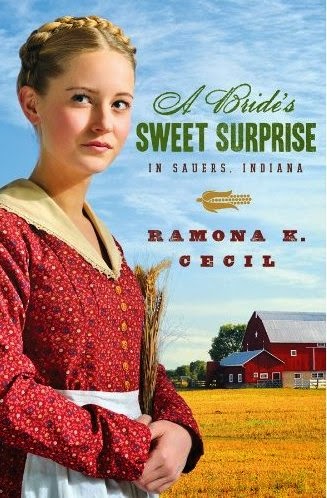


Sunday, October 5, 2014

Pioneer Amusements ~ Work Made Fun


by Ramona K. Cecil

As a student of my state’s history, I’ve learned that the life of an Indiana pioneer two hundred years ago was not easy. Just to stay fed, clothed, and relatively safe required back-breaking work from sunup until sundown. Many of the pioneers’ more arduous chores required multiple hands to execute, providing opportunities for these early Hoosier settlers to come together and turn the work into fun, social occasions. Indiana pioneers, like many others over North America, grabbed with both fists these opportunities to break up the monotony of their daily lives.


Butchering Day
Examples of such events could be found throughout the year in Hoosier frontier settlements. During the winter there were butcherings, where the community came together to help process the pork and beef supplies for the year.


In the spring there were sheep shearings, sugar boilings; when the sap of the sugar maple trees was collected to make syrup, and log rollings to clear cut timber from land to make room for a cabin or farmland.


Sheep Shearing
Sugar Boiling


Log Rolling


The summer ushered in the season for quilting bees, weddings, wheat threshings, and cabin and barn raisings.


Quilting Bee
Threshing


Barn Raising


Frontier Wedding


The autumn brought even more opportunities for work-parties beginning in September with bee hunts, where parties would venture out into the woods in search of hollow “bee trees” full of honey to harvest.

Bee Tree


Most often, these work-party events involved contests and were fashioned in a way as to encourage young people of marriageable age to mingle and hopefully for love to bloom.

 
Two such examples held in the fall of the year were apple parings and corn huskings.

 
The object of an apple paring was to prepare apples for drying; a method of preserving the fruit for use until the next apple harvest. Apples were peeled, quartered and cored, then strung on strings by passing a darning needle through the center of each apple quarter.
Apple Paring Party

Workers divided into teams, and the winning team was the one that finished the task quickest and most efficiently. During the paring, any girl who happened to get a hollow-cored apple was compelled to kiss a young man of the opposite team. In another game, girls would try to peel an apple with the paring in one long string. They would then throw the length of paring onto the floor. Whatever letter the paring resembled when it landed was thought to be the initial of her future husband’s name.


Corn Husking Party


Corn huskings were held in a barn with each man present choosing a
lady as a partner for the contest. During the husking, if a lady happened to find a red ear of corn she was entitled to a kiss from each gentleman present. If a man found a red ear, he got a kiss from every woman present.

 Apple parings and corn huskings, like nearly all of these pioneer work parties, ended with a supper and a dance.

 Many of these social get-togethers were still prevalent in rural Indiana communities well into the twentieth century. My own grandparents met at a log rolling a little over a hundred years ago.

 
Do you have a family story associated to one of these pioneer work-party social gatherings? I’d love to hear it!

~~~~~~~~~~~~~~~~~~~~~~~~

Ramona Cecil is a wife, mother, grandmother, freelance poet, and award-winning inspirational romance writer with eight published novels and novellas to her credit. Now empty nesters, she and her husband make their home in southern Indiana. A proud Hoosier, Ramona likes to set her stories in her home state. Visit her website at www.ramonakcecil.com to check out her latest books.