Showing posts with label switchboard operators. Show all posts

Saturday, January 28, 2023

Telephone Switchboards Through History – By Donna Schlachter with Giveaway

Switchboard Operators 1915 -- History Channel


Following the invention and then widespread use of telephones, one thing became quickly apparent—folks wanted to talk to more than one person on their newfangled invention. At the beginning, the telephone was much like the tin can-and-string contraption—two units connected by a single wire. You could call the person at the end of your wire, or they could call you.

In just about a year, The Holmes Burglar Alarm Company in Boston, Massachusetts, came up with the first central office and switchboard, serving as both a security office at night for banks and other businesses, as well as a telephone system.

The switchboard consisted of a desk-like piece of furniture where an operator set, plugging and unplugging calls and callers through a series of connections. At first, young men were hired, the thought being that since they worked well as telegraph operators. However, easily bored and sometimes with coarse language, they tended to get into trouble during slow times, sometimes ending up wrestling or causing a disturbance, other times wandering away from their station completely, leaving calls unanswered and unconnected. Thus, on September 1st, 1878, the Boston Telephone Dispatch hired Emma Nutt as the first woman operator.

Early switchboards in larger cities often spanned floor to ceiling to allow operators to reach all the lines in the exchanges. However, by the 1890s, divided switchboards were developed so teams served customers, working only the plugs in their section. Customers often knew their operator’s name, depending on what time they placed a call. At first, callers could ask for their party by name, but as populations with telephones increased, eventually the system assigned a unique number for each customer, which became known as their telephone number.

Eventually, callers would figure out they could call long distance, and so long-distance operators were employed to take the information of who was being called, would then make that call, then call back to connect the parties.

If you want to know more about how a switchboard actually operates, check out the article listed below from Wikipedia entitled “Telephone Switchboard”.

Switchboard operators were trained not only in the physical connection of calls, but also in switchboard etiquette. For example, there were rigid rules of dress. In the early days of the telephone, many parents were reluctant to give permission for their daughters to work at a telephone exchange, so the highest values of decorum, dress, and language were insisted upon. In particular, an operator could not be married, must be of high moral character, and no matter what the customer said, could only reply, “Thank you.” Long black dresses were the uniform, sometimes with a white blouse, and no jewelry visible. My character Juliette gets around this by wearing the string of pearls her late husband gave her on their wedding day underneath her shirtwaist, out of sight.

One note worth mentioning is that during the First World War, more than 200 female telephone operators facilitated communication between American, British, and French troops on the Western front, serving as operators and often also as translators. President Woodrow Wilson was so impressed that he changed his mind and dropped his objection to women’s suffrage in 1918, citing that partnering with women in war seemed to lead automatically to including them in voting rights.

With the coming of technology, however, telephone operators positions have decreased. By 1930, 235,000 operators worked in the US;, by 1940, less than 200,000. In 2021, only 5,000 workers were classified as telephone operators, with the number decreasing each year.


Giveaway: answer the following question to be entered into a random drawing for Juliette, Book 6 of the Switchboard Sisterhood. Please cleverly disguise your email address so the ‘bots don’t get you!


What is your funniest memory of using a telephone operator?


About Juliette:


A widow with her future planned out—and it doesn’t include marrying again. A physically scarred man resigned to remaining single. Can God work through a missing cat to bring them together?


Releases January 31st, but ebook is available for preorder here: https://www.amazon.com/dp/B0BJ66NX1Q

And you can check out the rest of the Series: https://www.amazon.com/dp/B0BNPJF8SJ
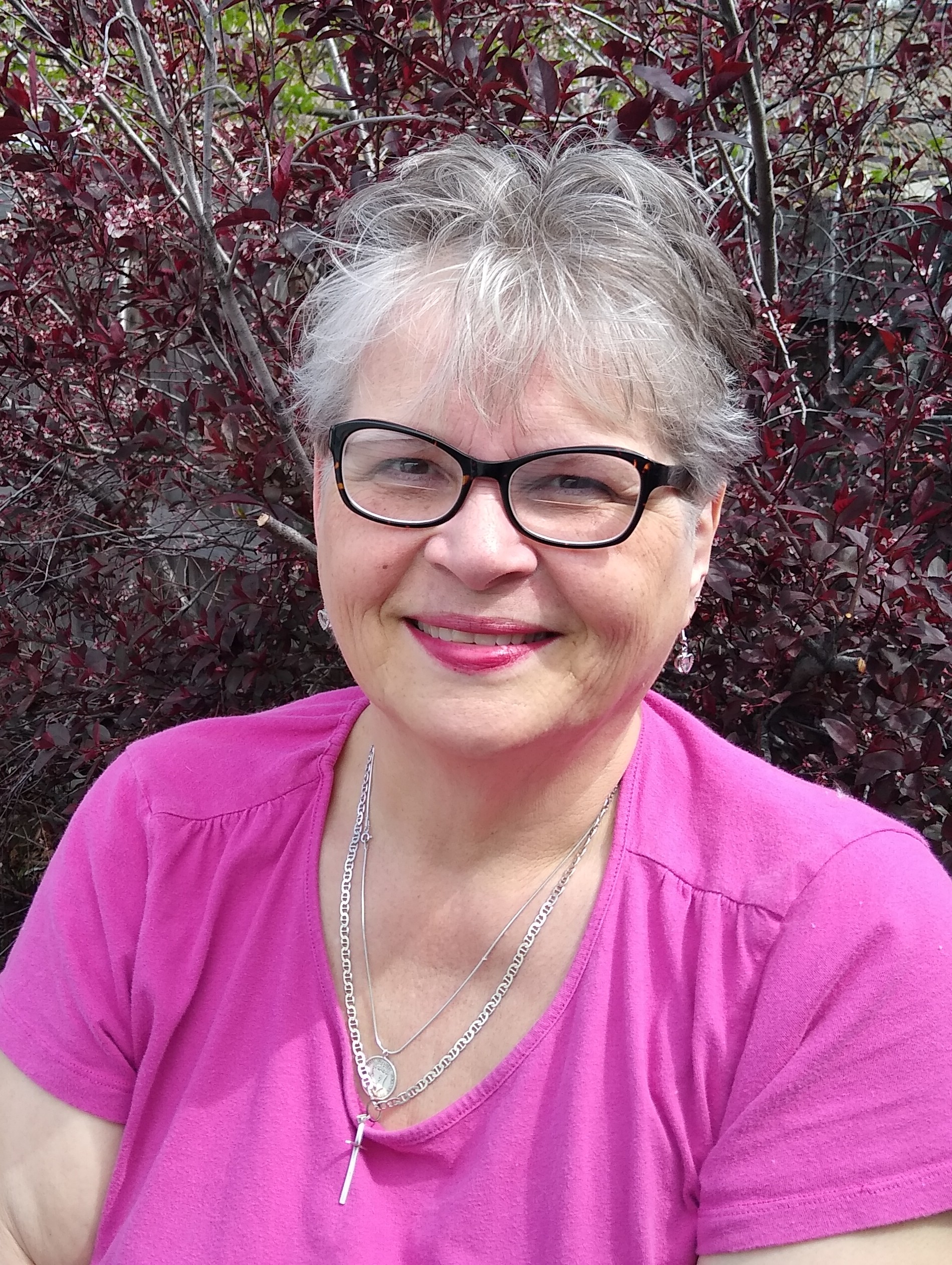


About Donna:

A hybrid author, Donna writes squeaky clean historical and contemporary suspense. She has been published more than 60 times in books; is a member of
several writers groups; facilitates a critique group; teaches writing classes; ghostwrites; edits; and judges in writing contests. She loves history and research, traveling extensively for both, and is an avid oil painter.

www.DonnaSchlachter.com Stay connected so you learn about new releases, preorders, and presales, as well as check out featured authors, book reviews, and a little corner of peace. Plus: Receive 2 free ebooks simply for signing up for our free newsletter!


Resources:

https://www.history.com/news/rise-fall-telephone-switchboard-operators

https://en.wikipedia.org/wiki/Telephone_switchboard

https://www.pbs.org/wgbh/americanexperience/features/telephone-development/

https://www.pbs.org/wgbh/americanexperience/films/telephone/


Tuesday, October 9, 2018

The Dawn of the Telephone!

By Tiffany Amber Stockton


Last month, I shared about the this history of hot air balloons and showcased a festival here in my town that happens every year. If you missed that post, you can read it here: https://www.hhhistory.com/2018/09/hot-air-balloon-flights-history-of.html.

Now, let's move from our bodies traveling through the air to our voices traveling over wires and cables.

* * * * *

The Dawn of the Telephone

First telephone call made
I don't know about you, but I personally find the cell phones we use today to be a distraction and relationship separator rather than a relationship connector, which is what the first telephone accomplished. Now, some could argue that our modern cell phones connect us to the world at large and connect us to information at our fingertips, and this is true. However, I'm old-school, I'll admit it. I still love to actually talk face to face with someone rather than send off a text. Can you imagine what Alexander Graham Bell would say if he were still alive today and saw how far his invention had come?

Bell's First Telephone
Many don't know this, but a man by the name of Robert Hooke created an acoustic string telephone that conveyed sound over a taut extended wire by mechanical vibrations way back in 1667! That's over two-hundred years before Bell made his first telephone call over outdoor wires. Sound transmission via vibration had been happening for hundreds of years prior to that too. It wasn't until 1874, though, that Bell conceived the theoretical concept for the telephone while on vacation at his parents' farm near Brantford, Canada. Alexander Melville Bell (his father) recorded notes of his son's conversation in his personal journal.

early model wired telephone
Two years later, on February 14, 1876, Elisha Gray (founder of the Western Electric Manufacturing Company) sent his lawyer to the patent office in Washington, D.C. with a patent caveat for the telephone. Two hours after that, Alexander Graham Bell's lawyer arrived at the same patent office with a full patent application and a request that it be filed immediately in the cash receipts blotter. It was. About two hours later, Gray's caveat was filed in the blotter. He could have converted his caveat to a full application and contested Bell's priority, but his lawyer advised against it, so the patent was awarded to Bell.

In March, Bell successfully transmitted speech to his assistant, saying "Mr. Watson, come here! I want to see you!" using a liquid transmitter as described in Gray's caveat, and Bell's own electromagnetic receiver. Can you imagine the excitement in realizing your invention worked?! And it all started with a theory. In August of that same year, Bell made the world's first long distance telephone call (about 6 miles), but in October, Bell and Watson demonstrated the first two-way phone call over outdoor wires between Boston and Cambridge.

Switchboard operators
All of this happened in the same year America turned 100 years old. How fitting to celebrate such a monumental birthday AND introduce a device that would experience revolutionary changes over the next century and eventually connect the world via voice over cellular antennas.

Rotary dial telephone
The first underground cable was laid in 1914, and that led to the rise in popularity of the switchboard operators, who fielded all the calls and connected them far beyond their local town. There had been operators in existence for the past thirty years, but most of the calls they received were quite close to home. The first transcontinental call was made in 1915 from New York to San Francisco, and later that year, the first transmission of speech across the Atlantic Ocean occurred from Virginia to France.

Cellular phones over the years
Today, cell phones have taken over telephone communication, but did you know the first proposition for the provision of mobile telephone service occurred in 1947? That's 70 years ago! Not surprisingly, the proposition came from two Bell Labs engineers, so the credit again goes to Bell. However, about twenty-five years later, a rival came onto the scene, and the first hand-held cell phone call was made by a Motorola employee (Martin Cooper) to Joel Engel, head of research at AT&T's Bell Labs. Prior to that, Bell had pretty much maintained a monopoly on communication via telephone. Not a bad run at all for about one hundred years. No matter what happens, Bell's legacy will always be remembered.

* * * * *

NOW IT'S YOUR TURN:

* Do you remember the very first telephone your family owned? What style or type was it?

* Have you ever made a phone call where you had to speak to the operator first?

* How many different kinds of phones have you used in your lifetime to make a phone call?

* What did you like most about today's post?


BIO

Tiffany Amber Stockton has been crafting and embellishing stories since childhood, when she was accused of having a very active imagination and cited with talking entirely too much. Today, she has honed those childhood skills to become an author and speaker who also works as a force for literacy as an educational consultant with Usborne Books. On the side, she dabbles in the health & wellness and personal development industry, helping others become their best from the inside out.

She lives with her husband and fellow author, Stuart Vaughn Stockton, along with their two children and two dogs: Nova, a Shiba-Inu/Chihuahua mix and Nugget a Corgi/Chihuahua mix, in Colorado. She has sold twenty (21) books so far and is represented by Tamela Hancock Murray of the Steve Laube Agency. You can find her on FacebookTwitterGoodReads, and LinkedIn.