Showing posts with label treasure. Show all posts

Monday, January 2, 2017

King John's Lost Treasure


Many of us remember King John of England (1166-1216) as the nemesis of Robin Hood, taxer of the poor and usurper of the English crown while his brother, the rightful king Richard the Lionheart, was away fighting in the Crusades. He is considered by many to be one of the worst kings in English history.

He was also one of the richest.

John was the youngest son of King Henry II and Eleanor of Aquitaine. In 1173, John's brothers Henry, Geoffrey and Richard (later Lionheart) rebelled against King Henry, along with their mother Eleanor. The rebellion failed, but John, as the only son not involved in the rebellion, became King Henry's favorite child.

Rebellion seems to have run in the family, because the brothers continued to fight among themselves over land, although Henry and Geoffrey died young. It wasn't shocking when, after Henry II died and Richard became king, John attempted a rebellion against Richard, who was rarely in England. While Richard's administrators at home held fast, Richard's reign was short, and at his death in 1199, John was crowned king.
Image result for king john of england
John, painted by Matthew Paris after 1250. Public Domain
By 1216, however, John was not considered a successful monarch. His barons rebelled against him. A year earlier, John had added his royal seal to the Magna Carta, a document that further reduced the power of the Crown, but neither John nor the barons seemed intent on keeping peace. The barons invited King Philip of France to fight John in England, and in the autumn of 1216, John had spent several months out on military campaign.

In October, John started to feel ill (he'd probably contracted dysentery). He determined to travel to Lincolnshire, which he considered to be a safe place to recover. He traveled a slower, safer route but the baggage wagons took the shorter route through the marshes. Exactly what happened next is a mystery, but one thing is clear: the baggage, which included the royal treasure, disappeared.

The baggage wagons had to cross a bay called the Wash or the Wellstream. According to legend, while crossing the bay at Wisbech, the wagons were lost. Possible reasons could include the rising tide or quicksand.

Much of the treasure was inherited by John from his grandmother, the Empress of Germany. Also lost were the Crown Jewels, an Arthurian relic called the Sword of Tristram, a golden wand, gold goblets, silver plate, and piles of coins. Today's value is estimated at seventy million dollars.
Despite search parties sent by John, the treasure wasn't recovered. Alas, John died within the week at a monastery in Lincolnshire. His grief over losing his fortune and ancestral treasures could not have helped his illness.

The treasure remains lost today. Nevertheless, fortune hunters still seek it, and in 2015 scientists used a new tool called LIDAR (Light detection and ranging) to determine how the landscape has changed in the past six hundred years, which might help archaeologists trace the route King John used. 

After six hundred years, it's difficult to imagine the treasure will ever be recovered. But one can always wonder ....

***

BIO: Susanne Dietze began writing love stories in high school, casting her friends in the starring roles. Today, she's the award-winning author of a dozen new and upcoming historical romances. A pastor's wife and mom of two, she loves fancy-schmancy tea parties, the beach, and curling up on the couch with a costume drama and a plate of nachos. You can visit her on her website, www.susannedietze.com, and sign up for her newsletter for an occasional cheery hello: http://eepurl.com/bieza5
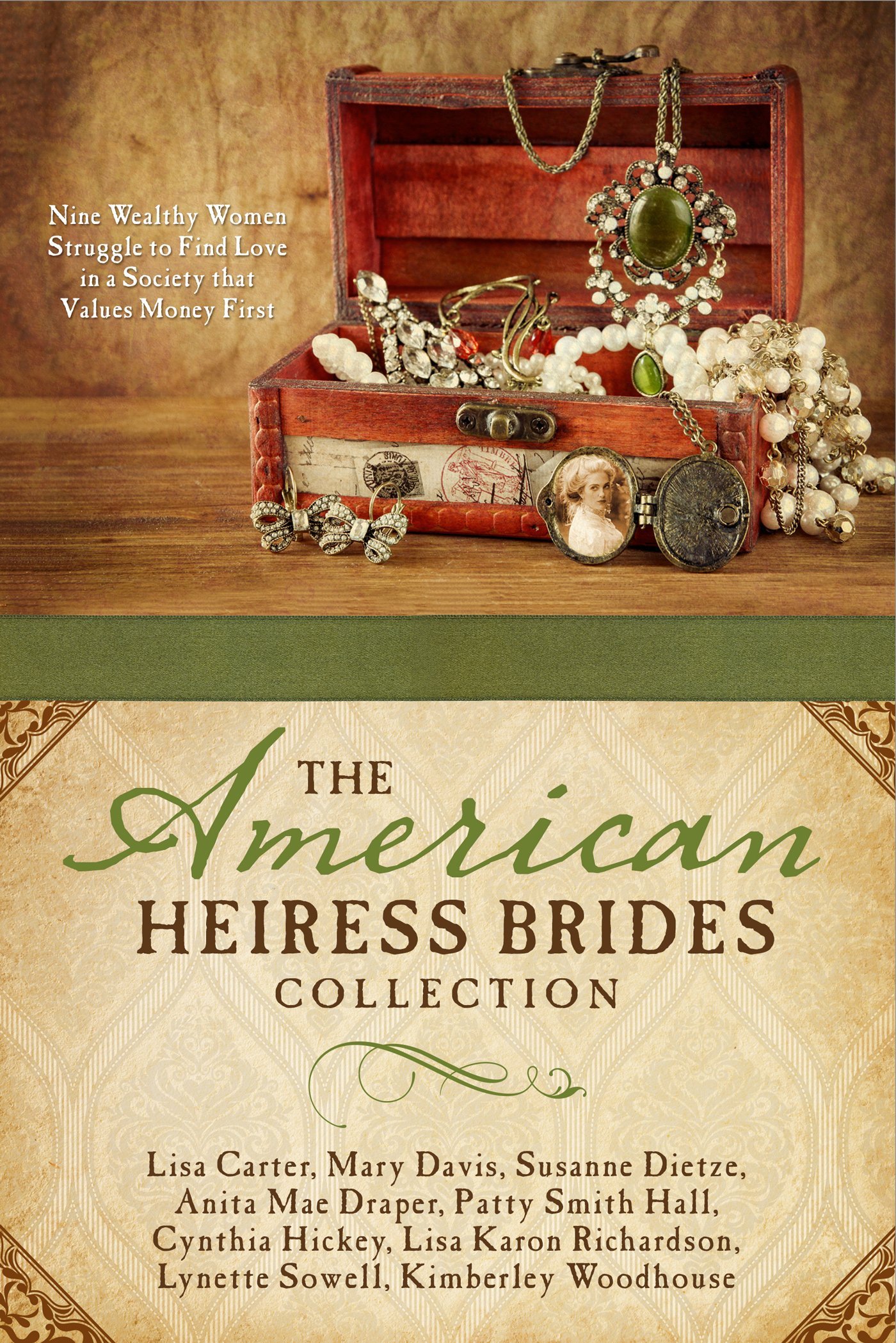

Although I'm a descendant of John and his second wife, Isabelle of Angoulême, the closest I'll ever get to his treasure is the role it plays in my novella, In for a Penny, in The American Heiress Brides Collection, out now.

Sunday, September 1, 2013

Barataria and the Louisiana Bayou

by Kathleen Y'Barbo

"Never approach, harass, or feed alligators. Remember they are wild animals and can move very quickly." This warning begins the Important Facts section of the National Historic Park and Preserve website for Louisiana's Barataria Preserve. Two hundred years ago, the same could be said for another group of residents of this southernmost stretch of Louisiana marshland and waterways, Jean Lafitte and his band of cohorts.

Were they pirates, these men who made their homes in the narrow channels and marshes where the Mississippi River emptied into the Gulf of Mexico? History says yes, although Lafitte often argued he and the others known as the Baratarians were merely sailing men with Letters of Marque from the Venezuelan government entitling them to call themselves privateers.

This license to hunt vessels from certain countries at odds with Venezuela meant nothing in the bayou, and yet it did provide at least some measure of excuse for these men to ply the brown waters of the Gulf. In league with such men as the Bowie brothers, one of whom--James--would die a hero at the Alamo, the Baratarians found success in providing citizens of New Orleans and points north with goods that otherwise might not be available. Where these goods originated, and whether their import was legal, were questions that were neither asked nor answered.

Any questions on how these Baratarians managed their exploits is easily answered with one view of the land where they carried on their activities. Where exactly is this place that hid pirates and Englishmen alike during the days leading up to the Battle of new Orleans in 1814?

Follow the Mississippi River past Baton Rouge and New Orleans, and the muddy water widens and rolls southward. Just before it empties into the Gulf of Mexico, it wraps around land that disappears with the tide only to reappear again when the water drains away. Before the advent of helicopters and speedboats, the only access many of the dwellers of the outer reaches of Barataria had was through ships sailing into the deeper channels and, failing that, the flat-bottomed boats called pirogues that could ply the narrowest and shallowest of streams. Even today, two hundred years after the Baratarians fled, or managed to hide deeper in the marshes as some legends go, there are places in these southernmost parishes that rarely see an outside visitor.


The Barataria Preserve offers a glimpse into these untouched places where alligators outnumber residents and pirates once roamed. Or were they merely businessmen in the employ of a foreign government? That depends on who you ask. What is true, however, is that a trip to the Barataria Region of Louisiana will leave the visitor with a greater appreciation of what life must have been like for these hardy settles two hundred years ago. If you believe the rumors, you may even stumble across some of Jean Lafitte's bounty. After all, stories abound of treasure left behind by the Baratarians in their haste to flee. Stories including my new novel Millie's Treasure, that is.

_________________________


Bestselling author Kathleen Y’Barbo is a Carol Award and RITA nominee of forty-nine novels with over one million copies of her books in print in the US and abroad and nominations including a Career Achievement Award, Reader’s Choice Awards, Romantic Times Book of the Year, and several Romantic Times Top Picks. A proud military wife and tenth-generation Texan, she now cheers on her beloved Aggies from north of the Red River. Find out more at www.kathleenybarbo.com.

Thursday, August 1, 2013

Jean Lafitte and Pirate Treasure

by Kathleen Y'Barbo

Growing up on the Texas Gulf Coast, the shrimp came right off the boat to our dinner table, and the beach was just down the road. Many summer days were spent wading in the warm water of the Gulf of Mexico or looking up and down the sandy shore for sand dollars or sea shells to bring home. And then there were the tales of pirate treasure left behind by the mysterious pirate Jean Lafitte.

Depending on who is telling the story, Jean Lafitte was  born in one of several regions in France or in
the French colony of Sant-Domingue (present-day Haiti). Most biographers agree that his was a seafaring childhood as one of six children. Some would argue that much of his early years were spent in the marshland and bayous of South Louisiana, though it is thought that this was claimed due to Lafitte's almost encyclopedic knowledge of the area later in life. Details beyond these are sparse, but it is widely agreed based on records at the time that Jean Lafitte was living and working in New Orleans by 1806. Many say his arrival was much sooner. Few doubt that he was the captain of a network of men, called Barataians, who preyed on vessels and hid away their ill-gotten gains in the bayous.

Whenever the date, the purpose of his presence in New Orleans was much more obvious. Lafitte and his brothers captained vessels that brought goods into the city, and thanks to the Embargo Act of 1807, these were often goods sold on the flourishing black market rather than in reputable stores. Based in the Barataria region, Lafitte was able to navigate marshes and keep ahead of anyone who might be in pursuit. Later, during the War of 1812, the Lafitte brothers used their ability to procure items on the black market to aid the battle against the British by providing flint for muskets that would otherwise have been useless.

Public opinion of the Lafitte brothers waxed and waned in the ensuing years, and finally under pressure from authorities he once aided, Jean Lafitte sailed off to make his new home in on Galveston Island in a colony he called Campeche. As if to taunt anyone who dared to come against him, he built a home that stood above the others on the island and then had it tinted a brilliant crimson color. Though almost 200 years old, the remains of that red house, called Maison Rouge, still stands at 1417 Harborside Drive in contrast to the modern city and port that grew up around it.

Rumors circulated that Lafitte was up to his old tricks of pirating vessels and hiding the spoils just as he had done while based in Barataria. In 1821, the United States Navy ousted him from the island and sent his men off to sail other waters. Some say he was wounded at sea several years later. Others disagree and claim that Lafitte lived to a ripe old age in some undisclosed foreign country. Just as his early years are shrouded in mystery, so are his later years.

Perhaps because of the air of mystery surrounding the enigmatic pirate, stories circulated of treasures buried by Lafitte and his Baratarians, treasures that were lost or forgotten over the years. With hurricanes pounding the coast every few years, it isn't hard to understand why a marker might be moved or the signs that were so obvious when something was hidden are obscured or obliterated. Certainly many generations of treasure hunters have searched, and it is likely that many more will continue to do just that. All it takes is for a few pieces of eight or gold doubloons to be detected under a few layers of Texas sand or Louisiana bayou mud and the hunt is on again.

So, what do you think? Is there buried treasure along the Gulf Coast?

__________________________________


Want to read more about treasure hunting? Like stories of Southern romance with a dash of steampunk? Perhaps you have a preference for handsome Pinkertons who dabble in the latest inventions? Millie's Treasure, the second book in The Secret Lives of Will Tucker series, releases August 1. See the trailer for this Romantic Times Top Pick here: Millie's Treasure.

Bestselling author Kathleen Y’Barbo is a multiple Carol Award and RITA nominee of forty-five novels with almost two million copies of her books in print in the US and abroad. A Romantic Times Top Pick recipient of her novels, Kathleen is a proud military wife and an expatriate Texan cheering on her beloved Texas Aggies from north of the Red River. To find out more about Kathleen or connect with her through social media, check out her website at www.kathleenybarbo.com.


______________________________