Friday, September 30, 2022

The World War II Comet Escape Line

by Cindy Kay Stewart

Today's post continues the story of the Comet Escape Line, the network  established during World War II to escort downed Allied Airmen safely out of Europe and back into the fight. If you missed the earlier posts and would like to read them, just click on these links: MarchAprilMayJuneJulyAugust, September.


Views along the Comet Escape Line in the Pyrenees. Courtesy of Pyrenean Experience.

September's post introduced Michou Dumont, codename "Lily," a leader in the Comet Escape Line in Brussels. After fleeing Belgium when the Gestapo was closing in on her, Lily went to Bayonne in the far south of France and met with Jean-Francois, the leader of the Comet Line. She warned him of serious problems with the network in Brussels. Jean-Francois, codename "Franco," travelled to Brussels to check out the situation and upon his return to Paris walked into a trap set by the Gestapo. Meanwhile, Lily awaited word from Franco at Auntie Go's house in Anglet, near Bayonne.

Border between Spain and France

Several weeks later, Michael Creswell, the British attaché in Spain who took charge of the rescued airmen after they crossed the border, called Auntie Go, Lily, and Max, another operative, down to Madrid for a planning session. Lily was assigned to work with Max in Paris and also to work the line from Dax (north of Bayonne) to the Spanish border. Max would continue bringing airmen by train from Paris to Dax.

After crossing the Pyrenees for additional meetings with Creswell in February, Lily returned to Paris. She was to coordinate escapes in Paris along with Martine Noel, a dentist. Lily stored her belongings in Martine's apartment. Lily wanted to speed up the escape procedures, so Martine set up a strategy session at a local restaurant for the new team of helpers

Michou Dumont, "Lily"

The fellow who sat directly in front of Lily seemed vaguely familiar. "He was short and sandy-haired, with close-set eyes, strange and intense. He wore a garish purple coat along with a polka-dot tie. Abbé Beauvais, a priest who gave sanctuary to pilots when they came to Paris," introduced the young Belgian as Pierre Boulain. Lily didn't recognize the name, but she didn't like the man. His polka-dot tie bothered her - it could be a signal.

The next day Lily left Paris with two British agents in danger of capture. They crossed the Pyrenees safely, and Lily returned to Auntie Go's in Anglet. Because of the increased Allied bombings, main rail lines were damaged, and Lily arrived in Paris many days later than expected. When she called Martine's apartment, a strange woman answered the phone and called Lily by her real name, Micheline, which Lily had not used in almost a year. No one in Paris knew her real name, or so she thought. The woman encouraged her to come by Martine's apartment, but Lily knew better.

Lily headed to Martine's dental office in the suburbs, but the concierge stopped her at the door. After informing her that Martine had been arrested, the concierge sent Lily to one of Martine's friends. She learned that everyone at the restaurant had been arrested and sent to Fresnes Prison just outside the city of Paris. Fearing her own capture, Lily caught a train for Bayonne. She considered her options and decided to find out who was betraying the Comet Line to the enemy. 

Lily returned to Paris and went straight to Fresnes Prison. At the prison gate, she asked to visit Martine and was promptly arrested. Although she was confined to a room by herself, Lily figured out the communication system used by the prisoners. They communicated at the sides of the walls and around corners using taps, echoes, and shouts. The jail was built in a classic hub-and-spoke design," so the inmates tracked down Martine and brought her close to Lily's room. Martine revealed that the traitor was Pierre Boulain. Lily finally remembered where she had seen the man before - in Brussels when he went by the name of Jean Masson.

Masson had obtained false identification papers for airmen traveling from Brussels to Paris and specialized in border crossings. He had attended a meeting at a safe house in Brussels two days before the Comet leader Monsieur de Jongh was arrested in Paris. "Up to now, Masson had protected his identity because all those who knew him were always arrested. Lily was the only one capable of breaking his cover."

After spending two nights at the Fresnes prison, Lily was led to the prison warden. The birthdate on her French identification card indicated she was only seventeen, and he couldn't accept the imprisonment of someone so young. The warden ordered Lily out of the prison immediately and told her the Gestapo was on the way. Lily left through the front gate. Shortly after, a German staff car passed her on the road, but the Gestapo officers inside didn't even notice her.

Return on November 1st for the final installment of the Comet Escape Line adventures. Learn what happened to Lily, Jean Masson, and the imprisoned leaders of the Comet Line.

*********


Resource: The Freedom Line by Peter Eisner. HarperCollins Publishers, 2004.


*********


Would you like a free e-book of true WWII stories of escape? Join my newsletter, and I'll send the download link. Be the first to know when my novels launch.
 
Click here to sign up and get your free e-book. 

*********


Cindy Kay Stewart, a high school social studies teacher, church pianist, and inspirational historical romance author, writes stories of hope, steeped in faith and love. Her manuscripts have finaled in Faith, Hope, and Love Christian Writers Touched by Love Award, Georgia Romance Writers Maggie Award of Excellence and Oregon Christian Writers Cascade Awards, semi-finaled in American Christian Fiction Writer’s Genesis contest, and won ACFW’s First Impressions contest and the Sandra Robbins Inspirational Writing Award. Cindy is passionate about revealing God’s handiwork in history. She resides in North Georgia with her college sweetheart and husband of forty-one years. Her daughter, son-in-law, and four adorable grandchildren live only an hour away. Cindy’s currently writing two fiction series set in WWII Europe.


September 2022 Book Day

Relax With One of These

Great Fall Reads!


THE LADY’S MISSION

The Quilting Circle (Book 5) Releases 10/5/22

A Sweet Historical Romance Series

By Mary Davis

Will Cordelia abandon her calling for love? Cordelia wants to escape the social norms for her society station. Unless she can maneuver her father into relinquishing her trust fund, she might have to concede defeat—as well as her freedom—and marry. Every time Lamar finds a fascinating lady, her heart belongs to another. When a vapid socialite is presented as a prospective bride, he contemplates flying off in his hot air balloon instead. Is Lamar the one to finally break the determination of Cordelia’s parents to marry her off? Or will this charming bachelor fly away with her heart?


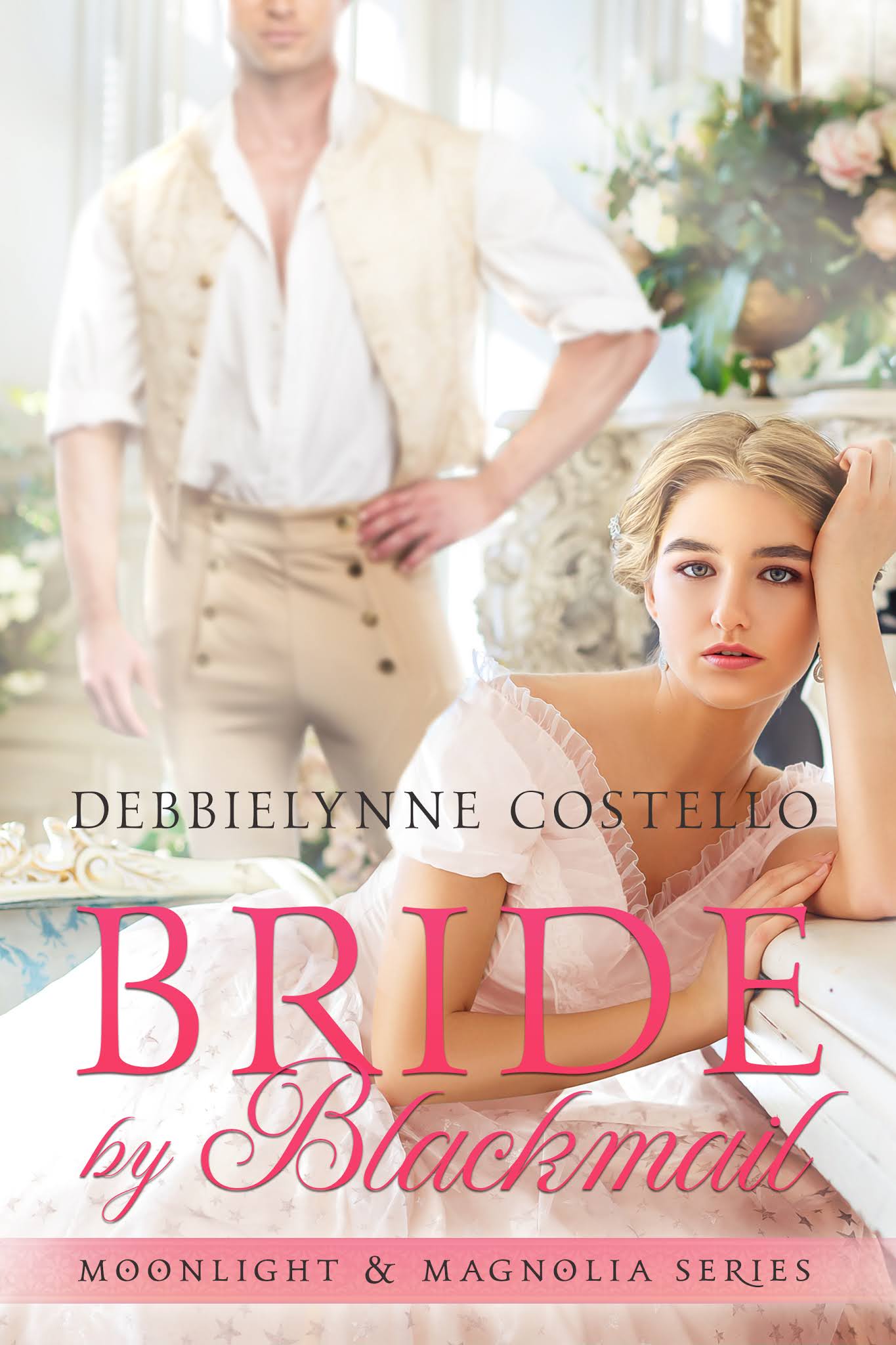
BRIDE BY BLACKMAIL

By Debbie Lynne Costello

A broken heart, controlling father, and intrusive Scot leave Charlotte reeling. Accused of stealing an heirloom pin, she must choose between an unwanted marriage and the ruin of her family name. With her and her sister’s futures at stake, Charlotte must navigate through injustice to find forgiveness and true happiness. Eager to find the traitor who caused the death of his brother, Duncan comes to America attempting to fit into Charleston society. But when the headstrong Charlotte catches his eye, Duncan acquires a second mission—winning the lass's hand. After several spurnings, he uses unconventional ways of winning her heart.


THE SERGEANT’S SWEETHEART

By Vickie McDonough

Scott Jantzen only had eyes for one girl in high school, but he never had the nerve to ask her out. Now an Army sergeant stationed in Kuwait, he gets Haley Tannehill’s email from her brother and reaches out. Will she respond? Haley almost deletes Scott’s email, but then she sees his comment about knowing her brother. She doesn’t remember him from high school, but she emails him back. She enjoys getting to know the interesting soldier—until the day he says he’s returning home and wants to meet her face to face. Has she just made the worse decision she’s ever made?


TITANIC: LEGACY OF BETRAYAL

A Time-Slip Novel

By Kathleen E. Kovach, et al.

A secret. A key. Much was buried on the Titanic, but now it's time for resurrection. Follow two intertwining stories a century apart. 1912 - Matriarch Olive Stanford protects a secret after boarding the Titanic that must go to her grave. 2012 - Portland real estate agent Ember Keaton-Jones receives the key that will unlock the mystery of her past... and her distrusting heart. Review: “I told my wife to move this book to the top of her reading list... This titanic story is more interesting than the one told in the Titanic movie... She will absolutely love it.”


OUT OF MY MIND: A Decade of Faith and Humour

By Terrie Todd

Since 2010, Terrie Todd has been writing a popular "Faith and Humour" column for The Graphic Leader in Portage la Prairie, Manitoba, Canada. This book celebrates a decade of wit and wisdom found in Terrie's hand-picked favori. tes. Arranged by category and excellent for use in public readings on various topics or simply for your own enjoyment, this book could be called a weirdly out-of-order memoir of a life in which faith and humour dwell hand in hand. Categories include: Marriage & Family, Health & Fitness, Faith, Writing Life, Christmas, Easter, Mothers & Fathers Day, Thanksgiving, Remembrance Day.


COUNT THE NIGHTS BY STARS

By Michelle Shocklee

1961. After a longtime resident at Nashville’s Maxwell House Hotel suffers a stroke, Audrey is tasked with cleaning out the reclusive woman’s room. She discovers an elaborate scrapbook filled with memorabilia from the Tennessee Centennial Exposition. Love notes on the backs of unmailed postcards inside capture Audrey’s imagination with hints of a forbidden romance . . . and troubling revelations about the disappearance of young women at the exposition. Audrey enlists the help of a handsome hotel guest as she tracks down clues and information about the mysterious “Peaches” and her regrets over one fateful day, nearly sixty-five years earlier.


THIMBLES AND THREAD

By Suzanne Norquist, et al

4 Love Stories Are Quilted Into Broken Lives


“Mending Sarah’s Heart” By Suzanne Norquist

Rockledge, Colorado, 1884

Sarah doesn’t need anyone, especially her dead husband’s partner. With four brothers to mentor her boys and income as a seamstress, she seeks a quiet life. If only the Emporium of Fashion would stop stealing her customers and the local hoodlums would leave her sons alone. When she rejects her husband’s share of the mine, his partner Jack seeks to serve her through other means. But will his efforts only push her further away?


“Bygones” by Mary Davis

Texas, 1884

Drawn to the new orphan boy in town, Tilly Rockford soon became the unfortunate victim of a lot of Orion Dunbar’s mischievous deeds in school. Can Tilly figure out how to truly forgive the one who made her childhood unbearable? Now she doesn’t even know she holds his heart. Can this deviant orphan-train boy turned man make up for the misdeeds of his youth and win Tilly’s heart before another man steals her away?


THE CRYPTOGRAPHER’S DILEMMA

By Johnnie Alexander

A Cryptographer Uncovers a Japanese Spy Ring. FBI cryptographer Eloise Marshall is grieving the death of her brother, who died during the attack on Pearl Harbor, when she is assigned to investigate a seemingly innocent letter about dolls. Agent Phillip Clayton is ready to enlist and head oversees when asked to work one more FBI job. A case of coded defense coordinates related to dolls should be easy, but not so when the Japanese Consulate gets involved, hearts get entangled, and Phillip goes missing. Can Eloise risk loving and losing again?


ESTELLE’S ENDEAVOR

By Linda Shenton Matchett

Will a world at war destroy a second chance at love? Estelle Johnson promised to wait for Aubry DeLuca, but then she receives word of his debilitating injuries. Does she have the strength to stand by him in his hour of need? Aubry DeLuca storms the beaches at Normandy, then wakes up in the hospital, his eyes bandaged. Will he regain his sight? Will the only woman he’s ever loved welcome him home or is he destined to go through life blind and alone?


HUNT FOR A HOMETOWN KILLER

By Mary Dodge Allen

2022 Christian Indie Award Winner, First Place – Mystery Suspense

While Roxy Silva is working her hometown mail route, a sinkhole opens up and drains a retention pond, uncovering the car used in her husband’s murder. Determined to solve the cold case, Roxy turns amateur sleuth, using her amazing photographic memory. Her relationship with handsome detective Kyle grows closer as they uncover shocking secrets. When the killer takes Roxy captive, she must use her wits to survive. “Suspense, humor, rapier wit, and a heaping helping of warmth and unexpected plot twists. We loved it!”   Pages & Paws – 5-Star Book Review


THE VOYAGEURS DUOLOGY:

Mist O'er the Voyageur and Song for the Hunter

By Naomi Musch

Mist: Brigitte Marchal would rather flee Montreal than marry her cruel suitor, but her disguise as a voyageur doesn’t hide her long. Crossing the Great Lakes at the questionable mercy of swarthy protector René Dufour, Brigitte struggles with faith, mysticism, and who to trust in the rugged, unfamiliar country. Song: When Métis hunter Bemidii Marchal kills a merchant’s son in self-defense, he flees to an island fort on Lake Superior. There he encounters Camilla Bonnet, a French-Canadian beauty. Feelings grow between them, until Bemidii’s secret is exposed. Now the truth threatens to steal Camilla’s love—and demand Bemidii’s life.

Thursday, September 29, 2022

"Who would ever want to use one?" ~ Tidbits of Telephone History


A question that has entered my peripheral research time and again centers around whether or not my characters’ households would own a telephone. Given the era of the story, that might seem like a no-brainer, but actually it is a question never easily answered. The biggest factors for each story depend upon locales. Are settings urban or rural? In well-off households or less so? Where did the lines run and how far out did they reach during the years in which my story takes place? What was the rate of home phone ownership there at that time? Would it have been likely that this character would have owned such a resource?

Ah, such rabbit trails! There’s a little wiggle room of course, but not much in my desire for historical and story accuracy.


I’m asking myself that question in another work-in-progress today. Would these people, in this small town, have their own telephone, or would they have to go to another place to use a public telephone? At the workplace or a nearby store perhaps. I continue my quest to be sure. In the process, I uncover some interesting historical tidbits about the telephone that drew a grin:

In 1876, when President Rutherford B. Hayes examined the telephone for the first time, he said to Alexander Graham Bell: “That’s an amazing invention, but who would ever want to use one of them?” (I suppose some of us still feel that way.)

The same year, as Bell struggled with his company, he offered to sell the patent to Western Union for $100,000 and was roundly turned down. Western Union’s reply:

“We do not see that this device will be ever capable of sending recognizable speech over a distance of several miles. Messer Hubbard and Bell want to install one of their ‘telephone devices’ in every city. The idea is idiotic on the face of it. Furthermore, why would any person want to use this ungainly and impractical device when he can send a messenger to the telegraph office and have a clear written message sent to any large city in the United States? … Mr. G.G. Hubbard’s fanciful predictions, while they sound rosy, are based on wild-eyed imagination and lack of understanding of the technical and economic facts of the situation, and a posture of ignoring the obvious limitations of his device, which is hardly more than a toy … This device is inherently of no use to us. We do not recommend its purchase.”

I bet bet they regretted that decision for a long, long time.

Over in Britain, they thought the device might be useful to Americans because we lacked domestic servants, while in that country, there was a “superabundance of messengers, errand boys and things of that kind.” (Ah. . .servants. What a novelty.)

Engineers and visionaries saw it differently. They looked to the future of the telephone a lot like we view space travel today. I presume that's what G.G. Hubbard's "fanciful predictions" seemed like.

When we view the telephone in light of the past, it’s easy to see how the general public had the same hesitancies about the new device as we’ve had about the internet and our various "smart" technologies today. There were concerns about invasion of privacy back then too—a very real concern with having to use the telephone in a public place. Then, once lines were brought house to house, there was the invasion of eavesdroppers over the shared lines. Even the telephone operators were privy to more private conversations than was probably fit for public consumption.

"AHOY!"

Nowadays we have voice mail to collect our phone calls and some of us still use answering machines to screen our calls. We can leave greetings on them for when the phone picks up. But what about that first, "Hello, Musches"? It was Thomas Edison who suggested we say hello when picking up a ringing phone. Bell's suggestion that we answer with a smart, "Ahoy" never caught on. (I might have to try that sometime.)

Telephone use became common to nearly everyone during the first half of the 1900s (though I still have that conundrum of how far lines reached and when). In 1946, Bell's company hired 250,000 women as switchboard operators for both public and business services.


They say President Lyndon Johnson's preferred method of handling white house communications and accomplishing most presidential work was the telephone, and he used it profusely. In fact, when he took office after President Kennedy's death, he had phones installed in so many places around the white house, he could literally move from phone to phone like a relay system, continuing conversations while going about his tasks. There were phones on coffee tables, in bathrooms, and on window sills. Even a phone beneath both the dinner table and the hammock. Not only did he prefer working by telephone, but LBJ is known to have secretly taped at least 9000 of his conversations😮. He used the transcripts to review his daily work. 6000 of them are available through the Miller Center at the University of Virginia.


Another fun bit of history is the ring system. Nowadays, we select a tone we want to hear when our cell phone rings. We can pick jazzy music or funny movie lines. Back in the early days of home phones and the party line, individual households had their home's ring pattern to help them know if the call was for their house or for another family on their line. It might be two short rings followed by two long, or one long and three short, and so on. I'm old enough to remember when my grandparents and our family got a "private line".

Now we're back to wondering who might be listening in. Not because of party lines of course, but because of concerns we have about Big Brother. 


What foreseeable changes do you think are coming to our ways of communicating? Will you welcome them, or do you abhor the notions?

Do you have a favorite read featuring old telephone systems or characters who are switchboard operators? One of my favorites lately is Candice Patterson's Saving Mrs. Roosevelt, in which Coast Guard characters include switchboard operators and spies on the home front during WWII.

There are a host of terrific Christian novels out there featuring switchboard operators. I had fun in my novel The Love Coward involving an off-scene operator who had the habit of spreading bits of gossip she'd overheard on the line, but she could be very helpful too. 

Do you find yourself ever being nostalgic about those old telephone days when we were still attached to the wall instead of the computer? So many useful storylines remain to be written! I still crack up when Oliver Wendell Douglas has to climb the telephone pole to answer the telephone on Green Acres

One of the richest blessings I've had lately regarding modern telephone technology happened only this morning as I was writing this post. A reader looked me up and gave me a call. She had stumbled upon Season of My Enemy at her library, and because of some connections she had to a town I mentioned in the book, she decided to search me out. Surprisingly, once she found me online, she discovered we had some close ties through my immediate family, so she rang me. We had a lovely time acquainting ourselves. I so appreciated the technology that brought that about!

Researching tidbits of telephone history has kept me hopping with several of my books. Here are a few titles where that research has played out.


The Love Coward (Post WWII, 1947), Season of My Enemy (1944-1947), The Deepest Sigh (1915-1919), The Brightest Hope (1924)

Looking back nostalgically,
Naomi

Wednesday, September 28, 2022

Women in Journalism – with Giveaway – by Donna Schlachter


Pexels.com Maryam Alruiwaie

In keeping with a recent release, Dianna’s Dilemma, in which the heroine is a journalist with the Colorado Springs Weekly Gazette, I thought I’d do some research into women in journalism through history. And boy, was I surprised! 

Women have been involved in newspapers in America since colonial times, when newspapers were often operated as a family affair. The gentle ladies worked alongside their fathers, brothers, or perhaps husbands to not only gather the news stories, but also to typeset and print them. Sometimes, a woman inherited the business from her husband, maintaining not only the family income but their legacy to pass along to their children. By the 1800s, women often were relegated to the more genteel sections of the paper, including birth, marriage, and death announcement; engagements; social events; reviews for the theater; and ultimately, to gossip columns meant to transmit news in the nicest of ways, of course. 

The following is a sample listing of women journalists, citing instances of important firsts in bold: 

• Elizabeth Timothy (ca. 1700-1757) – first woman publisher on record in US, inheriting the South Carolina Gazette when her husband died. • Mary Katherine Goddard (ca. 1738-1816) – printed and distributed the first official copy of the Declaration of Independence. 

• Cornelia Walter (ca. 1813-1898) – first woman editor of a newspaper in US 

• Ida B. Wells-Barnett (ca. 1862-1931) – part owner and editor of Memphis Free Speech 

• Eleanor Patterson (ca. 1881-1948) – editor and publisher of Washington Herald in 1930. 

A. Scott Duniway (Oregon Encyclopedia)


In a speech given regularly to interested audiences in 1897, Abigail Scott Duniway listed female journalists who influenced her life and encouraged her to persevere in what was commonly considered a male bastion. One of her earliest memories was of a small weekly publication called Lily which was the product of Mrs. Amelia Bloomer, after whom the costume is named. 

Miss Duniway held such women in high esteem, and the article referenced below in the Resources section is a veritable who’s who within the publishing industry itself. The women named were not on the sidelines or relegated to menial positions on their newspapers—these were editors, publishers, owners, and true journalists. She shares their struggles and stories, including the one about Mrs. Leslie who, after her husband died, leaving their paper in debt, assumed her husband’s first name, Frank, borrowed $50,000 (an exorbitant amount in the 1880s) and went to work. In less than two years, she’d repaid the debt. 

Courtesy Historic Sites.DC Preservation

Another important first in the world of journalism was Mary Ann Shadd Cary, the first black female journalist in North America and first female journalist in Canada—and much more. Born in 1823, she spent her life helping others through education, the law, journalism, and anti-slavery efforts. She served as co-editor of Canada’s first anti-slavery newspaper, the Provincial Freeman, and she published several pamphlets and articles in Washington DC newspapers. Another item of note is that she is recognized as one of the first black female lawyers in the US, earning her degree in 1883 at the age of 60. 

In my book, Dianna Dewalt is assigned to cover the inauguration of the town of La Junta, Colorado, which actually occurred in 1881. Several real life characters and events are key points in the story, including the reason antelope are still on the town’s official shield. You can learn more about the book here: https://www.amazon.com/dp/B0B3SCZFTZ 

And if you enjoy this story, you might like to check out the rest of the multi-author series: https://www.amazon.com/dp/B09K7FP3SJ 

Giveaway: Leave a comment and enter a random drawing for a print (US only) or ebook copy of Dianna’s Dilemma. Please remember to cleverly disguise your email address so you don’t get spammed. For example: donna AT liveybtheword DOT com (Note: no email address, and I can’t enter you into the drawing) 

Resources:

https://guides.loc.gov/c.php?g=859127&p=7407249

https://asduniway.org/%E2%80%9Cwoman-in-journalism%E2%80%9D-circa-february-september-1897/

https://historicsites.dcpreservation.org/items/show/35


About Donna: A hybrid author, Donna writes squeaky clean historical and contemporary suspense. She has been published more than 50 times in books; is a member of several writers groups; facilitates a critique group; teaches writing classes; ghostwrites; edits; and judges in writing contests. She loves history and research, traveling extensively for both, and is an avid oil painter. 

Connecting online: 

www.DonnaSchlachter.com Stay connected so you learn about new releases, preorders, and presales, as well as check out featured authors, book reviews, and a little corner of peace. Plus: Receive a free ebook simply for signing up for our free newsletter!

www.DonnaSchlachter.com/blog

Check out previous blog posts at www.HiStoryThruTheAges.wordpress.com and www.AllBettsAreOff.wordpress.com

Facebook: www.Facebook.com/DonnaschlachterAuthor

Twitter: www.Twitter.com/DonnaSchlachter

Books: Amazon: http://amzn.to/2ci5Xqq

Bookbub: https://www.bookbub.com/authors/donna-schlachter

Goodreads: https://www.goodreads.com/search?utf8=%E2%9C%93&query=donna+schlachter