Showing posts with label 1889 Land Run. Show all posts

Wednesday, December 18, 2019

The Victor Building, A Declaration of Victory

 
The Victor Building
Taken by Alanna Radle Rodriguez


By Alanna Radle Rodriguez and Judge Rodriguez


Hello Friends!

Thank you for joining us once again as we delve into the history of this great state we call home, Oklahoma.

First allow us to say: we wish to pay our respects to the brave men and women of our military, first responders and police and let them know our thoughts and prayers are with them and their families, particularly those currently on deployment outside our country and away from their families.

Last month, we covered the history of one of the most beloved thanksgiving foods. Potatoes. This month we continue our regularly scheduled articles on the different buildings in Guthrie. We have covered several of the older buildings in Guthrie, to include the Pollard, the Drug store Museum and the Capitol Printing Company Museum as well.

The Great Land Run was an exciting time. The land was open for everyone who could go in the run to claim. One of the rules of the land run was that they allowed many people to scope out the land, so they could know where they would claim.

In particular, the planned towns were hotly contested items. One such claim was on the corner of what would turn out to be First and Harrison in Guthrie.

Two men lay claim to the land, had started building on it, even though they were in dispute over it. The plot of land is just south of the plot that was planned for the Federal land. This Federal land was expected to be the new government offices for the budding territory.

After a long and contentious court battle, one of the claimants won. The winner took his claim to the sheriff, who then evicted Winfield Smith. From what we have been told, Smith refused to leave the property, so the sheriff threw a rope around the wooden building and dragged it two blocks down the street to an empty lot.

Mr. Smith was so aggrieved by this, he took the case back to court, this time winning the property. It was at this point, he engaged the services of a certain Joseph Foucart, who in 1893 completed the construction of the building.

Now, mind you, during this time, it was common to name the buildings after the owner. For instance take the McCabe building. It was named after the original owner, a freed slave with the name of McCabe. It was expected that the name of the building would be the “Smith Buiding” in honor of the builder. Well, you can imagine the collective gasps when the building was revealed to be the “Victor Building”, in a not-so-subtle way of thumbing one’s nose at the claimant who lost the final battle.

The building, when it opened, housed several different businesses, an business college, several territorial offices, a drug store, even a bowling alley in the basement.

The building has gone through several owners, and numerous businesses have resided in there over the years. On the second floor there were the territorial offices, a bank, even a hotel.

One of the stories we were told was that after the hotel had closed, back in the 80’s, they were clearing out the drawers of one of the night stands that had been in that office, only to find personal correspondence of a territorial official that was sent to Washington D.C. regarding the impending statehood of Oklahoma.

The third floor originally had the College of Architecture in it, until it closed in 1910. During the “Roaring 20’s”, a grand ballroom was placed on the third floor and was the “toast of the town.”

 
Third floor Sandplum Ballroom
Taken by Alanna Radle Rodriguez

As all things must, the building fell into disrepair and disuse during the 50’s, 60’s and 70’s. It was in 1982 that the Guthrie Historic District Preservation Movement started renovating the building. During the renovations, a new mural was painted on the wall in the Grand Ballroom, several pictures of which we have included in this article. The mural was painted by Frank Old.

 
The Mural by Frank Old
Taken by Alanna Radle Rodriguez


Self-portrait of Frank Old in the mural
Taken by Alanna Radle Rodriguez

The building is now owned by a property owner in Guthrie, who is in the process of renovating the building once again, to make use of its historic past. If you are ever in Guthrie and have the chance to stop by, during an event like the Victorian walk of this past two weekends, or ever get to discuss the history with the owner, it would be time well spent.

Thank you for joining us this month as we explored such a historic icon in Guthrie and our journey in the history of this unique state, Oklahoma. This is our last post and want to say thank you for such an amazing journey.
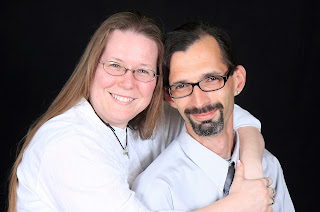


Born and raised in Edmond, Oklahoma, Alanna Radle Rodriguez is the great-great granddaughter of one of the first pioneers to settle in Indian Territory. Judge was born and raised in Little Axe, Oklahoma, the son of A.F. Veterans. Judge and Alanna love the history of the state and relish in volunteering at the 1889 Territorial Schoolhouse in Edmond. Her second published story, part of a collaborative novella titled 18 Redbud Lane, is now available. Alanna and Judge live in the Edmond area. They are currently collaborating on a historical fiction series that takes place in pre-statehood Oklahoma. The first book, The Marshal of Denver, is expected to come out in Spring 2020.

Facebook.com/authorAlannaRadleRodriguez
Pinterest.com/alannaradlerodr/
Amazon

Wednesday, September 18, 2019

Guthrie, OK History: Oklahoma Frontier Drugstore Museum

 
Inside Oklahoma Frontier Drugstore from Mezzanine
Picture by Alanna 
   
By Alanna Radle Rodriguez and Judge Rodriguez


Hello Friends!

Thank you for joining us once again as we delve into the history of this great state, we call home. Oklahoma.

If in old westerns, you’ve always marveled at the modern techniques of 19th century medicine, the Oklahoma Frontier Drugstore Museum is for you. It’s a pharmacy student’s dreams, or a patient’s nightmare, depending on how you look at it.

Since 1992, the Oklahoma Frontier Drugstore Museum, located in the Gaffney Building in Guthrie, has provided visitors with a unique view of the evolution of the Drugstore and doctoring. This museum covers both the 19th and 20th centuries and allows a distinctive view of the drugstore’s evolution in the providing of the needed services we have come to value today.
 
Inside the Drugstore Museum
Picture by Alanna
 
But the history of the Drugstore museum didn’t just start in 1992. One of the people who made the April 22, 1889 land run was Forress B. Lillie. He established one of the first drug stores in the territory. His license from the territorial board of pharmacy before statehood, was the first license issued by the state board of pharmacy. In 1890, the Gaffney building was built and housed his drugstore. At some point, the building was owned by a Mrs. Ruby Tryon, a follow lover of history, who wanted to see another museum open in Guthrie and sold it to the Pharmacy Heritage foundation. One of the Museum’s treasure artifact is the first license issued, Mr. Lillie’s.

Included in this museum, there are numerous different examples that contributors have been gathering since the 1970’s. This includes numerous medical books, tools / devices (medicines, boxes, tins, one-fix-all elixirs) that will leave you asking how we survived to the modern age of medicine we live in today.

You got somethin' that ails ya,
We got somethin' to cure ya!
Picture by Alanna
The Museum has several examples of the original soda “pop” bottles where the bottles were capped with a marble set in the opening with a string in wax, so when a person pulls the string and breaks the wax, they can hit the marble and “pop” the seal. 
 
Original "Pop" Bottles
Picture by Alanna
They even have an original soda fountain / Ice Cream Parlor display set up to show the visitors how Drug-Stores would have children of all ages, visit for their sweets as well. Quite often, the museum will have sarsaparillas and or cream soda you can buy and drink. 
 

Ice Cream! Parlor
Picture by Alanna

It even has a dentist’s office that looks more a like a medieval torture chamber somehow.
 
Enter, the Dentist Office
Picture by Alanna

In the late fall of 2006, the museum added an apothecary garden in honor of their 25th anniversary of operation.

The Drugstore Museum also takes part in the yearly Victorian Walk that Guthrie holds for Christmas.

If you get the chance to tour the Historic Downtown of Guthrie, Oklahoma, we recommend you make a stop along the path to visit this wonderful site, and revel in its historic treasures they present. If you wish to find out more about this museum, you can visit them at https://www.drugmuseum.org.


Born and raised in Edmond, Oklahoma, Alanna Radle Rodriguez is the great-great granddaughter of one of the first pioneers to settle in Indian Territory. Judge was born and raised in Little Axe, Oklahoma, the son of A.F. Veterans. Judge and Alanna love the history of the state and relish in volunteering at the 1889 Territorial Schoolhouse in Edmond. Her second published story, part of a collaborative novella titled 18 Redbud Lane, is now available. Alanna and Judge live with her parents in the Edmond area. They are currently collaborating on a historical fiction series that takes place in pre-statehood Oklahoma.

Facebook.com/authorAlannaRadleRodriguez
Pinterest.com/alannaradlerodr/
Amazon

Sunday, August 18, 2019

The Pollard Theater: Bringing the arts to Historic Guthrie, Oklahoma

 
Ken Parker
http://cinematreasures.org/theaters/10038/photos/155272
 

By Alanna Radle Rodriguez and Judge Rodriguez


Hello Friends!


Thank you for joining us once again as we delve into the history of this great state we call home, Oklahoma. Last month, we covered an overview of the history of the Capital Publishing Museum and some of its historical facts. This month we are covering the Historic Pollard Theater.

After the land-run, the site housed a wooden dry-goods store. The current building, being a structure made of local stone and local-made bricks, was built in 1901. It held The Patterson Furniture and a funeral parlor. Many of the cabinet makers at the time doubled as funeral parlors, as they had the access to the needed amounts of wood for the caskets. In 1919 George Pollard purchased the building, turning it into a vaudeville and silent movie house.

With the invention of “Talkies” (movies with an audio track) in 1926, the building was leased to A.R. Powell, who then renovated the building and decreased the size of the stage to accommodate the need for more viewing room. During the renovations, the Powell family added seating for up to 800 as well as putting in hand-painted murals and art-work. With the change of role in being turned in to a full sized movie theater, the theater underwent a name change as well. The theater was then called “The Melba Theater”.

The Powell family operated the Melba until the theater closed its doors in 1984. The building was renovated by Guthrie Arts & Humanities Council and changed back into a live venue. At the end of the renovations, the Pollard family took control of the building, and completed the renovations, turning the name of the theater back into the “Pollard Theater.”

This year marks the 100th anniversary of the theater and we recommend if you are ever in Guthrie, the time be taken to take in this historic treasure. Today, the Pollard Theater produces a yearly production of the Territorial Christmas Carol, among other productions throughout the year. If you would like more information on upcoming productions or even auditions, you can visit their website.

Thank you for joining us this month as we have looked into the Historic Pollard Theater. Join us next month as we delve into the history of other historic buildings in the city of Guthrie Oklahoma.


Born and raised in Edmond, Oklahoma, Alanna Radle Rodriguez is the great-great granddaughter of one of the first pioneers to settle in Indian Territory. Judge was born and raised in Little Axe, Oklahoma, the son of A.F. Veterans. Judge and Alanna love the history of the state and relish in volunteering at the 1889 Territorial Schoolhouse in Edmond. Her second published story, part of a collaborative novella titled 18 Redbud Lane, is now available. Alanna and Judge live with her parents in the Edmond area. They are currently collaborating on a historical fiction series that takes place in pre-statehood Oklahoma.

Facebook.com/authorAlannaRadleRodriguez
Pinterest.com/alannaradlerodr/
Amazon

Thursday, July 18, 2019

The Phoenix of Museums: The State Capital Publishing Museum


The State Capital Publishing Museum, Guthrie, OKlahoma
Wikimedia Commons


By: Alanna Radle Rodriguez and Judge Rodriguez


Hello Friends!

Thank you for joining us once again as we delve into the history of this great state, we call home. Oklahoma.

Over the last couple of months, we have looked into much of the history of the land runs. This month, we look at a truly historic icon that is being reborn. The two of us met in a re-enactment group called the Guthrie Gunfighters, longer ago than I would like to admit. Most of our gunfights were either in the middle of the street or on the corner of 2nd and Harrison in Guthrie, Oklahoma. We did more shows there between the Capital Publishing Museum and the Blue Bell Saloon, than we can count, making beautiful backdrops to our trolley shootouts.

First founded in March of 1889, The “State Capital” was founded in Winfield Kansas by a Franklin Greer. Less than a month later, he moved his operations down to the newly formed town of Guthrie. On April 22nd 1889, the State Capital became the “first daily paper ever published in what is now Oklahoma”.

Originally, the paper was located in a different location, but moved to a rented space on the second floor at the current location in 1890. As the circulation of the paper grew, however, Greer rented more and more space, until finally in 1897, he purchased the entire building. Once the final top floor occupant moved out in 1900, Greer expanded his operations to the entire building, making 10,000 square feet available to the more than 100 employees the paper employed.

The Capital Publishing company remained in the building until the building burned down on an Easter Sunday in 1902. After the fire, however, Greer paid to have the building redesigned and rebuilt on the same site. With the help of subscriptions, the building was rebuilt in only 6 months, at a price tag of $50,000.

It house not only the print company, located in the basement, and was the official printing company for the territorial government, it also held a beautiful and ornate bank, and post office on the first floor. Greer branched out and sold a complete line of office, school and stationary supplies.

The designer of the new building was Belgian architect Joseph Pierre Foucart, whom had been instrumental in the design of numerous buildings in Guthrie to include, the Victor block, the Foucart building, the Gray Brothers Building, the Gaffney Building, the De Ford Building, and numerous others.

The State Capital, being the first publishing company in Oklahoma, quickly became the biggest publisher west of the Mississippi river.

In 1911, Greer sold the Oklahoma State Capital to the Guthrie Daily Leader, their primary competitor, and publishing under the name of the State Capital ceased. The building then started being used as a printing and book binding, under the name of the Co-Op Printing company. It remained for many years as the largest publisher in the State of Oklahoma for schools, churches and government.


Filing system on the first Floor, State Capital Museum
https://www.publishingmuseum.org/gallery.html
used with permission

In 1975, the Oklahoma State Historical Society purchased the building and opened the Capital Publishing Museum. They had courses where children could come in and print their own newspapers by traditional printing. The printing presses are still where they are and can be viewed by the large windows that went around the basement. The teller windows and bank vault is still there in pristine condition, and an entire wall is taken by an intricate boxed filing system. It even holds teacher's applications for teacher's jobs that the printing company printed. The museum remained in operation until it being closed in 2012 due to a failed boiler, the last straw in a long list.

Bank Teller stations on the first floor
https://www.publishingmuseum.org/gallery.html
used with permission

In 2017, a group by the name of the Guthrie Tomorrow Coalition purchased the building and are in the process of renovating it. They were open for Guthrie's Victorian Walk and welcomed hundreds of visitors for some Christmas cheer. They are gathering the funds to get the building back up to code, to reopen the museum, in all its former glory.

Part of Resume for Teacher, my own picture
 
Another part of resume for a Teacher,
my own picture

Did you know that resumes were
called warrants?
My own picture

If you would like to donate to their efforts, please feel free to contact them at: https://www.publishingmuseum.org/ or https://www.facebook.com/The-State-Capital-Publishing-Museum-356084234882900/

Thank you for joining us this month, as we explore parts of the rich history and culture of this great state. We hope you will join us next month as we look in to some of the other historic buildings in the culture and history rich city of Guthrie, Oklahoma.


Born and raised in Edmond, Oklahoma, Alanna Radle Rodriguez is the great-great granddaughter of one of the first pioneers to settle in Indian Territory. Judge was born and raised in Little Axe, Oklahoma, the son of A.F. Veterans. Judge and Alanna love the history of the state and relish in volunteering at the 1889 Territorial Schoolhouse in Edmond. Her second published story, part of a collaborative novella titled 18 Redbud Lane, is not available. Alanna and Judge live with her parents in the Edmond area. They are currently collaborating on a historical fiction series that takes place in pre-statehood Oklahoma.

Facebook.com/authorAlannaRadleRodriguez
Pinterest.com/alannaradlerodr/
Amazon

Saturday, May 18, 2019

The Oklahoma Land Runs: Myth or Myster? Pt 1


Oklahoma Land Rush of 1889
Public Domain
https://images.app.goo.gl/mbFtZmCsDx224yXNA
  

By Alanna Radle Rodriguez and Judge Rodriguez


Thank you for joining us this month as we look into the history of the Oklahoma Land Runs.

For those of us that live in the great state of Oklahoma, the terms 89er, Boomer, Sooner, or Land Run, is commonplace. Recently, however, it recently came to our attention, that even locally, most didn't learn the whole truth in school.

I
n honor of the 130th anniversary of the first land run, and after much discussion, we decided to cover the different Land Runs. Wait. There was more than one?

For those of you whom are familiar with us, we spend many of our Saturdays doing tours at a local museum, Edmond's 1889 Territorial Schoolhouse Museum. Sometimes, we go deeper into the history of the state than others, depending on the interest level of the visitors at the museum. It has taken quite the amount of independent study and research.

“Why would someone be interested in the history of the state up to sixty years before the settling of a town?” one might ask. Why indeed? Without going into the history , we can't describe the reasons behind such an interest and unique method to allocate the lands, such as the land runs.

Thanks to a slight navigation error in surveys of the Louisiana Purchase, the entirety of the lands that later became the state of Oklahoma, were identified as being "unsuitable for white settlement." This, of course, led to the reassignment of the lands and the creation of the reservations for the Native Americans during the Indian Removal Act of the 1830’s. If a Native American was found outside of their assigned reservation, they could be executed.

There were a series of forts that existed throughout the entire territory, termed the “Border Forts” that helped keep the peace between the tribes, and the white settlers in the territories around the Indian Territory. The border forts helped keep the number of slave raids down to a minimum.

During the Mexican War (1846-1848), troops were moving through the different reservations on their way to Texas, and beyond. Even today, the system of roads created between the different forts form a major part of the backbone of the highway system, in Eastern Oklahoma.

During the conflict commonly called the Civil War, or the War Between the States, many of the tribes sided with the Confederate States of America (the South).

As the conflict raged on, many troops moving through the different areas desired settling in the lands that were set aside as reservation lands.

Post War Western Indian Territory saw an increase in raiding of the Apache and Comanche tribes, requiring the intervention of the U.S. Cavalry (in the Red-River War). This intervention created a new series of forts in the territory, many of which still exist today.

In 1887, there was a dissolution of the Reservations that were set aside for each of the tribes. The corruption endemic with each of the “Indian Agencies” that were managing each of the reservations led to numerous problems.

It was the extension of the railroad through the unassigned lands in the late 1880’s that sealed the fate of the reservations, however, and made White Settlement of the Indian Territory an inevitability.

There were several groups that had been pushing for the allowance of white settlers in the Unassigned Territory for years, the most notable of which was David Payne’s Boomers. After several skirmishes with the U.S. Cavalry, leading to the removal of what were considered squatters, the US government gave in.

Many people associate the term Land Run with just the first in the series of Land Runs, or Land Rushes.

Outline Map of the lands, known asOklahoma Indian Territory
Used with permission from the Oklahoma Historical Museum

The Great Land Run, also called “Harrison’s Horse Race”, was the opening of the “Unassigned Territory” located in the center part of what is now the state of Oklahoma. The bill was signed into being in January of 1889 and the Land Run took place on April 22nd.

Each of the plots had a marker stone that indicated the plot, the amount of land, and the exact location as mapped by the surveyors. These plots varied in size. They ranged from an acre (in-town plots) up to a quarter plot (160 acres, or a quarter square mile in the rural areas).

Though it is not known the exact number of people that took part in the first Land Run, there are estimates of it being anywhere from 10,000 to 50,000 prospective settlers.

There were a number of towns that formed overnight. Towns such as Norman, Moore, Oklahoma Station (later called Oklahoma City), Guthrie, Stillwater, and Summit (later called Edmond). Many of these towns were formed along the railroad itself, allowing for the import of badly needed building materials and supplies. Why didn't they just go out and cut trees down? The area where the '89 Land Run took place was tall-prairie grassland. There weren't any trees. Every piece of lumber came in on the railroad.

Edmond, I.T., depot before April 22, 1889
Used with permission from the Oklahoma Historical Society
Note: NO TREES
However, not many people were able to get the “Town plots” that were so coveted. Settlers that were able to, made the most of their allotments. "Tent cities" sprang up overnight.

Now this is not to say that there weren’t conflicts over land ownership. In fact, many of the conflicts that made it to arbitration lasted for years. One of the first families in Oklahoma was the Harn family. In 1891, President Harrison assigned William Harn to be a special commissioner to resolve land ownership disputes.

Many of those disputes lasted long enough that when one side’s claim was found valid, both parties had already moved on to other things. Eventually, Commissioner Harn ended up taking many of those plots of land for himself. You can visit the Harn Homestead Museum in central Oklahoma.

All together, there were seven Land Runs in Oklahoma. This article covers just the history leading up to and part of the information on the first of the Land Runs.

Please join us next month as we cover more information on the additional Land Runs that this state experienced as well.


Born and raised in Edmond, Oklahoma, Alanna Radle Rodriguez is the great-great granddaughter of one of the first pioneers to settle in Indian Territory. Judge was born and raised in Little Axe, Oklahoma, the son of A.F. Veterans. Judge and Alanna love the history of the state and relish in volunteering at the 1889 Territorial Schoolhouse in Edmond. Her first published story, part of a collaborative novella titled Legacy Letters, came out September 2016. Alanna and Judge live with her parents in the Edmond area. They are currently collaborating on a historical fiction series that takes place in pre-statehood Oklahoma.

Facebook.com/authorAlannaRadleRodriguez
Pinterest.com/alannaradlerodr/
Amazon