Showing posts with label Laura Ingalls Wilder. Show all posts

Saturday, August 23, 2025

HAVE YOU EVER HEARD OF SWITCHEL?

By Mary Davis

If you have, here is your gold star.


Perhaps you know it by one of its other names.

Haymaker’s Punch?

Farmer’s Water?

Ginger Water?

Ginger Pop?

Nectar of the weary farmhand?

Yankee Punch?

Yankee Beverage?

Yankee?

Harvest Drink?


No? None of those rings a bell? Me either.


It is believed to have originated in the Caribbean, but New England also claims ownership to its creation. So, if you live in the Northeast, you might have come across this, as it was common in that area in the 1700s and 1800s. Even as far back as the late 1600s. Think of it as their version of Gatorade.


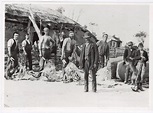
By the various names it went by, you can see that it was used to a great extent by individuals who worked outside, often in the heat. They would have it in a ceramic jug and leave it in the shade—or better yet, a creek—to keep cool.


Notice the jug of switchel in the lower right corner.


It was also used by sailors and whalers. When they were out whaling, they wouldn’t get the switchel until they got the whale.


The US Congress was known to have a bowl of switchel while in session. “On hot days - all summer and spring and often in winter, a great bowl of switchel stood in the middle of the Senate or the House. … Members paused in their great speeches … and going up to the great bowl, dipped deep.”

The Passing Age by Arthur Gray Staples (1924)


Congress

It was also a favorite in the courts of justice.


Laura Ingalls Wilder described a switchel-like drink in her novel The Long Winter.

"Ma had sent them ginger-water. She had sweetened the cool well-water with sugar, flavored it with vinegar, and put in plenty of ginger to warm their stomachs so they could drink until they were not thirsty. Ginger-water would not make them sick, as plain cold water would when they were so hot."


Herman Melville wrote in his work titled I and My Chimney, "I will give a traveler a cup of switchel, if he wants it; but am I bound to supply him with a sweet taste?"


It consists of water, shredded ginger, vinegar, and a sweetener—usually molasses, maple syrup, or honey.


Did I say vinegar? This does not sound appealing, but workers drank it by the gallons. So, naturally, I had to try it.


One of the old versions from 1800s called for 5 gallons of good water, 1/2 gallon of molasses, 1 quart of vinegar, and 2 ounces of powdered ginger.


Um . . . I don’t think so. That is way too much for little ole me to taste test.


It seems that everyone’s recipe was/is a little different. Some optional ingredients are freshly shredded ginger, nutmeg instead of ginger, salt, a fresh squeezed lemon, lemon zest, and rum—a favorite of sailors and was known to be in Congress’s version. Others used a fruit juice in lieu of the water. I mashed several versions together, pared it way down, and made mine this way.

1/2 tsp ginger

2 Tbsp honey

1.5 Tbsp apple cider vinegar

1.5 cups water


I made a second one with brown sugar instead of honey.


Though the early drinkers of this beverage didn’t know it, switchel has several health benefits.

◆         Ginger is a natural anti-inflammatory, helping with digestive issues, pain, and skin problems.

◆         Maple syrup and apple cider vinegar help replenish electrolytes.

◆         Apple cider vinegar has healing compounds like potassium, magnesium, and probiotics as well as helps to balance pH levels and detox the body.

◆         Real maple syrup is a great natural sweetener that reportedly doesn’t affect blood sugar levels like cane sugar when used in moderation and includes trace antioxidants and minerals.


“But, Mary, you didn’t tell us how it tasted.”


Like others online, I was surprised that it didn’t taste like swigging straight vinegar. I tasted the sweet honey flavor first then a hint of the vinegar tang at the back of my mouth as it was going down. It wasn’t too bad. However, the brown sugar version wasn’t as good. It was almost flavorless, but still with the hint of the vinegar on the back of my tongue. Maybe I’ll try adding more brown sugar or throwing in some maple syrup. I also like the idea of using juice instead of water.


Though I didn’t find it awesome, I might drink this regularly because of the health benefits.


Bottle of Switchel
Down the hatch.


THE PRODIGAL DAUGHTERS SERIES 


COURTING HER AMISH HEART (Book 1) ~ A doctor or an Amish wife? Kathleen Yoder can choose to be only one… Practicing medicine means sacrifice—no Amish man wants a doctor for a wife.

COURTING HER SECRET HEART (Book 2) ~ Caught between two worlds… Deborah Miller lives a double life as an Amish woman—and a fashion model! Soon she must choose between the Englischer world of modeling and the Amish man she’s come to love.

COURTING HER PRODIGAL HEART (Book 3) ~ Mother-to-Be’s Amish Homecoming. Pregnant and alone, Dori Bontrager is sure her Amish kin won’t welcome her back into the community—or the child she’s carrying.

https://books2read.com/marydavisbooks


MARY DAVIS, bestselling, award-winning novelist, has over thirty titles in both historical and contemporary themes. Her latest release is THE LADY’S MISSION. Her other novels include THE DÉBUTANTE'S SECRET (Quilting Circle Book 4) THE DAMSEL’S INTENT (The Quilting Circle Book 3) is a SELAH Award Winner. Some of her other recent titles include; THE WIDOW'S PLIGHT, THE DAUGHTER'S PREDICAMENT, “Zola’s Cross-Country Adventure” in The MISSAdventure Brides Collection, Prodigal Daughters Amish series, "Holly and Ivy" in A Bouquet of Brides Collection, and "Bygones" in Thimbles and Threads. She is a member of ACFW and active in critique groups.

Mary lives in Colorado with her Carolina Dog named Shelby. She has three adult children and three incredibly adorable grandchildren. Find her online at:
Books2Read Newsletter Blog FB FB Readers Group Amazon GoodReads BookBub


Sources

https://www.youtube.com/watch?v=zBGg4Svd8HI

https://www.youtube.com/watch?v=8wx1qfcT7KQ

https://www.ruralsprout.com/switchel/

https://www.almanac.com/history-switchel

https://en.wikipedia.org/wiki/Switchel

https://draxe.com/recipes/switchel/


Saturday, August 3, 2024

Blizzards of the 19th Century - Guest Post by Jodie Wolfe


Perhaps not many are aware of the great blizzards of the 19th Century, particularly from December 1885 to March 1888. The eastern United States and Great Plains suffered the most. It’s believed that a huge volcano explosion in the South Pacific in August 1883 was the cause of the huge snowstorms in the following few years.

A couple years before this storm, Laura Ingalls Wilder chronicled the effect of blizzards in her book The Long Winter that hit the Dakota Territory in 1880-81. Old photos show a train track cleared of snow and 8-12 feet of snow on either side in Minnesota. 

It’s reported in towns the drifts were as high as the buildings and people had to dig tunnels to be able to get around. Some folks were caught out in the storm because of the fierce wind and snow. People became lost and disoriented, sometimes dying a few yards from their home. Some prepared as the storm hit by tying a rope between their homes and a barn so they wouldn’t become lost in the blinding winds and snow.

On January 1-3 and January 6-8, 1886, a set of blizzards swept across the plains in what would become known as “The Great Blizzard of 1886.” Temperatures dropped to 30 degrees below zero with negative
wind chills. Drifts as high as twelve feet or more were common throughout the state of Kansas.

Before the storm hit, temperatures had been quite warm and rainy. One report I read from a Kansas farmer commented about how much his cows drank because of the heat.
An estimated 100 lives lost in the Kansas storm, were attributed to freezing to death. Over seventy-five percent of the livestock were decimated during this storm in some areas – over 100,000 cattle. Wildlife also lost their lives by freezing to death.

Train travel stalled with 12-foot-high drifts covering the tracks.

A storm that hit March 11-14, 1888, was often referred to as the ‘Great White Hurricane’. Warm temperatures were followed by plunging temperatures and wicked winds. The East Coast was blanketed in 50 feet high drifts. Boston, New York, and other cities were hit hard by snow blocking roads, knocking out telephone, telegraph, and rail service for several days. Many lives were lost in this storm.

What an incredible time in history, particularly if you’re a snow lover like me. :) I enjoyed utilizing the information from these blizzards in my upcoming book release, Convincing Lou.


Jodie Wolfe creates novels where hope and quirky meet. She is a member of American Christian Fiction Writers (ACFW), and Faith, Hope, & Love Christian Writers (FHLCW). She's been a semi-finalist and finalist in various writing contests. A former columnist for Home School Enrichment magazine, her articles can be found online at: Crosswalk, Christian Devotions, and Heirloom Audio. When not writing she enjoys spending time with her husband in Pennsylvania, reading, knitting, and walking. Learn more at www.jodiewolfe.com.


How hard can it be to round up one delinquent groom? 

Ellie Lou Williams will do just about anything to save her ranch, even going undercover as a man to round up a fella who is late to his own wedding. The reward will more than cover the money she owes the bank and solve all her problems.

Caleb Martin agrees to one final job as a deputy U.S. Marshal before he starts his new life away from the trail and tracking criminals. What he isn’t counting on is a mysterious bounty hunter who’s determined to undermine his every step.

Will one reach their goal first? Or will they learn to lean on God and work together?


*Winter images royalty free use from Pixabay.


Friday, August 26, 2022

Fit as a Fiddle

 By Cindy Regnier


 If you have read my posts in the past, you probably know I am a huge Laura Ingalls Wilder fan, and yes I’m going there – AGAIN! This time, I wanted to focus on Pa’s fiddle. The LIW books are full of references to Pa playing the fiddle and the many memories it created for Laura and her sisters. Though she included many of the lyrics to the songs she remembered, I always wished I could actually hear the music.

Charles Ingalls was an accomplished fiddler, and Laura documented 127 separate tunes that she remembered him playing. In Little House on the Prairie, Pa plays “Old Dan Tucker” so Mr. Edwards won’t feel lonesome as he heads back to his cabin. The song’s lyrics fit Mr. Edwards in Laura’s mind as she pictured him “washing his face in the frying-pan.”
Charles Ingalls

During a blizzard in The Long Winter Pa plays marches on the fiddle as Laura, Carrie, and Grace step in time to keep warm. Later as the blizzards grow more intense, Pa’s fiddle mimics their sounds. “The fiddle moaned a deep, rushing undertone and wild notes flickered high above it, rising until they thinned away in nothingness, only to come wailing back, the same notes but not quite the same, as if they had been changed while out of hearing.” As the winter drags on, Pa is unable to make music anymore, his fingers “too stiff and thick from being out in the cold so much” to play, a sad memory for Laura.

So I wondered, beyond the Ingalls family, what part did the fiddle play in American history? Fiddles, a popular European instrument, found their way to America with the first early explorers and settlers. In Jamestown in 1607, a man named John Utie played the fiddle. The Lewis and Clark expedition had at least two fiddlers in their group. Apparently that did much for morale and good relations with Indians. For a long while it was almost the only instrument you could find on the frontier.
European traditions strongly influenced America music. African culture and Native American culture also played a role until many ethnic influences eventually merged into the “American sound.” Fiddle music was the primary source of entertainment and “traveling fiddlers” were a welcome sight. The music and dancing was the escape from labor and hardship. Fiddles played for barn dances, husking parties, shivarees, weddings, even funerals.


 George Washington had his favorite fiddle tune, Jaybird Sittin’ on a Hickory Limb. Thomas Jefferson was an accomplished player, and his music played a part in courting his wife. Patrick Henry was good at fiddle playing and Davy Crockett developed the tune Crockett’s Reel, still played today.”

As the 19th century continued, immigrants brought with them the latest trends in fiddling from all over the world. In my opinion, Pa Ingalls was a large part of the fiddle’s history in America given its preservation in Laura’s books. 
Pa's fiddle
 

I’ve seen Pa’s fiddle on display at the Wilder home in Mansfield Missouri. I hope you can make it there one day too, if you haven't already. What a legacy!

How about you? Anyone know how to play a fiddle? Do you call it a fiddle or violin (I guess there are some minute differences) and what kind of fiddle music do you enjoy?


Scribbling in notebooks has been a habit of Cindy Regnier since she was old enough to hold a pencil. Born and raised in Kansas, she writes stories of historical Kansas, especially the Flint Hills area where she spent much of her childhood. Cindy is married to her husband of 39 years, has two grown sons, a son residing in heaven, and two beautiful daughters-in-law.

 
 To celebrate reaching 3 Million views, HHH is hosting a HUGE giveaway of over 60 books in 17 prizes, so there are many chances to win! One grand prize will consist of 10 books, two readers will win a second prize containing 5 books, and there will be 14 winners of a third prize containing 2 books each. There are several ways to earn entries, such as following, or commenting on the HHH blog each day. Thank you for being part of the HHH community, and best wishes in the giveaway!

Tuesday, October 26, 2021

The Wearing of the Wool


by Cindy Regnier

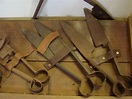
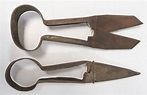
Do you live in a cooler climate and love to wear wool? Not only is it warm and soft, but natural. Sheep’s wool is so commonly used in our society that I began wondering how people used to shear a sheep back before there were things like electric clippers and what they used wool for once they obtained it. So – let's figure this thing out. Who first decided to “shear one of those fluffy animals and do something with that warm hair? Come to find out, sheep shearing is one of the world’s oldest industries. Nowadays wool is clipped by skilled shearers about once a year from the sheep. Wool’s many uses are the reason for the success of the sheep industry (mutton – not so much, in America anyway.).

Some sources say sheep were first domesticated over 10,000 years ago and raised as a food source in Central Asia, but shearing sheep began around 3500 B.C. when man learned to spin the wool. The production of wool is the oldest trade commodity known to man. The wool industry is mentioned in the Old Testament and was the first widespread international trade throughout ancient civilizations.
Most of the explorations organized by Queen Isabella of Spain were financed through her wool trading business. In the 1400’s, she paid for the voyages of Columbus and the conquistadors with profits from sheep shearing. The sheep were also used as a food source for Columbus and he left sheep in the New World when he sailed to Santo Domingo and Cuba. These sheep, known as Churras, are the ancestors of American sheep and were bred by the Navajo tribe for food and wool. 


England attempted to prevent breeding and shearing sheep in the American colonies of the 16th and 17th centuries to keep them dependent on English wool, but the colonists resorted to smuggling sheep into America and established their own lucrative wool business. By the mid 1600’s, the Massachusetts General Court required all children to learn how to shear sheep, spin the wool and weave it too. Imagine that!

The wool trade has been successful throughout the world for many centuries as an easily sustainable resource with many uses. It is the oldest tradable commodity and has only changed in the methods that the wool is taken from the sheep. Starting out as a very tedious process of hand clipping, the art of shearing has come a long way.
The earliest known mechanical machines were invented in the late 19th century and revolutionized the procurement of wool. It was a two person job and involved turning a handle. 

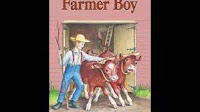
 Laura Ingalls Wilder described sheep shearing in her book Farmer Boy as follows: 

Father had cleaned the sheepfold and built a platform across one end of it. He and Lazy John each caught a sheep, set it up on the platform, and began cutting off its wool with long shears. The thick white mat of wool peeled back, all in one piece, and the sheep was left in bare pink skin. With the last snick of the shears the whole fleece fell on the platform, and the naked sheep jumped off it, yelling, “Baa-aa-aa!” 

As the story goes, it was young Almanzo’s job to carry the fleece up to the barn loft once it was shorn and the workers teased him that they would be done first while he still worked. Almanzo outsmarted them by hauling a sheep up to the loft before it was shorn. The Wilders evidently used most of their wool for the family. The women spun the fleece into a fabric they used for all sorts of garments and made yarns for knitting and other needlework.


Sheep shearing has come a long way since Almanzo took that sheep to the loft to fool French John and Lazy Joe. Today electric clippers are used by professional shearers. Hundreds of sheep can be sheared in a day by one skilled operator. Sheep shearing has even become a competition sport whereby shearers attempt to outperform each other in both time and leaving the fleece in one piece. Thankfully, the spinning is now done by machines!

Sheep shearing is a skill unlikely to ever die out, with wool being such a high commodity across the world. If you have the chance to watch a sheep shearing, check it out. I think it’s just as interesting a process as it was back in Almanzo’s time.


Rand Stafford isn't looking for love. He'd ridden that trail until his fiancée left him with a shattered heart. What he needs is a wife to help care for his orphan nieces. Desperate, he places an advertisement and hopes for the best.

Fleeing her dishonest employer, hiding herself on a Kansas cattle ranch sounds like the perfect refuge to Carly Blair. But its sanctuary comes with a price—a husband. While marrying a man she doesn't know means sacrificing her dreams, it's better than what she leaves behind.

Or is it?


Saturday, June 26, 2021

Things That Go Boom in the Night

By Cindy Regnier

 It’s that time of year again, time to celebrate our country and our freedom. My family operates a fireworks stand so as we prepare for the 2021 holiday, I wondered just how long firecrackers have been around. Did someone invent them sometime after 1776 to be used in our Independence Day celebration? Nope. Turns out people were enjoying firecrackers centuries before our forefathers signed that Declaration.

Though no one really knows for sure, many historians think that fireworks originated around A.D. 800. Chinese alchemists mixed saltpeter, sulfur and charcoal to make a crude gunpowder, apparently in search of a recipe for eternal life. They packed the powder into bamboo shoots and threw them into a fire creating a loud blast. Once they realized what they had made, the Chinese came to believe that these explosions would keep away evil spirits. 


  These firecrackers were used in celebration of the most important events in life – a birth, a wedding, a death, holidays, and coronations. By the 10th century, the Chinese had figured out that they could make bombs with the gunpowder, and so they attached firecrackers to arrows that they shot at enemies. Within the next 200 years, fireworks were honed into rockets that could be fired at enemies without the help of an arrow, a concept still used today in firework shows.

Fireworks eventually spread to Europe to celebrate military victories and were later used in public celebrations and religious ceremonies. Legend has it that Captain John Smith set off the first fireworks display in the American colonies in Jamestown, Virginia in 1608. Furthermore, fireworks were likely used in the very first 4th of July celebration. John Adams wrote in a letter, "The day will be most memorable in the history of America. I am apt to believe that it will be celebrated by succeeding generations as the great anniversary festival. It ought to be solemnized with pomp and parade … bonfires and illuminations [fireworks] … from one end of this continent to the other, from this time forward forevermore." His prediction was right, and the tradition began in 1777 and every year since then.

You knew I couldn’t make it to the end of this blog without mentioning Laura Ingalls Wilder. Laura described the Fourth of July Celebration like this: The music was so gay; the bandsmen in their blue and red and their brass buttons tootled merrily, and the fat drummer beat rat-a-tat-tat on the drum. All the flags were fluttering and everybody was happy, because they were free and independent and this was Independence Day. ~Farmer Boy, by Laura Ingalls Wilder.

In the books, Independence Day was always glorious.The sun shone and everybody reveled in their pride in being American. Of course, life isn’t always like that. Take the 4th of July in 1881, for example. This is the year of the Independence Day Laura described in Little Town on the Prairie. In her version, the town gathered around the flagpole, where the Declaration of Independence was read and Star Spangled Banner was sung. There was free lemonade and horse races, and politician handed out firecrackers. All under a shining sun with a happy crowd. The 38-star flag flew over De Smet, and the rest of the nation, in 1881.
Illustration by Garth Williams, in Farmer Boy, c. HarperCollins

In actuality, July 4, 1881 was a wet, gloomy day in De Smet, South Dakota. Any readings, speeches, or singing took place inside the hardware store. There was no Pledge of Allegiance, because it hadn’t been written yet – that would come about a decade later. And the crowd wasn’t happy all day. President Garfield had been shot 2 days earlier. News of this tragedy and worry for the President’s life (he lived 80 days before dying of infection from the wound) would have dampened the spirits more than the rain.

But telling that story isn’t celebratory and surely Laura wanted the children who read her books to learn a sense of patriotism and freedom. Certainly, Laura would have enjoyed fried chicken and lemonade, rousing speeches and songs, horse races and fireworks on various Independence Days, so she drew on these experiences, combined them, and gave us an iconic vision of what the 4th of July should be.

How do you celebrate the Fourth of July? I’d love to hear about it in your comments.


Rand isn't looking for love. He'd ridden that trail. He needs a wife to care for his orphan nieces. Desperate, he places an advertisement and hopes for the best. Fleeing her former employer who would use her to further his unlawful acts, an advertisement reads like the perfect refuge to Carly. Escaping the danger to hide herself on a Kansas cattle ranch is her best shot for freedom. But sanctuary comes with a price.While marrying a man she doesn't know or love means sacrificing her dreams, it's better than being caught by the law. Or is it?