Showing posts with label Presidents. Show all posts

Thursday, February 6, 2020

Beauvoir, Jefferson Davis Home and Presidential Library

By Michelle Shocklee

A few weeks ago, hubby and I drove down to Biloxi, Mississippi for a long weekend with our two grown sons, who drove in from Texas. We weren't able to see them for Christmas, so I was truly looking forward to some quality time with my kiddos. Before we left town, however, people kept asking, "Are you going to Biloxi to gamble at the casinos?" What?! Quite honestly, we didn't know there were casinos down there, nor did we have any interest in losing our hard-earned money. We simply wanted a beach getaway weekend with our boys. It was wonderful!

But casinos weren't the only unexpected site awaiting us. As history geeks, we enjoy visiting old houses, museums, and such, so you can imagine our 'geek radar' going off as we drove past an old white house, gleaming in the Mississippi sunshine. I read the sign out front --- Beauvoir --- and quickly Googled it. Was I ever shocked to discover who had once lived there!

Beauvoir; photo Wikipedia

Now, before I get into the history of Beauvoir, I have to clarify something. My great-grandfather fought for the Union Army during the Civil War. I'm immensely proud of that fact. As an author of historical fiction that deals with the evils of slavery, you can be assured this post is not meant to honor anyone associated with the Confederacy. It's simply to share about an historic and interesting place we visited while on vacation.
Hubby and eldest son at Beauvoir

Beauvoir, which means "beautiful view," was built in the mid-1800s by James Brown, a prosperous planter from Madison County, Mississippi, who wanted a summer home for his family. Because of its location on the beach facing the Gulf of Mexico, the house was built as a raised cottage, meaning its foundation is placed on massive pillars, not flat on the ground, allowing flood waters to flow through the ground level. With wide porches all around, high ceilings, and big windows, Beauvoir was designed to welcome cooling breezes from the gulf in the days before air-conditioning. With only eight rooms, Beauvoir has a simple floor plan, with some of the bedrooms being accessed from porches instead of hallways. In addition to the main house, Brown constructed two smaller cottages in what is now the front yard and some service buildings in the back, such as a fine brick kitchen. The Brown family owned Beauvoir for about twenty-five years.

Sarah Ellis Dorsey
In 1873, Sarah Ellis Dorsey, a famous and wealthy author from Natchez, Mississippi, bought the house and christened it Beauvoir. After her husband's death in 1875, the widow invited former Confederate President Jefferson Davis, who was ill and nearly bankrupt, to visit the plantation. She offered him a cottage called the Pavilion near the main house, where he could live and work on his autobiography, "Rise and Fall of the Confederate Government." He ended up living at Beauvoir the rest of his life. In 1878, Sarah, ill with cancer, remade her will, bequeathing her entire estate, including Beauvoir, to Jefferson Davis, making his youngest daughter, Varina Anne Davis, known as "Winnie," the heir after her father died. Sarah died in July 1879. Some records indicate Jefferson Davis offered to buy Beauvoir for $5,500, making at least one payment before Sarah passed.

Jefferson Davis' political and military life prior to the Civil War was varied. He was a graduate of West Point, a hero in the Battle of Monterrey during the Mexican-American War, and a senator from Mississippi. When Davis served in Washington, he helped get the Smithsonian Institution up and running after the founder, James Smithson, died. In his private life, he was a married father of several children. In 1860, he owned 113 slaves who worked at his plantation, Brierfield. In the months before the Civil War, Davis resigned from the Senate and was selected as president of the Confederacy. When the war ended, he was charged with treason and, although he was never tried or convicted, he lost the right to run for public office.

Following the death of Jefferson Davis, the home passed to his daughter, Winnie. Winnie, however, wasn't interested in caring for a large house in Mississippi, and instead moved to New York. When Winnie passed away at the age of 34, Davis' widow, Varina Howell Davis, inherited. In her will, she expressed her wish that Beauvoir be turned into a retirement home for Confederate soldiers. Her wishes were granted, and hundreds of veterans and some Confederate widows moved in, living in barracks constructed for them. A hospital, dining room, and chapel were also added. In 1953, the home became a museum.

In 1998, the Jefferson Davis Presidential Library opened. Inside is an auditorium showing a film about Davis, a large museum that highlights his long and eventful life, and a library for research. Some of his own books are available for viewing.

Jefferson Davis Presidential Library and Museum

All in all, our visit to Beauvoir was interesting. We may not agree with the choices Jefferson Davis made before, during, or after the Civil War, but he will always be a historical figure in American history. 

Your turn: Have you ever visited Beauvoir? What are you thoughts on it?


Michelle Shocklee is the award-winning author of The Planter's Daughter and The Widow of Rose Hill, historical sagas set on a Texas cotton plantation before and after the Civil War. Her time-slip novel set in Nashville will release in September 2020 from Tyndale House Publishers. Michelle and her husband of 32 years make their home in Tennessee. Connect with her at www.MichelleShocklee.com.


THE WIDOW OF ROSE HILL

Widowed during the war, Natalie Ellis finds herself solely responsible for Rose Hill plantation. When
Union troops arrive with a proclamation freeing the slaves, all seems lost. In order to save her son’s inheritance she strikes a deal with the arrogant, albeit handsome, Colonel Maish. In exchange for use of her family’s property, the army will provide workers to bring in her cotton crop. But as her admiration for the colonel grows, a shocking secret is uncovered. Can she trust him with her heart and her young, fatherless son?

https://www.amazon.com/gp/product/B078CN65FH/ref=dbs_a_def_rwt_bibl_vppi_i0


Saturday, March 2, 2019

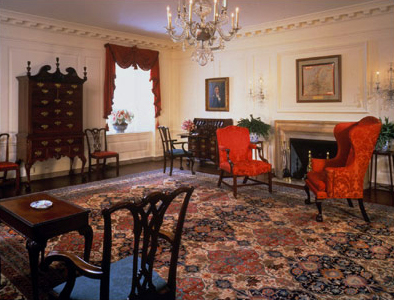
Inside the White House: The Map Room


The Map Room is on the ground floor of the White House, home of the American President in Washington D.C.. It received its name in World War II, when it was used by President Franklin Roosevelt as a situation room.
The Map Room, 1994. Public Domain.
In its earlier days, the room was a utilitarian space in the basement. During the Administration of Chester Arthur, however (1881-1885), a billiard table was installed in the unfinished room, and subsequent presidents enjoyed using the room as for billiards. (Billiards had been played at the White House since the days of John Quincy Adams, but there as yet was no designated room for the game.)


Chester Alan Arthur.jpg
Chester A. Arthur, a president who enjoyed billiards. Public Domain.

When Theodore Roosevelt moved in, however, he got rid of the billiard room. An active man, he did not find the game inspiring. During his Administration, in 1902, the entire White House was renovated, and new uses were found for the updated, finished rooms on the ground floor.

President Wilson brought back the billiard room, but the Hoovers fashioned the chamber into a quieter space. It was used as doctor's treatment room, as a place for household staff to meet, and as a waiting room for guests.

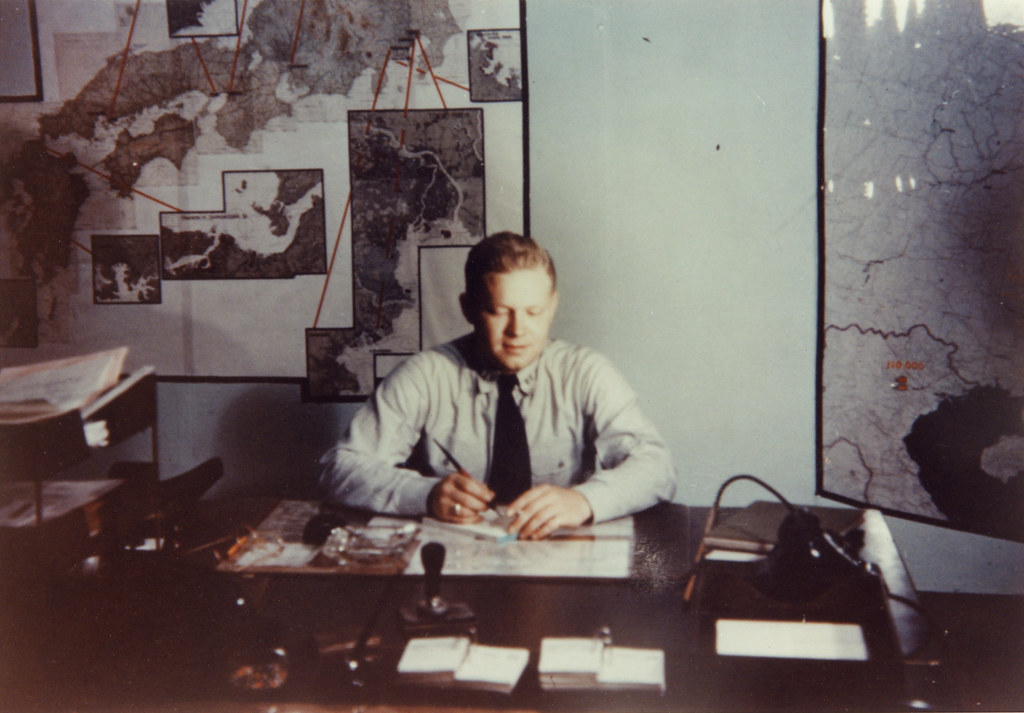
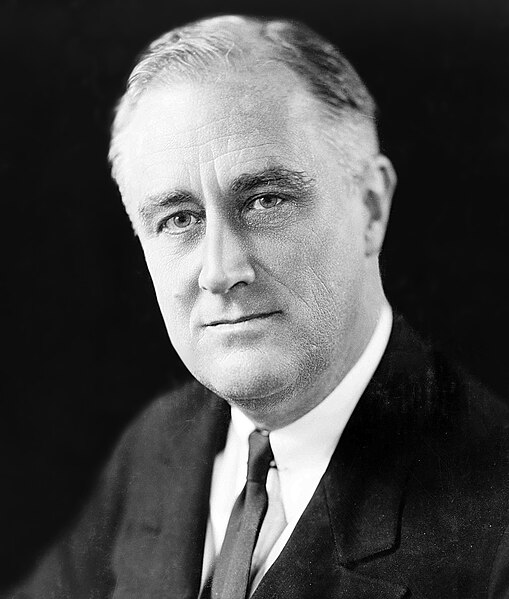
In World War II, however, President Franklin D. Roosevelt used it as a place to follow the course of the war. 
Image result for map room white house
Army Officer in the White House Map Room, WWII. https://goo.gl/images/EUY1ga
File:FDR in 1933.jpg
FDR, 1933. Elias Goldensky (1868-1943). Public Domain.
The room was renovated during the Truman Administration (1949–1952), paneled in with wood from the original load-bearing timbers of the house. Sandstone removed from the house was crafted into a mantel, paced here. Above it hangs the last situation map prepared for President Roosevelt, on April 3, 1945. 

In the early 1960's, the room was used as an office for the newly-minted Curator of the White House, and donations were cataloged here. 
JFKWHP-KN-C21624.jpg
Curator's office. Note the wood paneling from the Truman renovation. Robert Knudsen. White House Photographs. John F. Kennedy Presidential Library and Museum, Boston; public domain
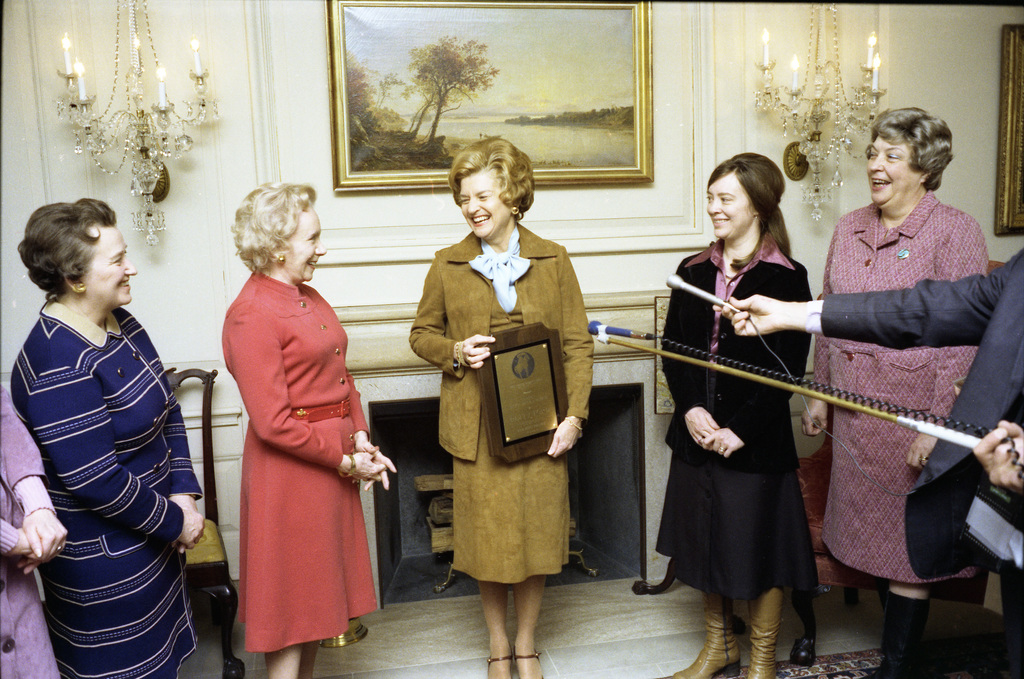
Then in 1970, First Lady Pat Nixon worked with the Curator to redecorate the space, and it became a parlor, as it is today. 


First Lady Betty Ford with Members of the National Women’s Party Following the Presentation of the First Alice Paul Award to Mrs. Ford in the Map Room at the White House  First Lady Betty Ford with Members of the National Women’s Party Following the Presentation of the First Alice Paul Award to Mrs. Ford in the Map Room at the White House. Gerald R. Ford White House Photographs 09/08/1974 - 20/01/1977. https://goo.gl/images/dcUqjF


The room was redecorated in again in 1994 in the Clinton Administration, in the Chippendale style, as it remains today. 
File:WJCwhmaprrom.jpg
President Clinton in the Map Room. Public Domain.

It is used for television interviews, small teas, and social gatherings. Here, President Obama was sworn into office for a second time by Chief Justice John Roberts, who'd accidentally flubbed the oath. 
File:Second oath of office of Barack Obama.jpg
Chief Justice Roberts administers the Oath of Office a second time, January 21, 2009. Public Domain.
Visitors from Princess Diana to the Dali Lama have sat in the red upholstered chairs here. One can only image the stories these walls could tell.

***

Susanne Dietze is the award-winning author of fifteen romances. You can learn more about her on her website, www.SusanneDietze.com.


Sunday, December 2, 2018

Inside the White House: Christmas Gingerbread Houses


Gingerbread has been part of America cuisine since its inception, and the first First Lady, Martha Washington, apparently had quite a good recipe for soft gingerbread. President and Mrs. Grant hired their cook based on her gingerbread, alone. However, it's not known when the first gingerbread house entered the White House, although some presidential families indubitably included them in their holiday decor.

It wasn't until the Nixon Administration that a gingerbread house became an official White House tradition. Assistant Executive Chef Hans Raffert designed and built a traditional A-frame style house for the family.

File:Pat Nixon first White House gingerbread house 1972.jpg
Pat Nixon and the first official gingerbread house in the State Dining Room, 1972. Public Domain.
Since then, a gingerbread house has been carefully crafted and placed on the 1902 mahogany console table in the State Dining Room, in front of the gilded mirror, for the family and visitors to enjoy during the holidays. 

What began as a sweet, A-frame style decoration of perhaps 1-2 feet in height continued through the Ford, Carter, and Reagan administrations, into the administration of George H. W. Bush. 
File:Larry Hagman - Hans Raffert - Nancy Reagan.jpg
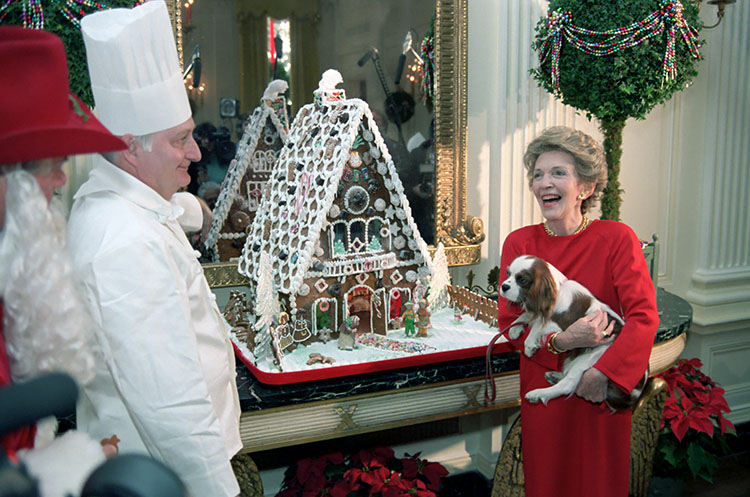
Nancy Reagan and her dog Rex speaking with with White House Executive Chef Hans Raffert and actor Larry Hagman dressed as a cowboy-hat wearing Santa Claus, December 9, 1985. Public Domain

In 1992, Roland Mesnier became Executive Pastry Chef, and he took over the job of creating the annual gingerbread house. That year, he created five gingerbread houses decorated with marzipan, icing, and spun sugar for the Bushes, with their likenesses crafted in marzipan, frolicking in sugary snow.

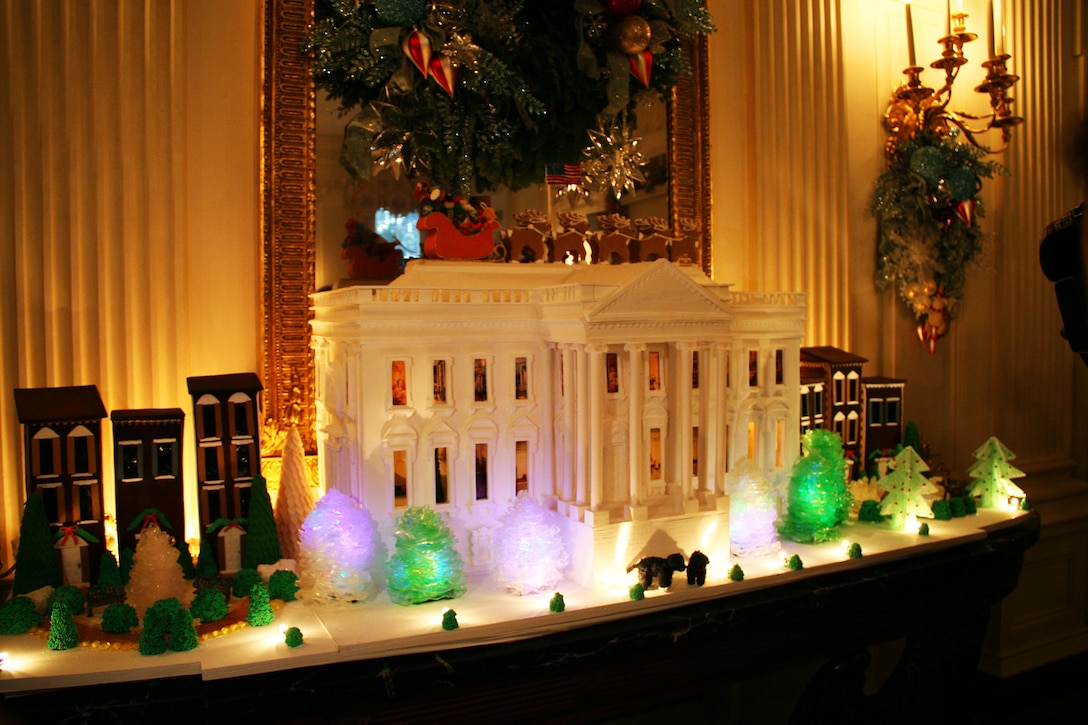
In 1993, he created a gingerbread replica of the White House, entitled "House of Socks" after the First Cat. Twenty-two marzipan sculptures of Socks frolicked around the house, and the personal touch of adding figures of the First Pet was well-received by the family and public alike.

File:Photograph of Socks the Cat Standing Next to the Gingerbread Replica of the White House- 12-05-1993 (6461501333).jpg
Socks the "First Cat" checking out the gingerbread house in 1993. Public Domain.
Today, the gingerbread houses weigh between 300 and 500 pounds. They are unique each year, and while the White House is often recreated in gingerbread, other buildings have been depicted: Santa's workshop, recreations of Bill and Hillary Clinton's childhood homes (in separate years), monuments in Washington, D.C. (for the Millennium Celebration during the Clinton Administration), a Nutcracker ballet stage, and a winter castle. 

Generally, the gingerbread houses go with the holiday theme selected by the first lady. Once she and her staff have come up with a theme--generally in the summer months--the executive pastry chef begins thinking of ideas.
File:Laura Bush and chef Roland Mesnier.jpg
Roland Mesnier with First Lady Laura Bush in 2006. Public Domain.
Once the design is approved by the First Lady's office and plans have been constructed, the pastry chefs start baking gingerbread, which must dry and harden. This can take weeks, so it generally happens mid-autumn. 

File:Replica of the White House made of gingerbread and white chocolate.jpg
Gingerbread house in 2009, with kitchen garden. By Samatha Appleton, Public Domain
A band saw is used to cut the pieces to size. Then, the chefs and chocolatiers create architectural elements out of chocolate, gum paste, or marzipan. Windows are crafted out of gelatin, and royal icing and marzipan are used to fashion vegetation and landscaping. Sometimes miniature furniture is created to sit inside the windows, too--edible, of course. 

Sometimes, personalized touches are added to the gingerbread house, like the addition of candied versions of the presidential pets or the garden. 

In late November, the team working on the gingerbread house puts in hours of overtime assembling the structure. A White House electrician installs lighting, if desired--and it's the only part of the gingerbread house that can't be eaten. This work is often done in the China Room.
File:Susie Morrison - White House gingerbread house 2010.jpg
Current White House Executive Pastry Chef Susie Morrison crafts the White House Gingerbread House in the China Room, 2010. Public Domain
Then the completed house is moved to the State Dining Room--a stressful job. Fragile and weighing in at a few hundred pounds, the gingerbread house can be difficult to transport and adjust. However, the gingerbread house is always in place, looking perfect (and delicious!) by the end of Thanksgiving weekend, when the White House holiday decorations are unveiled.

The White House gingerbread house displayed in the State Dining Room is made 250 pounds of pastillage, 40 pounds of marzipan, 25 pounds of gum paste, 80 pounds of gingerbread dough and 25 pounds of sugar. DoD photo by Terri Moon Cronk
Obama Administration Gingerbread White House with First Dogs, Bo and Sunny. https://goo.gl/images/5tThnq
A display shows the annual White House Gingerbread House during an event honoring military families at the White House in Washington, D.C., Dec. 2, 2015. The gingerbread house weighs close to 500 pounds, including more than 250 pounds of gingerbread dough, 150 pounds of dark chocolate, 25 pounds of gum paste, 25 pounds of pulled and sculpted sugar work and 25 pounds of icing. DoD photo by EJ Hersom
2015 Gingerbread House covered in dark chocolate, weighing in at close to 500 pounds. https://goo.gl/images/Vx71ur 

The White House is not the only gingerbread creation for 2018. The Capitol, Lincoln Memorial, Jefferson Memorial, and Washington Monument are included this year. The scene was made from over a hundred pounds of gingerbread and twenty pounds of royal icing. Sadly, I couldn't find a photo of it labeled for reuse, but you can look at the display here: https://goo.gl/images/XZBoHN.


Thousands of visitors stroll past the gingerbread house each year, but the presidential families enjoy the houses, too. Amy Carter, Chelsea Clinton, and the Bush twins have been rumored (or have admitted) to have nibbled on the houses while they were children.

***

How about you? Do you craft gingerbread houses?

***

Susanne Dietze began writing love stories in high school, casting her friends in the starring roles. Today, she's the award-winning author of over a dozen romances. A pastor's wife and mom of two, she loves fancy-schmancy tea parties, the beach, and curling up on the couch with a costume drama and a plate of nachos. You can visit her on her website, www.susannedietze.com, and sign up for her newsletter for an occasional cheery hello: http://eepurl.com/bieza5

Thursday, September 6, 2018

President Andrew Jackson and the Hermitage

By Michelle Shocklee

Since moving to the Nashville area last October, hubby and I have enjoyed visiting many historical sites located in this part of the world. For a history lover like myself, I must admit I feel as though I've landed in a sweet spot of the country! We've seen plantations, Civil War battlefields, old forts, old homes, and more. I look forward to visiting Belmont Mansion, Bell Meade Plantation, and other sites that pique our interest in the near future.

One historical site in particular, however, took me by surprise, and that is the Hermitage. I had no idea the home of President Andrew Jackson was located in Nashville. To be perfectly honest, I didn't know a lot about the seventh president of the United States, but boy oh boy, you can bet I do now! He led quite the interesting and sometimes tragic life, and I'd like to share a little of what I've learned with you!

In 1765 Andrew Jackson's parents and two older brothers immigrated to America from Ireland, landing in Charleston (some stories say Philadelphia), and headed 160 miles into the wilderness where they built a small log cabin near a creek somewhere between North and South Carolina. Sadly, Jackson's 29-year old father died three weeks before Andrew was born, possibly in a logging accident or from illness (both stories have been told), leaving his mother to raise the three boys. They went to live with relatives in the Waxhaws settlement, a Scots-Irish community.

Without a father to guide him, Andrew became unruly. He was known for pranks, cursing, and fighting, which no doubt broke his mother's heart since she had dreams of him becoming a minister.  When the Revolutionary war arrived in the Carolinas in 1778, thirteen-year old Andrew, along with his two older brothers, volunteered to fight the British. His oldest brother Hugh died from heat stroke the following year after the Battle of Stono Ferry, and Andrew and his remaining brother Robert were eventually captured.

During his captivity, an incident occurred that became the subject of an 1876 Currier & Ives lithograph. While imprisoned in Camden, South Carolina, Andrew was attacked by a British officer, Major Coffin, for refusing to clean his boots. Coffin swung his sword, and Andrew put his hand up to deflect the strike. He was scarred on his left hand and forehead and developed a hatred for the British. A biographer wrote: “It was cut to the bone, and a gash on his head left a white scar that Andrew Jackson carried through a long life that profited little to England or any Englishman.”

Andrew's bad luck continued. He and Robert contracted smallpox in prison and were gravely ill. Their mother arranged for their release in a prisoner exchange, but shortly after their release, Robert succumbed to the illness. After Jackson recovered, his mother traveled to Charleston to aid the war effort by nursing injured and sick soldiers. Tragically, while there she contracted cholera and died, leaving Jackson an orphan at the young age of fourteen.

With the war finally at an end, Andrew tried various occupations, including briefly as a school teacher and as a store clerk. In 1784, seventeen-year old Jackson decided to become an attorney. He moved to Salisbury, North Carolina, where he studied law by apprenticing with prominent lawyers. After three years, he received his license to practice law in several counties, but he soon had an itch to go further West and made the long trip across the Alleghany Mountains to a new settlement on the banks of the Cumberland River: Nashville.

While in Nashville, Andrew boarded with the widow of  Colonel John Donelson, one of the founding father's of Nashville. Donelson's daughter Rachel had recently returned home after a failed marriage. Andrew and Rachel fell in love and married, believing Rachel's first husband had obtained a divorce. It turns out the divorce was not final, making Rachel a bigamist and adulterer. Oops! It took some time, but the divorce was finalized and Andrew and Rachel's marriage was finally legal. Although the couple never had biological children, they did adopt three boys.

During these years, Andrew had a busy career. He was elected attorney general, was a delegate to the Tennessee constitutional convention, and after Tennessee became a state, he was elected as its only Representative. In 1797 he was elected as a US Senator, but his time in the Senate was short-lived because of his disgust with the current president's administration. Upon his return to Tennessee, he became a judge, military leader, merchant, landowner, planter, and, unfortunately, a slave owner.

In 1804, Jackson acquired a 425-acre farm--including several slaves--in Davidson County. Later he added more acres. He named it the Hermitage, the dwelling of a hermit. It wasn't until 1819 that work began on the house we see today. Up until that time he and Rachel lived in a simple log home. Rachel chose the site of the new two-story house atop a meadow, and her favorite place soon became the English-style garden filled with flowers.


Photos: Wikipedia


In 1828, Jackson was elected President of the United States following a contentious and truly ugly campaign. Tragically, his beloved Rachel became ill during this stressful time and died from a heart attack on December 22, 1828. It is said that Jackson had to be pulled from her so the undertaker could prepare the body. Rachel was buried at the Hermitage on Christmas Eve. "May God Almighty forgive her murderers," Jackson swore at her funeral, meaning his opponent and his supporters. "I never can."


The devastated Jackson entered the White House a widower and consoled himself by directing a massive renovation of the Hermitage. The mansion was expanded to 13 rooms. Two one-story wings were added, one on each side of the house. The east wing had a library and office where Jackson spent much of his retirement reading, writing letters and managing the day-to-day operations of his plantation. The west wing included another dining room and a pantry. A kitchen and smokehouse were added behind the home.


In 1834, while Jackson was still in the White House, a chimney fire ravaged the Hermitage and destroyed the eastern and central parts of the home. He hired architects Joseph Reiff and William C. Hume to redesign the mansion in a Greek Revivalists style complete with two-story, modified Corinthian columns along the front porch. The columns were coated with sand and the wood on the front facade painted tan to give the appearance of stone.


As a planter, Jackson owned at least 300 slaves over a span of 66 years. Although he was considered a benevolent owner, he did actively pursue runaways as seen in this notice and allowed his slaves to be whipped if they broke the rules. Three slave homes at the Hermitage still stand. One was the home of Alfred, a slave who tended Jackson’s horses and maintained farm equipment. Other remaining cabins include the original farmhouse where Jackson and Rachel lived before the mansion was built (which Jackson later converted into a one-story cabin) and the original Hermitage kitchen. Excavations have exposed the remnants of ten additional slave cabins and hundreds of thousands of artifacts. The artifacts reveal that Jackson’s slaves were spiritual and some may have been literate.

Andrew Jackson died on June 8, 1845 and is buried at the Hermitage next to his wife Rachel. His adopted son inherited the home and eventually sold it to the State of Tennessee. In 1889, after years of neglect, the Ladies Hermitage Association took over the upkeep. It is now a beautiful part of American history where millions of visitors come every year. 

Have you ever been to the Hermitage? What was your favorite part?


Michelle Shocklee is the award-winning author of The Planter's Daughter and The Widow of Rose Hill. Her historical novella set in the New Mexico Territory is included in The Mail-Order Brides Collection. Michelle and her husband of 31 years make their home in Tennessee. Connect with her at www.MichelleShocklee.com.
THE WIDOW OF ROSE HILL

Widowed during the war, Natalie Ellis finds herself solely responsible for Rose Hill plantation. When Union troops arrive with a proclamation freeing the slaves, all seems lost. How can she run the plantation without slaves? In order to save her son’s inheritance she strikes a deal with the arrogant, albeit handsome, Colonel Maish. In exchange for use of her family’s property, the army will provide workers to bring in her cotton crop. But as her admiration for the colonel grows, a shocking secret is uncovered. Can she trust him with her heart and her young, fatherless son?

https://www.amazon.com/Michelle-Shocklee/e/B01MYD4TRE/ref=sr_ntt_srch_lnk_1?qid=1486004955&sr=8-1

Thursday, August 2, 2018

Inside the White House: The Treaty Room

The Treaty Room is located on the second floor of the White House, in the president's family quarters. While it is currently used as a private study, the room has been used in numerous ways over the years, and many significant decisions have been made here.
File:WHTreatyJFK.jpg
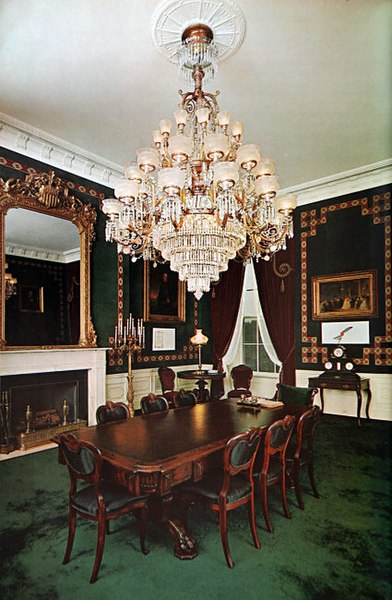
Treaty Room, Kennedy Administration, with Grant's table. Public Domain

President Lincoln used this particular room as a waiting room for the Presidential Office next door (which is now the Lincoln Bedroom). After Lincoln's assassination, his successor, President Johnson, chose to use the chamber as a meeting place for the Cabinet.

The Cabinet continued to meet here during subsequent administrations, and in 1869, President Ulysses S. Grant ordered a large walnut conference table with overstuffed chairs for the Cabinet to use. The table is fitted with eight locking drawers, which meant President Grant and each of the seven members of Cabinet had his own drawer in which to store things. 
File:White House Treaty Room 1901.jpg
The Cabinet Room, 1901, using Grant's Cabinet Table. Public Domain.
At this table in 1898, Secretary of State, William R. Day, and French Ambassador Jules Cambon (acting on behalf of the Spanish government) signed a peace protocol establishing an armistice in the Spanish-American war . The moment was recorded in a painting by Theobald Chartran (which can be viewed in the background of the below picture of President Obama).


File:Barack Obama reading a letter in the Treaty Room.jpg
President Obama in the Treaty Room, using the Grant Table as a desk. In the background, note Theobald Chartran's painting "Signing of the Peace Protocol Between Spain and the United States, August 12, 1898." Public Domain
In 1902 when the Presidential offices were moved to the West Wing, President Theodore Roosevelt's Cabinet members were allowed to purchase the overstuffed chairs in the room for $5 a piece as souvenirs. 

For the next several years, the room served various purposes, but it became known as the Monroe Room during the Hoover Administration when First Lady Lou Hoover turned it into a parlor using furnishings from the Monroe Administration, including the desk on which Monroe signed the Monroe Doctrine. The Truman Administration, however, redecorated using contemporary pieces.

In 1961, Jacqueline Kennedy oversaw the redecoration of the room, so that it closer resembled the Cabinet Room of Grant's administration almost a hundred years before. President Grant's conference table was returned, and the walls were papered in dark green, in a pattern similar to the paper in the room at the Peterson House (across the street from Ford's Theater) where Abraham Lincoln died. Theobald Chartran's painting "Signing of the Peace Protocol Between Spain and the United States, August 12, 1898" was hung in the room, as were copies of several treaties signed at the White House--and the name Treaty Room was chosen for the chamber.

President Kennedy signed the Nuclear Test Ban Treaty in the room in 1963, and President Nixon signed the US instrument of ratification of the Treaty on the Limitation of Anti-Ballistic Missile Systems in 1972.
File:President Kennedy signs Nuclear Test Ban Treaty, 07 October 1963.jpg
President Kennedy signing the Limited Nuclear Test Ban Treaty, October 7, 1963, in the Treaty Room (but not using the Grant table). Robert L. Knudson. Public Domain.
In 1979, President Carter had Grant's conference table moved to the north grounds of the White House for the signing of the peace treaty between Israel and Egypt; likewise, President Clinton also had the table moved outdoors for the signing of the Israeli-Palestinian accords in 1993 and the declaration ending the war between Jordan and Israel in 1994.

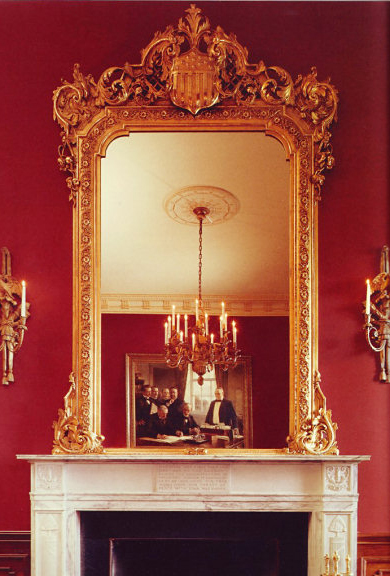
In 1993, the Treaty Room was decorated in rich colors and used as a private office for President Clinton. The walls were papered in simulation red-leather-style paper, and a gilded walnut chandelier that once hung in the Red Room was installed.
Treaty Room, Clinton Administration. Note the Theobald Chartran painting reflected in the mirror. Public Domain.
President George W. Bush had the room painted off-white and trimmed with olive green. In 2001, he addressed the nation here, to announce the War in Afghanistan had started.
File:Treaty Room in 2001.jpg
President Bush in the Treaty Room, with his feet on the Grant Cabinet Table, in 2001. White House Museum. Public Domain.
Like his predecessors, President Obama used the room as a private office. 

While often overlooked among other, more famous chambers in the White House, the Treaty Room has been a place of incredible importance. Throughout the decades, policy was debated in this room, armistices negotiated, and treaties signed. One can only imagine what the walls would say if they could talk!

***
Susanne Dietze began writing love stories in high school, casting her friends in the starring roles. Today, she's the Selah award-winning author of over a dozen historical romances who's seen her work on the ECPA, Publisher's Weekly, and Amazon Bestseller Lists for Inspirational Fiction. Married to a pastor and the mom of two, Susanne lives in California and enjoys fancy-schmancy tea parties, genealogy, the beach, and curling up on the couch with a costume drama and a plate of nachos. You can visit her on her website, www.susannedietze.com