Showing posts with label Voting. Show all posts

Wednesday, November 14, 2018

One of the Greatest Freedoms

The original star spangled banner - on display at the
Smithsonian’s National Museum of American
History in Washington, D.C.
http://www.si.edu/Encyclopedia_SI/nmah/starflag.htm
Recently, many of us exercised one of the greatest freedoms known to mankind - the freedom to cast a vote. We also honored Veteran's Day, where we celebrate the countless men and women who have served our country to ensure this basic freedom, knowing the great importance of maintaining a democracy.

With the tip of a pen, we possess the ability to rise to power men and women who will make decisions that not only affect us, but future generations to come. We shouldn't, for one moment, take that responsibility lightly.

When we cast our educated vote, our end goal should not be the hope of who fills the Oval Office, or a seat in the House or Senate. We should vote with the knowledge that it is but one step toward making America the kind of home we want a generation not yet created to inherit.

With the election so recently held, I think of our Founding Fathers and the nation they envisioned for us. Many of them didn't simply cast a ballot, they cast their lives for a dream - a dream of one nation, under God, indivisible, with liberty and justice for all.

"Now more than ever before, the people are responsible for the character of their Congress. If that body be ignorant, reckless and corrupt, it is because the people tolerate ignorance, recklessness and corruption. If it be intelligent, brave and pure, it is because the people demand these high qualities to represent them in the national legislature.... If the next centennial does not find us a great nation ... it will be because those who represent the enterprise, the culture, and the morality of the nation do not aid in controlling the political forces."
James Garfield, the twentieth president of the United States, 1877

"Freedom is not a gift bestowed upon us by other men, but a right that belongs to us by the laws of God and nature."
Benjamin Franklin

"America will never be destroyed from the outside. If we falter and lose our freedoms, it will be because we destroyed ourselves."
Abraham Lincoln

"We have forgotten God. We have forgotten the gracious hand which preserved us in peace and multiplied and enriched and strengthened us, and we have vainly imagined, in the deceitfulness of our hearts, that all these blessings were produced by some superior wisdom and virtue of our own. Intoxicated with unbroken success, we have become too self-sufficient to feel the necessity of redeeming and preserving grace, too proud to pray to the God that made us."
Abraham Lincoln's 1863 Thanksgiving Proclamation

"The cause of America is in a great measure the cause of all mankind. Where, some say, is the king of America? I'll tell you, friend, He reigns above."
Thomas Paine

"Those people who will not be governed by God will be ruled by tyrants."
William Penn

"If we abide by the principles taught in the Bible, our country will go on prospering and to prosper; but if we and our posterity neglect its instruction and authority, no man can tell how sudden a catastrophe may overwhelm us and bury all our glory in profound obscurity."
Daniel Webster

"It cannot be emphasized too strongly or too often that this great nation was founded, not by religionists, but by Christians; not on religions, but on the Gospel of Jesus Christ. For this very reason peoples of other faiths have been afforded asylum, prosperity, and freedom of worship here."
Patrick Henry

What about you? Did you exercise your freedom to vote? Who did you honor on Veteran's Day?

Gabrielle Meyer lives in central Minnesota on the banks of the Mississippi River with her husband and four children. As an employee of the Minnesota Historical Society, she fell in love with the rich history of her state and enjoys writing fictional stories inspired by real people and events.

Find her on Facebook
Find her on Pinterest
Find her on Twitter
Find her on Amazon
Find her on Goodreads
Find her on Her Website
Sign up for Her Newsletter

Monday, July 14, 2014

A NEW WOMAN EMERGES - INDEPENDENT WOMEN OF THE 1920s

ANNE GREENE here. I’m writing a book, working title, AGAINST ALL ODDS, about the 1920s. The research is so fascinating I’m sharing with my readers. I hope you enjoy learning more about that jazzy decade. 

A woman of 1920 would be surprised to know that she would be remembered as a new woman. Many changes would enter her life in the next ten years. Significant changes for women took place in politics, the home, the workplace, and in education. Some were the results of laws passed, many resulted from newly developed technologies, and all had to do with changing attitudes toward the place of women in society.  

When passed in 1920, the Nineteenth Amendment gave women the right to vote. Surprisingly, some women didn’t want the vote. People believed women’s roles and men’s roles did not overlap. This idea of separate spheres held that women should concern themselves with home, children, and religion, while men took care of business and politics.
Though slow to use their newly won voting rights, by the end of the decade women influenced the political agenda of the federal government. They put more emphasis on social improvement, such as protective laws for child labor and prison reform.
Female high school students seldom expected to go to college. If they did, most women became teachers or nurses as these were considered suitable professions for women. Few women earned degrees during the 1920s. But times were changing, and each year more women earned college degrees.
Before WWI most women lived in rural areas without electricity. Imagine trying to keep food fresh without a refrigerator, ironing with an iron that had to be reheated constantly, cooking on a woodstove, going to an outside well for water, and visiting an outhouse instead of a bathroom.
The 1920s women found that electricity made housework easier, with electrically run vacuum cleaners, irons, and washing machines. Electricity meant that people could stay up later at night, because electric lights were more efficient than kerosene lamps and candles. Indoor plumbing brought water inside and introduced a new room to clean—the bathroom. 
In the 1920s only about 15 percent of white and 30 percent of black married women with wage-earning husbands held paying jobs. Most Americans believed that women should not work outside the home if their husbands held jobs. As a result, wives seldom worked at outside jobs. However, some married women in desperate need took jobs in textile mills.

By 1922 mills hired female floor workers. Cotton mills employed a few nurses, teachers, and social workers to staff social and educational programs. Black women worked as domestic and child-care workers. Public acceptance of wage-earning jobs for young unmarried women grew. No longer being limited to work as mill girls or domestics, women began to perform clerical work in offices and retail work in shops and department stores. Some young married women worked until they had children. Working for wages gave women independence, and by 1930 one in four women held a paying job.
Despite increasing opportunities in employment and education, and the expanding concept of a woman’s place, marriage remained the goal of most young women. Magazine articles and movies encouraged women to believe that their security and social status depended on a successful marriage. The majority worked only until they married.
Today the easily recognized image of the flapper symbolizes the 1920s for many people. The flapper—with her short skirts, short hair, noticeable makeup, and fun-loving attitude—represented a new freedom for women. The old restrictions on dress and behavior were overthrown.

Is this glamorous and rebellious image of the flapper a true representation of the 1920s woman? Not entirely. In order to be a flapper, a woman had to have enough money and free time to play the part. College girls, unmarried girls living at home, and independent office workers most frequently presented themselves as flappers. However, the average woman did wear the fashions made popular by flappers. As often happens, unconventional clothing integrated into fashion.
Flappers popularized slender, boyish fashions. Figures were flattened with undergarments. Hemlines, straight or uneven, gradually crept up, and waistlines dropped. High-fashion evening wear in tubular, sleeveless styles featured beading and fringe. Day dresses copied the evening lines. Short skirts were complemented by flesh-colored stockings worn with decorative shoes. Hair was cut close to the head and covered outdoors by the close-fitting cloche hat. Makeup became respectable. Between 1920 and 1930 women’s appearance changed completely.
Women’s lives changed. Society accepted that women could be independent and make choices for themselves in education, jobs, marital status, and careers. Women’s spheres broadened to include public as well as home life. The new woman was on her way.
Leave a comment on what you think was the best change for women in the 1920s for a chance to win an autographed copy of MARRIAGE BY ARRANGEMENT.

ANNE GREENE delights in writing about wounded heroes and gutsy heroines. Her second novel, a Scottish historical, Masquerade Marriage, won three prestigious book awards. The sequel Marriage By Arrangement released November, 2013.  A Texas Christmas Mystery also won awards. Anne’s highest hope is that her stories transport the reader to awesome new worlds and touch hearts to seek a deeper spiritual relationship with the Lord Jesus. Anne makes her home in McKinney, Texas. She loves to talk with her readers. Buy Anne’s books at http://www.Amazon.com. Talk with Anne on twitter at @TheAnneGreene. View Anne’s books, travel pictures and art work at http://www.AnneGreeneAuthor.com.
Learn more about Anne as well as get tips on writing award-winning books at http://www.anneswritingupdates.blogspot.com.

Monday, October 21, 2013

Voting in Regency England

Naomi Rawlings here today. I’ve always found the process of democracy—and elections in particular—rather fascinating. And as we head into the month of November, I wanted to share a little about elections and voting rights in Regency England.
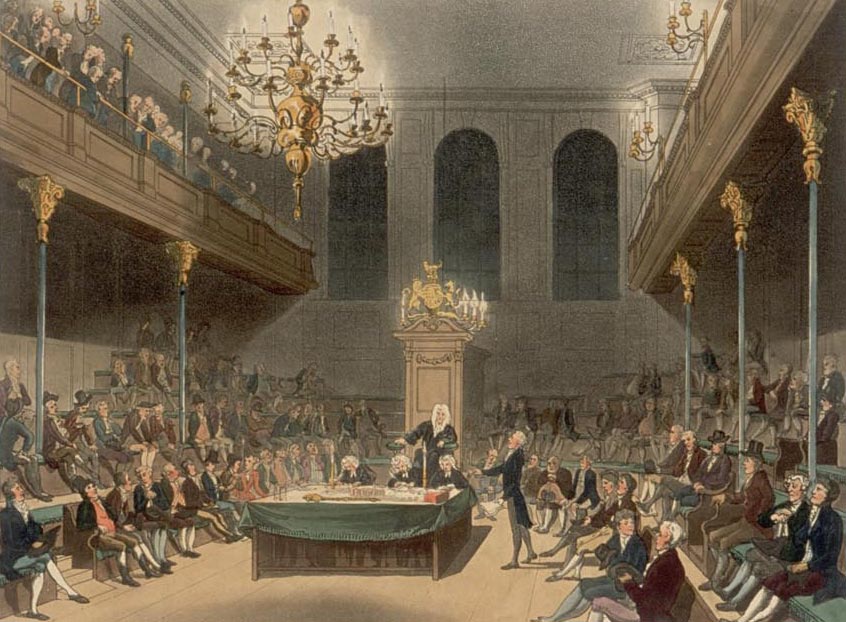
I’m afraid voting options were rather limited for the common British subject. Britain’s Parliament is (and was) divided into two houses, the House of Lords and the House of Commons. The House of Lords was composed of peers who were approved membership by their fellow peers, and these positions in the House of Lords were handed down through heredity. Your regular English coal miner or weaver or farmer had no voice in anything that happened in the House of Lords.
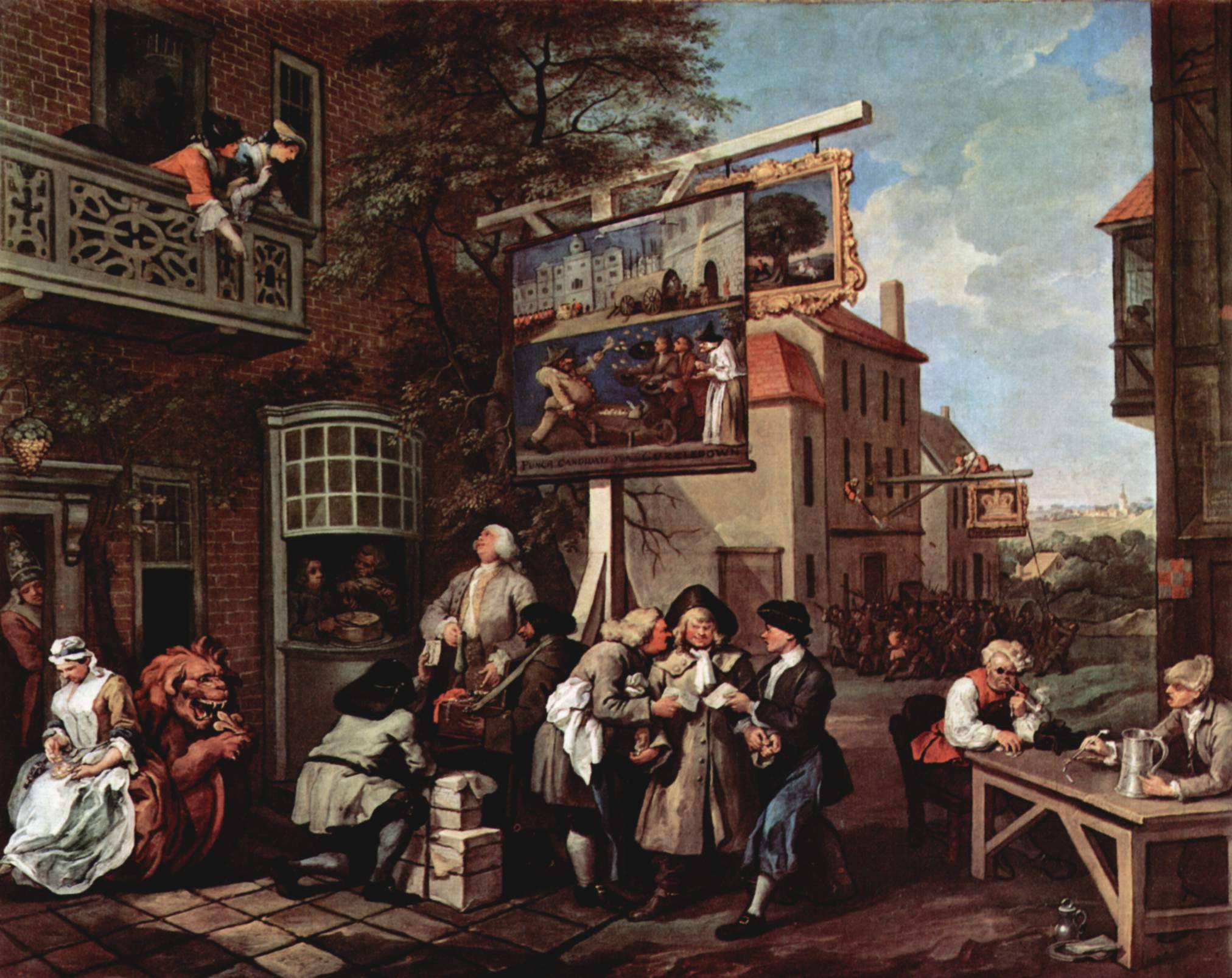
The House of Commons was a little more democratic in nature. These members were “elected,” by counties and boroughs, though a lot of corruption was embedded in the electoral process. When Regency characters in novels and movies mention purchasing a seat in the House of Commons, that’s because the electoral process was so crooked individuals could well “purchase” seats that were supposed to be "elected."
Further complicating the issue, a Member of Parliament representing a county had to have a yearly income of 600 pounds. And a Member of Parliament representing a borough had to have a yearly income of 300 pounds. Thus election to and involvement in parliament was unattainable for the average Englishman. In fact, lower born sons of peers filled a good number of the seats in Commons for this very reason.
Even more disparaging, all voting was done open ballot, and oftentimes retribution could occur if you voted for the wrong person. For example, if an earl's third son was running for a seat in Commons and you farmed the earl's land, you could go cast your vote for the opposing candidate. But you might well loose your rights to farm as a result.
Elections were hardly honest or fair. It was a world where the most elite and wealthy controlled the government and gave the bulk of the country's citizens very little power. Most citizens were not even allowed to "vote."
To vote in county elections, a person had to be:
  1. Male--Though offensive to most people living today (myself included), this was completely normal for the time period. Women’s suffrage wasn’t even thought of yet.
  2. A Property Holder with land worth 40 shillings or more per year--this is known as the forty shilling freehold.

To vote in borough elections, you had to be:
  1. Male
  2. A resident of the “right” county or borough.There were a lot of populated cities in Regency England that didn’t get any representatives in the House of Commons. The designated “boroughs” were delineated during the Middle Ages and not changed until 1832. So numerous cities that sprang into existence due to industrialism were denied members to the House of Commons, while some extremely small communities that had been thriving 400 years earlier got to elect officials.
  3. 3). Owner of a certain amount of wealth or property. The degree of wealth and property ownership varied from borough to borough. In some places, the forty shilling freehold stood. In others, not receiving alms or poor relief earned you the right to vote. And in others, simply owning a home gave you opportunity to vote.

So now I’m curious. If you’d been living during the Regency days, do you think you (or your husband) would have been able to vote? I daresay my husband would not own enough property to qualify.
*****
Naomi Rawlings is mom to two young boys, a wife to her wonderful husband, an author for Love Inspired Historical, and an avid reader. She and her family live in Michigan’s rugged Upper Peninsula, where they get over 200 inches of snow per winter and share their ten wooded acres with black bears, wolves, coyotes, deer, and bald eagles. Because of her romance novel addiction (and the alarmingly high number of books she devours per week) she started a website for inspirational romance lovers like herself:  www.inspirationalromanceratings.com. Naomi is looking forward to the release of her next book, The Wyoming Heir, in January 2014. For more information about Naomi or her books, please visit her website at www.naomirawlings.com.

Note: This blog post was originally published on Regency Reflections in November 2012