Showing posts with label february. Show all posts

Tuesday, February 2, 2021

History of the Amethyst: February's Birthstone


Blogger: Amber Schamel
 

Necklace from South Aribia dating 2,000 B.C.
From "Gems and Gemstones: Timeless Natural Beauty of the Mineral World"
by Lance Grande and Allison Augustyn, 2009, University of Chicago Press

Happy February, everyone! And happy birthday to all those born in this blistery month. Today we get to study one of my favorite birthstones, the amethyst. This gorgeous stone comes in beautiful hues of purple, a color that has been my favorite since I was old enough to name it.

The name amethyst comes from the Greek word 'amethystos' which can be translated "not drunken". The ancient Greeks believed that the gem would prevent intoxication, allowing someone to hold their liquor with a clear head, thus, they often used the stone for wine goblets.

 The earliest findings of amethyst jewelry dates back to 2000 B.C. The piece was engraved with a South Arabian script, believed to be from the 8th century. 

Mosaic depiction of god Bacchus
Public Domain


One legend of mythology, most famously told by French poet Remy Belleau, tells the tale of Bacchus, god of intoxication, pursuing a maiden by the name of Amethyste. The damsel refused his affections and prayed to the gods to remain chaste. The chaste goddess Diana answered her prayer by turning her into a white stone. Bacchus was so inspired and humbled by Amethyste's desire to remain chaste that he poured a goblet of wine upon the stone as an offering, turning the crystals purple. This legend, and variations of it, are interesting because it indicates that perhaps the ancients knew amethyst was a purple quartz.

Today, amethyst is not as rare as other gemstones we have studied, but it still manages to avoid being "common." It can be found in every part of the world, but it is still sought after for its unique, rich color. However, it wasn't always as plenteous as it is now. Up until the 18th century, amethyst was considered a "cardinal" gem, meaning its value was equal to the diamond and other most-precious gems. It wasn't until larger sources of it were discovered in Brazil that it became available to those of us who are not among the most wealthy. 

Carving of Roman Emperor Caracalla
in Amethyst.
Public Domain


Because of its color, amethyst was a favorite of royalty around the world. It was found in Anglo-Saxon graves, Egyptian tombs, on the crown jewels of monarchs, containing images of emperors, and more.

Clergy also loved this stone, and it was used in many religious relics for several reasons. The first is that the purple was thought to represent the deity of Christ. Second, the amethyst was one of the twelve stones in the Priestly breastplate in the Old Testament. Thirdly, the stone was said to be one of the stones representing the twelve apostles. Finally, since the stone indicated the meaning "Not drunken", they felt it represented Peter's words on the day of Pentecost in Acts 2:15-16, "These are not drunken, as ye suppose, seeing it is but the third hour of the day. But this is that which was spoken by the prophet Joel."

Some accounts say that Saint Valentine had a ring with Cupid carved into amethyst, which could be the reason it was chosen as the birthstone of February, the month of Valentine's day.

Great minds such as Leonardo De Vinci utilized the stone and believed it helped to quicken the mind and dissipate evil thoughts.

Today, amethyst is still in great demand and is used for all types of ornaments and jewelry such as rings, necklaces, rosary beads and more. The most important sources are still in Brazil.

For such a wintry month as February, a brilliant stone like Amethyst is a beautiful and welcome contrast. 

*****

Two-time winner of the Christian Indie Award for historical fiction, Amber Schamel writes riveting stories that bring HIStory to life. She has a passion for travel, history, books and her Savior. This combination results in what her readers call "historical fiction at its finest".  

She lives in Colorado Springs near her favorite mountain, in a small "castle" with her prince charming. Between enjoying life as a new mom, and spinning stories out of soap bubbles, Amber loves to connect with readers and hang out on Goodreads with other bookish peoples.

Amber is a proud member of the American Christian Fiction Writers Association. Visit her online at www.AmberSchamel.com/ and download a FREE story by subscribing to her Newsletter!

Thursday, February 23, 2017

February--Things Happen in the Shortest Month


The month of February may be short, but many significant events have happened in it, at the dead of winter in the United States. Here are twenty-six, just for thought.


February 1, 2003 - Sixteen minutes before it was scheduled to land, the Space Shuttle Columbia broke apart in flight over west Texas, killing all seven crew members.


February 2, 1848 - The war between the U.S. and Mexico ended with the signing of the Treaty of Guadalupe Hidalgo. In exchange for $15 million, the U.S. acquired the areas encompassing parts or all of present day California, Nevada, Utah, Arizona, New Mexico, Colorado, Wyoming, and Texas.


Cochise
February 3, 1870 - The 15th Amendment to the U.S. Constitution was ratified, guaranteeing the right of citizens to vote, regardless of race, color, or previous condition of servitude—and the 16th Amendment to the U.S. Constitution was ratified, granting Congress the authority to collect income taxes.


February 4, 1861 - Apache Chief Cochise was arrested in Arizona by the U.S.Army for raiding a ranch. Cochise then escaped and declared war, beginning the period known as the Apache Wars, which lasted 25 years.


February 6, 1952 - King George VI of England died. Upon his death, his daughter Princess Elizabeth became Queen Elizabeth II, Queen of the United Kingdom of Great Britain and Northern Ireland. Her actual coronation took place on June 2, 1953.


February 8, 1587 - Mary Stuart, Queen of Scots, was beheaded at Fotheringhay, England, after 19 years as a prisoner of Queen Elizabeth I. She became entangled in the complex political events surrounding the Protestant Reformation in England and was charged with complicity in a plot to assassinate Elizabeth.


February 9, 1943 - During World War II in the Pacific, U.S. troops captured Guadalcanal in the Solomon Islands after six months of battle, with 9,000 Japanese and 2,000 Americans killed.


February 10, 1763 - Britain, Spain and France signed the Treaty of Paris, ending the Seven Years’ War (also known as the French and Indian War in North America).


February 10, 1840, Britain's Queen Victoria married Prince Albert of Saxe-Coburg and Gotha.


February 12, 1809 - Abraham Lincoln (1809-1865) the 16th U.S. President was born in Hardin County, Kentucky.


February 13, 1635 - Boston Latin School, the first tax-payer supported (public) school in America was established in Boston, Massachusetts.


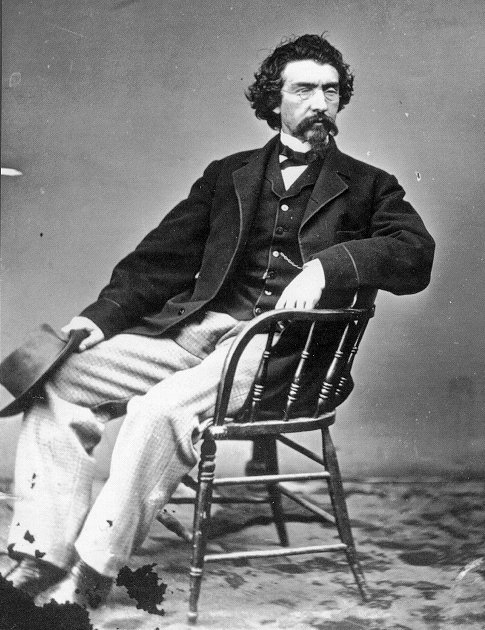
Matthew Brady
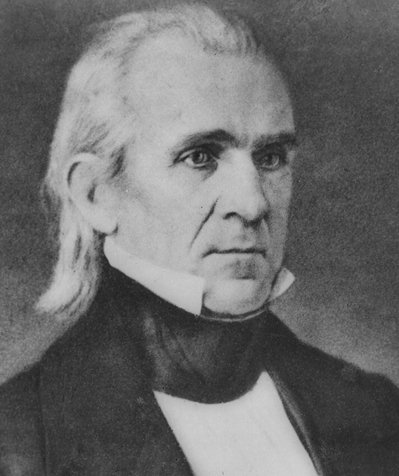
February 14, 1849 - Photographer Mathew Brady took the first photograph of a U.S. President in office, James Polk.


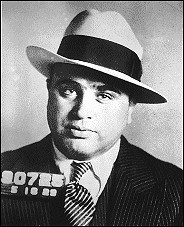
February 14, 1929 - The St. Valentine's Day massacre occurred in Chicago as seven members of the Bugs Moran gang were gunned down by five of Al Capone's mobsters posing as police.


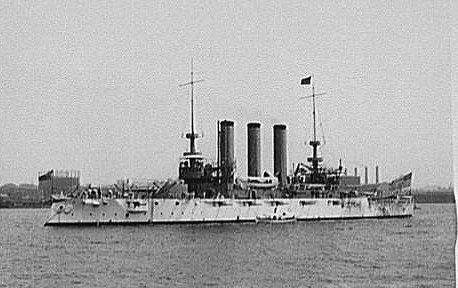
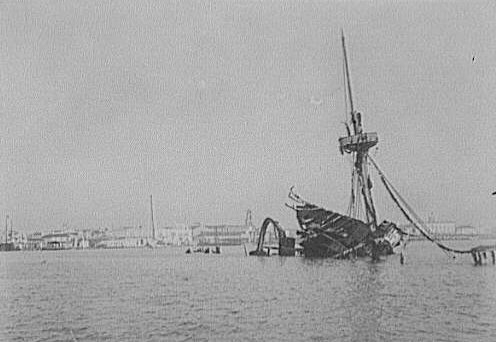
February 15, 1898 - In Havana, the U.S. Battleship Maine was blown up while at anchor and quickly sank with 260 crew members lost. The incident inflamed public opinion in the U.S., resulting in a declaration of war against Spain on April 25, 1898.


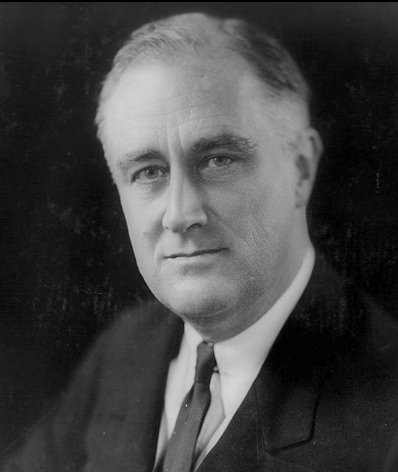
February 15, 1933 - An assassination attempt on newly elected U.S. President Franklin D. Roosevelt occurred in Miami, Florida. A spectator deflected the gunman's aim. As a result, Chicago Mayor Anton Cermak was shot and killed instead. The gunman, an Italian immigrant, was captured and later sentenced to death.


Feb. 15, 1642 - Astronomer and physicist Galileo Galilei was born in Pisa, Italy. He was the first astronomer to use a telescope and advanced the theory that the sun, not the earth, was the center of the solar system.


February 19, 1942 - Internment of Japanese Americans began after President Franklin Roosevelt issued an Executive Order requiring those living on the Pacific coast to report for relocation. Over 110,000 persons therefore shut down their businesses, sold off their property, quit school and moved inland to the relocation centers.


February 20, 1962 - Astronaut John Glenn became the first American launched into orbit. Traveling aboard the "Friendship 7" spacecraft, Glenn reached an altitude of 162 miles (260 kilometers) and completed three orbits in a flight lasting just under five hours.


George Washington
February 22, 1956 - In Montgomery, Alabama, 80 participants in the three-month-old bus boycott voluntarily gave themselves up for arrest after an ultimatum from white city leaders. Martin Luther King and Rosa Parks were among those arrested. Later in 1956, the U.S. Supreme Court mandated desegregation of the buses.

February 22, 1732 - George Washington was born in Westmoreland County, Virginia. He served as commander of the Continental Army during the American Revolution and became the first U.S. President.

February 23, 1942 - During World War II, the first attack on the U.S. mainland occurred as a Japanese submarine shelled an oil refinery near Santa Barbara, California, causing minor damage.


February 24, 1582 - Pope Gregory XIII corrected mistakes on the Julian calendar by dropping 10 days and directing that the day after October 4, 1582 would be October 15th. The Gregorian, or New Style calendar, was then adopted by Catholic countries, followed gradually by Protestant and other nations.


February 24, 1867 - The House of Representatives voted to impeach President Andrew Johnson. The vote followed bitter opposition by the Radical Republicans in Congress toward Johnson's reconstruction policies in the South. However, the effort to remove him failed in the Senate by just one vote.


February 26, 1848 - The Communist Manifesto pamphlet was published by two young socialists, Karl Marx and Friedrich Engels. It advocated the abolition of all private property and a system in which workers own all means of production, land, factories and machinery.


February 27, 1950 - The 22nd Amendment to the U.S. Constitution was ratified, limiting the president to two terms or a maximum of ten years in office.
Lithograph depicting the explosion on the USS Princeton


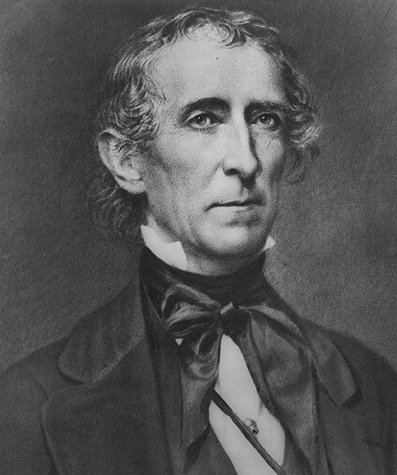
February 28, 1844 - During a demonstration of naval fire power, one of the guns aboard the USS Princeton exploded, killing several top U.S. government officials on the steamer ship, and narrowly missed killing President John Tyler.


Also in February, 2017, I launched my new series, Maine Justice. To enter for a copy of the first book, The Priority Unit, leave a comment and your contact info.


Susan Page Davis is the author of more than seventy published novels. She’s always interested in the unusual happenings of the past. Her newest books include The Priority Unit, Echo Canyon, The Saboteur, and My Heart Belongs in the Superstition Mountains. She’s a two-time winner of the Inspirational Readers’ Choice Award and the Will Rogers Medallion, and also a winner of the Carol Award and a finalist in the WILLA Literary Awards and the More Than Magic Contest. Visit her website at: www.susanpagedavis.com .


Monday, January 20, 2014

Winter, Woeful and Wonderful

by Linore Rose Burkard

There are days when winter is wonderful. White. Pristine. Silent and still, letting one's soul rest. Winter, however, can be a challenge. January and February can drag on, offering little but an endless litany of dreary weather.  The days are short, the sunlight weak (unless one is on the road driving when it is suddenly blindingly bright)  and snow, fog, or ice seem to cloud our minds as well as our walkways.  

Perhaps writers and poets are more sensitive to the vagaries of the seasons than most, but I love the way they capture them. The following poems and snippets, taken from the pages of history, show winter in its breadth of both woe and wonder. 
Snow Creek, Wisconsin
No one captures the bleakness better, I think, than Emily Dickinson, in the following: 

There’s a certain Slant of light,
Winter Afternoons —
That oppresses, like the Heft
Of Cathedral Tunes —

Heavenly Hurt, it gives us —
We can find no scar,
But internal difference,
Where the Meanings, are —

None may teach it — Any —
’Tis the Seal Despair —
An imperial affliction
Sent us of the Air —

When it comes, the Landscape listens —
Shadows — hold their breath —
When it goes, ’tis like the Distance
On the look of Death —

Or, from Scottish poet Robert Burns:


The wintry west extends his blast,
  And hail and rain does blaw;
Or the stormy north sends driving forth
  The blinding sleet and snaw:
While, tumbling brown, the burn comes down,
  And roars frae bank to brae;
And bird and beast in covert rest,
  And pass the heartless day.

...Thou Power Supreme, whose mighty scheme
  These woes of mine fulfil,
Here firm I rest; they must be best,
  Because they are Thy will!
Then all I want—O do Thou grant
  This one request of mine!—
Since to enjoy Thou dost deny,
  Assist me to resign.

from,Winter: A Dirge, 1781
And many of us do just that: Resign ourselves to enduring winter blasts. However, in contrast to heartless winds and icy walks, the following vignettes show winter at its best.

    Now winter nights enlarge
The number of their hours,
And clouds their storms discharge
Upon the airy towers.
Let now the chimneys blaze,
And cups o’erflow with wine;
Let well-tuned words amaze
With harmony divine.
Now yellow waxen lights
Shall wait on honey love,
While youthful revels, masques, and courtly sights
Sleep’s leaden spells remove.  

Thomas Campion, from, Now Winter Nights Enlarge, 1617
Or, this almost playful piece, by Robert Louis Stevenson:

   Late lies the wintry sun a-bed,
A frosty, fiery sleepy-head;
Blinks but an hour or two; and then,
A blood-red orange, sets again.

Before the stars have left the skies,
At morning in the dark I rise;
And shivering in my nakedness,
By the cold candle, bathe and dress.

Close by the jolly fire I sit
To warm my frozen bones a bit;
Or with a reindeer-sled, explore
The colder countries round the door.

When to go out, my nurse doth wrap
Me in my comforter and cap;
The cold wind burns my face, and blows
Its frosty pepper up my nose.

Black are my steps on silver sod;
Thick blows my frosty breath abroad;
And tree and house, and hill and lake,
Are frosted like a wedding-cake.
 

Winter-Time, from, A Child's Garden of Verses, 1885  
What I love most about winter in many older poems are the references to home and hearth fires. In my regency Christmas book, I dedicated a whole section to poetry and found more snippets of happy scenes of families gathered 'round the hearth than I could possibly put into one book. 
I leave you with a few, beginning with this from Felicia Hemans, a foremost female poet from Regency England, though little known today:  
 
 By the gathering round the winter hearth,
When twilight call'd unto household mirth;
By the fairy tale or the legend old
In that ring of happy faces told;
By the quiet hour when hearts unite
In the parting prayer and the kind "Good-night;"
By the smiling eye and the loving tone,
Over thy life has the spell been thrown.
And bless that gift!–it hath gentle might,
A guardian power and a guiding light.

 From, The Spells of Home

Another, also from Mrs. Hemans, idealized, perhaps, but charming: 

The merry Homes of England!
Around their hearths by night,
What gladsome looks of household love
Meet in the ruddy light!
There woman's voice flows forth in song,
Or childhood's tale is told,
Or lips move tunefully along
Some glorious page of old.  (1828)


May you enjoy your own hearth-fires, or other cozy spot to read, relax and renew your soul during the slower months of winter.


Linore Rose Burkard is the creator of "Inspirational Romance for the Jane Austen Soul." Her characters take you back to Regency England (circa 1811 - 1820). Fans of classic romance, such as Pride & Prejudice  or Emma, will adore the adventurous heroines and heroes in Linore's historical novels.