Showing posts with label jewelry. Show all posts

Monday, March 1, 2021

History of the Aquamarine: March's birthstone

Amber Schamel Christian Author
Blogger: Amber Schamel


Aquamarine
Rob Lavinsky, iRocks.com – CC-BY-SA-3.0
March is associated with the coming of Spring, so it is very appropriate that their birthstone would be the shade of blue skies and clear water. Although, aquamarine can vary in shades from light blue, to dark blue, to a green-blue. This is one of my personal favorites, because it is the birthstone of my husband, and the gem he gave me for our anniversary.

This gem is a blue form of the beryl stone, whereas emeralds are green hues of the beryl, so they are essentially the same stone, in different colors.


Aquamarine is a name derived from two Latin words meaning "water" and "of the sea". It was named such for its color that reminds us of the peaceful waters of a clear beach, but probably also because of the beliefs associated with the gem.

This stone has been admired for thousands of years. The Ancient Egyptians buried their kings with beads of aquamarine. The Hebrews used the stone in the garments of the High Priest and in their temple. Ancient Romans believed the stone had the power to grant protection to fishermen and luck in their catch. Roman bridegrooms would gift the stone to their betrothed, believing that it had the ability to absorb the atmosphere of young love.

During the middle ages, this belief was expanded to include rekindling love in a marriage. Also during this era, aquamarine was believed to hold mystic powers. Many famous mystics used the gem for their crystal balls in which to divine the future, including Dr. John Dee who cast the horoscope for Queen Elizabeth I's coronation. It was also believed that aquamarine could be an antidote for poison.

For centuries, aquamarine has been a favorite of sailors, and the legends and tales surrounding the gem are vast. One of the many tales is that mermaids keep this gem in treasure chests beneath the sea and give them out to their favorite sailors to protect them against storms and other dangers of sea life.

The Dom Pedro aquamarine. Photo by Karen Neoh.
Licensed under CC By 2.0.


There are many famous pieces of aquamarine. One of the most well known is a massive fourteen-inch tall obelisk named the Dom Pedro. The stone was found by prospectors in Brazil during the 1980's, and the original piece was over three feet long, and weighed over 100 pounds. The prospectors dropped it, breaking it into three pieces. The two smaller chunks were sold and made into smaller pieces of unknown jewelry, however the largest of the three became infamous and was named after the first emperor of Brazil. The sculpture was crafted by a German artist, Bernd Munsteiner, to reflect the depths of the sea and is truly a stunning piece of art. It is currently the world's largest cut aquamarine and is housed at the National Museum of Natural History. 


The Roosevelt Aquamarine
Public Domain from the US National Archives.


Another famous piece is the Roosevelt Aquamarine. In 1936, the Brazilian President gifted a whopping 1,298-ct aquamarine to the first lady, Eleanore Roosevelt. At the time, it was the largest cut aquamarine, however it fell to second place after the discovery of the Dom Pedro mentioned above. It was never mounted into jewelry, but now belongs to the Franklin D. Roosevelt Presidential Library.

This beautiful gem is coveted for its tranquil and calming color and is a lovely tribute to all the people lucky enough to be born in March.


*****

Two-time winner of the Christian Indie Award for historical fiction, Amber Schamel writes riveting stories that bring HIStory to life. She has a passion for travel, history, books and her Savior. This combination results in what her readers call "historical fiction at its finest".

She lives in Colorado Springs near her favorite mountain, in a small “castle” with her prince charming. Between enjoying life as a new mom, and spinning stories out of soap bubbles, Amber loves to connect with readers and hang out on Goodreads with other bookish peoples.

Amber is a proud member of the American Christian Fiction Writers Association. Visit her online at www.AmberSchamel.com/ and download a FREE story by subscribing to her Newsletter!

Sunday, June 2, 2019

Cameos: Jewelry with a Rich History ~ Plus a Giveaway!


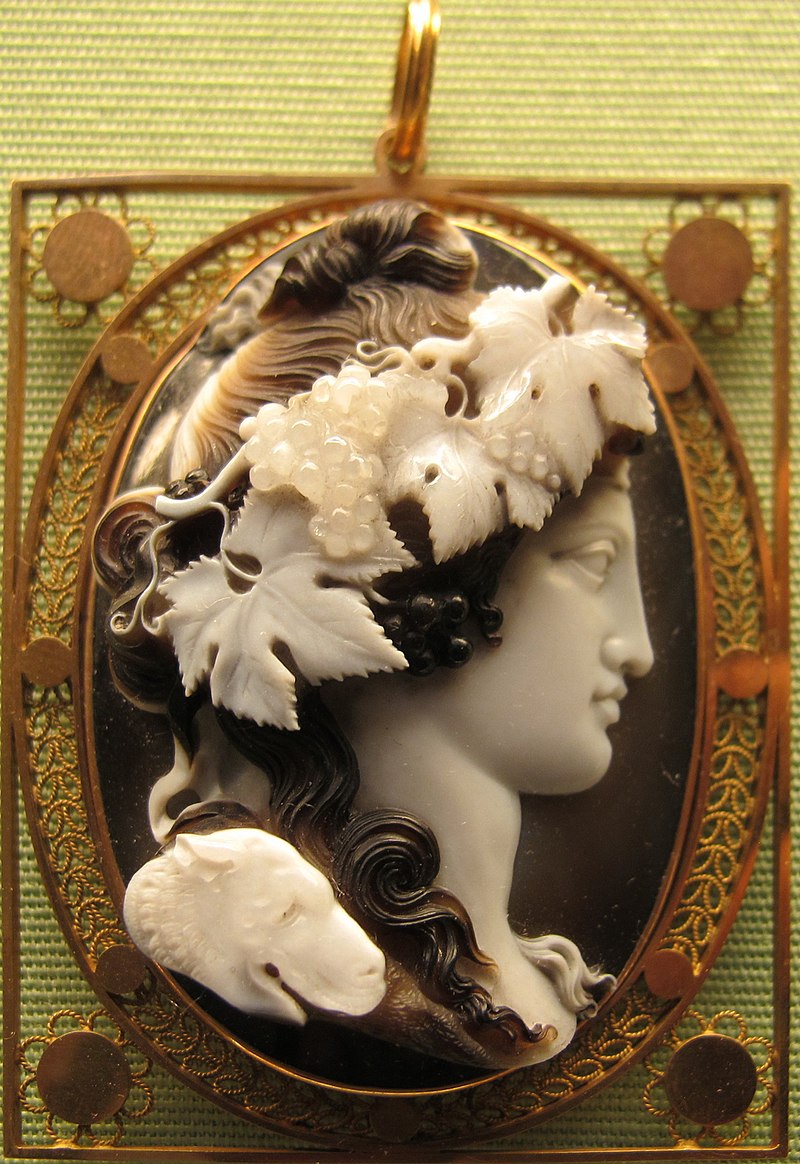
Cameos--a carving with a raised relief of contrasting color, that often depicts a person's profile or scene from mythology--are commonly made of shell, coral, lava, glass, or stone, and set in metal to be worn as jewelry. Queen Victoria of England adored them, and her affection for them set off a trend for women to wear them, followed to this day.
Queen Victoria wears cameos as pins and a bracelet in this portrait by Heinrich von Angeli, 1875. Public Domain.
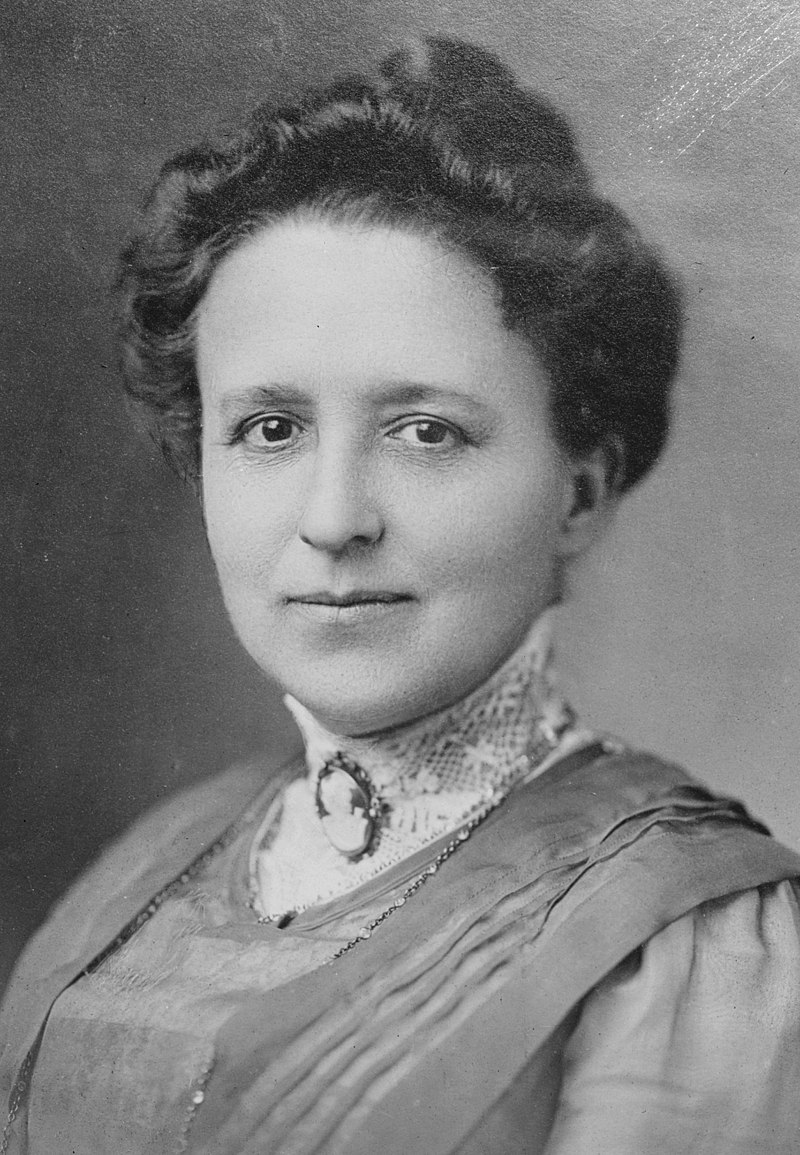
However, cameos have been around far longer than Queen Victoria, and they used to be worn by men as well as women. They were also worn differently than they are usually worn now: the notion of a woman pinning a cameo to the high, lacy neck of her dress, originated in the Edwardian period, about a hundred years ago.

Head and shoulders of a serious and dignified woman in her forties, with dark hair up and in a dress with high lace collar and a cameo at her throat, Edwardian style
Woman with cameo pinned to her throat, circa 1912. Photographer and subject unknown. Public Domain.
Cameos are believed to have originated sometime around the 3rd Century BC. The Greeks and Romans created numerous cameos, featuring images of gods and goddesses or mythological scenes. They were worn as rings, earrings, or admired as objets d'art.

Sometimes hidden messages were attached to them. For example, a Hellenistic young woman might wear a cameo depicting Eros to indicate she was romantically interested.
File:Cameo Athena CdM Babelon17.jpg
Athena wearing the ægis. Sardonyx cameo, late 1st century BC. The mount was added later: enameled gold by Josias Belle, late 17th century. Public Domain.
Other cameos were created to honor political figures. The Blacas Cameo, showing the profile of Emperor Augustus, is rather large at almost 13 cm high. Carved from sardonyx, it was created sometime around 20 AD. The pose and details are symbolic, invoking the gods and highlighting Augustus' "divine attributes." This cameo is one of the "State Cameos" of Augustus that are believed to have originated in Augustus's inner circle.

Image result for cameo
The Blacas Cameo

Christians created cameos in the Byzantine era, often to be worn as enkolpions, a devotional medallion or pendant. Common carvings include angels, saints, and scenes from the Bible.

Cameo of the Virgin, of bloodstone, circa 900. Public Domain.
Cameos' popularity waxed and waned through the centuries, but continued to be crafted from semi-precious gemstones like onyx and agate. They found a popular following in the Renaissance. Pope Paul II (1417-1471) was apparently an avid collector of cameos, and one fanciful story claims that he wore so many cameo rings, his hands got too cold, and he caught a chill that resulted in his death! (Other accounts say he died of a heart attack, stroke, or eating too much melon.) Regardless, he owned several, and much of his collection passed to Lorenzo de Medici.

Pietrobarbo.jpg
Pope Paul II, without a cameo ring in sight. Public Domain.
Women began to wear and collect cameos during the Elizabethan Period as a display of wealth and status. Often cameos continued to depict Roman or Hellenistic gods or rulers, to give the appearance of antiquity.

File:Italian - Cameo Portrait of the Roman Emperor Tiberius - Walters 421162 - Group.jpg
Cameo Portrait of Roman Emperor Tiberias mounted on a ring, circa 1625-1675, Italy. Public Domain.
Monarchs and wealthy folks around Europe continued to wear cameos in the coming years. Queen Anne of England gifted one to Pocahontas. Napoleon Bonaparte wore one to his wedding, and so enjoyed them that he even founded a Parisian school to teach the art of cameo carving to craftsmen.

Brown and white stone cameo of a woman facing right with flowers and leaves in her hair
Cameo circa 1800 by Benedetto Pistrucci, Italian gem-engraver. Public Domain.
In the nineteenth century, the popularity of shell cameos grew (as opposed to more expensive semi-precious stones), and profiles became a popular subject matter for the masses.

File:Cameo bracelet with portraits of the Hunt Brothers, by William Morris Hunt, c. 1840, gold, shell.jpg
Cameo bracelet with portraits of the Hunt Brothers, by William Morris Hunt, c. 1840, gold, shell. Public Domain.
A new method of cameo carving came into being in the late 19th century, too: incrustation. An engraver carves a portrait, makes a cast of it, and from there produces a ceramic cameo which is then encased in glass. Although the process originated in Bohemia, French glassmakers became proficient, and the Bakewell Glass Company in Pittsburgh, Pennsylvania crafted beautiful pieces in this manner, from knobs to tumblers, vases to paperweights. (To see an example, visit here.)

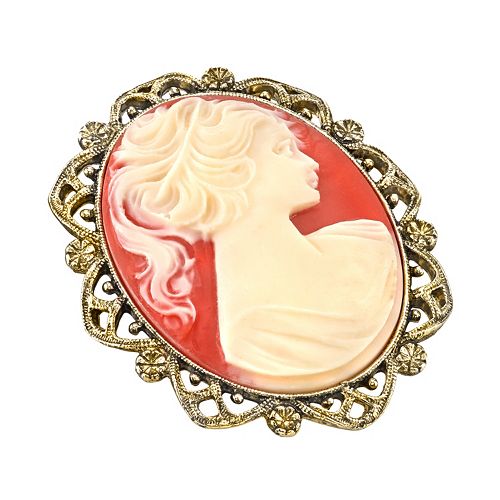
Today, cameos are mainly worn by women, and cameos can be purchased in any medium from agate to plastic. 
1928 Cameo Pin
Cameo on sale at Kohl's.
What about you? Do you own a cameo?

***

Giveaway: Please comment below by 11:59 pm PDT, June 6, 2019, to enter to win a copy of Cameo Courtships. Include an email address. Void where prohibited. 


A Family Heirloom Inspires Romance
In 1851, the “Victoria Cameo” is gifted by Queen Victoria to Letitia Newton, who though considered an old maid, soon has the attention of three gentlemen. Inspired by her own romance and quick marriage, Letitia decides to gift the cameo to other women in her family, hoping romance will follow....

***
Susanne Dietze is a 2019 RWA RITA-nominated author who has published fifteen romances with Timeless Heart. To learn more about her and her stories, please visit her website, www.susannedietze.com.

Saturday, November 23, 2013

History of Charm Bracelets--and a Giveaway!

Susan Page Davis here. I love my charm bracelet. I got it when I was about 12 years old. When did you get yours?

Photo by Matt O'Gara
Charms have been around since ancient times, but charm bracelets as we know them are a much more recent innovation.

People of many cultures made and wore amulets or talismans, which were associated with magic, protection, and spirituality. Today we wear charms simply for their beauty and the pleasure they give us.

The Babylonians may have been the first to wear charms on a bracelet, from around 700 B.C. Ancient charms were made of many materials—shells, stones, clay, bone. Later the tiny figures were carved of ivory and semi-precious stones, and still later they were cast in metal.


Queen Victoria helped popularize charms and charm bracelets in the mid-1800s. Wealthy people at the time wore small, custom-made “charms” as pendants or ornaments on their watch fobs and clothing. The queen wore small lockets containing miniature portraits and locks of hair of her deceased loved ones. After Prince Albert died, she led the trend in “mourning charms” and bracelets carved of jet to be worn with the black dresses she favored for the rest of her long life.

With the coming of the Industrial Revolution, charms were machine-made and mass-produced. Now the middle class could afford the ornaments that used to belong only to the wealthy.

In the United States, Tiffany and Co. introduced its first charm bracelet in 1889. This link bracelet held a dangling heart. People could add more tokens to the bracelet.

Photo by affinity1
But it wasn’t until after World War II that charm bracelets reached the pinnacle of popularity in the U.S. Soldiers brought souvenir charms home from Europe, and soon jewelers were creating new styles of charms, which were given as gifts on any occasion. Travelers bought miniature representations of monuments they visited, such as Eiffel Towers or the Statue of Liberty.

Many women collected charms that symbolized important events in their lives. Hearts, graduation caps, baby shoes, and tokens engraved with significant dates were a few. The bracelets remained very popular in the 1950s and 1960s, with movie stars such as Elizabeth Taylor and Joan Crawford seen displaying their own bracelets.

You can read more about charm bracelets on the website of Rembrandt Charms, the company that made the bracelet for the cover of my new book, The Charm Bracelet, at: http://is.gd/cdNSrN .

This week I’m giving away two copies of the e-book The Charm Bracelet, a light Christian romance. Winners who do not use e-books can wait a few weeks for the print copy of this book or choose another of my books.

Susan Page Davis is the author of more than forty published novels. A history major, she’s always interested in the unusual happenings of the past. She’s a two-time winner of the Inspirational Readers’ Choice Award, and also a winner of the Carol Award and the Will Rogers Medallion, and a finalist in the WILLA Awards and the More Than Magic Contest. Visit her website at: www.susanpagedavis.com.