Showing posts with label Book Giveaway. Show all posts

Tuesday, April 11, 2023

Newbie here! (+ Biblical Fiction Giveaway!!!)


Hi, I'm Naomi!

I'm fairly new here at Heroes, Heroines and History. (a.k.a. still figuring out the system😏) and I'm glad to be part of this fun-loving group of historical fact knowers!

I write historical novels set in Bible times, taking people we read about in the Bible and exploring the culture surrounding the brief mention in scripture. Why did this person make this choice that was recorded for all to see throughout the ages? What happened after the event we know about? My goal is not to add or take away from the scriptures, but to send readers to the Bible to dig in deeper to God's Word. 

I love reading Biblical novels for these reasons above, as well as suddenly I can see these characters as real people that God used in real places. It helps the Bible come alive for me.

My husband is a pastor in the southeastern mountains of Arizona, and I am very involved in church with the kids, teens and the audio/visual team.


Do you love books? I assume you do, if you are reading this blog. I co-host Behind the Story on YouTube. Twice a month we release Christian and Sweet & Clean author interviews and talking about new great books. (Usually this is accompanied with a giveaway!) Our focus is Historical/Biblical and Contemporary Romance/ Rom Com. (Odd combo I know--My friend and critique partner, Lisa Renee writes contemporary--it works!) Some of the authors we've had on include Jill Eileen Smith, Liz Tolsma, Kim Vogel Sawyer, Dana McNeely (former HHH blogger) and HHH's own Jennifer Uhlarik (did you see her bizarre-o post the other day The Curious Case of Elmer McCurdy?  This is what I love--random trivia about history!!)

Random  trivia about me:

1)I have a rescue dog named Freeway. From our best guess he is part German Shepherd, part Rottweiler, part Shiba Inu(?) and 100% willing to do anything for treats.

2)I toured for two and a half years with Covenant Players Theater Ministry. 

3) I'm a hot mess when it comes to follow through. I purchased a new shower liner WEEKS ago. Is it nice and neat on the backside of the shower curtain? No, no it is not. It is still sitting by the front door where I removed it from the amazon package.

Your turn! Comment on the blog post 3 random facts about you to be entered into the drawing for a digital copy of Ezekiel's Song. 

(Winner will be randomly chosen April 13, 2023)

A prophet's heart broken, a woman's joy gone. What does Yahweh have planned for His people?

On the brink of Jerusalem's demise, devoted priest, Ezekiel, sees the insincerity of Judah's worship. Despite his efforts to call the people back to true worship of Yahweh, priests, artisans, valiant warriors, and royals are exiled to Babylon. When God gives him messages of continued judgment for the people in his homeland, his heart breaks. How can he minister to the people from so far away?

The presence of the Lord is tangible when Shiriel sings in the temple, and her voice prepares the hearts of many to worship. When she is exiled to Babylon, her faith is shaken. Does the Lord's presence extend beyond Jerusalem and His holy temple?

Ezekiel is struck mute and paralyzed as he begins his prophetic ministry, and Shiriel devises a plan to get the Lord's message back to the unfaithful people of Judah. Shiriel struggles with discontentment as serving the Lord looks nothing like she'd imagined. Can she provide for her family and carry out her husband's ministry when her joy is gone, and her own dreams are placed on hold?


Download your free novella, On Desolate Heights


A Pagan Seer.

A Slave Boy.

A Talking Donkey.


Unlikely messengers delivering Yahweh's blessings to the nations.


Monday, August 29, 2022

Resistance and Escape by German Prisoners in Wisconsin's PW Camps During WWII


During WWII, Hitler's Third Reich drafted all manner of men into their army, both Nazi and anti-Nazi alike. In fact, according to Stalag, U.S.A: The remarkable story of German POWs in America, by Judith M. Gansberg, only about 10-15 percent of Germany's enlisted men were hard-core Nazis. Those considered anti-Nazis or resisters were quickly sent into combat zones. Thus, as I mentioned in my WWII novel Season of My Enemy, most of the German prisoners of war sent to work in Wisconsin's agricultural industry were not hardened Nazis, but mostly young men anxious about their homes and families back in Germany. Men who quietly did the work required while they waited out the war. Prisoners who were true Nazis like Hitler’s SS (recognized by paperwork and telltale tattoos) were sorted out upon entry to the country and sent to special, tightly-controlled prison camps.

Now and then a Nazi sympathizer did manage to slip through, but even then, they were usually found out and dealt with accordingly, sometimes amongst the prisoners themselves. As you might imagine under such circumstances, there was a varying difference of opinions among the prisoners. Factions formed within the larger camps between those of differing political attitudes. Those still sympathetic to the Nazi cause might try to exert influence and control over the other prisoners or even attempt to take over a camp. This was a problem that couldn’t be entirely solved. Nevertheless, by war’s end, the U.S. military court-martialed, sentenced to death, and hanged fourteen PWs found guilty of murder within the camps. Many others were convicted of lesser crimes and made to complete prison sentences before they could be repatriated to Germany after the war.

My post today is only referring to the German prisoners. Korean prisoners captured among Japanese units frequently volunteered to join the U.S Army. They were rejected, but it is believed they did so sincerely because the Japanese had conquered their country and then drafted them. Yet, they added yet another division to an already testy situation in some of the camps.

In prison camps like Wisconsin’s Fort McCoy, bands of prisoners staged a few riots, work stoppages, and other forms of resistance. Occasionally there were acts of personal aggression toward guards. Refusing to cooperate in daily tasks were forms of more passive resistance. If an undetected Nazi or SS tried stirring up trouble in the ranks, procedures were in place to identify agitators and have them removed. Most of the German barracks then coexisted in an attitude of resignation and peaceful cooperation.

The Geneva Convention recognized that it was the duty of prisoners to attempt escape, and in it they set parameters of punishment for such offenses. Attempted escapes could result in up to thirty days of hard labor and thirty days on bread and water or both. The decision would be made by the camp’s commanding officer. However, if a prisoner was caught in the very act of escape, authorities retained the right to shoot them on sight.

There are numerous stories of escapes that ended peaceably, some by Japanese prisoners and some by Germans. The most obvious opportunities came with the Germans who had gained the opportunity to go off base to work. Content with their lot for the most part, many departures were of the adventure-seeking variety. German PWs sometimes walked away from their work or camp simply to see the sights, take a swim, or to visit the ladies and local eating and drinking establishments. They often returned undetected in time for morning roll call. Some prisoners even located extended family members in the region and joined them for dinner or other pleasurable pastimes before returning to their camps or being picked up and brought back.

As for the citizens who lived near the PW camps, they held one of two views. There were those who feared the prisoners being housed so nearby and working among them, certain that the Germans intended to kill them in their beds. Then there were those who had little or no fear of the prisoners or of their possible escape. Some locals visited the camps either to sight-see out of curiosity, or to inquire as to some relative back in Germany, since so many Wisconsinites had come from Germany themselves or held some other familial connection.

History is rife with the telling of families who had PWs working on their farms, or who worked beside them in the fields and factories, and later corresponded with the former prisoners after the war. Some sent care packages to them in Germany. Some became sponsors when PWs wished to immigrate back to the States after their repatriation.

This short blog doesn’t give me space to share the many anecdotes I read about in my research for Season of My Enemy, but I hope that if the history of the German PWs intrigues you, you’ll look into it. The following 12-minute video is a concise, fascinating, and at moments astounding look into this bit of American and German history.


LAST CHANCE!

Heroes, Heroines, and History is winding up August and our month-long, Three Million Views Celebration! If you haven’t entered yet for one of our big drawings, it’s your LAST CHANCE to enter to win part of a giveaway of over 60 books in 18 prizes! One grand prize will consist of 10 books, two readers will win a second prize containing 5 books, and there will be 15 winners of a third prize containing 2 books each. There are several ways to earn entries, such as following, or commenting on the HHH blog each day. Thank you for being part of the HHH community, and best wishes in the giveaway! Enter at this link:


I also invite you to read my novel of a very special heroine and her Wisconsin family who encounter a group of German PWs on their farm during WWII.


Enjoying our celebration with you!
Naomi

Wednesday, July 27, 2022

Researching in the Ruins + Giveaway

Dana McNeely


While the internet is a wonderful research tool, books are often more dependable. This was driven home to me recently because my computer has been in the repair shop for more than a week, and I'm typing this on a loaner laptop. I was grateful to an "old ruin" of a book, paper and ink rather than the "cloud," for providing me research material for this blog post.

One of my favorite old reference books is PALESTINE AND THE BIBLE by Samuel Schor, born in Jerusalem around 1860. My falling-apart copy is faded and worn, the nineteenth edition published in 1931, so the book itself is a piece of history. Having the appearance of a homemade book, it is a true soft cover, made of tan paper only slightly thicker than its pages, folded back to reinforce the edges. Perhaps it resembles the first pamphlets from which it originated.


In its introduction, Schor wrote "God's Word is an Eastern Book. It was written in the East, by Easterns, and for Easterns." He went on to say his little book was intended to help Western readers understand Eastern expressions as they studied the Bible. He often included Bible verses to illustrate his descriptions of life and customs in Jerusalem. In 1891, he started what he called the "Palestine Exhibitions." His book developed over the time he lectured and wrote pamphlets for the Exhibitions.

I consider PALESTINE AND THE BIBLE an early precursor to "Everyday Life in Bible Times" books. The book is out of print and I believe copies are rare, so in this post I'd like to share with you a few tidbits of Schor's unique insights.

EASTERN PLOUGHS AND YOKES

  • Primitive ploughs were made of wood, had a handle, and were light enough to be carried by a man. And Jesus said unto him, No man, having put his hand to the plough, and looking back, is fit for the kingdom of God. (Luke 9:62)
  • The plough is fastened to the neck of oxen with a yoke and the oxen pass under it.  But the nations that bring their neck under the yoke of the king of Babylon, and serve him, those will I let remain still in their own land, saith the Lord. (Jeremiah 27:11a)
  • The weight of the yoke makes the poor animals stoop, hence the force of the allusion that when God brought Israel out of Egypt and broke their yoke of bondage, He said "I made you go upright." I AM the Lord your God, which brought you forth out of the land of Egypt, that ye should not be their bondmen; and I have broken the bands of your yoke, and made you go upright. (Leviticus 26:13)
  • Partly for protection and partly because of the size of their fields, farmers would often plow together, each with his own team of oxen, creating long, straight plow lines across the field. Thus Elisha was engaged when he was called by Elijah. So he departed thence, and found Elisha the son of Shaphat, who was plowing with twelve yoke of oxen before him, and he with the twelfth: and Elijah passed by him, and cast his mantle upon him. (1 Kings 19:19)
Schor's descriptions of Old Jerusalem painted a backdrop for much of my book RAIN, particularly a scene where Aban, a young former acolyte of Ba'al, observes the prophet Elijah call his successor, Elisha. Part of that scene from RAIN follows:

Antique plow with iron tip as used by prosperous farmers during Israel's Iron Age

Wednesday, February 5, 2020

Unique Valentine Ephemera and a Giveaway

by Anita Mae Draper

Ephemera refers to paper material like tickets, coupons, pamphlets, calling cards, and others that were printed for an event or purpose that was meant to be short-lived, but were often kept as mementos and souvenirs. Personal bank notes fall into this category and it was a delight to find one from the BANK OF TRUE LOVE printed in Philadelphia c1852.

Valentine in form of a bank note. Philadelphia c. 1852. Library of Congress, Public Domain
Along with exquisite artistry, the bank note is, "Secured by the whole stock of Truth, Honour, and Affection." It offers, "The Token of Friendship" as well as the "State of Matrimony." And promises, "...to pay to _____ on demand the homage and never failing devotion of sincere affection." It is signed by "Cash'r, Cupid, Prest (the cashier, Cupid, President). 

Other unique Valentine ephemera fall into the illustrated letter category of which rebus is one form. Rebus is the representation of a word or phrase using suggested pictures, symbols, etc. and was also known as hieroglyphics around the turn of the 19th into the 20th century due to the Egyptian discoveries being made at that time. This type of puzzle has been around for centuries although it didn't reach it's usage peak until greeting cards and postcards became a normal part of life.

A Farmer's Love Letter, Mrs. Stella Gilbert, 1909

Another type of Valentine greeting card used words or letters arranged in a puzzle to profess their love, if only the receiver could decipher the message. This one, entitled, The Old Fancy, took me several minutes before I caught a phrase that gave me the key to unlock it.

The Old Fancy, Jessie Shepherd, artist, c1888. Library of Congress, Public Domain

Today, most valentine gifts are flowers, stuffed animals, candy and chocolate. Although these are precious to receive, they can't always be kept as mementos. The interest in sending Valentine's Day cards is waning, yet they are the easiest ephemera to keep because they don't require much space...unless, of course, you're an ephemera collector. 

Giveaway of one new signed copy of the printed book, The Secret Admirer Romance Collection, to one person who leaves their email address in the comments of this post. Deadline to enter is Feb 5, 2020 at midnight PST.


Rebus decipher: Do you carrot all for me, my heart beets for you and my love is as soft as a squash, but as strong as an onion. For you are a peach, with your radish hair and your turnip nose. You are the apple of my eye and if we cantaloupe then lettuce marry anyhow, for I know we would make a happy pear

The Old Fancy decipher:  I am in love as thou mayst see, I love but one and that is thee. Read down and up and thou shall't find the way to read thy valentine.


Anita Mae Draper lives on the Canadian prairies where she uses her experience and love of history to enhance her stories of yesteryear's romance with realism and faith. Readers can enrich their story experience with visual references by checking Anita's Pinterest boards. All links available on her website at www.anitamaedraper.com


Sunday, February 2, 2020

Origins of the U.S. Secret Service, + a Giveaway


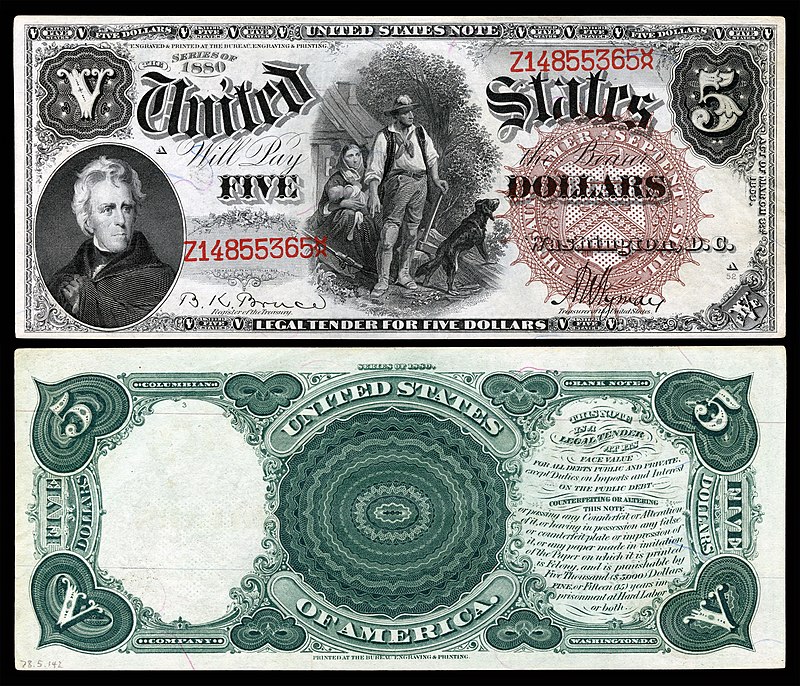
While the United States Secret Service (USSS) is one of the oldest federal law enforcement agencies in America, dating to the Civil War. While the Secret Service is known today for providing protection to the President and his family, part of the Department of Homeland Security, it was originally part of the Treasury Department, founded to combat counterfeiting of American currency.


1880 Legal Tender, Public Domain, National Numismatic Collection, National Museum of American History.

Before the Civil War, American money was much different than it is today. Over a thousand individual banks issued their own bills, called banknotes, and government paper currency was limited to Treasury notes, fractional currency, and postal currency, which could be redeemed for postage but was also used as money. During the Civil War, the federal government also introduced "greenbacks" as national currency, but banknotes and other currencies were still in circulation after the war.

With so many varieties of currency, it wasn't hard to create fakes to fool the unsuspecting. The US Marshals Service was tasked with curbing counterfeiters along with their other duties, and hired detectives to assist--Allen Pinkerton, for example. But in the meantime, an estimated third to half of all currency in circulation in America was counterfeit, which created problems to the national economy.
Hugh McCulloch.png
Hugh McCulloch at the approximate time the Secret Service was founded. Public Domain.
In 1865, Secretary of the Treasury Hugh McCulloch advised President Abraham Lincoln to establish an agency to combat counterfeiting, and President Lincoln signed the paperwork on April 14, 1865, the very day he was assassinated at Ford's Theatre in Washington, D.C. 

While the idea of creating an organization to provide presidential protection was discussed after the assassination, it was not originally part of the Secret Service's role when it was officially begun on July 6, 1865 under its first chief, William Wood. National Headquarters were established in the Treasury Building in Washington. Operatives were hired primarily for their experience as detectives.

Operatives were not paid particularly well for their services, and they were expected to write daily reports to their superiors. They were well versed with the world of counterfeiting and its techniques, which varied from engraving to painting replica bills, a time-consuming process.

By all accounts, the Secret Service was an immediate success, but it had a large job to do. Budgetary restrictions capped the number of agents employed, and some operatives were responsible for enormous districts that spanned several states. Within two years, the Secret Service's responsibilities broadened to include other frauds against the government, from battling smugglers to investigating the Ku Klux Klan.

The Secret Service created rules to help with investigations that influenced law enforcement procedures. Suspects were often photographed by professional photographers after arrest, and operatives recorded identifying details about the suspect as well as the arrest and investigation. 

In 1869, the chief, Hiram C. Whitley, granted permission for operatives to obtain badges if they so wished, but they weren't issued until 1873. Alas, there is no information as to what these first badges looked like, but a the 1875 design remains. The star's five points each signify one of the agency's core values: justice, duty, courage, honesty and loyalty.

File:Badge of the United States Secret Service (1875–1890).png
Badge from 1875-1890. Public Domain.

In 1890, the badge was redesigned so the smaller size would fit easier into the agents' commission books.

File:Badge of the United States Secret Service (1890–1971).png
1890 Badge. Public Domain.

While the Secret Service continued to fight currency and other frauds, two more presidents were assassinated: James A Garfield (1881) and William McKinely (1901). It would take another 36 years before the Congress gave the Secret Service the job of protecting the President, although in 1902, there were just two agents assigned to this particular task.

The role rapidly expanded and today, it's what the Secret Service is known for more than any of its other responsibilities. Additionally, American currency has many security features to make counterfeiting far more difficult than in years past. 


Today, counterfeit money comprises about 0.01% of American currency.


***

The Blizzard Bride

50834152. sx318 sy475

Abigail Bracey arrives in Nebraska in January 1888 to teach school…and to execute a task for the government: to identify a student as the hidden son of a murderous counterfeiter—the man who killed her father.

Secret Service Agent Dashiell Lassiter wants to protect Abby, but when a horrifying blizzard sweeps over them, can Abby and Dash set aside the pain from their pasts and work together to catch a counterfeiter and protect his son—if they survive the storm?

***

Have you ever been in a snowstorm?

I'm giving away a copy to one person who comments before 11:59 am February 4, 2020, PST. Winner announced here. US-only, please. Void where prohibited.


***

Susanne Dietze began writing stories in high school, placing her friends in the starring roles. Today she's a RWA-RITA nominated author. Learn more at www.susannedietze.com.


Thursday, December 5, 2019

Sleigh Bells and a Giveaway


by Anita Mae Draper


Lady in cutter, Calgary, Alberta, ca 1910. Courtesy of Glenbow Archives

The winter songs that merrily sing out about sleigh bells jingling at Christmas weren't just a holiday tradition, but in many snow regions were a legal requirement to winter transportation. The reason being that fast gliding sleighs and other conveyances on steel runners were often the cause of accidents to the unwary. A leather strap of bells, as in the above photograph, was an easy way to warn the public as well as comply with any local laws concerning winter driving.


Porcupine Advance (Porcupine, Ontario, Canada), 23 Jan 1924

Although many states and provinces have taken the sleigh bell law off the books, it is still illegal to drive a horse-drawn sleigh without bells in Ontario, Canada, where according to the Ontario Highway Traffic Act, "Every person travelling on a highway with a sleigh or sled drawn by a horse or other animal shall have at least two bells attached to the harness or to the sleigh or sled in such a manner as to give ample warning sound."

Court records found in the London, Ontario public library show a common occurrence in 1877 for sleigh drivers to be fined $1.50 for driving a sleigh without having bells attached. 

Depending on size and how they are made, sleigh bells give off sounds from merry jingling to heavy clunking. The image below shows round bells with a single slit, called a throat, that is one open cut across the diameter to let out the sound of the iron pellet or ball bearing rolling around inside. Sleigh bells don't hang down like an open bell, but are riveted to the strap, or held in place with a shank, and stand upright for the best sound quality. 


Crotal bells with iron ball bearings, 19th century. Courtesy of National Museum of American History

There are no rules to how many bells are too many, or how elaborate sleigh bells and their harness can be. Take this late 16th to mid 17th century pen and ink watercolor from a Nuremberg, Germany parade which shows an impressive harness with many bells.


Album of Tournaments and Parades in Nuremberg, Germany. Public Domain, Wikipedia

Sleigh bells are known by several names and shapes depending on the region. What we call petal bells in North America are referred to as crotal bells in the United Kingdom. Manufacturers of petal bells - on both sides of the ocean - go back 400 years and vary in size from 3/4 inch to over 4 inches or more. Older petal bells have a ridge around the middle and two to four holes cast into the lower half. The older they are, the more decorative, with manufacturers initials or the size engraved near the throat. 


Crotal bell cast by the Robert Wells bell foundry of Aldbourne, Wiltshire, U.K. Public Domain Wikipedia
Early catalogs show strap with bells alone, or with chimes attached. The open bottom chimes added a melodious sound to the jangling strap of bells and could be heard from a greater distance. 

Strap Bells, Sears, Roebuck and Co., 1896. Public Domain


Chimes were often used alone where they sat above the horses back. Open bottom shaft bells were attached to the sleigh's trace, or shaft. This 1890 catalog from R. S. Luqueer & Company shows a variety of what was available at the time. 


Bells and Chimes, 1890 catalog. Public Domain

As a modern collector of jingle bells, I bought a strap of sleigh bells a few years ago and then gave it to my daughter. This year, my son is in his first apartment and drooled over my leather wreath with large sleigh bells attached, so I gave it to him. I am left with this modern reproduction assortment, none of which are worth anything of value, but pleasurable enough when it comes to testing their different shapes and sound quality. 

Anita's Jingle Bell assortment

Personally, I love the sound of No. 2 Ring of Jingle Bells which have hung on our front door Christmas wreath in winter weather for several years. I also like the richer tone of No. 3 and No. 5 which appear to be made of the same metal but have different throats. For contrast, No. 6 is an open bell and not a jingle bell.

I found this interesting video where you can hear and learn about the different sounds of sleigh bell types. More pics and info on their post by the same name.
Everything You Never Knew You Never Knew About Sleigh Bells


If you are interested in sleighs and horse-drawn winter conveyances, check out my post,  https://www.hhhistory.com/2017/12/sleighs-cutters-carioles.html for info and images from the past.

Have you ever been on a sleigh ride? Have you heard the sound of sleigh bells? Care to share your thoughts?


Giveaway of one new signed copy of a small hardcover book, A Cup of Christmas Cheer Volume One: Tales of Faith and Family for the Holidays to one person who leaves their email address in the comments of this post. 
Deadline to enter is Dec 5, 2019 at midnight PST. 
My first published story, Riding on a Christmas Wish, is part of this collection and is set in 1911 Ontario, Canada. Riding on a Christmas Wish features sleigh riding so if you liked this post, enter today for a chance to win the book.


~~~~~~~~~~~~~~~~~~~~~~~~~~~~~~~~~


Anita Mae Draper lives on the Canadian prairies where she uses her experience and love of history to enhance her stories of yesteryear's romance with realism and faith. Readers can enrich their story experience with visual references by checking Anita's Pinterest boards. All links available on her website at www.anitamaedraper.com


Sunday, June 2, 2019

Cameos: Jewelry with a Rich History ~ Plus a Giveaway!


Cameos--a carving with a raised relief of contrasting color, that often depicts a person's profile or scene from mythology--are commonly made of shell, coral, lava, glass, or stone, and set in metal to be worn as jewelry. Queen Victoria of England adored them, and her affection for them set off a trend for women to wear them, followed to this day.
Queen Victoria wears cameos as pins and a bracelet in this portrait by Heinrich von Angeli, 1875. Public Domain.
However, cameos have been around far longer than Queen Victoria, and they used to be worn by men as well as women. They were also worn differently than they are usually worn now: the notion of a woman pinning a cameo to the high, lacy neck of her dress, originated in the Edwardian period, about a hundred years ago.
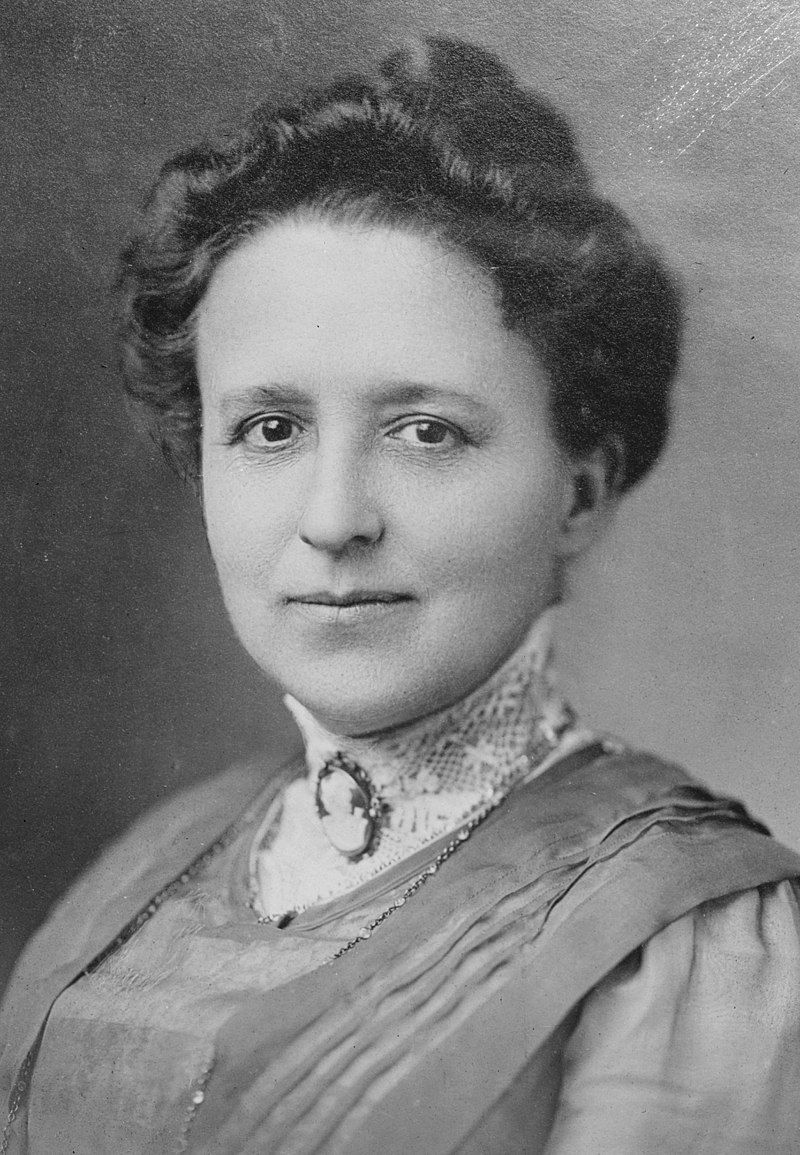
Head and shoulders of a serious and dignified woman in her forties, with dark hair up and in a dress with high lace collar and a cameo at her throat, Edwardian style
Woman with cameo pinned to her throat, circa 1912. Photographer and subject unknown. Public Domain.
Cameos are believed to have originated sometime around the 3rd Century BC. The Greeks and Romans created numerous cameos, featuring images of gods and goddesses or mythological scenes. They were worn as rings, earrings, or admired as objets d'art.

Sometimes hidden messages were attached to them. For example, a Hellenistic young woman might wear a cameo depicting Eros to indicate she was romantically interested.
File:Cameo Athena CdM Babelon17.jpg
Athena wearing the ægis. Sardonyx cameo, late 1st century BC. The mount was added later: enameled gold by Josias Belle, late 17th century. Public Domain.
Other cameos were created to honor political figures. The Blacas Cameo, showing the profile of Emperor Augustus, is rather large at almost 13 cm high. Carved from sardonyx, it was created sometime around 20 AD. The pose and details are symbolic, invoking the gods and highlighting Augustus' "divine attributes." This cameo is one of the "State Cameos" of Augustus that are believed to have originated in Augustus's inner circle.

Image result for cameo
The Blacas Cameo

Christians created cameos in the Byzantine era, often to be worn as enkolpions, a devotional medallion or pendant. Common carvings include angels, saints, and scenes from the Bible.

Cameo of the Virgin, of bloodstone, circa 900. Public Domain.
Cameos' popularity waxed and waned through the centuries, but continued to be crafted from semi-precious gemstones like onyx and agate. They found a popular following in the Renaissance. Pope Paul II (1417-1471) was apparently an avid collector of cameos, and one fanciful story claims that he wore so many cameo rings, his hands got too cold, and he caught a chill that resulted in his death! (Other accounts say he died of a heart attack, stroke, or eating too much melon.) Regardless, he owned several, and much of his collection passed to Lorenzo de Medici.

Pietrobarbo.jpg
Pope Paul II, without a cameo ring in sight. Public Domain.
Women began to wear and collect cameos during the Elizabethan Period as a display of wealth and status. Often cameos continued to depict Roman or Hellenistic gods or rulers, to give the appearance of antiquity.

File:Italian - Cameo Portrait of the Roman Emperor Tiberius - Walters 421162 - Group.jpg
Cameo Portrait of Roman Emperor Tiberias mounted on a ring, circa 1625-1675, Italy. Public Domain.
Monarchs and wealthy folks around Europe continued to wear cameos in the coming years. Queen Anne of England gifted one to Pocahontas. Napoleon Bonaparte wore one to his wedding, and so enjoyed them that he even founded a Parisian school to teach the art of cameo carving to craftsmen.
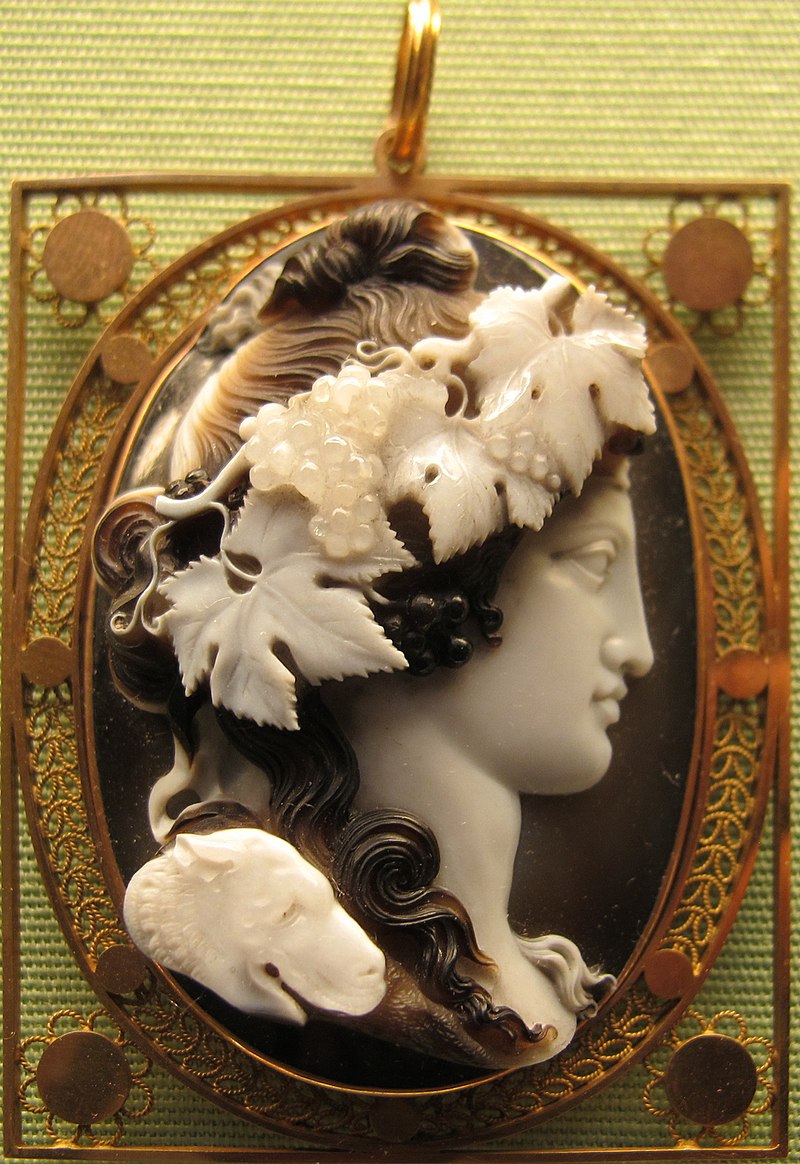
Brown and white stone cameo of a woman facing right with flowers and leaves in her hair
Cameo circa 1800 by Benedetto Pistrucci, Italian gem-engraver. Public Domain.
In the nineteenth century, the popularity of shell cameos grew (as opposed to more expensive semi-precious stones), and profiles became a popular subject matter for the masses.

File:Cameo bracelet with portraits of the Hunt Brothers, by William Morris Hunt, c. 1840, gold, shell.jpg
Cameo bracelet with portraits of the Hunt Brothers, by William Morris Hunt, c. 1840, gold, shell. Public Domain.
A new method of cameo carving came into being in the late 19th century, too: incrustation. An engraver carves a portrait, makes a cast of it, and from there produces a ceramic cameo which is then encased in glass. Although the process originated in Bohemia, French glassmakers became proficient, and the Bakewell Glass Company in Pittsburgh, Pennsylvania crafted beautiful pieces in this manner, from knobs to tumblers, vases to paperweights. (To see an example, visit here.)

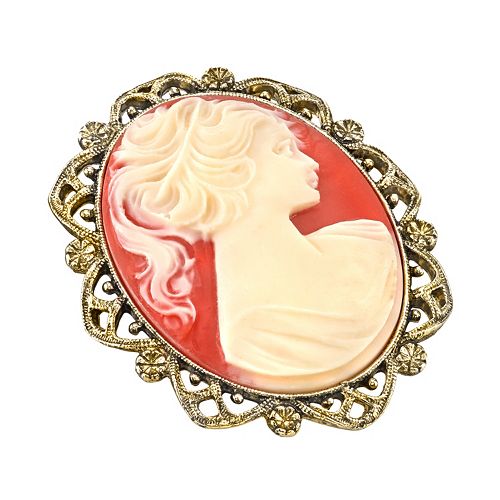
Today, cameos are mainly worn by women, and cameos can be purchased in any medium from agate to plastic. 
1928 Cameo Pin
Cameo on sale at Kohl's.
What about you? Do you own a cameo?

***

Giveaway: Please comment below by 11:59 pm PDT, June 6, 2019, to enter to win a copy of Cameo Courtships. Include an email address. Void where prohibited. 


A Family Heirloom Inspires Romance
In 1851, the “Victoria Cameo” is gifted by Queen Victoria to Letitia Newton, who though considered an old maid, soon has the attention of three gentlemen. Inspired by her own romance and quick marriage, Letitia decides to gift the cameo to other women in her family, hoping romance will follow....

***
Susanne Dietze is a 2019 RWA RITA-nominated author who has published fifteen romances with Timeless Heart. To learn more about her and her stories, please visit her website, www.susannedietze.com.

Saturday, May 25, 2019

Notre-Dame de Paris, Part 2: Exterior Features--and a Giveaway!

By Joan Hochstetler

; https://creativecommons.org/licenses/by-sa/3.0/deed.en
View of Notre-Dame de Paris by Gilbert Bochenek (2011)
The Cathedral of Notre Dame in Paris was in the news last month because of the fire that started on the evening of April 15, while the cathedral’s roof was being repaired. I became interested in the cathedral while doing research for my upcoming release, Refiner’s Fire, which is partially set in Paris. In my last post I covered the building’s history, and over the next couple of months I plan to highlight some of the marvelous details and treasures Notre Dame contains. Today I’m focusing on its exterior features.

Notre Dame is an imposing 420 ft. long, 157 ft. wide, and 115 ft. high, excluding the two massive towers at the main entrance on the western side. These are among its most recognizable features and were the last major part of the cathedral that was constructed. The south tower was built between 1220 and 1240 and houses the 13-ton Emmanuel bell. The north tower was built between 1235 and 1250 and at 226 ft. is slightly taller than the south tower as you can see in the image above. They remained the tallest structures in Paris until the Eiffel Tower was completed in 1889.

The Last Judgment, Central Portal
Carlos Delgado; CC-BY-SA
The three magnificent portals on the western façade were built in the 13th century. A significant amount of their carvings and statuary were demolished during the French Revolution but have been carefully duplicated. The left portal portrays the life of the Virgin
Mary. The central portal features a vertical triptych of the Last Judgment, displaying the resurrection of the dead, the judgment, Christ, and the apostles, with Christ reigning in the highest panel. The portal of Saint-Anne on the right side includes the oldest, most beautiful, and last surviving sculpture from the 12th century, showing the Virgin Mary sitting on a throne holding the Christ child. A gallery of 28 statues of the kings of Israel occupies the space above the portals. The west side also features a stunning rose window measuring 32.8 ft. in diameter, with images of Adam and Eve on the outer rim. The Grande Galerie that connects the two towers is adorned with images of demons and birds that can only be seen from above.
https://creativecommons.org/licenses/by-sa/3.0/deed.en
Chimera,  Jawed Karim (2014)
There are also impressive portals on the north and south façades. The one on the north features a magnificent 13th-century statue of the Virgin Mary. She used to hold the Christ child in her arms, but it also was destroyed during the French Revolution and never replaced. On the cathedral’s south side lavis sculptures adorn the Saint-Etienne Portal portraying the life and deeds of the saint. And from the cathedral’s rear at its east end one can see the exterior of the apse and the graceful flying buttresses that support its walls.

https://creativecommons.org/licenses/by-sa/4.0/deed.en
Panageotean Graphics,
derivative work Lämpel
The original spire was constructed in the 13th century and placed on the cathedral’s roof above the transept and altar. By 1786 it had become so weakened that it had to be removed. A new spire built of oak covered with lead and weighing 750 tons replaced it during the 19th-century restoration by Eugène Viollet-le-Duc. This one was surrounded by copper statues of the twelve apostles, with groups of 3 facing in each direction along with an animal symbolizing one of the four gospel writers: an angel for Matthew, a lion for Mark, a steer for Luke, and an eagle for John. The only statue that didn’t face outwards toward Paris was that of Thomas, the patron saint of architects; it faced the spire and had Viollet-le-Duc’s features. The spire was crowned by a rooster weather vane that contained a tiny piece from the Crown of Thorns and relics of Denis and Saint Genevieve, patron saints of Paris, placed there in 1935 by Archbishop Jean Verdier, to protect the congregation from lightning or other harm. This spire was destroyed in the April fire along with the roof itself, but by a stroke of luck the statues had been removed for restoration a few days before the fire. And miraculously, the rooster was found intact in the rubble left by the fire.

My post next month will take a closer look at the exquisite rose windows and other treasures of the cathedral. This month, since Refiner’s Fire officially publishes June 1, I’m giving away a copy—or for those who haven’t read all of the previous books of my American Patriot Series, your choice of any of the volumes! To enter the drawing, please leave a comment on this post answering the question below. And be sure to include your email address so I can contact you if you win. Because of the holiday, I’m extending the drawing through Tuesday. I’ll announce the winner in the comments here Wednesday morning, so be sure to check back!

QUESTION: What do you think of the ideas being proposed for the reconstruction of Notre Dame Cathedral? Should this historic building be restored to its former glory, or do you favor adding dramatic modern features as some experts advocate? Let’s hear your opinions and your reasons why!
~~~
J. M. Hochstetler is the daughter of Mennonite farmers and a lifelong student of history. She is also an author, editor, and publisher. Her American Patriot Series is the only comprehensive historical fiction series on the American Revolution. Book 6, Refiner’s Fire, releases in April 2019. Northkill, Book 1 of the Northkill Amish Series coauthored with Bob Hostetler, won Foreword Magazine’s 2014 Indie Book of the Year Bronze Award for historical fiction. Book 2, The Return, received the 2017 Interviews and Reviews Silver Award for Historical Fiction and was named one of Shelf Unbound’s 2018 Notable Indie Books. One Holy Night, a contemporary retelling of the Christmas story, was the Christian Small Publishers 2009 Book of the Year and a finalist in the Carol Award.