Showing posts with label unwed mothers. Show all posts

Saturday, September 24, 2022

Gone to Her Aunt’s: The History of Maternity Homes

By Terrie Todd

If you were born in the middle of the 1900s or earlier, you probably know of a teenage girl who went to “live with an aunt” for six months. Whispers and rumors would abound. Only the girl and her closest friends and family knew the truth. She’d gone to a maternity home where she would stay, keeping her pregnancy a secret, until after the baby’s birth. She would give the child up for adoption, then return to her old life as though nothing had ever happened.


The shame and stigma surrounding unwed mothers was so great that experts deemed this solution best for everyone. Since sex outside of marriage seemed to be the unforgivable sin, being single and pregnant was socially and morally unacceptable. Society labeled unmarried mothers as ‘ruined’ and the resulting offspring labeled worse than that. Girls carried the weight of having shamed their families and, in many cases, were disowned by their parents.

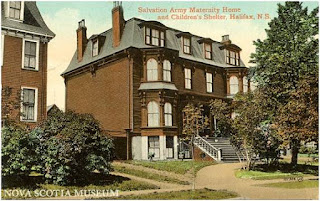
It was during the Victorian era that the first homes began to spring up to shelter these young women, often organized and supported by church and charity groups. In the United States, the Salvation Army opened its first one in 1886. Though these homes were born from a place of benevolence, true compassion toward the girl was often sadly lacking. Many women who experienced life at one of these homes reported feeling isolated and lonely. Some homes insisted that the girls use false names. Making friends with other residents was discouraged and contact with home was restricted or forbidden. In extreme cases, girls were not adequately assisted through labor and delivery, so that they would better “learn their lesson” and not be repeat offenders.
All too frequently, a young mother had no say in the adoption. Either her baby was taken away without her ever seeing it, or in some places—even more cruelly, girls were given their baby to breastfeed for a month or two and then suddenly the baby was taken away. Records were sealed. Options were not discussed. A girl was made to feel completely selfish if she wished to keep her baby.

In some cases, a maternity home might require girls to remain for a period of time after delivery, to serve at the home in payment for the medical and other expenses incurred during her own stay.

By the 1970s and 80s, attitudes had changed and maternity homes either closed their doors or adapted to a more supportive environment. Adoptions are more open.Today’s pregnancy support centers are known for educating young women about their options and supporting them through whichever choice they make with compassion and care. Practical needs like maternity clothes and baby items are often provided to young parents. Trained staff and volunteers offer parenting classes, life skills training and peer support. Miscarriage, infant loss, and post-abortion counseling are usually on the list of services offered. Sometimes transitional housing is included as well.

 

On the cusp of World War II, a seventeen-year-old farm girl finds herself alone and carrying a heavy secret. Never telling a soul, Cornelia pours out the painful events in her diary. Decades later, Cornelia’s granddaughter, Benita, is in the midst of her own crisis, experiencing several losses in the same week, including the grandmother she adored. On the brink of divorce, she discovers Cornelia’s diary. Now the secrets of her grandmother’s past lead Benita on an unexpected journey of healing, discovery, and faith.



A main character in Terrie Todd’s award-winning debut novel faces a teenage pregnancy in the 1940s. You can read about it in The Silver Suitcase. Terrie’s also the author of Maggie’s War, Bleak Landing, Rose Among Thornes (winner of two 2022 Word Awards), and The Last Piece (winner, 2022 Word Award for Contemporary Fiction). Her next novel, Lilly’s Promise, releases later this year. She lives with her husband, Jon, in Portage la Prairie, Manitoba, Canada where they raised their three children and where her novels are set. They are grandparents to five boys.

Follow Terrie here:

Blog

Facebook

Quarterly Newsletter Sign-up

Friday, May 20, 2016

Dr. Kate Waller Barrett - A Lesser Known Advocate for At-Risk Girls


A young wife and mother opens the front door of the parsonage on a cold an snowy night. On her porch stands another young mother, grieving over her desperate state, especially for the sake of her baby. The pastor's wife invites her in and listens to her story of a girl deserted by her child's father and likely thrown out of her parents' home, because of being unwed. This situation forever changed the life of her hostess, Kate Waller Barrett.

As I did research on homes for unwed mothers in the Detroit area, while writing Rumors and Promises and found (by Divine guidance I’m sure!) the Florence Crittenton Mission, I also learned about a unique Christian woman ahead of her time, Dr. Kate Waller Barrett. Brought up in the south, the eldest of eight daughters in a wealthy family, Kate Waller had aspirations of helping those less fortunate.

Dr. Kate Waller Barrett
She married a minister by the name of Reverend Robert South Barrett, moved with him to Georgia, and aided him in his work. Soon her heart became tender toward a specific group. After having borne her first child, son Robert, Kate was faced with an impoverished young mother on her front doorstep, desperate for help. The girl told a story of being deserted by a man who had promised to marry her.

Aquia Church in Stafford, VA. This was where Reverend Barrett's
first and last assignments were. Kate Waller Barrett and her
husband were buried in the cemetery here. 
Kate felt that one thing had separated them—this other young woman had been ill-used by an evil man, while she had been able to marry a good man. This fueled her compassion for a marginalized class—fallen women—especially unmarried mothers. She was determined to start a home for unwed mothers. By the time she had five children of her own, she decided to further her education to add weight to her expertise. She went on to pursue a doctorate in science and M.D. degrees.

Doorway to Florence Crittenton Home in Charleston, SC.
Dr. Kate Waller Barrett went on to establish a maternity home in Atlanta. However, while she traveled abroad, the city created ordinances against such work and it was closed. She heard about the work of Charles Nelson Crittenton and sought out his help. Eventually they were able to partner in this effort. While Crittenton’s main desire had been to rescue prostitutes, Kate had been more interested in the unwed mother. She was instrumental in eventually changing the primary focus of the Crittenton Homes. In 1895 she became the General Superintendant of the homes on a national level. When her husband, Robert, died the following year, she took on a greater role, traveling widely on behalf of the Crittenton Missions.

As their superintendent, Kate Waller Barrett wrote a manual for establishing a standard for The National Florence Crittenton Mission rescue homes. This manual gave instructions for order, how to set the homes up, and how to run them. She also made inroads to more positive racial relations and established Florence Crittenton homes for African American women as well. Unfortunately, due to Jim Crow laws, these homes were separate rather than integrated, but for the times, her outreach can be considered a step against racism.

Headline on Rockefeller's combatting human trafficking
from a San Francisco paper. 
Dr. Kate Waller Barrett became the organization's president after the death of Charles Crittenton in1909 and her work went beyond that of the mission. In 1914 she was named as a special agent to the U.S. Bureau of Immigration. She became involved because of the policy of deportation of women due to their alleged immorality. Often these women were victims of human trafficking, then called "white slavery." In a speech she gave as early as1896 she had mentioned the steps of these mistreated women as going from the brothel, to imprisonment, then into hospitals, and winding up in unmarked graves; and that this process often took as little as five years.

In her concern she influenced philanthropist John D. Rockefeller, in the making of the film, Traffic in Souls. Such films helped publicize the cause of human trafficking across the United States. She also advocated for the way young women were treated in custody. She traveled to Europe, studying and giving recommendations on women's immigration issues between 1914 and 1919. She was even one of only ten women to attend the Versailles Conference in 1919!

Poster for the sensationalized movie.
Around the time she died in 1925 there were over 70 Crittenton homes existing across the United States and internationally. Two of her children, Robert South Barrett, Jr. and daughter Reba Barrett Smith were part of leadership in the National Florence Crittenton Mission, continuing their mother's work.

The seeds she planted, along with Charles Crittenton, to minister to at-risk girls and young women, showing compassion rather than judgment, and giving them a chance to flourish, continues today through the work of The National Crittenton Foundation. In taking many steps of faith to minister to those less fortunate Dr. Kate Waller Barrett has left a rich legacy of care and kindness toward those less fortunate. In the scope of her roles, work, and influence, she was truly a woman ahead of her time!

Kathleen Rouser has loved making up stories since she was a little girl and wanted to be a writer before she could even read. She desires to create characters who resonate with readers and realize the need for a transforming Savior in their everyday lives. She is a long time member in good standing of ACFW and a former board member of its Great Lakes Chapter. Kathleen has been published in anthologies, including the Amazon bestseller, Christmas Treasures, as well as in both print and online magazines. Her debut full-length novel, Rumors and Promises, was recently published by Heritage Beacon Fiction in April, 2016.


Previously a home-school mom of three, she has more recently been a college student and sometimes a mild-mannered dental assistant by day. Along with her sassy tail-less cat, she lives in Michigan with her hero and husband of 34 years, who not only listens to her stories, but also cooks for her. Connect with her on Facebook and Twitter.


Wednesday, April 20, 2016

A Book Giveaway and the History of the Florence Crittenton Missions


Charles Nelson Crittenton liked best to be referred to as “The Brother of Girls,” a title given to him by Frances Willard, renowned women’s suffragist, educator and temperance reformer of 19th century America.

Crittenton was born in 1833 on a farm in Henderson, New York, to a large and happy family. However, he desired to go into retail and worked his way up to partner in a drug company in New York City. Eventually, he began his own wholesale druggist company and became quite wealthy.


Charles Nelson Crittenton {PD}

He was especially fond of the youngest of his three children, Florence, who died from scarlet fever when she was only four years old. Devastated by this loss, Charles turned to the Lord for comfort and had a deeply felt conversion experience. His work with street evangelist, Smith Allen, led to the opening of the Bleeker Street Night Mission in 1883. 

After the loss of his daughter, the stress of his wife's death, increasing business and mission responsibilities, Crittenton became ill. He rested and traveled at the instructions of his doctor, returning to concentrate on a preaching and teaching ministry. Out of this time of ministry and pondering, the National Florence Crittenton Mission came to be.  

In 1893, he met Dr. Kate Waller Barrett, a woman truly ahead of her time. Crittenton shared his vision of homes throughout the country taking in "lost and fallen" women, shelters for girls who were bearing children out of wedlock and for prostitutes. Here they would find hope and grace, be retrained in a skill and learn how to become good mothers. 
Dr. Kate Waller Barrett {PD}

Waller-Barrett willingly served as General superintendent of the National Mission while Crittenton traveled and evangelized. As he went from town-to-town, he offered to donate $500 to any community which would be willing to start a Florence Crittenton Home in their area. He continued his work until 1909 when he died from pneumonia, leaving a legacy in his daughter's name.

Kate Waller Barrett had been a champion of marginalized women for many years and continued the work, taking over as president of the National Florence Crittenton Mission and continuing with Crittenton's vision for the homes for several years. 

Later, the profession of social work grew and influenced the mission's work. Unfortunately, there are reports of coercing teenage girls to release their children to adoption during the 1950s and 60s. However, during the 1970s a movement emerged to make changes, and included rescuing girls from risky behaviors, such as drug use. Now called the National Crittenton Foundation, 27 loosely affiliated organizations around the country seek to support young women and their families to break destructive cycles of behavior, empowering at-risk girls and young mothers to make healthy changes in their lives. Most of the unwed mothers choose to keep their children today.


The hero of my novel, Rumors and Promises, Pastor Ian McCormick, visits a home for unwed mothers in Detroit, planning on beginning a similar ministry in Stone Creek, Michigan. I was elated to find in my research there was an actual mission, the Florence Crittenton Mission, which had opened in 1900, the year of my story that he could have visited. 

While the house on Brush Street and their previous accommodations, are long gone, I enjoyed learning about the Christ-centered roots of this home. It fit with Ian's heart for the girls on the margins of society. He had been deeply touched by a situation that took place earlier in his life, where he felt he'd failed. He feels compelled to reach unmarried mothers with the Gospel, a place of hope, sustenance, and shelter. 

From the roots of the real Florence Crittenton Mission in Detroit a medical center and hospital eventually emerged. Crittenton Hospital, a large and modern medical facility presently stands in Rochester Hills, Michigan. I wonder if Charles Nelson Crittenton ever imagined such a thing?


Please leave a comment for the chance to win a paper back or Kindle ebook version of my recently-released novel, Rumors and Promises, from Heritage Beacon Fiction, an imprint of Lighthouse Publishing of the Carolinas. Winner's choice! 

Kathleen Rouser was so enthralled with books, she wanted to write stories before she could read them. A past homeschooling mom and mild-mannered dental assistant, Kathleen writes from her home in Michigan, where she lives with her husband of 34 years, who not only listens to her stories, but also cooks for her. And let’s not forget her resident muse is a sassy tail-less cat named Lilybits.


Her debut novel, Rumors and Promises, from Lighthouse Publishing of the Carolinas, has just been released. It's the story of an unwed mother, who is an heiress on the run with a child in tow, trying to start over in a town that doesn't like secrets! Connect with Kathleen at her websiteFacebook author page, Twitter  and Pinterest.

Sunday, March 20, 2016

Plight of the Unmarried Mother in the late 19th and Early 20th Century


Considering the moral superiority over men required to be possessed by women during the Victorian age and into the 20th century, a woman’s reputation was a delicate matter. (See my article from last month.) Having a child outside of marriage was considered shameful to the point that a family might abandon the young woman in this situation, whether or not the pregnancy resulted from an act of her own volition or not. The young women often bore the shame alone and her family by association.

  
There were several ways this could be dealt with. A pregnant daughter was often sent away to bear the baby in secret. She could be sent to a relative or perhaps a home for unwed mothers and possibly other fallen women. Sometimes the young woman would be allowed to come home and supported by the family. Her child would be raised by her parents as one of her siblings.

However, towards the turn of the 20th century and beyond, attitudes changed. Girls were pressed to release their illegitimate children for adoption. Numerous homes for unwed mothers in several countries were reported to have coerced the young mothers, giving them little choice. They were encouraged to leave their pasts behind and not even share their real names, so as not to embarrass their families. While it gave them an opportunity to start anew, these young women were in a sense stripped of their identities and ordered to leave the past behind rather than deal with it.

Some blamed the judgmental tone of religious organizations for this treatment. However, even the Ideal Maternity Home in Canada, a non-religious based facility discouraged such things and babies were taken away and even sometimes sold. Mothers might be told their children had died and not allowed to see them. The profit the founders made from the Ideal Home became a scandal and it was eventually closed. Whether or not their babies lived their mothers often had to stay for another six months to a year to pay off the cost of their room and board.

Religious organizations like the Salvation Army did their best to provide options, as did some private Christian maternity homes. One such example was the Open Door in Omaha, Nebraska, founded by a woman by the name G. W. Clark. Mrs. Clark wrote in her annual superintendent's report: The door of our "home" has been opened wide the last year to receive beneath the shelter of its roof, those who so sadly stood in need of our ministration. Many times has the sad, appealing face of the heart-broken girl, appeared at our door, the poor victim of her own folly and one man's licentiousness and cruelty, more sinned against than sinning, driven forth from heart and home, no place under God's heaven, no shelter. What is there for her to do? Where to go, if it was not for the Open Door. (http://plainshumanities.unl.edu/peattie/ep.owh.18921022.html)

The Open Door operated from 1892-96 until Mrs. Clark's eyesight wore out and the funds dried up. This caring soul looked at the home as a place to minister to others as you would to Jesus. Her compassion contrasted with the judgmental attitudes of the day, which often held a double standard with the regards to the father.

The Crittenton Missions also sought to provide for unwed mothers in a more compassionate way. I will share more about the Crittenton Missions . . . next month!

Kathleen Rouser was so enthralled with books, she wanted to write stories before she could read them. A past homeschooling mom and mild-mannered dental assistant, Kathleen writes from her home in Michigan, where she lives with her husband of 34 years, who not only listens to her stories, but also cooks for her. And let’s not forget her resident muse is a sassy tail-less cat named Lilybits.

Her debut novel, Rumors and Promises, from Lighthouse Publishing of the Carolinas, is coming out in April, 2016. It's the story of an unwed mother, who is an heiress on the run with a child in tow, trying to start over in a town that doesn't like secrets! Connect with Kathleen at her websiteFacebook author page, Twitter  and Pinterest.