Showing posts with label #Colorado. Show all posts

Wednesday, December 4, 2024

How A Bygone Era Came to Life in a Colorado Mountain Town

By Donna Wichelman

Have you ever visited a place where you experienced that sense of having stepped into a picture postcard of a bygone era? Did you sigh, your body relaxing, as if you’d been transported into a time long ago when life seemed much simpler and the stresses and strains of daily routine melted away? Christmas in Georgetown, Colorado in December 2019 was that encounter for me.

If you’ve read my most recent blogs about Georgetown, Colorado, you know my historical romance, A Song of Deliverance just released yesterday, December 3, 2024. But in 2019, I wanted to become acquainted with what it might have felt like to experience Christmas in Georgetown in the 1870s during its silver mining heyday.

When weather forecasters predicted record snowfall totals for the Colorado mountains over that weekend, I couldn’t have ordered up a better weather outlook if I’d tried. So when my husband and I stepped onto Sixth Street, formerly known as Alpine Street in the 1870s, we thought we’d entered into a Thomas Kincaid painting.

Sixth Street Georgetown, Colorado Christmas Market--December 2019: Donna's Gallery
Madrigal Singers, Georgetown, Christmas Market--December 2019: Donna's Gallery

Georgetown has worked hard to keep its Victorian era character, passing ordinances maintaining the gingerbread architecture in the original part of town and buying up open space land to ensure the community isn’t overdeveloped. A 1986 John Denver film, The Christmas Gift, depicts a New York developer trying to purchase land and build condominiums and a golf course in Georgetown. The film was loosely based on a true story and reflects the generosity and neighborly spirit that continues to thrive in Georgetown. It has just that kind of “hometown” atmosphere, which is why generations of families have remained in the same houses over the last century and a half.


Each year, Historic Georgetown, Inc. holds its annual Christmas Market on the first two weekends of December. Similar to European Christmas markets, with the sights, sounds, and smells of handcrafted gifts and specialty food vendors, Georgetown's quaint atmosphere overflows with ambiance. This year will be its 64th annual year. The organization also welcomes guests to Christmas at the Hamill House for a traditional Christmas celebration as William A. Hamill and his wife Pricilla would have celebrated in the 1870s. Both events offer that magical spirit of joy in a timeless place.

Horse-drawn Wagon, Georgetown Christmas Market--December 2019: Donna's Gallery
:
Children's Santa Lucia Parade, Georgetown Christmas Market--December 2019: Donna's Gallery

A Reading of the Night Before Christmas, Christmas at the Hamill House--December 2019: Donna's Gallery

Christmas at the Hamill House with St. Nicholas--December 2019: Donna's Gallery

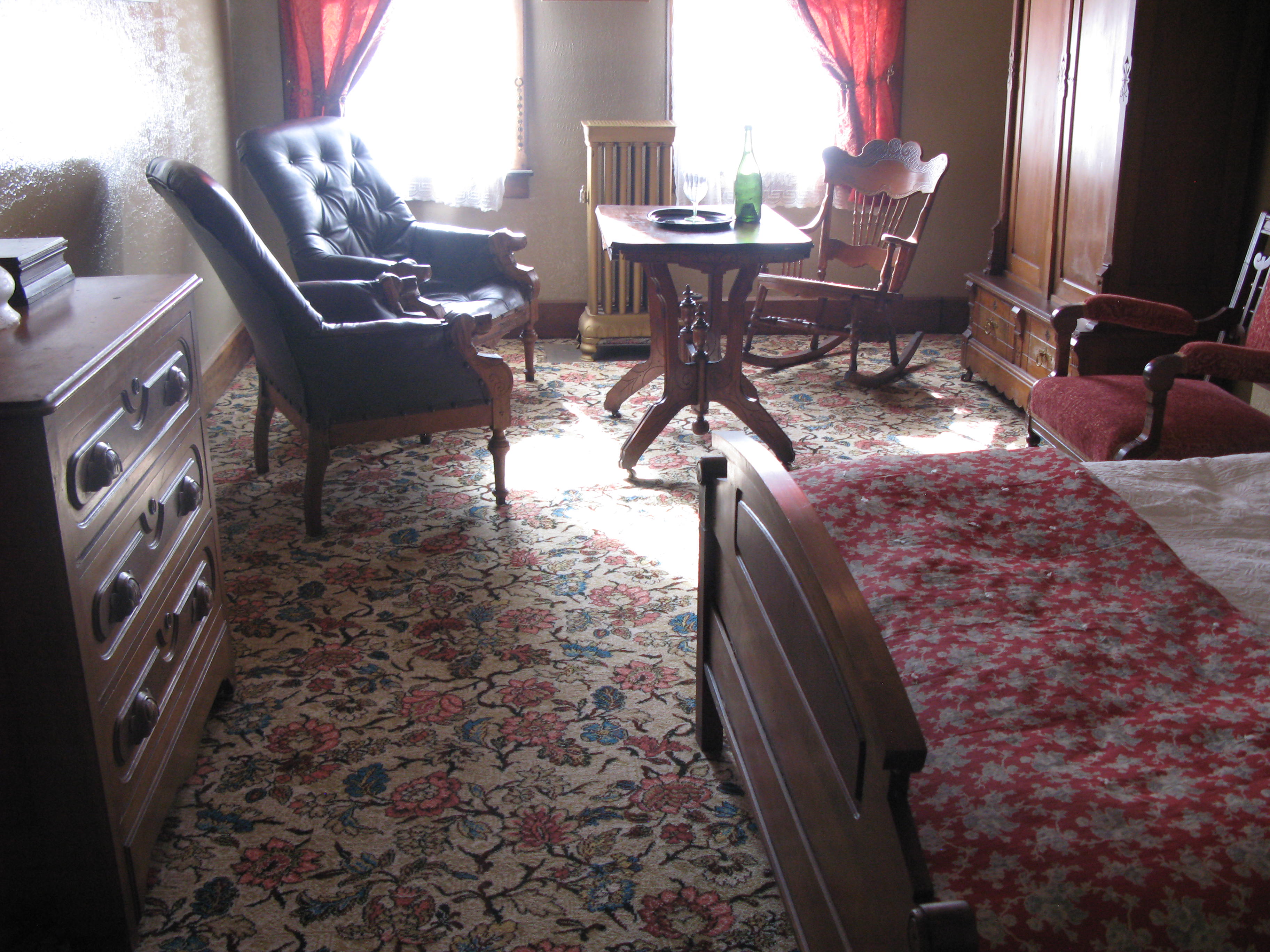
During the Christmas Market, Historic Georgetown also opens its museums to the public. Hotel De Paris is one of Georgetown's premier landmarks. Louis Dupuy first opened the hotel in 1875 as a tiny "hole in the wall." But by the 1880s, he had transformed it into one of the most elegant Victorian hotels in the region, welcoming guests from all over the world--businessmen in the silver ore trade as well as tourists visiting the Rocky Mountains. Today, the hotel appears much as it did in the 1890s and is one of the best-preserved hotels in the nation.

Hotel De Paris, Georgetown, Colorado--December 2019: Donna's Gallery

 
Hotel Room, Hotel De Paris, Georgetown, Colorado: Donna's Gallery

Other museums include Alpine Hose #2, the Energy Museum, and the Old School House, built in 1874. The Old School House figures prominently in Rhythms of the Heart, Book Two of the Silver Singing Mine series that releases December 2, 2025. 
The Old School House, Georgetown, Colorado--October 2018: Donna's Gallery

Georgetown doesn’t promise nightclubs and the city high life, but it does provide a peek into a time when life was a little more relaxed, and the people knew their neighbor’s names. Historic Georgetown, Inc. invites you to step back in time for just a little while and enjoy what the town has to offer. For more information about the Georgetown Christmas Market and Christmas at the Hamill House, click here.

Weaving history and faith into stories of intrigue and redemption grew out of Donna's love of travel, history, and literature as a young adult while attending the United World College of the Atlantic--an international college in Wales, U.K. She enjoys developing plots that show how God's love abounds even in the profoundly difficult circumstances of our lives. Her stories reflect the hunger in all of us for love, belonging, and forgiveness.

Donna was a communications professional before writing full-time. Her short stories and articles have appeared in inspirational publications. She has two indie-published romantic suspense novels, Light Out of Darkness and Undaunted Valor, in her Waldensian Series. Her Gilded Age historical romance, A Song of Deliverance, released on December 3, 2024.

Donna and her husband of forty years participate in ministry at their local church in Colorado. They love spending time with their grandchildren and bike, kayak, and travel whenever possible.


Sunday, August 4, 2024

How Immigrants Birthed and Influenced Colorado's Mining Industry in the Gilded Age

By Donna Wichelman 

(Note: For those who have enjoyed the WWII series I began in November 2023, I will return to the series after my Gilded Age historical romance is released in December 2024 by Scrivenings Press. In the meantime, I hope you will enjoy the blog series on the Territory of Colorado.)

Looking back on the beginnings of the United States of America, one might say we've always been a nation of immigrants. Before the fifteenth – sixteenth centuries, when the Spanish and French arrived on North American soil and established settlements, indigenous populations roamed the land for millennia. But once word spread about the vast land of North America with its abundant resources, more and more English and Europeans arrived seeking personal prosperity, escaping oppressive governments, and desiring religious freedoms.

The same values that brought men and women to a new continent drove the Revolutionary War toward the end of the eighteenth century, because men like George Washington and Thomas Jefferson perceived the loss of those principles at the hand of King George III of Great Britain, which had birthed the first thirteen United Colonies. Jefferson wrote a Declaration of Independence on July 4th, 1776, collected fifty-six signatures, and proclaimed those values—life, liberty, and the pursuit of happiness—to be self-evident, and a new nation was born.

Over the following century, immigrants filled with hopes and dreams of a new and better life streamed to the United States of America, where it was rumored the streets were paved with gold. Each new boat that arrived contained people in pursuit of life, liberty, and happiness.
Castle Gardens, Battery Park, New York: First Official American Immigration Station Opened March 1855
19th Century Illustration1357311458.jpg Dreamstime.com

Castle Clinton Museum, aka Castle Gardens, New York
Dreamstime_l_198086920.jpg

But while the entire eastern seaboard belonged to the United States, territories across the continent, like Colorado and Louisiana, still belonged to the Spanish and French. It wasn’t until 1846, when the United States went to war with Mexico, that a treaty was finally reached in 1848, giving the Territory of Colorado to the United States.

Most Easterners still avoided the Rocky Mountains, deterred by the rough terrain. Trappers and others who were brave enough to move west took advantage of the system of trade set up by the Spanish with the Native American tribes of Utes, Arapahos, and Cheyenne and established trading posts, allowing for easier travel west.

But then a different report regarding gold arose, only this time it was of the shiny metal kind found along the rivers and streams on the plains and in the mountains.

In 1850, a party of Georgians, heading west during the California gold rush, found a meager supply of gold on Ralston Creek near present-day Golden, Colorado. But it wasn't until 1858, when William Green Russell organized an expedition and camped along the confluence of the Cherry Creek and South Platte Rivers (now the heart of downtown Denver), that they found profitable deposits. Russell's men established a small settlement named Auraria that later became Denver.

One troy ounce California placer gold nugget - Natural gold specimen


George Jackson, a member of Russell's party, reasoned that gold on the plains flowed down from the mountains. He ventured into the Clear Creek gorge where the valley opened up at Floyd Hill. Following the path to present-day Idaho Springs, he discovered his first gold on January 7, 1859. Rumor spread, and prospectors flocked to the mountains, where they found significant amounts of placer gold along rivers and creeks. 

Gold discoveries also sparked fierce competition for claims and available resources, and prospectors moved west. 

Two brothers in Russell’s party, George and David Griffith, deterred by the competition, moved up the valley to the confluence of the Main and South Clear Creeks. Having learned by experience in California to look for hard rock veins called lodes on the sides of the valley, they were not disappointed. And though they also found a silver vein, they initially ignored it for the gold.

More prospectors descended on the area, establishing camps that evolved into settlements. The one near the West and Main Forks of Clear Creek became known as George’s Town.

The gold bubble burst in 1864, when the constant need for more investment capital never paid off. Investors, including George Griffith, pulled out.

But in the fall of 1864, three prospectors—Robert Steele, James Huff, and Robert Taylor—discovered an extremely rich silver lode eight miles south of Georgetown on Mount McClellan at 13,200 feet. They headed to Central City to assay their samples, discovering a value of two to five hundred dollars per ton. The silver boom was on.

Silver nuggets isolated on black background close-up


By the summer of 1865, Eastern prospectors flocked to the region, and by September 1866, Clear Creek County was declared “indisputably” rich in ores by Central City’s Weekly Miners’ Register. Georgetown flourished. The town built a post office, and William Barton—a Bostonian—started construction on a two-story hotel. New clapboard buildings housing banks and business enterprises sprung up in a growing business district.

Remains of an Old Mine Near Silver Plume, Colorado: Donna's Gallery 2019

The thriving community also needed the infrastructure required, and soon, eastern missionaries created churches, lawyers established law offices, and Georgetown’s first newspaper, the Colorado Miner, ran its first edition in May 1867. On January 28, 1868, the Territory of Colorado legislature declared Georgetown an official town.

Easterners weren’t the only ones investing in the mines. Attempting to raise capital to build smelting plants, mine owners pursued investment from abroad. Robert Orchard Old—a native Englishman who had moved to America—was one man who banked on the silver industry. In 1868, he formed a joint-stock company—the British and Colorado Mining Bureau—with its main offices in London and branches in Colorado. The company shipped ores to England for smelting with the plan to open smelting works in Colorado. His bureau remained prosperous until 1873.

According to historian Christine Bradley in The Rise of the Silver Queen, “The town’s early rustic appearance [in 1872] gave way to fine homes, level sidewalks, a few trees, and elegant fences … The streets of Georgetown were packed with new arrivals from every point of the globe …” including Cornish, Welsh, and German miners, Italian retailers, Irish workmen, and the Frenchman Louis DePuy, who turned a small bakery into the elegant and now historic Hotel de Paris. It was also a town where formerly enslaved people could earn a living and invest in mines. All these elements coincided to create international flare and intrigue as people descended upon Georgetown to make their mark in the mining community.”
Modern View of Hotel De Paris, Georgetown: Donna's Gallery, December 2019

In September's blog, we’ll look at how one immigrant group made its mark on the mining industry of Colorado.


Weaving history and faith into stories of intrigue and redemption grew out of Donna's love of travel, history, and literature as a young adult while attending the United World College of the Atlantic--an international college in Wales, U.K. She enjoys exploring people and cultures of the world and developing plots that show how God's love abounds even in the profoundly difficult circumstances of our lives. Her stories reflect the hunger in all of us for love, belonging, and forgiveness.

Donna received her master's degree in mass communication, journalism from San Jose State University and became a communications professional before writing full-time. Her short stories and articles have appeared in inspirational publications. She has two indie-published romantic suspense novels, Light Out of Darkness and Undaunted Valor, in her Waldensian Series. Her Gilded Age historical romance, A Song of Deliverance, will be released by Scrivenings Press in December 2024.

Donna and her husband of forty years participate in ministry at their local church in Colorado. The love spending time with their grandchildren and bike, kayak, and travel whenever possible.