Showing posts with label #america. Show all posts

Friday, November 7, 2025

From Plymouth to Plymouth


Over four hundred years ago, the people we now know as "Pilgrims" set out from Plymouth for the New World, seeking relief from religious persecution in their home country. Every Thanksgiving, children don paper hats and cardboard bonnets to reenact the life of these settlers after their arrival. Their difficult journey as well as salvation at the hands of the local Native American tribes is the stuff of legends (as well as the basis for a national holiday).

But how much do you know about the Pilgrims before they were Pilgrims?

The Pilgrims, in fact, never called themselves Pilgrims. Instead, they were "Separatists" or "Saints," a congregation of disgruntled English Protestants from the village of Scrooby in Nottinhamshire. They did not want to pledge allegiance to the Church of England, an entity they viewed as a merger between church and state and one that, in their opinion, was as corrupt as the Catholic Church it had replaced not so long ago. Not only did Separatists believe that true worship must progress from an individual relationship with God rather than state-mandated religion, they also saw many of the church's doctrines and practices as direct contradictions to the Christian gospel to which they claimed to adhere. For example, the Church of England's Book of Common Prayer was viewed as blasphemous, having not been inspired by God nor having no scriptural justification. The Separatists wished to break away and form their own independent churches guided by the Holy Spirit rather than government assignation. (This was a split from another group of Separatists known as Puritans who sought to reform the government church.)

But, at a time in which church and state were combined, any break from the church was viewed as treason, and the Separatists were forced to flee to Holland. Although they found religious freedom in their new home, they also found themselves struggling to adapt to the realities of living in a foreign country, one in which they didn't speak the language nor understand the prevalent culture or customs. The language barrier prevented all but the lowest-paying jobs, and the relatively "modern" society was viewed as sinful and depraved.

It was soon clear that Holland was not the answer to their quest. They needed a place where they could establish their own culture, form their own society, and worship in a way free of government influence. The best place for this, they decided, was somewhere far from England, uninhabited and away from distraction.

A place like the New World.

Photo Credit: history.com

The Separatists returned from Holland, hoping to formulate a plan and secure finances for this new adventure. The Virginia Company, already staking claim in what would soon be America, gave the Separatists permission to establish a plantation on the East Coast between 38 and 41 degrees north latitude (roughly between Chesapeake Bay and the mouth of the Hudson River). The King of England, perhaps seeing the voyage as a solution to the headache the Separatists were causing, bid them a hearty farewell, so long as "they carried themselves peaceably."

Joining the Separatists on their journey was a group of not-so-kindly named "Strangers," non-religious people simply seeking fortune or a new life in America. Approximately 102 people bid England farewell in August 1620 aboard two merchant ships, the Mayflower and the Speedwell.

They returned only a few days later.

The Speedwell had begun to leak almost immediately, forcing the travelers to return to port and, after a thorough inspection, was deemed unseaworthy for the voyage. Rather than delay any longer and await, not only the finances for another ship, but also the unlikely availability, the passengers and crew of TWO ships instead merged onto one. The Mayflower now carried double the people, in addition to double the food supply, double the weapons cache, and an overwhelming assortment of live animals, including sheep, goats, chicken, and dogs).

When the Mayflower finally set sail on September 16, 1620, she was over-burdened and had also missed the window of opportunity for a smooth voyage, setting sail right in the height of the Atlantic storm season. In addition, the ship itself was never meant for a cross-ocean trip; more suitable for short crossings, its high, wall-like sides made it difficult to sail in the strong winds that often blew across the Atlantic. A voyage that should have taken a month instead lasted 66 days, causing illness, food shortages, poor tempers, and even a few deaths.

Even more hardships waited for them upon arrival. They landed well north of their allotted land, in the midst of Native American land in which they had no right to be (although the "right" of the Virginia Company to its own claimed land is still up for debate as well). The long journey had depleted their supplies and broken their bodies, and the New World wasn't at all what they had expected it to be.

Photo Credit: brittanica.com 

And yet they persisted, establishing a colony for the glory of God and the right to worship in the way they saw fit. Their determination and drive set the precedent for what we now know as the "American Spirit"--and became the basis for our modern day Thanksgiving celebration. 


Jennifer L. Wright grew up wanting to be a reporter, but it only took a few short months of working in journalism for her to abandon those aspirations for fiction writing instead. She loves to reimagine and explore forgotten eras in history, showcasing God's light amidst humanity's darkest days. Her books have won multiple awards, including Golden Scroll and Angel awards. She currently lives in New Mexico with her husband, two kids, a couple of hyperactive dachshunds, and an ever-growing herd of guinea pigs. 


Monday, July 7, 2025

Will The Real Independence Day Please Stand Up?


Happy Birthday to the United States of America!
 
America’s birthday is generally accepted to be July 4. Independence Day. A day filled with  hot dogs, fireworks, and flags. The day our founding fathers banded together to declare independence from Great Britain, marking the end of colonial rule and the birth of a new nation.

And it is. Sort of.

While most people are familiar with the Declaration of Independence, written by Thomas Jefferson and adopted on July 4, 1776 (hence the aforementioned Independence Day celebration), many more are LESS familiar with the original resolution, written on June 7 by Richard Henry Lee, a statesman from Virginia. In it, Lee stated “that these United Colonies are, and of right ought to be, free and Independent States, that they are absolved from all allegiance to the British crown, and that all political connection between them and the State of Great Britain is, and ought to be, totally dissolved.”

This original resolution was adopted by Congress on July 2, essentially declaring for the first time the creation of a new and independent nation. It was this day that was commemorated by our founding fathers, not July 4. In fact, John Adams wrote to his wife that July 2 would be remembered and celebrated as “the most memorable Epocha in the History of America.”

It was Lee’s resolution that began the movement toward independence. The founding fathers believed the new nation needed three things in order to begin: a Declaration of Independence, alliances with foreign states, and a plan for the confederation. Jefferson, as you may have guessed, was called to handle the first step; it was only because of Lee’s original resolution that the actual Declaration of Independence was drafted.

Photo Credit: Library of Congress

And, as we all know, it was this draft that was adopted on July 4, 1776, ultimately overshadowing Lee’s and giving rise to the Independence Day we all celebrate today. But, interestingly enough, Jefferson’s draft also created a conundrum in the new country.

Jefferson’s document contained the first use of the words “the United States of America,” though he also included language from Lee’s original text, referring to the new nation as “these United Colonies” in his closing paragraph.

Thus, for several months, the newly formed nation suffered a bit of an identity crisis, with some referring to it as “The United States of America” with others referring to it as “The United Colonies of America.”  For example, Congress itself used the term “United Colonies” when it appointed George Washington as commander in chief of the newly formed United Colonies armed forces. The abbreviation “USA,” however, was stamped on official gunpowder canisters by government inspectors to verify that the powder met government standards.

It wasn’t until the convening of the Second Continental Congress, meeting in Philadelphia on September 9, 1776, that the issue was resolved once and for all. On this day, a resolution was approved and ratified, asserting “that in all continental commissions, and other instruments, where, heretofore, the words ‘United Colonies’ have been used, the stile be altered for the future to the ‘United States.'”

The United States of America was officially born.


Jennifer L. Wright grew up wanting to be a reporter, but it only took a few short months of working in journalism for her to abandon those aspirations for fiction writing instead. She loves to reimagine and explore forgotten eras in history, showcasing God's light amidst humanity's darkest days. Her books have won multiple awards, including Golden Scroll and Angel awards. She currently lives in New Mexico with her husband, two kids, a couple of hyperactive dachshunds, and an ever-growing herd of guinea pigs. 


Saturday, November 5, 2022

Maryland, My Maryland Part Five


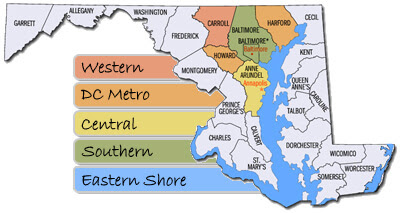
Courtesy maryland.com
Thank you for joining me on another jaunt through my native state of Maryland. If you missed my last post about the Eastern Shore region, follow this link: https://www.hhhistory.com/2022/10/maryland-my-maryland-part-4.html. Today we’re going to visit the Central Region which is comprised Baltimore City and Anne Arundel, Baltimore, Carroll, Harford, and Howard counties. Annapolis, the state capital and home to the U.S. Naval Academy, is in Anne Arundel county (referred to as AA by locals).

The county is named in honor of Lady Ann Arundell (later modernized by adding an e and removing an L), the daughter of Thomas Arundell and part of the ancient family of Arundells of Cornwall, England, who married Cecilius, the second Lord Baltimore in either 1627 or 1628. As was common at the time, theirs was an arranged marriage. Her husband was the founder and first lord proprietor of the colony Province of Maryland.

During the American Revolutionary War, citizens of the county supported the Continental Army by providing troops for three regiments. And in the War of 1812, the USS Constitution sailed from Annapolis prior to its victorious engagement with the British ship HMS Guerriere. Two years later and three miles away, Francis Scott Key would write the poem that would become the Star Spangled Banner, our national anthem.

On May 22, 1830, the horse-drawn train of the Baltimore and Ohio Railroad traveled thirteen miles,
Pixabay/Martin Winkler
making it the first common carrier railroad and the oldest railroad in the U.S. As a child, I often visited the B&O Railroad Museum (http://www.borail.org) with my grandfather.

Before its European colonization, Carroll County had been inhabited by numerous Native American tribes for thousands of years, the Susquehannock and Lenape the most prominent of the indigenous nations. Most of the roads in the county are ancient trails established by the Native Americans.

The American Civil War saw much division among the resident of Carroll County, with families and friends often on opposite sides of the issue. In 1863, there were significant troop movements through the area as part of the Gettysburg campaign.

Howard County was created in 1838 when Dr. William Watkins of Richland Manor, a land grant dating from 1719, proposed breaking off a section of Anne Arundel County and calling it the “Howard District.” Despite the fact that many area plantations in the county used slave labor, there were numerous stops as part of the Underground Railroad.

Bordered on the north and northeast by the Patapsco River and the southwest by the Patuxent River, Howard County is located on the Piedmont Plateau with rolling hills making up most of the landscape.

Interestingly, Harford County is named for Henry Harford, the illegitimate son of Frederick Calvert, 6th Baron Baltimore. Harford was the last Proprietary Governor of Maryland but because of his illegitimacy didn’t inherit his father’s title. A deeply historic region, there are 79 properties and districts listed on the National Register.

The county sits at the headwaters of the Chesapeake Bay along the Susquehanna River and is home to Aberdeen Providing Ground which was created in 1917. The geography is a mixture of flatlands of the Atlantic Coastal Plains and the undulating hills of the Piedmont Plateau.

Baltimore City, (pronounced bawl-da-MOR or BAWL-mer by locals), is the most populous of Maryland’s cities and the fourth most populous city in the Mid-Atlantic. Designated an independent city (separate from the county) in 1851, Baltimore is located about forty miles from Washington, DC. Nearly one-third of the city’s buildings (over 65,000!) are designated historic by the National Historic Register, and the city has sixty-six historical register districts and thirty-three local historical districts.

Pixabay/David
Port of Baltimore was created in 1706 for tobacco trade and the town was laid out in 1729. By 1752, there were twenty-seven homes, two taverns, and one church. Many of the streets were named to show loyalty to the mother country (King, Queen, King George, and Caroline streets). As the county seat, Baltimore built the courthouse in 1768. Lexington Market, founded in 1782 is the oldest continuously operating public market in the U.S. The city grew quickly, its plantations producing grain and tobacco, which, unfortunately, meant heavy use of slave labor.

On February 7, 1904, over 1,500 buildings were destroyed in what would be known as The Great Baltimore Fire. It took more than two years to rebuild, but lessons learned from the fire led to improvements in firefighting equipment and standards.

At more than 2,500 square miles, Maryland’s Central region is a beautiful and historic area.

_________________

Estelle's Endeavor


Will a world at war destroy a second chance at love?


Estelle Johnson promised to wait for Aubry DeLuca, but then she receives word of his debilitating injuries. Does she have the strength to stand by him in his hour of need?

Aubry DeLuca storms the beaches at Normandy, then wakes up in the hospital, his eyes bandaged. Will he regain his sight? Will the only woman he’s ever loved welcome him home or is he destined to go through life blind and alone?

Purchase Link: https://amzn.to/3EObJg8


Linda Shenton Matchett writes about ordinary people who did extraordinary things in days gone by. A volunteer docent and archivist for the Wright Museum of WWII, Linda is a former trustee for her local public library. She is a native of Baltimore, Maryland and was born a stone’s throw from Fort McHenry (of Star Spangled Banner fame). Linda has lived in historic places all her life, and is now located in central New Hampshire where her favorite activities include exploring historic sites and immersing herself in the imaginary worlds created by other authors. Learn more about Linda and her books at http://www.LindaShentonMatchett.com