When we think of Irish immigration to America, we often think of the 1845 Potato Blight and the subsequent years through the 1860s as the prime time when folks from Ireland fled to America. However, the Irish came to America during colonial times, too. Charles Carroll emigrated in 1706, and seventy years later, his grandson, also Charles Caroll of Carollton, signed his name to the Declaration of Independence, a brave move by men from any nation, as that act alone could place a price on their heads.

Between 1820 and 1860, over one-third of immigrants to the US originated in Ireland. In the 1840s specifically, that number climbed to almost half of all immigrants. Prior to the Potato Famine, almost all immigrants from Ireland were male, but during and after the Famine, entire families sought a better life in America.
 |
| Courtesy of Pixabay.com |
The majority of Irish immigrants left a rural lifestyle, and they found it difficult to assimilate into a primarily east coast urban setting, including the latest in industry and technology. Most larger cities on the east coast of the US were specialized, which meant families were sometimes separated because of occupation. While the poorest could never escape Ireland because they couldn’t raise the needed boat fare, the middle class arrived in America with little more than the clothes on their backs. As a result, they accepted whatever work they could find, and they crowded together in tenements to be able to keep a roof over their heads and food in their stomachs. As a result, cholera, typhoid, tuberculosis, and mental illness ran rampant. They sometimes faced hostility because they were accused of carrying or starting these epidemics.
Irish immigrants often entered the workforce at the bottom of the pay scale, which meant that everybody in the family had to work so they could survive. Many women became servants, while many men labored in mines or built railways and canals.
Irish immigrants often entered the workforce at the bottom of the pay scale, which meant that everybody in the family had to work so they could survive. Many women became servants, while many men labored in mines or built railways and canals.
 |
Photo by Enric Cruz López from Pexels
|
As Irish immigrants moved inland, they found themselves in competition for jobs they often had no experience in. However, employers hired them because they’d work for less than anybody else. This then resulted in complaints, strikes, and outright battles from other workers trying to keep their jobs.
Most Irish immigrants stayed true to the Catholic upbringing and faith, which didn’t always set well with a primarily Protestant America. From verbal abuse to mob attacks, the Irish struggled to survive in their new land. In particular, in the 1840s, anti-immigration and anti-Catholic groups formed strong alliances which rejected “foreign influences” and promoted “traditional American ideals”, a notion now considered ironic considering the majority of those living in America at the time had been born elsewhere, or were first or second generation immigrants themselves.
Most Irish immigrants stayed true to the Catholic upbringing and faith, which didn’t always set well with a primarily Protestant America. From verbal abuse to mob attacks, the Irish struggled to survive in their new land. In particular, in the 1840s, anti-immigration and anti-Catholic groups formed strong alliances which rejected “foreign influences” and promoted “traditional American ideals”, a notion now considered ironic considering the majority of those living in America at the time had been born elsewhere, or were first or second generation immigrants themselves.
 |
Photo by Gotta Be Worth It from Pexels
|
Added to these problems was the Conscription Act of 1863, which made all white men between twenty and forty-five years of age eligible for the draft by the Union Army. Free men of color could volunteer if they chose. Monied white men could buy their way out of the draft, while the less affluent couldn’t. Into this latter category is where more Irish fell. Racial tensions increased, and several cities fell victim to draft riots. Enrollment officers and free men of color were targeted, primarily by Irish men.

By the late nineteenth and early twentieth centuries, however, Irish Americans became a powerful political force in the US. As they had done in Ireland, they formed strong alliances that created political groups that focused on raising the Irish presence at all levels of politics. For example, New York’s Tammany Hall was under Irish American control for more than fifty years, and the city boasted its first Irish American mayor in 1880. In 1884, Hugh O’Brien added Boston to that prestigious club. These alliances enabled Irish Americans the open doors needed to get better job, deal with naturalization issues, and also rewarded supporters with political appointments.
While Irish Americans might have had a rocky start, those who came to America were changed by this country, and they changed this nation. They and their descendants contributed through politics, industry, labor, religion, literature, and art.
While Irish Americans might have had a rocky start, those who came to America were changed by this country, and they changed this nation. They and their descendants contributed through politics, industry, labor, religion, literature, and art.
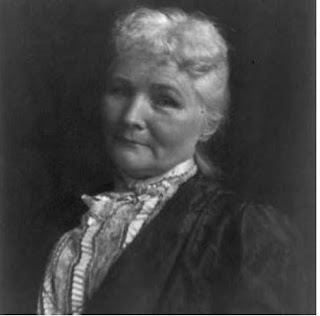 |
| https://www.womenshistory.org/education-resources/biographies/mary-harris-jones |
For example, Mary Harris, also known as Mother Jones, spent more than fifty years unionizing works throughout the country. Trained as a schoolteacher and seamstress, she was arrested, personally attacked, and faced with many hardships, but she earned an audience with United States Presidents from McKinley to Coolidge.
Regardless of the difficulties these early immigrants from Ireland faced, they came to America in hopes of finding a better life than the one they left behind. They set the example for chain immigrations, bringing family and relatives to the US, because they still believed in the American dream.
Leave a comment, and I’ll enter you into a random drawing for a free print (US only) or ebook (winner’s choice otherwise) of “Time Will Tell.” Don’t forget to cleverly disguise your email address so phishers can’t steal it: name AT email provider DOT extension For example, donna AT livebytheword DOT com
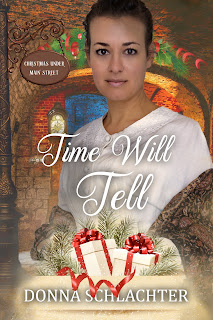
About “Time Will Tell”:
After Sadie Bauer inherits her father’s watch and clock repair shop in Pueblo, she soon learns that Fate conspires against her.
Will O’Reilly longs to help this beautiful damsel in distress, but she’s about as prickly as a porcupine.
Can Sadie overcome her mistrust of men in general, and of a certain suave salesman in particular? Can Will get past his former betrothed’s infidelity? And can both learn to trust the God who makes all things beautiful in His time?
Check out the book here: https://www.amazon.com/dp/B09MNX4SKV
About Donna:

A hybrid author, Donna writes squeaky clean historical and contemporary suspense. She has been published more than 50 times in books; is a member of several writers groups; facilitates a critique group; teaches writing classes; ghostwrites; edits; and judges in writing contests. She loves history and research, traveling extensively for both.
www.DonnaSchlachter.com Stay connected so you learn about new releases, preorders, and presales, as well as check out featured authors, book reviews, and a little corner of peace. Plus: Receive a free ebook simply for signing up for our free newsletter!
www.DonnaSchlachter.com/blog
Regardless of the difficulties these early immigrants from Ireland faced, they came to America in hopes of finding a better life than the one they left behind. They set the example for chain immigrations, bringing family and relatives to the US, because they still believed in the American dream.
Leave a comment, and I’ll enter you into a random drawing for a free print (US only) or ebook (winner’s choice otherwise) of “Time Will Tell.” Don’t forget to cleverly disguise your email address so phishers can’t steal it: name AT email provider DOT extension For example, donna AT livebytheword DOT com
About “Time Will Tell”:
After Sadie Bauer inherits her father’s watch and clock repair shop in Pueblo, she soon learns that Fate conspires against her.
Will O’Reilly longs to help this beautiful damsel in distress, but she’s about as prickly as a porcupine.
Can Sadie overcome her mistrust of men in general, and of a certain suave salesman in particular? Can Will get past his former betrothed’s infidelity? And can both learn to trust the God who makes all things beautiful in His time?
Check out the book here: https://www.amazon.com/dp/B09MNX4SKV
About Donna:
A hybrid author, Donna writes squeaky clean historical and contemporary suspense. She has been published more than 50 times in books; is a member of several writers groups; facilitates a critique group; teaches writing classes; ghostwrites; edits; and judges in writing contests. She loves history and research, traveling extensively for both.
www.DonnaSchlachter.com Stay connected so you learn about new releases, preorders, and presales, as well as check out featured authors, book reviews, and a little corner of peace. Plus: Receive a free ebook simply for signing up for our free newsletter!
www.DonnaSchlachter.com/blog
Check out previous blog posts at www.HiStoryThruTheAges.wordpress.com and www.AllBettsAreOff.wordpress.com
Facebook: www.Facebook.com/DonnaschlachterAuthor
Twitter: www.Twitter.com/DonnaSchlachter
Books: Amazon: http://amzn.to/2ci5Xqq
Bookbub: https://www.bookbub.com/authors/donna-schlachter
Goodreads: https://www.goodreads.com/search?utf8=%E2%9C%93&query=donna+schlachter
Etsy online shop of original artwork: https://www.etsy.com/shop/Dare2DreamUS
Resources:
https://www.loc.gov/classroom-materials/immigration/irish/irish-contributions-to-the-american-culture/
https://www.womenshistory.org/education-resources/biographies/mary-harris-jones
Facebook: www.Facebook.com/DonnaschlachterAuthor
Twitter: www.Twitter.com/DonnaSchlachter
Books: Amazon: http://amzn.to/2ci5Xqq
Bookbub: https://www.bookbub.com/authors/donna-schlachter
Goodreads: https://www.goodreads.com/search?utf8=%E2%9C%93&query=donna+schlachter
Etsy online shop of original artwork: https://www.etsy.com/shop/Dare2DreamUS
Resources:
https://www.loc.gov/classroom-materials/immigration/irish/irish-contributions-to-the-american-culture/
https://www.womenshistory.org/education-resources/biographies/mary-harris-jones