Showing posts with label 1930's. Show all posts

Saturday, June 1, 2024

Unexpected Legacy Series: Earl Eugene Edwards

By Matthew J. Elliott

Gene Edwards 2007

There are times in life when unexpected things happen to unexpecting people. Some of these stories have a lot of chaotic aspects to them as well. My own story is somewhat of a chaotic one, and while my story is not the story this post is about, there are some unique connections between mine and that of one of my favorite authors of all time. As a young man, I deeply longed for people to relate to who endured similar experiences in life that I had. I eagerly wanted to find others to connect with because there was no one, at least no one I knew about, who could understand the things I had to deal with as a child. Even as an adult, I questioned the idea of being understood by others. Earl Eugene Edwards, known to many as the famed author, Gene Edwards, was one of the few. His stories inspired me and his personal story inspires me even more. 


Before he was even born, circumstances were against him. His ancestor, Joseph Edoir, a Frenchman, abandoned his heritage and shipped off to the Americas with dreams of building a new life in the late 1790s. Surrounding the oil boom of the 1920s, his illiterate father, J.C. “Blackie” Edwards moved to the great state of Texas and married a woman named Gladys Brewer. She was the daughter of a cotton farmer who was terrified of tornadoes and forced his family to live a mostly sheltered life moving from town to town living in storm cellars.  Both had dreams of creating a new life together and had two sons together. While Gene’s father did what he thought he needed to do in the business world, his mother became a teacher and dreamed of becoming a writer.  While she never accomplished this, she did pass that gifting on to her son. Gene was the younger of the two and had little hope of living past the age of three. 


Conroe, TX (Oil Boom Late 1930s)
While living in Conroe, Texas, Gene became one of the many who were almost taken by the scarlet fever epidemics of 1935. While Texas had limited cases, worldwide scarlet fever was breaking out even in schools that had been immunized against the disease. His lungs filled with fluid and breathing was considered impossible. The medical personnel who visited the guaranteed home on multiple occasions told the family that the young toddler would not make it through this. On three occasions, it was believed that Gene had actually passed on. It was only after his parents took after Hannah, Samuel's Mother from the Bible, and promised God that they would give him solely to the Lord's work that Gene overcame this struggle. In truth, I had a similar struggle as a baby with an infection in my leg that almost did the same to me. 


Had it not been for the prayers of my parents, I might have perished as a baby too. Gene also had a significant case of dyslexia. Another sentiment, I can relate to on a pretty deep level, but this is not about me, is it? As a young preteen Gene could not even read his own handwriting and he was more of an introvert than most. The combination of this left the poor young child with little hope of finding purpose in life and he struggled with this until he began attending military school. There he discovered that he had a prodigious memory. In other words, Gene could store a great deal more information in his memory than most people. This led him to develop a deep passion for history and literature and eventually led him to his own Damascus Road Faith experience. 


The Divine Romance
At this point, Gene’s life took a huge turn. He left the military school and in the early 1950s, he graduated college at the ripe old age of 18. After this, he joined the ministry and developed even more interest in biblical history, thus leading us to who many know him as today, one of the most masterful authors of his time. While trying to find his place in a pastorate, Gene discovered he had his mother's gift of story-building and he ultimately left the pastorate roles he thought he wanted to live out his days as a Christian Writer. His stories include everything from educational content to biblical fiction books based on the knowledge he had gained about the early Christian Church. In his time he published more than 25 best-selling books, and his most memorable work, The Divine Romance, is widely considered a masterpiece of Christian literature. 

It is hard to imagine that someone who had such a challenging history could overcome so much in his lifetime. The Legacy Gene Edwards left behind is truly one that many would not have expected and it proves that once again, It is not who you are underneath, or where you come from that defines you, but what you can overcome. The past is always going to be there, it is how we react to the present that will determine our future.  There is so much more to Gene Edwards' story than I have been able to share in this post. So I encourage you to look into it for yourself. There is a great deal to learn about this man, as well as the others you have highlighted in this series so far. Go, therefore, and find the ones you can relate to in your own life.  


~ Biography ~

Matthew James Elliott (M.J. Elliott) is a passionate writer who loves to encourage and inspire others. He has served in various ministry roles for over 15 years, which has given him a unique perspective on people and Biblical History. Matthew holds a degree in Biblical Studies from Oklahoma Wesleyan University, with a focus on Pastoral Care, Christian Education, and Worship.

Matthew is happily married to Traci, and they have three children named Leyla, Caleb, and Hannah, who bring them immense joy and inspiration. As a writer, Matthew's goal is to share love, equip others, and edify them for the greater good. He loves connecting any amount of scripture to his stories and uses his knowledge of Biblical History to do so often.

You can find Matthew's works on Amazon, Goodreads, Facebook, and His Website. He has written Devotionals, An Episodic Series, Novellas, and even Commentaries for The Gospel Daily.


~ Highlighted Release ~
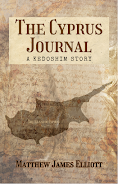
The Cyprus Journal is Out! It Released on May 5th, 2024!

One Young Man. His Significant Story. A Witness of the Early Church.

Many knew him as the young cousin to Barnabas the Encourager, the son of Mary who offered her home to honor the Savior and those who followed Him, or even the man who abandoned Paul on his First Missionary Journey, but there is more to his story. His story is one of new beginnings, a promise fulfilled, and a man who overcame fear of the unknown.

----

Sources:

Autobiography | Gene Edwards. geneedwards.com/autobiography.

Tuesday, September 29, 2020

The Legacy of a Writer

Elaine Marie Cooper I’ll never forget hearing the news in 1995 that my favorite author, James Herriott (Alf Wight) had passed away. My heart sank as he was the one writer I had hoped to meet in person one day. My opportunity had slipped away forever. Good writing has that ability to connect reader and writer in a relationship both unique and loyal. Through an author’s words, readers are led on a series of emotions that can run the gamut from fear to joy to tenderness. It is, to me, a special bond.

Alfred Wight (James Herriott was his pen name) graduated from Glasgow Veterinary College in 1939. It was an era without benefit of modern treatments such as antibiotics to kill infections. It was also an era that led to the outbreak of war against Germany. Herriott managed to weave the historical aspects into the stories that he shares which captivate reading audiences. Herriott (Wight) practiced veterinary medicine for nearly fifty years. When I picked up a copy of Herriott’s first novel, All Creatures Great and Small, many years ago, I was spellbound. Totally enraptured by the 1930’s era story of the young vet hired by a country practice in the hills of Yorkshire, England, who could not relate to the new graduate’s sense of feeling like a fish out of water? The city vet meets the mud and challenges of large animal practice while trying to not make a fool of himself. Of course, he often makes a fool of himself, which only endears him to us more. Herriott painted such vivid word-portraits of the surrounding countryside as well as the intriguing characters, that each chapter flowed easily into the next. When the sequels emerged, I was first to purchase each one, eagerly anticipating more adventures of the country vet, his friends, and the animals that grew to touch us in so many heartfelt ways. I cannot recall just how many chapters left me either in laughter or tears.
I was not the only loyal fan of the Herriott books. A series was created for television and lasted for several years. Audiences tuned in faithfully, viewing reruns over and over. That first series was filmed in 1978.


Imagine my joy to discover that a whole new series based on the books is soon to be presented on PBS. I am delighted to watch the tales (and tails!) all over again. The power of words. They transport us to times past that seem to be lost to the ages yet bring us renewed understanding of the lives who came before us. But the true power of words is their ability to envelope 
us in the common human condition that brings both joy and sorrow. It takes a special author to infuse those feelings through the words and into our hearts. Well done, James Herriott. Elaine Marie Cooper has two historical fiction books that released in 2019: War’s Respite (Prequel novella) and Love’s Kindling. They are the first two books in the Dawn of America Series set in Revolutionary War Connecticut. This series will re-release with a new publisher beginning in 2021. Cooper is the award-winning author of Fields of the Fatherless and Bethany’s Calendar. Her 2016 release (Saratoga Letters) was finalist in Historical Romance in both the Selah Awards and Next Generation Indie Book Awards. She has been published in Chicken Soup for the Soul and HomeLife magazine. She also penned the three-book historical series, Deer Run Saga. Her upcoming release, Scarred Vessels, is about the black soldiers in the American Revolution. Look for it in October 20, 2020. You can visit her website/ blog at www.elainemariecooper.com

Wednesday, September 2, 2020

Weddings of the 1930's


After the shorter skirts and uptick in non-traditional weddings of the 1920's, brides-to-be of the 1930's were ready for something different. Two major influences molded couples' decisions about their weddings: the Depression and Hollywood--there was glamour, but on a budget. (And by the middle of the decade, there was official help, since dedicated bridal magazines first appeared at this time.)
File:Musical stars Madge Elliott and Cyril Ritchard's wedding, St Mary's Cathedral, Sydney, 16 September 1935.jpg
A gust of wind hits Australian musical stars Cyril Ritchard and Madge Elliott after their wedding in 1935. Public Domain.
The overall look of wedding dresses was far more conservative than the previous decade's, with higher necklines, lower hemlines, and long trains and veils. Rich fabrics that reflected light, such as satin or shiny silk, were the choicest fabrics for 1930's brides, cut in the slimming styles favored by movie stars. Those fabrics were expensive, however, so brides often turned to rayon as a thriftier alternative. Sometimes, these dresses would be dyed and worn again.

If a bride couldn't splurge on fabric, then, as now, she might wear her best dress, or borrow a relative's or friend's dress. 


Attention was drawn to the waist in these dresses, a stark contrast to the drop-waist gowns of the previous decade. Belts, pleats, and ruching were all in vogue. For church weddings, long-sleeve styles were considered appropriate, but a bride might wear a sleeveless gown with a jacket over it for the ceremony. 


Most new brides wore white, but my grandmother married in her favorite color: pastel blue. A bride who'd been married before often wore pastel colors. Shoes, gloves, and hats were often dyed to match.

File:StateLibQld 1 174063 Eric and Lillian Webster on their wedding day, 1934.jpg
Eric and Lillian Webster's wedding day, 1934. Public Domain.
Early in the decade, many a bride still sported short hair, popular in the Roaring 20's. Styles changed, however, and brides curled their hair to frame their faces, or grew it as the years went on. 

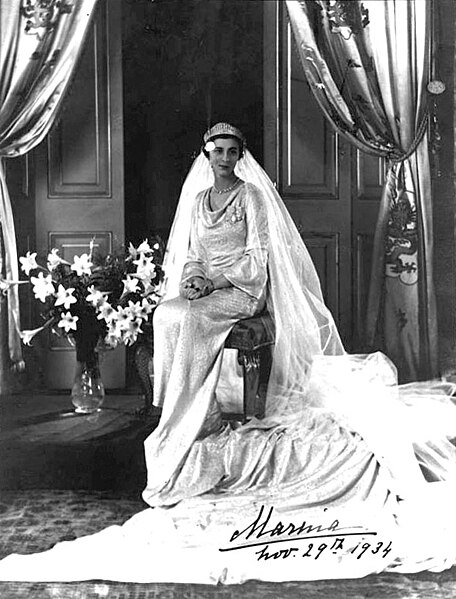
Atop these new hairdos, brides favored veils, but expensive lace was replaced by tulle--and lots of it. Some veils went to the floor, anchored by regal-looking tiaras (comprised of real or fashion gems, for larger budgets, or starched lace for those watching their pennies), flower wreaths, or, more simply, pins, holding it snug to the head.

File:Princess Marina 1934.jpg
Princess Marina of Greece and Denmark anchored her veil with a tiara at her 1934 wedding. https://commons.wikimedia.org/wiki/Template:PD-US, Public Domain in original country.
Other brides preferred a hat: sunhats and halo hats were all the rage.

A bride didn't forget her makeup, either. The style was thin eyebrows--sometimes shaved off completely and drawn back on with a pencil--as well as false eyelashes, pale foundation, and eye shadow.


Flowers were part of the wedding, with bouquets as large as desired and afforded, but a corsage would do, as well.


By the end of the decade, "Gone with the Wind" was incredibly popular, and Victorian-influenced fashions were all the rage. Crinolines (hoop skirts) and leg o'mutton sleeves shaped wedding gowns, bedecked with ruffles and bows.


Grooms often wore tuxedos with suits with shoulder pads, felt hats or no hats, patterned ties or white ties--and he might have worn a mustache, too. Since a diamond ring could cost upwards of a hundred dollars, some grooms offered their brides much more affordable bands, lacking stones. 


Of course, bridesmaids and groomsmen made up the wedding party--the higher the number, more likely the wealthier the family paying for the wedding.


Church weddings were more fashionable than in the previous decade, and after the ceremony, the new marriage was celebrated with a reception including cake and toasts. Only the wealthy could afford large dinner or luncheon receptions.

File:Wedding cakes by DeLuxe Pastry Shoppes, Fort Wayne, Indiana (78670).jpg
Advertisement for DeLuxe Pastry Shoppes in Fort Wayne, Indiana, 1930's. Public Domain.
Bakers began to provide wedding cakes in the 1930's, making them more affordable and accessible to many people, and cake toppers were also new--available in Bakelite, porcelain, or even wood. It first became a tradition for the bride and groom to cut the cake together using a knife or sword.

Times would change again with the coming of World War II, but 1930's brides and grooms created personal, memorable, and stunning weddings that would not soon be forgotten.


**


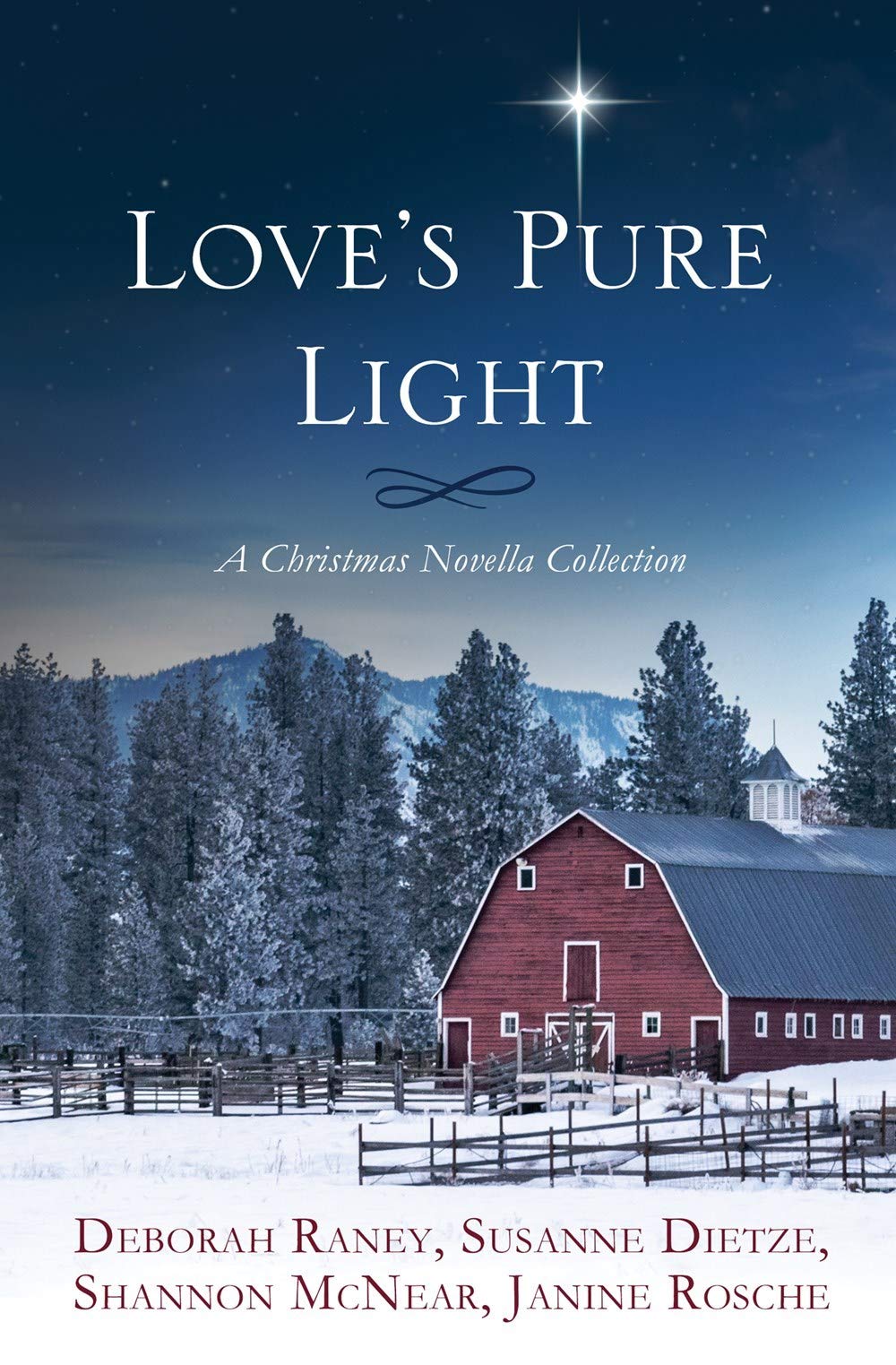
Today is my final post for Heroes, Heroines & History. I have loved my time here, but at present, my current contracts are all for contemporary-set stories with Love Inspired. This month, however, I'm celebrating the release of my story While Shepherds Watch Are Keeping in Love's Pure Light, a Christmas novella collection. To learn more about the collection, please visit my website, www.susannedietze.com. 

To enter to win a copy, an Amazon card, and a Willow Tree Nativity set, use the rafflecopter form found here.

Thank you to all the readers and and members of HHH!


Friday, April 26, 2019

The Golden Age of Radio


Long ago—before the word podcast was ever a thing—the Golden Age of Radio filled American homes with broadcasts of comedy sitcoms, up-to-date news from around the world, stories of science fiction, soap-operas, variety hours, talent shows, children’s shows and even quiz shows.

It became common for families to sit around the radio after a long day of work and listen to their favorite program before turning in for the night. Children loved The Adventures of Frank Ferrell or Space Patrol. Mothers and fathers waited for the latest news about what was happening in Europe during the tumultuous early Twentieth Century. Radio broadcasting brought families and the world closer.

There were three big radio networks; National Broadcasting Company or NBS, American Broadcasting Company, or ABC, and Columbia Broadcasting System, or CBS. A fourth smaller network, Mutual Broadcasting System rounded out the stations controlling the majority of the programming . . . and sponsors controlled the networks.

At first, sponsors bought a show’s title for advertising, like Champion Spark Plug Hour or A&P (a long-gone grocery store) Gypsies. By doing so, during the early days of radio, there were no commercial interruption and in fact, commercials were thought of as rude, but after a few years, advertisers created a mid-show break and used that time to promote their goods.   
Reading the script
                       
Sponsors like Maxwell House Coffee would use this mid-show break to entertain while promoting. Perhaps, they’d have a fashion show, where the newest styles would be described or maybe a super-star from the big-screen would speak about the reasons the listener should spend their hard earned (and scarce during the Great Depression years) money on their products.

Programming varied wildly. As mentioned previously, a station may have broadcast a live music show, or a comedy variety show, or a dramatic mystery. Every type of programming that you might find on television today, was played on radio . . . only often times, it was live. Actors and actresses would stand (or sit) at a microphone with a script in hand and read and act out the story. Super-stars like Clark Gable and Betty Grable would revise a roll they played on the big screen for those at home. Major motion pictures like Bachelor and the Bobbysocks, and The Maltese Falcon were re-played on radio shows with the original cast acting out the script.

 
Abbott and Costello
Vaudeville acts like Abbott and Costello or Gracie Allen and her husband George Burns found a new career on radio. The stage play What a Life was turned into the long running NBC radio show, The Aldrich Family. The writer for The Aldrich Family earned $3,000.00 a week at the peak of the show’s popularity. This was the most any radio show writer was payed.

Another common beginning for radio shows was comic strips. Blondie, Dick Tracy, Little Orphan Annie, Li’l Abner, Popeye the Sailor and many more comics were wildly popular on radio. Some eventually were made into long running cartoons or television shows.

The family comedy Father Knows Best made a successful transition to the new media, television. Some shows made this move easily, while others failed. The basic outline of radio was adapted by TV and though eventually the new television media replaced radio, it took a long time for families to give up the cozy habit of listening to radio programing.   
Cast of The Guiding Light
                                       
Today as podcasts make a bigger and bigger impact on media, I often think of the popularity of The Golden Age of Radio. I have to wonder if listening to entertainment isn’t better for our brain function than watching the television.

If you’re interested listening to some old-time radio, it’s as simple as doing an internet search. Many, many old shows are available for download or to simply play and enjoy. There are even a few mobile apps to download. Try it, radio shows are a great way to pass time while at the gym or doing yard work.

Have you ever listened to a radio show? Do you remember any late-night radio programming? When we moved to Florida in the early 1990’s, a local television station used to simulcast their programming on a radio station. I listened to The Price Is Right almost every day . . . And loved it.

Thank you for joining me today on Heroes, Heroines and History. I hope wherever you are, you’re happy, healthy and loved. Until next month, my friends—adios.


 Multi award-winning author, Michele K. Morris’s love for historical fiction began when she first read Laura Ingalls Wilder’s Little House book series. She grew up riding horses and spending her free time in the woods of mid-Michigan. Married to her high school sweetheart, they are living happily-ever-after with their six children, three in-loves, and ten grandchildren in Florida, the sunshine state. Michele loves to hear from readers on Facebook, Twitter, and here through the group blog, Heroes, Heroines, and History at HHHistory.com.

Michele is represented by Tamela Hancock Murray of the Steve Laube Agency.

Sunday, May 21, 2017

Let's Go to the Diner!


photo by Jim Brueckner

By Marilyn Turk

Have you ever been to a diner?
These nostalgic restaurants were popular from the 1920’s to the 1950’s, but today’s fast food restaurants replaced them. Some of you may remember the diners in TV shows like “Happy Days” and “Alice.”  Norman Rockwell’s 1958 painting, The Runaway, shows a young boy and a protective highway patrolman at the counter of an anonymous diner.
According to Webster’s Dictionary, a diner is “a restaurant in the shape of a railroad car,” and was nicknamed from the term “dining car.”
In 1858, Walter Scott of Providence, Rhode Island, began selling sandwiches and coffee to night workers. His business grew so well that in 1872, he quit his day job and started selling food from a horse-drawn covered express wagon, credited as being the first diner. Soon, others copied his idea and set up wagons that served workers and pedestrians at night, since most restaurants were closed by 8:00 p.m.

Photo courtesy Flickr by Liz West
When the wagon vendors joined the lunchtime business, their inexpensive, fast meals gained popularity, and the wagons began to crowd the streets. Towns and cities passed ordinances to restrict their hours of operation. This prompted some owners to park their wagons in semi-permanent location to circumvent the law.

As horse-drawn street cars were replaced by new electric ones, wagon vendors bought the old cars and converted them into diners. During this time, diners gained the reputation of “greasy spoons,” and many were open 24 hours a day.

After women gained the right to vote in 1920, diner owners began to clean up their image to attract the women’s business. They spruced up their businesses with a fresh paint, added flowers and shrubs outside, and booth service inside.

Diner menus typically featured American classic fare like hamburgers, French fries, and sandwiches. In addition, many served hand-blended milkshakes and desserts like pies, displayed in glass cases.
Prefabricated diners entered the scene in the 1920’s with innovations such as indoor bathrooms, tables, and longer dimensions. The 1930’s saw more streamline versions, made to symbolize speed and mobility.

Diners maintained their popularity during the Depression because they offered inexpensive places to eat. After World War II, the demands for diners increased. Servicemen eligible for G.I. loans saw diners as an easy way to make an income. In 1948, a dozen diner manufacturers competed for business. New materials such as Formica, Naugahyde and terrazzo floors made their entrance into diner design. All stainless steel exteriors and large windows were added to attract motorists as populations became more mobile.

The introduction of new fast food restaurants caused diners to lose popularity during the 1960’s until a revival began in the late 1970’s.

Interest in the American diner continues today. People intent on preserving the diner atmosphere where people from all walks of life gathered for inexpensive meals prompted a number of vintage diners to be rescued from demolition and relocated to new sites. The Massachusetts Historical Commission has placed all vintage functioning diners on the National Register of Historic Places.

Did you have a favorite diner? What did it look like? What was your favorite food there?


Marilyn Turk loves to study history, especially that of lighthouses and the coast of the United States. She is the author of Rebel Light, a Civil War love story set on the coast of Florida, A Gilded Curse, a historical suspense novel set on Jekyll Island, Georgia, in 1942, and Lighthouse Devotions - 52 Inspiring Lighthouse Stories, based on her popular lighthouse blog. (@ http://pathwayheart.com)