
This blog series celebrates the cattle queens mentioned in The Whispering Wind, the final installment in the Montana Gold western historical romance series.

In 1860, Hattie started her studies at Salado College. She met George Washington Cluck at a dance. Hattie was seventeen when they married on June 25, 1863. The Civil War had begun, several of their brothers enlisted in the Confederate Army. George remained behind, most likely to run the ranch. Hattie gave birth to two daughters and a son over the next six years.
Following the War, the eastern states were in short supply of beef. Cattle that sold for $4 each in Texas fetched $40 a head when sold in Abilene. A supply route opened up in 1867 when the railway connected to Abilene Kansas. Texas ranchers could drive their cattle up the Chisholm Trail to newly-built stockyards and send their beef to eastern buyers by rail. In the spring of 1871, George Cluck decided to join forces with another rancher to drive their herds to Abilene.
Hattie accompanied George on the arduous journey. Hattie later said that George “took all he had in the world with him, and we wanted to be together no matter what happened.” However, her granddaughter stated that Hattie was the one who insisted on going along. The truth is probably lost in time. Either way, Hattie is celebrated as the first female to travel the Chisholm Trail. She accomplished this feat with her three children (ages six, four, and two) in tow and while pregnant with her fourth child.

Hattie died on March 2, 1938, at the venerable age of 92, but her fame lives on. The Chisholm Trail Crossing Park in Round Rock, Texas includes a statue of Hattie Cluck with her young son, Emmet.
Hattie is much admired by Phoebe Walsh, heroine of The Whispering Wind (Montana Gold, book six). Phoebe cites Hattie Cluck as an example while trying to talk her uncle into training her to become a ranch hand. Like Hattie, Phoebe challenges limits imposed on women. Regardless of her impending spinsterhood, Phoebe determines to live a meaningful life. It would take a strong man to change her mind--someone like Will Canfield. Despite the kiss he'd stolen along with her peace of mind, Will doesn't want her.
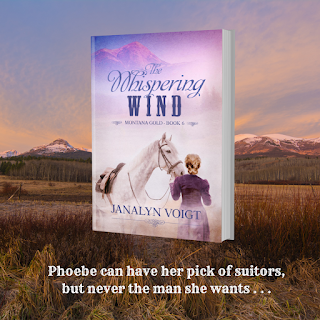 Fancy parties and embroidered fans hold little appeal for Phoebe Walsh. She would rather gallop across the open range or help her father with a wounded calf. Of her many admirers, none spark her interest. Ma seems determined to save her from becoming a spinster, but how can Phoebe accept her mother's choice of suitors when her heart belongs elsewhere?
Several years have passed since Will Canfield stole a kiss and her heart. Remembering her passionate response still curls her insides, but how she feels doesn't matter. Will's interest in her isn't serious, as he's made clear. She needs to get over the man. If Uncle Con will stop throwing them together, that could be a whole lot easier.
Will feels guilty about Phoebe, but he can't risk another heartbreak. Being left at the altar certainly changed his mind about romance. Phoebe is better off marrying someone else, even if the idea sets his teeth on edge.
Phoebe and Will must both, with God's help, conquer an old fear before they can move ahead with their lives.


 |
| "Pioneer Woman" and "Pioneer Boy" (statues of Hattie and Emmett Cluck) published courtesy of Another Believer, CC BY-SA 4.0, via Wikimedia Commons |
Western Cattle Queens: Hattie Standefer Cluck
Harriet Louise Standefer entered this world on April 14, 1846 in Alabama. Her parents, James Stuart and Caroline (Randall) Standefer soon left for Williamson County, Texas, taking their young daughter with them. Her father did quite well at cattle ranching.In 1860, Hattie started her studies at Salado College. She met George Washington Cluck at a dance. Hattie was seventeen when they married on June 25, 1863. The Civil War had begun, several of their brothers enlisted in the Confederate Army. George remained behind, most likely to run the ranch. Hattie gave birth to two daughters and a son over the next six years.
Up the Chisholm Trail
Following the War, the eastern states were in short supply of beef. Cattle that sold for $4 each in Texas fetched $40 a head when sold in Abilene. A supply route opened up in 1867 when the railway connected to Abilene Kansas. Texas ranchers could drive their cattle up the Chisholm Trail to newly-built stockyards and send their beef to eastern buyers by rail. In the spring of 1871, George Cluck decided to join forces with another rancher to drive their herds to Abilene.
Hattie accompanied George on the arduous journey. Hattie later said that George “took all he had in the world with him, and we wanted to be together no matter what happened.” However, her granddaughter stated that Hattie was the one who insisted on going along. The truth is probably lost in time. Either way, Hattie is celebrated as the first female to travel the Chisholm Trail. She accomplished this feat with her three children (ages six, four, and two) in tow and while pregnant with her fourth child.

Along the way, Hattie and her family dealt with several harrowing experiences. She and her children had to cross the swiftly-running Red River on horseback to lighten the wagon. Robbers assailed their party and had to be fended off at gunpoint.
Despite the hardships and dangers, the Clucks made it to Abilene with their herd and their family intact. Hattie was so close to her due date that she and her husband opted to remain in Kansas. This didn’t go particularly well, since Kansas farmers resented the tendency of Texas ranchers to drive their cattle through their crops.
The Clucks returned to Texas two years later, and George registered a second cattle brand under Hattie’s name. George closed several good land deals, enjoyed success as a cattle rancher, and sold water rights to the railroad. He donated land and money for a local school. Hattie and George added six more children to their family. They also took in their nephew.
After George died in August of 1920, Hattie spent her days in simple living. She continued to run her farm, and in spare moments might be found quilting, reading popular fiction, writing poetry, daydreaming, or collecting arrowheads on her property.
The Hattie Cluck Legend
She was 84 when reporters began making much of her journey up the Chisholm Trail. They were guilty of embroidering its perils. The bandits became Indians in some accounts, and Hattie helped loade guns for the men who resisted them. One legend has it that Hattie declared herself ready to take the place of any coward who refused to fight. Whatever the truth may be, the bandits left without any cattle.Hattie died on March 2, 1938, at the venerable age of 92, but her fame lives on. The Chisholm Trail Crossing Park in Round Rock, Texas includes a statue of Hattie Cluck with her young son, Emmet.
Hattie is much admired by Phoebe Walsh, heroine of The Whispering Wind (Montana Gold, book six). Phoebe cites Hattie Cluck as an example while trying to talk her uncle into training her to become a ranch hand. Like Hattie, Phoebe challenges limits imposed on women. Regardless of her impending spinsterhood, Phoebe determines to live a meaningful life. It would take a strong man to change her mind--someone like Will Canfield. Despite the kiss he'd stolen along with her peace of mind, Will doesn't want her.
The Whispering Wind

Several years have passed since Will Canfield stole a kiss and her heart. Remembering her passionate response still curls her insides, but how she feels doesn't matter. Will's interest in her isn't serious, as he's made clear. She needs to get over the man. If Uncle Con will stop throwing them together, that could be a whole lot easier.
Will feels guilty about Phoebe, but he can't risk another heartbreak. Being left at the altar certainly changed his mind about romance. Phoebe is better off marrying someone else, even if the idea sets his teeth on edge.
Phoebe and Will must both, with God's help, conquer an old fear before they can move ahead with their lives.
Set during a troubled time in America, the Montana Gold series explores faith, courage, and love in the Wild West.
What's New with Janalyn Voigt

Hello friends. I hope all is well with you. Have you planned any challenges for yourself lately? I'm working to improve my daily life. Recently, I came across an image of types of coffee drinks. Some I've tried and others I've thought about making. It surprised me, though, to learn how many I'd never heard of before. There were 30 pictured, meant to encourage a month of experimenting. Now, as an author, I have an affinity for coffee.
Last Christmas, a family member gave me a tongue-in-cheek sign for my office: "I turn coffee into books. What's your superpower?" Hmmm... I wonder if consuming various coffee drinks produces different books. What do you think?
Biography
Janalyn Voigt's unique blend of adventure, romance, suspense, and fantasy creates worlds of beauty and danger for readers. Writing in the historical romance and medieval epic fantasy genres, Janalyn is represented by Wordserve Literary. When not writing, she loves to discover worlds of adventure in the great outdoors.
Learn more about Janalyn Voigt and her books.


