Showing posts with label The Whispering Wind. Show all posts

Friday, June 20, 2025

Heroes of the Wild West: Ranchers


When we think of the heroes who tamed the American frontier, our minds may leap to lawmen, cowboys, or pioneers in covered wagons. Yet one group quietly shaped the West in profound and lasting ways: the ranchers. They were not only stewards of cattle and land but also guardians of a way of life that required faith, determination, and resilience. Nowhere is this more evident than in Montana’s Deer Lodge Valley, where lush grasslands, open skies, and enterprising hearts gave rise to one of the most iconic ranches of the West—the Kohrs Ranch.

A Divine Opportunity

As settlers pushed westward during the 1800s, wagon trains heading toward Oregon and California often left behind cattle that were sick, lame, or simply too exhausted to continue. Left to the mercy of the wilderness, these abandoned cattle thrived on Montana's rich grasses. Ranchers rounded them up, nursed them back to health, and integrated them into their growing herds. This practice not only salvaged valuable livestock but also reflected a culture of stewardship rooted in frontier practicality and Christian compassion.

One of the greatest exemplars of this spirit was Conrad Kohrs, a German immigrant who came to Montana seeking opportunity and built an empire instead. Known as the "Cattle King of Montana," Kohrs began modestly, buying and raising cattle that others had given up on. With hard work, vision, and an eye for opportunity, he turned abandoned animals into thriving herds, building what would become the legendary Kohrs Ranch.

The Open Range and a Growing Industry

The success of ranching in Montana hinged on the concept of the open range. Without fences to constrain them, cattle could roam for miles, feeding on the bounty of the land. For ranchers like Kohrs, this meant lower overhead and larger herds, but it also required trust—trust in neighbors, hired hands, and God.

Ranch life was demanding. Days began before dawn and ended well after sunset. The weather could be merciless, isolation was common, and profits uncertain. Yet, through it all, many ranching families held fast to their faith. The Bible was as essential to life as the branding iron, and Sunday worship, whether in a distant town or around the family hearth, provided spiritual rest and direction.

Markets for beef flourished as railroads connected Montana to the rest of the nation. Towns like Chicago and Kansas City became key destinations for Montana cattle, and British investors began pouring money into massive herds, hoping to cash in on the boom. But such rapid growth brought its own dangers.

Greed, Overgrazing, and the Storm to Come

By the mid-1880s, overgrazing had become a serious problem. The open range, once an Eden of opportunity, began to show signs of strain. Driven by greed and fueled by speculative foreign capital, especially from British syndicates, ranchers allowed too many cattle to graze the same stretches of land. The balance that had once sustained the cattle industry was tipping dangerously.

Then came the winter of 1886–87.

Known as “The Great Die-Up,” it was one of the harshest winters in Western history. Cattle by the tens of thousands froze or starved, unable to paw through snow to reach grass. Entire herds were lost, and with them, the dreams of many ranchers. Conrad Kohrs himself lost more than half his stock.

This devastating winter spelled the end of the open range era. Fencing, controlled grazing, and winter feeding became necessary to survive. While this change marked the beginning of modern ranching, it also closed a chapter in the romantic but rugged life of frontier cattlemen.

The Whispering Wind

Learn More
This poignant and powerful moment in history provides the setting for my novel, The Whispering Wind, a historical Christian romance that takes place during the summer just before the Great Die-Up.

Phoebe, my heroine, is the daughter—and niece—of ranchers, living on her uncle’s ranch in the Deer Lodge Valley. Skilled with horses and determined to prove her worth in a man’s world, she persuades her uncle to take her on as a ranch hand—no small feat in an era when women were expected to remain in the background.

She finds herself working under Will, the ranch manager, a man of quiet strength who has seen both the promise and perils of the cattle business. As he trains her to work cattle, their bond deepens. But their growing affection is shadowed by the troubling signs of a range pushed to its limits, and the rising tide of ambition and foreign greed threatening to unravel all they hold dear.

Writing The Whispering Wind allowed me to explore the resilience and faith of people living on the edge of change. I was inspired by the courage of women like Phoebe, who defied cultural norms, and men like Will, who bore responsibility with integrity. The novel is steeped in the rich detail of ranch life—branding cattle, riding herd, and wrestling with the moral questions raised by unchecked growth. Yet, at its heart, it is a story of love, faith, and finding strength in God when the world around you begins to shift.

The Legacy Lives On

The ranchers of Montana, like Conrad Kohrs and the countless others who followed, may not wear the same kind of fame as outlaws or gunfighters, but their legacy is every bit as enduring. They helped feed a nation, shaped the land, and left behind values of hard work, humility, and trust in God's provision.

Their stories—and the lessons they teach us—still speak today. Whether you're drawn to the sweeping romance of the open plains or the quiet faith of those who called it home, the ranchers of the Wild West remain true heroes of the American frontier.

About Janalyn Voigt

Janalyn Voigt fell in love with literature at an early age when her father read chapters from classics as bedtime stories. When Janalyn grew older, she put herself to sleep with tales "written" in her head. Today Janalyn is a storyteller who writes in several genres. Romance, mystery, adventure, history, and whimsy appear in all her novels. Learn more about Janalyn, read the first chapters of her books, and subscribe for updates at http://janalynvoigt.com.

Monday, February 20, 2023

Western Cattle Queens: Hattie Cluck

The Wild West had a way of producing tough women, and none grittier than the cattle queens who rode, roped, and endured the privations of the trail as well as any man. Facing challenges, hardships, and perils—sometimes with children at their side—they garnered grudging respect in an era of shifting cultural roles. Some accrued wealth, while others paid with their lives. These women overcame cultural expectations to live on their terms. The halls of history must ring with applause.

This blog series celebrates the cattle queens mentioned in The Whispering Wind, the final installment in the Montana Gold western historical romance series.
"Pioneer Woman" and "Pioneer Boy" (statues of Hattie and Emmett Cluck) published courtesy of Another Believer, CC BY-SA 4.0, via Wikimedia Commons

Western Cattle Queens: Hattie Standefer Cluck

Harriet Louise Standefer entered this world on April 14, 1846 in Alabama. Her parents, James Stuart and Caroline (Randall) Standefer soon left for Williamson County, Texas, taking their young daughter with them. Her father did quite well at cattle ranching.

In 1860, Hattie started her studies at Salado College. She met George Washington Cluck at a dance. Hattie was seventeen when they married on June 25, 1863. The Civil War had begun, several of their brothers enlisted in the Confederate Army. George remained behind, most likely to run the ranch. Hattie gave birth to two daughters and a son over the next six years.

Up the Chisholm Trail


Following the War, the eastern states were in short supply of beef. Cattle that sold for $4 each in Texas fetched $40 a head when sold in Abilene. A supply route opened up in 1867 when the railway connected to Abilene Kansas. Texas ranchers could drive their cattle up the Chisholm Trail to newly-built stockyards and send their beef to eastern buyers by rail. In the spring of 1871, George Cluck decided to join forces with another rancher to drive their herds to Abilene.

Hattie accompanied George on the arduous journey. Hattie later said that George “took all he had in the world with him, and we wanted to be together no matter what happened.” However, her granddaughter stated that Hattie was the one who insisted on going along. The truth is probably lost in time. Either way, Hattie is celebrated as the first female to travel the Chisholm Trail. She accomplished this feat with her three children (ages six, four, and two) in tow and while pregnant with her fourth child.

Along the way, Hattie and her family dealt with several harrowing experiences. She and her children had to cross the swiftly-running Red River on horseback to lighten the wagon. Robbers assailed their party and had to be fended off at gunpoint.

Despite the hardships and dangers, the Clucks made it to Abilene with their herd and their family intact. Hattie was so close to her due date that she and her husband opted to remain in Kansas. This didn’t go particularly well, since Kansas farmers resented the tendency of Texas ranchers to drive their cattle through their crops. 

The Clucks returned to Texas two years later, and George registered a second cattle brand under Hattie’s name. George closed several good land deals, enjoyed success as a cattle rancher, and sold water rights to the railroad. He donated land and money for a local school. Hattie and George added six more children to their family. They also took in their nephew.

After George died in August of 1920, Hattie spent her days in simple living. She continued to run her farm, and in spare moments might be found quilting, reading popular fiction, writing poetry, daydreaming, or collecting arrowheads on her property.

The Hattie Cluck Legend

She was 84 when reporters began making much of her journey up the Chisholm Trail. They were guilty of embroidering its perils. The bandits became Indians in some accounts, and Hattie helped loade guns for the men who resisted them. One legend has it that Hattie declared herself ready to take the place of any coward who refused to fight. Whatever the truth may be, the bandits left without any cattle.

Hattie died on March 2, 1938, at the venerable age of 92, but her fame lives on. The Chisholm Trail Crossing Park in Round Rock, Texas includes a statue of Hattie Cluck with her young son, Emmet.

Hattie is much admired by Phoebe Walsh, heroine of The Whispering Wind (Montana Gold, book six). Phoebe cites Hattie Cluck as an example while trying to talk her uncle into training her to become a ranch hand. Like Hattie, Phoebe challenges limits imposed on women. Regardless of her impending spinsterhood, Phoebe determines to live a meaningful life. It would take a strong man to change her mind--someone like Will Canfield. Despite the kiss he'd stolen along with her peace of mind, Will doesn't want her. 

The Whispering Wind

The Whispering Wind by Janalyn Voigt
Fancy parties and embroidered fans hold little appeal for Phoebe Walsh. She would rather gallop across the open range or help her father with a wounded calf. Of her many admirers, none spark her interest. Ma seems determined to save her from becoming a spinster, but how can Phoebe accept her mother's choice of suitors when her heart belongs elsewhere?

Several years have passed since Will Canfield stole a kiss and her heart. Remembering her passionate response still curls her insides, but how she feels doesn't matter. Will's interest in her isn't serious, as he's made clear. She needs to get over the man. If Uncle Con will stop throwing them together, that could be a whole lot easier.

Will feels guilty about Phoebe, but he can't risk another heartbreak. Being left at the altar certainly changed his mind about romance. Phoebe is better off marrying someone else, even if the idea sets his teeth on edge.

Phoebe and Will must both, with God's help, conquer an old fear before they can move ahead with their lives. 

Set during a troubled time in America, the Montana Gold series explores faith, courage, and love in the Wild West.


What's New with Janalyn Voigt

Hello friends. I hope all is well with you. Have you planned any challenges for yourself lately? I'm working to improve my daily life. Recently, I came across an image of types of coffee drinks. Some I've tried and others I've thought about making. It surprised me, though, to learn how many I'd never heard of before. There were 30 pictured, meant to encourage a month of experimenting. Now, as an author, I have an affinity for coffee. 

Last Christmas, a family member gave me a tongue-in-cheek sign for my office: "I turn coffee into books. What's your superpower?" Hmmm... I wonder if consuming various coffee drinks produces different books. What do you think?  

Biography 

Janalyn Voigt's unique blend of adventure, romance, suspense, and fantasy creates worlds of beauty and danger for readers. Writing in the historical romance and medieval epic fantasy genres, Janalyn is represented by Wordserve Literary. When not writing, she loves to discover worlds of adventure in the great outdoors.
Learn more about Janalyn Voigt and her books.

Friday, January 20, 2023

Western Cattle Queens: Margaret Borland

The Wild West had a way of producing tough women, and none grittier than the cattle queens who rode, roped, and endured the privations of the trail as well as any man. Facing challenges, hardships, and perils—sometimes with children at their side—they garnered grudging respect in an era of shifting cultural roles. Some accrued wealth, while others paid with their lives. These women overcame cultural expectations to live on their terms. The halls of history must ring with applause.

This blog series celebrates the cattle queens mentioned in The Whispering Wind, the final installment in the Montana Gold western historical romance series.

Western Cattle Queens: Margaret Hefferman Borland

Born in Ireland on April 3, 1824, Margaret Heffernan was just five years old when her life changed forever. On the advice of land agent John McMullen, her candlemaker father abandoned his struggling business and moved his family to America. The year was 1829 when the first wave of Irish immigrants landed on the shores of Texas. The family settled in San Patricio, situated in the Coastal Bend.

Tragedy struck Margaret at the age of twelve when her father died in an Indian attack during the Texas Revolution (1835-1836). She couldn’t know then that sorrow and loss would become reoccurring themes in her life. Margaret’s widowed mother took refuge with her children at the Spanish-built Presidio La Bahia (also known as Fort Defiance).

The Presidio La Bahia image Courtesy of Ken Lund from Reno, Nevada, USA, CC BY-SA 2.0 via Wikimedia Commons

By some miracle, Margaret and her remaining family escaped the Goliad Massacre on March 27, 1836. The invading forces may have mistaken them for fellow Mexicans due to the fluency with which they spoke Spanish. After Texas won its freedom, Margaret’s family returned for a new start to San Patricio.

When Margaret was 19, she married Harrison Dunbar. Within a year, she became a young widow with a baby after Harrison died over a ‘private argument’ in a pistol duel.

Several years later, Margaret married Milton Hardy. She and her new husband built their combined 2,912 acres into a thriving cattle ranch. Together, they had four children, but one died in infancy. When cholera struck, it claimed both Milton and Margaret’s last living son. No stranger to grief, Margaret stepped up, with her brother’s assistance, to manage her ranch. By 1860, only four years later, she was a wealthy woman.

Margaret married Alexander Borland, a wealthy South Texas cattle rancher, in 1860. Their herd totaled 8,000 longhorns when the Civil War broke out in 1861. They learned that the army needed beef but decided not to risk a dangerous cattle drive. They stayed put and added to their family instead. After Margaret’s many losses, who can blame her for craving safety and security?

In 1867, two years after the close of the Civil War, a yellow fever epidemic took Margaret’s husband, three daughters, one son, and her infant grandson. Out of her seven children, only three survived.

After that, Margaret ran her ranch alone. In the winter of 1871-2, a freak blizzard froze thousands of her cattle on the hoof. Beef was oversupplied in Texas but in demand in the East. However, Missouri and part of Kansas refused to let Texas cattle, which might carry deadly “Spanish fever,” across their borders. In the spring of 1867, Joseph G. McCoy convinced officials at the Kansas Pacific Railroad officials to service Abilene, a hamlet on the edge of the restricted area. From that point, he planned to transport cattle east by railroad. 

McCoy constructed stockyards and sent word to Texas ranchers. This was welcome news. Steers brought $8 a head in San Antonio, but they could fetch $23.80 in Abilene. Needing to find a way to recover financially, Margaret made the decision to drive part of her herd north along the Chisholm Trail.

You have to hand it to this gutsy widow. She traveled with her two young sons, daughter, and granddaughter—not to mention 2,500 longhorns—over 648 miles of dusty trail for two long months. The feat made it into newspapers, giving her a claim to fame. Sadly, it also ended her life. Margaret died on July 5, 1873 in Wichita from what a doctor named “brain congestion” or “trail driving fever.” She was 49. Her sons sold the herd and brought their mother home to Victoria, Texas for burial.

Margaret Borland is the only known female trail boss on the Chisholm Trail. She suffered many sorrows and faced difficulties during her lifetime. Her courage and grit in the face of adversity and grief are the enduring legacy she gave us all.


Set during a troubled time in America, the Montana Gold series explores faith, courage, and love in the Wild West.

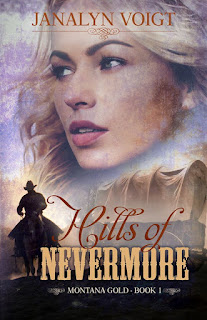
Hills of Nevermore (book 1) - Can a young widow hide her secret shame from the Irish preacher bent on protecting her?
Cheyenne Sunrise (book 2) – After her wagon journey goes terribly wrong, a woman disillusioned in men must rely on a half-Cheyenne trail guide.
Stagecoach to Liberty (book 3) – A young Hessian girl must decide whether to trust a handsome Irish stranger or her alarming companions.
The Forever Sky (book 4) - Can a young widow with no faith in love hope for a future with the man who broke her heart?
The Promise Tree (book 5) - A preacher’s daughter shouldn’t encourage a troublemaker’s advances—no matter what her wayward heart desires.

About Janalyn Voigt


Janalyn Voigt's unique blend of adventure, romance, suspense, and fantasy creates worlds of beauty and danger for readers. Writing in the historical romance and medieval epic fantasy genres, Janalyn is represented by Wordserve Literary. When not writing, she loves to discover worlds of adventure in the great outdoors.

Note from Janalyn

Hello, friends. The turn of the year is a time of renewal, of casting off cares and beginning afresh. I hope you are benefitting, as I am, from the chance to rethink and reboot. With the last tweaks of The Whispering Wind, the last book in the Montana Gold western historical romance series completed, my time and attention turns its April 5th release date. The Whispering Wind will go on presale shortly. I'm preparing a sneak peek at the cover for subscribers to the Creative Worlds of Janalyn Voigt.

Friday, May 20, 2022

Wild West Sayings We Use Today, Part 34

Bannack, Montana Jail

Wild West Sayings We Use Today, Part 34

It's time for another deep-dive into Wild West idioms and their histories. But first, let's discuss the image, above. This is a picture of the original jail in Bannack, Montana. When Sheriff Henry Plummer erected this building, he oriented the windows to offer his prisoners a sobering view of the gallows. Little did the sheriff realize that one day he would gaze through these barred windows himself. Sheriff Plummer and the dramatic events in Bannack comprise the historical background of Hills of Nevermore (Montana Gold, book 1).

Skinflint

They called a tight-fisted person a skinflint in the Wild West, just as we do today. We don't know the genesis of this slang term, but several theories provide clues.

Lexicographer Craig M. Carver suggests that 'skinflint' came from a thrifty practice of certain riflemen. Flintlock rifles contained a small piece of flint. A flint, if you don't know, is a fragment of hard rock that sparks easily. Modern cigarette lighters use flints to generate sparks. When someone pulled the trigger of a flintlock rifle, the spring-loaded cock struck the flint against a steel plate. This sent a shower of sparks into a pan below the plate. The priming powder in the pan ignited the charge in the bore, firing the rifle. When a rifle flint wore out, most people replaced it. However, a miserly individual would pull out a knife and sharpen, or “skin,” the flint.

Another idea is that ‘skinflint’ derived from ‘skin the flint,’ an earlier idiom denoting a person who ensured frugality through excessive measures. The existence of similar phrases (shave a louse, shave a flea, and the French shave an egg) makes this theory seem likely. 

Both of these suggestions may be true, for all we know. 

Historical Reference: ‘Skinflint’ was first recorded in A New Dictionary of the Terms Ancient and Modern of the Canting Crew by B. E. Gent (1699): “Skin-flint, a griping, sharping, close-fisted Fellow.”

‘To skin a flint’ made its print debut in a poem from The Legend of Captaine Jones: relating his adventure to sea, his first landing, and strange combat with a mighty beare : his furious battell with his six and thirty men, against the army of eleven kings, with their overthtow [sic] and deaths : his relieving of Kemper Castle : his strange and admirable sea-fight with six huge gallies of Spain, and nine thousand soldiers : his taking prisoner and hard usage : lastly, his setting at liberty by the Kings command, and returne for England by David Lloyd (1656):

’Mongst all those Blustering sirs that I have read

(Whose greatest wonder is that they are dead)

There’s not any Knights, nor bold Atchivers Name,

So much as Jones’s in the Booke of Fame:

They much of Greeces Alexander bragg,

Hee’d put ten Alexanders in a Bag:

Eleven fierce Kings, backt with two thousand Louts,

Jones with a Ragged Troope beats all to Clouts.

But sure it was a Conquest by Compact,

For he could never be accus’d of fact:

And yet no story a Romancer sings,

That ere exploited more stupendious things;

Quixot a winged Gyant once did kill,

That’s but a flying tale, beleiv’t who will:

This were but petty hardship, Jones was one

Would Skinne a Flint, and eat him when h’had done.”

Example: My uncle is such a skinflint that, after a party, he goes through the trash to salvage all the plastic cups and cutlery.

Skulduggery

Here’s a colorful word that’s fun to say. It brings pirates to mind. Yes? ‘Skulduggery’ means treachery, which certainly helps the association. The first syllable sounding like ‘skull’ doesn’t hurt either. Well, and the second syllable recalls digging. (But I digress.) The slang term, 'skulduggery,' is thought to have come from ‘sculdudrie,’ a Scottish word of uncertain origin used by at least 1713. It described adultery and other bawdy misbehavior. This is the most popular origin theory, but it's interesting to note that the modern meaning of skulduggery differs. Other opinions on its origin exist. Several attach it to similar-sounding words for guilt.

Historical Reference: ‘Skulduggery’ arose as a separate term in America, where it meant subterfuge. William Faulkner is credited with creating a verb form (skuldug). The first known print citation, according to the Oxford English Dictionary, dates from 1867: “From Minnesota had been imported the mysterious term ‘scull-duggery’, used to signify political or other trickery.” Apparently, this word mystified folks in the nineteenth century, too. 

Example: What sort of skulduggery are they up to?

What’s New with Janalyn Voigt

Books take time, and the wheels of publishing move slowly. I’m still editing The Whispering Wind (Montana Gold, book 6). Catching up on my writing and household duties is a bit challenging after suffering a burn injury while on deadline. Thank the Lord, I'm in a lot better shape now. Unfortunately, my email inbox isn’t. I have to admit that focusing is hard, with everything going on in the news. I regularly have to cast my crown at Jesus’s feet, and surrender my worries to Him. 

If you want to know more about the books I write, visit the bookstore at my website.

About Hills of Nevermore

Can a young widow hide her secret shame from the Irish preacher bent on helping her survive? 

In an Idaho Territory boom town, America Liberty Reed overhears circuit preacher Shane Hayes try to persuade a hotel owner to close his saloon on Sunday. Shane lands face-down in the mud for his trouble, and there’s talk of shooting him. America intervenes and finds herself in an unexpectedly personal conversation with the blue-eyed preacher. Certain she has angered God in the past, she shies away from Shane. 

Addie Martin, another widow, invites America to help in her cook tent in Virginia City, the new mining town. Even with Addie’s teenage son helping with America’s baby, life is hard. Shane urges America to depart for a more civilized location. Neither Shane’s persuasions nor road agents, murder, sickness, or vigilante violence can sway America. Loyalty and ambition hold her fast until dire circumstances force her to confront everything she believes about herself, Shane, and God. 

Based on actual historical events during a time of unrest in America.


Sunday, February 20, 2022

Shake Idioms (Wild West Sayings We Use Today)

Welcome to an all-new exploration of words and their history. Do you find it fascinating to learn about people from a bygone era? Words connect us to those who lived before us. Today we’ll discover slang expressions that use ‘shake' or 'shakes.’ Ready to climb into our literary time machine? It’s time for another word adventure.


Wild West Sayings We Use Today, Part 31


No Great Shakes

This idiom, which means ‘nothing to brag about,’ has been around since the early 1800s, and possibly before. Several theories exist on the origin of 'no great shakes.' Some believe it derived from gambling with dice. Others suspect the phrase evolved from an obsolete sense of ‘shake,’ which once signified ‘swagger.’

Historical Reference: The first known print citation came from Sir John Cam Hobhouse, the first Baron Broughton, a politician and friend to Lord Byron. In Recollections of a Long Life, his 6-volume memoir, Lord Broughton referred to an art show held in 1816: “W. said that a piece of sculpture there was 'nullae magnae quassationes,' and the others laughed heartily.” (Note: The others were proficient linguists, who understood the Latin for ‘no great shakes’ at once.

Example: I’ve tasted her meatloaf. She’s no great shakes at cooking.

Shake a Leg


The use of ‘shake a leg’ for ‘hurry up and get started’ appears to have come from an old nautical saying with a colorful backstory.

Historical Reference: In the 1700s through the 1800s, many men were kidnapped and forced into service on sailing vessels. To keep them from deserting, sailors were restricted from going ashore in port. However, the wives of married sailors could join their husbands onboard. In the bunk area in the mornings, the petty officer would shout, ‘show a leg,’ or ‘show a leg and put a stocking on it.’ Feminine ones could remain under the covers. Hairy legs betrayed their owners, who had to get up and work.

Example: Shake a leg, will you? We don’t have all day.

More Than You Can Shake a Stick At


This delightfully picturesque expression for ‘too many to count’ inspires interesting mental pictures. Shaking a stick can be considered threatening, so some people suggest this phrase came from warfare. Others picture children at play. No one knows the exact origin. I vote for children at play.

Historical Reference: The first print citation for this phrase appeared in “The Lancaster Journal” (Pennsylvania; 1818): "We have in Lancaster as many Taverns as you can shake a stick at."

Example: My mother has more yarn than you can shake a stick at.

Thanks for traveling into another installment of Wild West Sayings We Use Today. Don't rush off. I'd love to know your thoughts.
  • Were you aware of these phrases and meanings or did they surprise you?

What's New with Janalyn Voigt

The deadline for The Whispering Wind (Montana Gold, book 6) was the worst I’ve ever faced. To make a long story short, I hurt my back last fall by lifting a heavy canner. My injury had nearly healed when I decided it would be a good idea to carry a 50-lb. bag of sugar. (What could go wrong?) This reactivated the earlier injury. To alleviate the pain, I applied a muscle rub. This gave me a chemical burn, complete with nerve damage. Constant pain, sleep disruptions, and the inability to type without muscle spasms made meeting my deadline seem impossible at times.

Thankfully, my publisher was gracious. I could use dictation to type and voice-edit. And my dear husband stepped in to help with the dishes. He even cooked dinner one night. It turned out well, which is saying something. My husband’s informal nickname around here is ‘Mr. Burny Man.’ If you’ve read Hills of Nevermore (Montana Gold, book 1), Nate is modeled after my husband. Enough said.

I’m grateful to report that I turned in The Whispering Wind on Thursday. The story never stopped coming, which boosted my faith to continue working. The plot involves two people, ironically enough, in pain. I could relate, although my characters suffered emotional pain, whereas mine was quite physical. I’ve sustained no permanent damage, and the book is finished. God is good.

Learn more about Janalyn Voigt and her books.

Hills of Nevermore

Can a young widow hide her secret shame from the Irish preacher bent on helping her survive?

In an Idaho Territory boom town, America Liberty Reed overhears circuit preacher Shane Hayes try to persuade a hotel owner to close his saloon on Sunday. Shane lands face-down in the mud for his trouble, and there’s talk of shooting him. America intervenes and finds herself in an unexpectedly personal conversation with the blue-eyed preacher. Certain she has angered God in the past, she shies away from Shane.

Addie Martin, another widow, invites America to help in her cook tent in Virginia City, the new mining town. Even with Addie’s teenage son helping with America’s baby, life is hard. Shane urges America to depart for a more civilized location. Neither Shane’s persuasions nor road agents, murder, sickness, or vigilante violence can sway America. Loyalty and ambition hold her fast until dire circumstances force her to confront everything she believes about herself, Shane, and God. Available in print, digital, and audiobook formats. Purchase Hills of Nevermore.

Based on actual historical events during a time of unrest in America, Hills of Nevermore explores faith, love, and courage in the wild west.


Monday, December 20, 2021

Word History is So Delightful! (Wild West Sayings We Use Today)

The weather outside may be frightful, but learning the history of words is so delightful. So, fellow word-lovers, pour a cup of your favorite warm drink and settle down in a cozy spot. Let’s go time-traveling together!


Wild West Sayings We Use Today, Part 30

What do shooting, boxing, and textile mills have in common? All relate to this month’s selection of words that passed through the Wild West to us today. Curious? Read on.

Scoot

From 1758, people have said ‘scoot’ when they mean ‘take off in a hurry.’

Historical Reference: This slang term of uncertain origin may relate to the Old Norse ‘skjota’ (to shoot). It’s not hard to imagine the connection. In an interesting sidenote, the noun, ‘scooter,’ first emerged from the verb to designate ‘one who goes quickly’ in 1825. Scooter was also applied to a kind of plow and a syringe. The child's toy we are more familiar with today, is documented in 1919. It may have derived from motor scooter, which had its genesis two years earlier.

Example: “We’d better scoot or we’ll miss the beginning of the play.”

From Scratch

Today, as in the Wild West, making something ‘from scratch’ calls for basic ingredients or components.

Historical Reference: Scratch dates to the 1400s. It probably fused the Middle English words, ‘scratten’ and ‘crachen,’ both of which meant ‘to scratch’ and are of unknown origin.

As a noun and verb, 'scratch' developed a wide range of meanings. The nuance that concerns us here emerged in the late 18th century as a boxing term. It came from the practice of drawing (or ‘scratching’) a boundary or starting line in the dirt. At that time, crossing a line between fighters, rather than a bell, marked the beginning of a round. The boxer who could no longer cross the line was declared not ‘up to the scratch.’

This phrase eventually referred to other sports. A player who ran a race, for instance, without a head start, was said to run ‘from scratch.’ The earliest citation I could find for this use appeared in the Bicycle Journal, August 18, 1878 edition: "Mr. Tom Sabin, of the Coventry Bicycle Club, has won, during last week, three races from scratch."

By the late-19th century, “from scratch” meant starting with nothing at all, as this snippet from George Orwell’s satirical novel, Coming Up for Air (1939), makes clear: “We’d no fishing tackle of any kind, not even a pin or a bit of string. We had to start from scratch.”

This sense of the phrase is the one that attached to cooking from basic ingredients. While that context dominates today, we still use this phrase to denote other items made from basic components.

Example: Aunt Mae makes her delicious cakes from scratch.
Example: Uncle Joe built that barn from scratch.

Have a Screw Loose

This idiom indicates an eccentric person or someone with an unsound mind.

Historical Reference: ‘Have a screw loose’ might seem modern but actually goes back to the 1780s. That’s when the industrial revolution ushered in the mass production of textiles. Large mills were erected to house numerous machines to keep the cheap labor busy. Keeping all the machines running was difficult, however. When one malfunctioned, it was said to ‘have a screw loose’ somewhere.

Example: “Don’t stare like you’ve lost your wits or people will think you have a screw loose.”

Further Thoughts

Personally, a connection between a scooter and shooting seems appropriate. I think of the phrase, ‘take off like a shot.’ How interesting that ‘scoot’ is so old. I’ll never think of from-scratch cooking again without picturing boxers. The history of ‘have a screw loose’ surprised me. I had no idea it originated with the early textile industry.

What are your reactions to this batch of Wild West sayings we use today? I’d love to know.


What’s New with Janalyn Voigt

Christmas seems especially precious this year. Set apart to celebrate the coming of our Savior, it stands as a marker of holiness. I feel that way not despite the chaotic world in which we live, but because of it. Jesus was born, lived, died, rose again, and lives today. In Him, through repentance, we are able to really live. This is the truth that sings in my heart this Christmas and each day of the year. May you also join the angels in a chorus of praise to God.

Merry Christmas, dear friends.

My personal history: I fell in love with literature at an early age when my father read chapters from classics to me as bedtime stories. After I grew older, I put herself to sleep with tales "written" in my head. Today I'm a storyteller who writes in several genres. Romance, mystery, adventure, history, and whimsy appear in all my novels. I am represented by Wordserve Literary Agency. Learn more about me and the books I write at http://janalynvoigt.com.

Christmas Specials

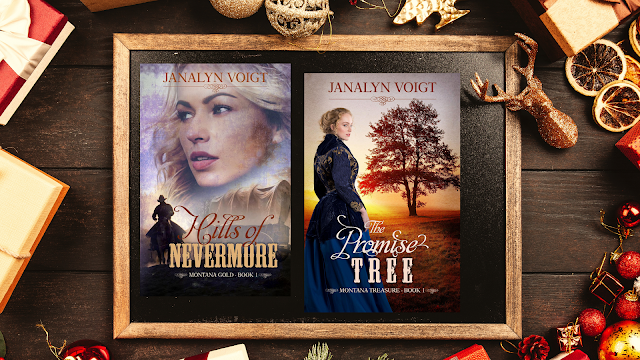
My publisher has both Hills of Nevermore (Montana Gold, book 1) and The Promise Tree (Montana Gold, book 5) on special. I honestly don't know when the sale will end, so if you want to claim either of these titles, sooner is better than later. 

Hills of Nevermore: America Reed hides her secret shame, certain that God is angry with her. She does her best to avoid Shane Hayes, the blue-eyed circuit preacher, never guessing that Shane is trying to live down his own past.  
For readers who enjoy redemptive love stories.

The Promise Tree: America Hayes's daughter, Liberty, is all grown up and ready to sort out her priorities. A preacher's daughter shouldn't marry a troublemaker, like Jake. She should never have made that unfortunate promise to him. If he would stop pursuing her, keeping herself from falling in love with him would be a whole lot easier.
For readers who enjoy multi-layered love stories. 

Please note that The Promise Tree cover states it is Montana Treasure, book 1. However, my publisher and I decided to place this book in chronological order in the Montana Gold series instead of creating a spin-off series. The cover will soon
 reflect the change. Meanwhile, this is a rare opportunity to obtain a limited-edition cover. :)

Saturday, November 20, 2021

What Do Fish, Hiding, and Hunting Have to do With it? (Wild West Sayings We Use Today)

Welcome to a fun adventure into word history. The origin stories of words can be mystifying or enlightening, but they are always intriguing. Ready to explore the past in a often surprising way? All aboard for a journey through time. 

Wild West Sayings We Use Today, Part 29

So, what do fish, hiding, and hunting have to do with the Wild West? Read on and discover how they connect to the current crop of Wild West sayings used today. 

 Scad

In the 18th century, fishermen harvested millions of scads, silvery fish with deeply-forked tails, that congregated in schools off the coast of Britain. It’s not difficult to imagine how such abundance might have fostered a metaphor. 

‘Scad’ or 'scads' was used in the Wild West, as today, to describe bountiful quantities of an item. The connection to fish seems plausible but is unproven. The origin of the idiom is unknown.

Historical Reference: 
The first print citation for ‘scad’ gave the word as a slang term for ‘dollar’: "This land of our dads...is a dinger at nailing the scads" (The American Magazine; 1809). This little ditty meant that America provided abundant opportunities to make money. At that time, scads referred to dollars. By the mid-19th century, scad meant large quantities of anything. It was often used with ‘oodles,’ which means the same thing. This gave rise to the emphatic form: ‘scadoodles.’ (Don't you just love that word?) When describing a grandiose amount, I suppose you had to improvise.

Examples:
  • We harvested a scad of walnuts.
  • We harvested scads of walnuts.
  • We harvested scads and scads of walnuts.

Make Yourself Scarce

Going from abundance to our next expression may seem dizzying, but let’s take a look at ‘make yourself (myself, oneself) scarce.’ This expression for abandoning, escaping, or avoiding a difficult situation was first noted in 1771 according to Etymology Online. While I couldn’t verify this, I did come up with a quaint quote dated only ten years later.

Historical Reference 
“He thought he should insure their love, to which he had the best possible title, and by those very means he lost it. Be wise, my friend; take warning; make yourself scarce, if you wish that persons of little understanding should know how to prize you" (Private Letter from renowned poet and hymn writer William Cowper to the Reverend John Newton; 1781).

Example

You might want to make yourself scarce until our neighbor calms down a bit.

Scare Up

This phrase describes finding something with perhaps a little difficulty. “Rustle up’ is another way of saying this. The English Oxford Dictionary defines ‘scare up’ as colloquial, which means that if I tried to slip it into one of my manuscripts, it wouldn't make it past my editor. However, i might get away with couching this term in dialogue for a colorful character. A colloquial phrase, if you haven’t guessed, is more appropriately spoken than written.

Scare up originated as a hunting term in 19th-century America. It meant to frighten game out of cover. The figurative nuance naturally arose from the practical meaning.

Historical Reference

The first printed citation for ‘scare up’ as a hunting term is from 1846: “He is also to send us the rattles of the biggest snake ever scared up in ‘Old Norf Caline’” ("Spirit of the Times," a New York sporting periodical).

The phrase is used as an idiom in “Loyalties,” a 1922 play by John Galsworthy: “I can scare up the money for that.”

Example

I’d better scare up some coffee.

Thanks for joining me again! I hope you enjoyed this month’s selection. Tell me, did you guess any of the phrase origins (or likely origins)? Which of them have you heard or used? See you next month for another word adventure.

What’s New with Janalyn Voigt

Work on The Whispering Wind (Montana Gold, book 6) is progressing. As I mentioned last month, I’ve been dealing with distractions lately. Those haven’t let up, a fact that has pros and cons. On the negative side, distractions can steal both my focus and time. They force me, out of self-defense, to improve my concentration and better manage my time. If you also struggle in this area, I can tell you that prayer works wonders.

Here's my brief author bio:

Janalyn Voigt fell in love with literature at an early age when her father read chapters from classics as bedtime stories. When Janalyn grew older, she put herself to sleep with tales "written" in her head. Today Janalyn is a storyteller who writes in several genres. Romance, mystery, adventure, history, and whimsy appear in all her novels in proportions dictated by their genre. Janalyn Voigt is represented by Wordserve Literary. Learn more and visit the bookstore at http://janalynvoigt.com.

The Promise Tree 

A preacher’s daughter shouldn’t encourage a troublemaker—no matter what her wayward heart desires.

Liberty has always believed she should marry a man of God, but Jake doesn’t qualify. The promises they’d made at age twelve can’t change that. If only Jake would stop pursuing her, she might keep from falling in love with him.

Jake fears he’ll lose Liberty to Beau, the new man in town. He doesn’t trust the smooth-talker—and certainly not with Liberty. Expressing his opinion sounds jealous and pushes Liberty further away. Jake’s efforts to forget the woman he loves lands him in jail for a crime he didn’t commit.

A bounty hunter on the trail of a notorious outlaw gallops into town, and Liberty finds herself in unexpected peril. When Jake rides after her, he faces a test of faith. Jake and Liberty must each overcome their own false beliefs. Only then can they experience the truth of God’s redeeming love.

Set during a troubled time in America, the Montana Treasure series explores faith, courage, and love in the Wild West. Read this heartwarming story to affirm your faith in love.

Friday, August 20, 2021

What do Murder, Jokes, and Air Have to Do with it? (Wild West Sayings We Use Today)

Diving into the history of words is not only entertaining. It can teach you something. Researching for this blog series always turns discoveries for me. Words and their histories teaches us about the past but also our present reality. So, what do murder, jokes, and air have to do with Wild West sayings we use today? Read on, my friend.

Wild West Sayings We Use Today, Part 26


P’shaw

Sometimes idioms surprise you. Take, p’shaw, for example. Would you guess that this way of expressing contempt, disdain, impatience, and/or a sense of absurdity dates from 1670 or earlier? Websters Dictionary lists p’shaw as ‘of imitative origin.’ P'shaw appears to be an example of onomatopoeia, the practice of naming words (like hiss or buzz) to imitate the sounds they make. P’shaw is thought to replicate the sound of air released in disgust through closed lips. We've all been there, right?

Historical Reference:

‘"Pshaw! Why do ye bother yourself wid texts, man, about so small a matter?" interrupted the landlady’ (James Fenimore Cooper; The Pioneers; 1823).

Example: “Pshaw! I’ll believe it when I see it.”

Pulling My| Your| His| Her| Our Leg

In the Wild West, people used ‘pulling my leg’ in the same way we do today—to be teasingly deceived by another person. It’s nice to know that folks have enjoyed a good joke for centuries.

Historical Reference: This expression is of unknown origin, but it is first recorded in Always Ready, or, Every One His Pride, a Novel by an unknown author (1859):

“I intend leaving as soon as possible; for I know, if I remain here, you will both spoil me by your kindness.”

“Not a bit of it,” said Ned, giving one of his hearty laughs. “I know you are pulling my leg,” continued he, “but I’ll tell you candidly what it is, Harry—we shall both miss you.”

Example: “I know you are pulling my leg when you say are too busy to go shopping!”

Raise Cain

This slang term for making a ruckus goes all the way back to the Biblical story of Cain and Abel, Adam and Eve’s sons. In the book of Genesis, Abel sacrificed to God the first fruits of his labor, whereas his brother offered God “the fruit of the ground.” Abel’s gift was one of faith, because he trusted that more of a harvest would follow. Hebrews 11:4 confirms this: “By faith Abel offered to God a more acceptable sacrifice than Cain, through which he received approval as righteous, God bearing witness by accepting his gifts.”

When God favored Abel’s sacrifice over his own, Cain became jealous and killed his brother. God banished Cain from farming, thus removing the source of supply he’d hoarded away from God. Cain was forced to wander the Earth in a fruitless existence the rest of his days.

Someone who raises Cain engages in actions that are violent and disturbing, just as Cain did. To fully understand the expression, we must go back to an earlier (14th-century) sense of ‘raise,’ which meant to summon a spirit. However, ‘raise Cain’ refers not to a spirit but to the sinful nature of mankind.

Historical Reference:

By the time this saying made it into print, it was common enough to inspire a joke. That is the form its first recorded use takes. “Why have we every reason to believe that Adam and Eve were both rowdies? Because … they both raised Cain” (The Daily Pennant newspaper, May 2, 1840 edition).

Example: They went out last night and raised Cain.

I’m curious. Did the background of any of the sayings surprise you? Leave a comment and let me know.

What's New with Janalyn Voigt

Janalyn Voigt

I'm currently on deadline for The Whispering Wind, the second installment in the Montana Treasure western historical romance series. For those following the series, this is Phoebe's story. This tough-but-sweet complex gal is one of my favorites, but I almost killed her off. That's right. In order to prove my theme in Cheyenne Sunrise (Montana Gold, book 2), an innocent character had to die. Phoebe was an enchanting three-year-old elf and the most likely victim. In fact, I'd created her for that purpose. 

Stories don't always go as you plan, and Phoebe grew into such a charming lass that my editor and publisher, Miralee Ferrell, proclaimed herself traumatized by Phoebe's untimely passing. I took the matter under consideration and determined that a minor character could die in Phoebe's place. Miralee thanked me profusely. We still pass comments about the matter while working back-and-forth on the books. Both of us are very glad that Phoebe survived.

For the curious, here's a bit about me:

Janalyn Voigt fell in love with literature at an early age when her father read chapters from classics as bedtime stories. When Janalyn grew older, she put herself to sleep with tales "written" in her head. Today Janalyn is a storyteller who writes in several genres. Romance, mystery, adventure, history, and whimsy appear in all her novels in proportions dictated by their genre. Janalyn Voigt is represented by Wordserve Literary.
Learn more about Janalyn and visit the bookstore at http://janalynvoigt.com.

The Promise Tree (Montana Treasure, book 1)

A preacher’s daughter shouldn’t encourage a troublemaker—no matter what her wayward heart desires.

Liberty has always believed she should marry a man of God, but Jake doesn’t qualify. The promises they’d made at age twelve can’t change that. If only Jake would stop pursuing her, she might keep from falling in love with him.

Jake fears he’ll lose Liberty to Beau, the new man in town. He doesn’t trust the smooth-talker—and certainly not with Liberty. Expressing his opinion sounds jealous and pushes Liberty further away. Jake’s efforts to forget the woman he loves lands him in jail for a crime he didn’t commit.

A bounty hunter on the trail of a notorious outlaw gallops into town, and Liberty finds herself in unexpected peril. When Jake rides after her, he faces a test of faith. Jake and Liberty must each overcome their own false beliefs. Only then can they experience the truth of God’s redeeming love.

Set during a troubled time in America, the Montana Treasure series explores faith, courage, and love in the Wild West. Read this heartwarming story to affirm your faith in love.