Showing posts with label Cincinnati. Show all posts

Sunday, June 14, 2026

Cincinnati, Ohio in 1870 - Part 2 by Denise M. Colby


This is the PART TWO of my two-part post about Cincinnati, Ohio in 1870. I had gathered so much research for my recent book, A Whole New Plan, that I divided it into two parts. If you are interested in reading PART ONE, click on this link.


The Red Stockings


Image downloaded from of Detroit Public Library website


I love baseball and was e
xcited to learn that Cincinnati had the very first fully paid baseball team in 1869. The name was the Red Stockings. They traveled all over the country and played over 60 games that season, winning the 57 that were part of the league (the only perfect season for a team, ever). All other teams would mostly have volunteers and a few paid players, so this team was also a rarity and had a huge following because of it.


Nine of the original players stayed and played in 1870. They won many in the first half of the season, but had a losing streak later, which caused the team to disband. Some of the business men involved were hired by a man in Boston to form a team. A few of the Cincinnati players went to play for this newly formed team named the Boston Red Stockings in 1871 (that became the Boston Braves, which then moved to Atlanta in 1966). At first I thought it would be tied to the Boston Red Sox, but that team wasn’t formed until 1901.


The new Cincinnati Reds formed a few years later. As associations came and went, so did teams. The current Cincinnati Reds do consider the Cincinnati Red Stockings as part of their history, even though there was a few years gap in between organizations.


To continue on with the theme of baseball, the first baseball league, called The National Association of Base Ball Players, was formed in 1857. It changed after the 1870 season to the National Association of Professional Base Ball Players. This organization lasted until 1876 with the formation of the National League of Professional Base Ball Clubs, which was the foundation of the baseball leagues we have today.


Since my characters are in Cincinnati, I added a bit about the Cincinnati Red Stockings. Will, the hero in A Whole New Plan, is from California in a small ranching community that plays baseball in a field during the fall harvest celebration each year (I have a baseball game scene in my first book, When Plans Go Awry) but he’s never seen a professional team before, so when he comes across a promotion for the team, he makes note of it.


Crime and Crime Bosses


First let’s talk about Crime Bosses. Since I have one in A Whole New Plan, I needed to know what they could be focused on, where in the city they were located, and how they operated. In my research, I didn’t find any specific crime boss’s in 1870, but I did find some from the 1880’s, so I incorporated things I learned about “Boss Cox”.


George “Boss” Cox was a political boss who ruled in the 1880’s. He went from a barkeep to a city councilman. Then found his way onto the property tax board where he began cutting deals with business owners and pocketing the funds. He ruled the city for 25 years. And it was because of him that reforms were created about how much power one role could wield. In his eyes everything ran smooth, organized, and clean, even though he most likely traded favors for votes, and influenced candidates and policy. I read different reports, but I did find multiple sources calling his reign corrupt.

George "Boss" Cox (Photo from Wikipedia)


I sort of went with someone similar in A Whole New Plan. The bad guy (named Boss Man) owns a lot of establishments in town that could pay and influence city officials, including the police.


Besides Cox, there was a street gang called the Nuttle Gang and they supposedly terrorized the Dublin Street area. They would swarm victims (there were so many of them) so no one could really identify them. They claimed the abandoned railroad tunnels as their own, and when delivery wagons had to pass the area, a “tax” had to be paid. Since many of these were breweries, an extra keg was put in the delivery wagon’s to give to the gang.

Other Crimes


There was one other type of crime I learned about that was a little creepy, but part of Cincinnati history that I want to share. Body snatching was a popular type of felony committed in Cincinnati through 1871 (before a crackdown on the practice happened). Providing cadavers to medical schools was a lucrative trade. So grave robbers would dig them out of the ground and get paid for each body retrieved. I can only imagine how many families would not be happy to find the grave of a loved one dug apart and the body missing.


Eateries


In my story, my “Boss Man” owned eateries. So in my research I found that many were built in key areas.


Riverfront: with the Ohio river being a vital transportation route, the docks and surrounding areas would have had many establishments in 1870 to serve travelers, workers, and sailors.


Downtown: because this was close to the river, there was a lot of commercial activity downtown and there would be taverns, inns, and restaurants serving business travelers as well as residents.


High-traffic areas: areas with high foot traffic would have been prime locations for food vendors, simple eateries, and restaurants.


Neighborhood hubs: many neighborhoods featured a mix of businesses such as local taverns and food shops to serve the growing communities formed. These residential areas sometimes were grouped based on immigrant culture. They all had names including “Over-The-Rhine (OTR)” and “Columbia-Tusculum”.


Photo from the Cincinnati Library Collection 

In my book, I decided to have a restaurant called “The Fish Grotto” on the riverfront that served a well-known fish patty sandwich. I had found references to several different types of fish sandwiches that were served by restaurants including a Victorian era fish cake that combined flaked poached codfish with mashed potatoes, eggs, and seasonings. They would be formed into cakes and then sauteed in butter until crispy.


A fun-fact (not set in 1871) was that the owner of the Cincinnati McDonalds created the first filet-o-fish in 1962 that then became a menu staple in all McDonalds across the country.


Old Photos of Cincinnatti


I found a Facebook page specifically for old photos of Cincinnati


Cincinnati Overall

After the civil war, Cincinnati was by far Ohio’s largest city. The sheer number of people who lived in the city (one report says 200,000 and one said 300,000) made it the country’s most densest population. In comparison, Sacramento, California was the 10th largest city in the nation but only had 16,283 (in the city only). I tried to capture this through Will’s eyes. What would it be like to come from a city the size of Sacramento to the size of Cincinnati?


Photo from the Cincinnati Library Collection 


 Book 4 in the Best-laid Plans Series releases May 26, 2026


California, 1870. Pastor William Baker built his life on steady faith and safe choices, but the arrival of Lydia Spencer upends everything. Independent and outspoken Lydia is unlike any woman he’s ever known. Lydia is a Pinkerton detective, undercover as a schoolteacher while tracking a dangerous crime boss. She’s determined to protect her friends in Washton even if it means keeping her distance from the kind, steadfast pastor who sees too much. But when Will and Lydia are thrown together in a search for truth they find themselves fighting not only for justice, but for a future neither had planned.


Denise M. Colby writes historical romance sweetened with faith, hope, and love. She finds history fascinating and contemplates often how it was to live in the 1800's. Her debut novel, When Plans Go Awry, is a 2025 Carol Award finalist. Sign up for her newsletter at www.denisemcolby.com or follow Denise on FacebookInstagramBookbubPinterest, or GoodReads.


Thursday, May 14, 2026

Cincinatti, Ohio in 1870 - Part 1 by Denise M. Colby

 
Since my next book release has part of the story in Cincinnati during 1870, I found myself doing a lot of research of this city and wanted to share some of the amazing little tidbits I found:


map of Cincinnati, 1870


Public Transportation:


In 1870, Cincinnati had a horse-bus, otherwise called a horse-drawn omnibus for public transportation. One would pay a fee and be carried from one stop to another. When the first horse-bus started (before 1850), they were not too reliable and it was still faster to walk, but by the late 1850s, steel rails were installed throughout the city, so if a carriage had steel wheels it could be pulled by a team of horses or mules easier.


In one article I found there were six different companies managing separate lines all around Cincinnati in 1870.


Sometimes the buses were built as double deckers (I can only imagine!)


This picture I found looks similar to an early design of a cable car (the very first successful cable car was invented and operated in San Francisco in 1873, but Cincinnati had some shortly after that too).


What a small omnibus looked like in Cincinnati, 1870


I have my characters using this omnibus transportation in my most recent release.


The Cincinnati Conservatory:


The Cincinnati Observatory was built in a neighborhood high on a hill called Mount Ida. The location was renamed to Mount Adams when President John Quincy Adams presided over the dedication.


This observatory was unique for many reasons. The original 1845 telescope was the largest refractor in the western hemisphere, and the third largest in the world (the lens was found in Germany and shipped to Ohio). It also was called the people’s telescope because it was the first one open to the public (see photo below).


Known as ‘The Birthplace of American Astronomy’, the Cincinnati Observatory and first director MacKnight Mitchel published the first astronomical publication, The Sidereal Messenger. Cleveland Abbe, the second director, published the nations’s first weather forecasts and assisted in the creation of the National Weather Service.


But wait, there’s more.


Most people relied on church bells, jeweler clocks, and pocket watches to keep time. And most communities in different cities had their own time zone. But the invention of the railroads called for some sort of standard time (which they had their own system to build a consistent time). Imagine if the time your city kept was different than the train? I’m sure many people missed their train due to no standard time.


At the time most observatories used a sundial or a shadow clock, including the observatory in Cincinnati. But the city was so large that the these means meant time could be off if you were situated on the west side versus the east side. So the observatory received a transit telescope from the United States Coast Survey which allowed them to observe the crossing of the sun at its highest point in the day more precisely (called solar time). Professor Abbe coordinated with local jewelry shops to help regulate time around the city, thus keeping everyone on the same time. Thus making the Cincinnati Observatory the official time keeper in all of Cincinnati (I estimated the population to be about 215,000 people in 1870 - ranked the 9th largest in the US).


Later (1873) when the observatory was moved five miles east of the city to a place called Mt. Lookout, and they needed a new way to communicate the time around the city (not everyone could see it now), so with the help of the Army Signal Service, it built a time ball (think New York’s New Year’s Eve ball). At noon, every day, a five-foot canvas ball was hoisted up a 60-foot pole in three stages - halfway (11:45am), top (11:55am), dropping at exactly noon, signaling the correct time. The Time Ball was used through the mid-1880s.


 All of this is to say that the Cincinnati atronomical observatory was the only source for exact time in Cincinnati. If you check out the website to the observatory, it states that it has been recently restored and is still fully functioning. To learn even more about time balls, you can check out this website document which is full of details.


One of my characters uses the time-ball in my story (not exactly the right year - but since it’s fiction, I wanted to incorporate this fascinating historical tidbit).


Women’s College:


The Western Female Institute (1832-1837) operated in the neighborhood of Walnut Hills. It was founded by Catharine Beecher (yes, older sister to Harriot Beecher Stowe). The school was intended to train teachers for the western frontier. Due to several reasons, it closed after five years. But it was the early foundation for future schools including the American Woman’s Educational Association.


Catharine Beecher (1800-1878) advocated for women’s roles as teachers and mothers. She believed providing professional training to women would allow them to become independent professionals. Schools before this mostly focused on fine arts and languages, but Catherine’s schools offered a full range of subjects. She also introduced calisthenics to her students to improve women’s health (and to negate the idea of women fragility).


She established the American Woman’s Educational Association in 1852 and although it did not have a location in Cincinnati, from what I understand, she ran it from the area. As an association it provided funding to help establish other women’s colleges in Iowa, Illinois, and Wisconsin that taught with this focus. Its sole purpose was to recruit and train teachers for frontier schools (sending women West to civilize the young - a direct quote).


In my fictional story world, I established a school in Cincinnati supported by this association that sent my teachers west to California. I had Catherine Beecher teaching these teachers directly.


There's more - but I save the rest to share in next month’s post. In the meantime here is more about my next release (that I gathered all this research for).


 Book 4 in the Best-laid Plans Series releases May 26, 2026


 California, 1870. Pastor William Baker built his life on steady faith and safe choices, but the arrival of Lydia Spencer upends everything. Independent and outspoken Lydia is unlike any woman he’s ever known. Lydia is a Pinkerton detective, undercover as a schoolteacher while tracking a dangerous crime boss. She’s determined to protect her friends in Washton even if it means keeping her distance from the kind, steadfast pastor who sees too much. But when Will and Lydia are thrown together in a search for truth they find themselves fighting not only for justice, but for a future neither had planned.


Denise M. Colby writes historical romance sweetened with faith, hope, and love. She finds history fascinating and contemplates often how it was to live in the 1800's. Her debut novel, When Plans Go Awry, is a 2025 Carol Award finalist. Sign up for her newsletter at www.denisemcolby.com or follow Denise on FacebookInstagramBookbubPinterest, or GoodReads.

Tuesday, April 28, 2026

Famous Horses in History – Cincinnati with giveaway by Donna Schlachter


From Civil War Monitor site -- Cincinnati with Grant

This soldier didn’t wear a uniform. He didn’t give commands. And yet, in some of the most defining moments of the American Civil War, he carried a man who did.

His name was Cincinnati—a powerful, steady thoroughbred whose quiet strength helped shape the course of history. And friend, when you lean in close to his story, you begin to see something deeper than war… you see faithfulness in motion.

Cincinnati came into the life of Ulysses S. Grant as a gift during the war, not long after the Battle of Chattanooga. From the beginning, Grant recognized that this wasn’t just any horse—he came from a remarkable lineage. His sire was Lexington, one of the fastest thoroughbreds in the nation, and that strength and elegance showed in this colt.
Grant astride Cincinnati -- Wikipedia

In fact, he would later call Cincinnati “the finest horse that he had ever seen.”

And that’s saying something from a man who knew horses like few others.

What made Cincinnati remarkable wasn’t just his strength—it was his spirit.

He was calm under pressure, even-tempered in the chaos of battle, yet responsive and alive when the moment called for courage. Through the Overland Campaign and the last confrontations with Confederate General Robert E. Lee, Cincinnati carried Grant faithfully. And perhaps most notably, he was the horse beneath Grant as he rode to Appomattox Court House to accept Lee’s surrender—one of the most pivotal moments in American history.

Even President Abraham Lincoln rode Cincinnati during a visit near the war’s end—a rare honor, as Grant seldom allowed others to ride him.

When the war ended, Cincinnati didn’t fade into obscurity. Grant valued him so deeply that he refused an offer of $10,000 for the horse—a staggering sum at the time. Instead, Cincinnati remained with him, even living in the White House stables during Grant’s presidency.

Nearly every statue and artistic rendering of Grant shows him seated atop Cincinnati.
That’s not accidental—that’s legacy.
Grant astride Cincinnati -- mural at Grant's Tomb

Cincinnati lived out his final years in quiet retirement and died in 1878 on a farm in Maryland.

Cincinnati’s life whispers a truth we still need today: Faithfulness positions us for purpose. And sometimes, the greatest impact you’ll ever make…is simply carrying well what God has placed beneath you.

Enter to win:
Leave a comment, and I will randomly draw one winner’s name to receive a free print book of Hollow Hearts, book 2 in the Hearts of the Pony Express series. Cleverly disguise your email so the ‘bots don’t find you, but I can. For example, donna AT livebytheword DOT com


About Donna:
A hybrid author, Donna writes squeaky clean historical and contemporary suspense. She has been published more than 60 times in books; is a member of several writers' groups; facilitates a critique group; teaches writing classes; and judges in writing contests. She loves history and research, traveling extensively for both, and is an avid oil painter. She is taking all the information she’s learned along the way about the writing and publishing process, and is coaching committed writers eager to tell their story.


Connect online:
www.DonnaSchlachter.com

Newsletter: https://www.thepurposefullwriter.com/newslettersignup

Facebook: www.Facebook.com/DonnaschlachterAuthor

Amazon Author Page: https://www.amazon.com/stores/Donna-Schlachter/author/B01180A2EE

Bookbub: https://www.bookbub.com/authors/donna-schlachter

Goodreads: https://www.goodreads.com/author/show/14116621.Donna_Schlachter

The Purpose-Full Writer: https://www.facebook.com/groups/604220861766651

Need a writing coach? Or want to write your family or personal story? www.ThePurposeFullWriter.com


Resources:

https://www.civilwarmonitor.com/grants-war-horse-cincinnati/

https://www.presidentialpetmuseum.com/ulysses-s-grants-cincinnati/#google_vignette

https://en.wikipedia.org/wiki/Horsemanship_of_Ulysses_S._Grant

https://www.gettysburgbattlefieldtours.com/famous-civil-war-horses/


Leave a comment, and I will randomly draw one winner’s name to receive a free print book of Hollow Hearts, book 2 in the Hearts of the Pony Express series. Cleverly disguise your email so the ‘bots don’t find you, but I can. For example, donna AT livebytheword DOT com


A hybrid author, Donna writes squeaky clean historical and contemporary suspense. She has been published more than 60 times in books; is a member of several writers' groups; facilitates a critique group; teaches writing classes; and judges in writing contests. She loves history and research, traveling extensively for both, and is an avid oil painter. She is taking all the information she’s learned along the way about the writing and publishing process, and is coaching committed writers eager to tell their story.


www.DonnaSchlachter.com

Newsletter: https://www.thepurposefullwriter.com/newslettersignup

Facebook: www.Facebook.com/DonnaschlachterAuthor

Amazon Author Page: https://www.amazon.com/stores/Donna-Schlachter/author/B01180A2EE

Bookbub: https://www.bookbub.com/authors/donna-schlachter

Goodreads: https://www.goodreads.com/author/show/14116621.Donna_Schlachter

The Purpose-Full Writer: https://www.facebook.com/groups/604220861766651

Need a writing coach? Or want to write your family or personal story? www.ThePurposeFullWriter.com


Resources:

https://www.civilwarmonitor.com/grants-war-horse-cincinnati/

https://www.presidentialpetmuseum.com/ulysses-s-grants-cincinnati/#google_vignette

https://en.wikipedia.org/wiki/Horsemanship_of_Ulysses_S._Grant

https://www.gettysburgbattlefieldtours.com/famous-civil-war-horses/


Saturday, November 29, 2014

Spring Grove Cemetery in Cincinnati, Ohio

White Pine Chapel 1859
One of the Largest Non-Profit Cemeteries in the United States is Spring Grove Cemetery and Arboretum. Here are 733 acres of a place people come to visit for its history, beauty, and peacefulness. You can drive through the cemetery or take a walking tour. There is too much to see in just one trip. The architecture and landscape is enough to keep you captive on a beautiful day. These pictures were taken on October 26th this year and I'm hoping to go back soon to explore further. Lucky me, I live very near here so I can go anytime. And guess what? If you grew up watching Superman, George Reeves from the 1950's his body was actually kept here in White Pine Chapel for approximately a year after his death. You can read more about that sad tale here.


Just need some time to get away and think? Most of us probably wouldn't consider a cemetery but this cemetery is just special. This cemetery opened on September 1, 1845. "Dr. Daniel Drake who saw the need for a burial ground outside of the fast growing city after his wife died and was interred at Washington Cemetery. He saw firsthand the deplorable conditions of this and the other 22 cemeteries within the city. The cholera epidemics that plagued Cincinnati at the time were responsible for much of the problem. The cemeteries were terribly overcrowded with bodies being buried without coffins and often stacked together. There was also a serious problem of grave robbers stealing bodies to sell for medical dissection." Here's more on that information.


You can take the self guided walking tour as well. Many of the students in the area go to Spring Grove for the leaf projects they have to complete for school because the area is filled with trees.

Do you have an unusual cemetery near you?

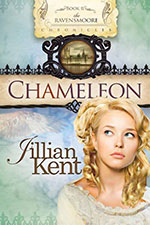
 Chameleon by Jillian KentJillian is employed as a counselor for nursing students in Cincinnati, Ohio and possesses a masters degree in social work. She is a member of the American Association of Christian Counselors and passionate about mental health, wellness, and stomping out the stigma of mental illness. You can explore further at her website www.jilliankent.com.She invites you to join her on Twitter @JillKentAuthor and Facebook https://www.facebook.com/JillianKent