Showing posts with label Coca Cola. Show all posts

Tuesday, December 10, 2024

Coca-Cola – Refreshing and Medicinal

By Suzanne Norquist

It’s difficult to imagine that Coca-Cola was ever considered healthy. But John Pemberton formulated it as a medicine and then decided to sell it as a soft drink instead. Jacobs’ Pharmacy in Atlanta, Georgia, sold the first glasses for five cents each in 1886.

Those who tried it considered it “delicious and refreshing,” a sentiment shared by many today. Marketing copy described it as a “valuable brain tonic” that would cure headaches, relieve exhaustion, and calm nerves. An “Intellectual Beverage.”


Carbonated water had been considered a healthy alternative to regular water for centuries. In ancient Greece, England, and other places, carbonated water bubbled up naturally from springs. Historians believe volcanic gasses created this effect.

This unique water was believed to cure diseases. In the 1700s, Germans built spas and hotels around the gaseous springs. There, tourists would drink the water and bathe in it. Entrepreneurs bottled and sold it across Europe.

In 1767, in Leeds, England, chemist Joseph Priestley invented equipment for artificially saturating water with carbon dioxide, and soda water was born. Soon, flavoring was combined with the water, creating a pleasant drink.
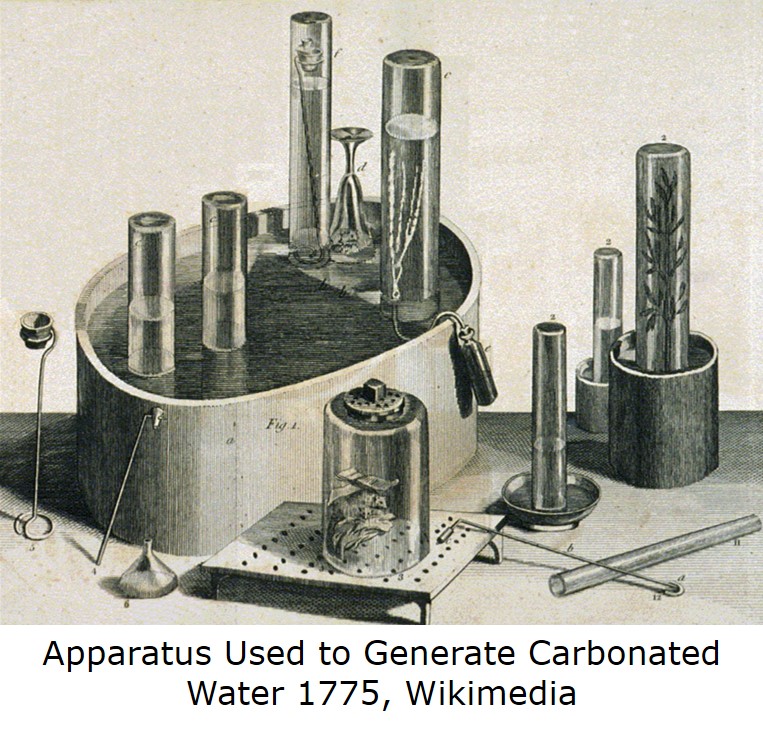
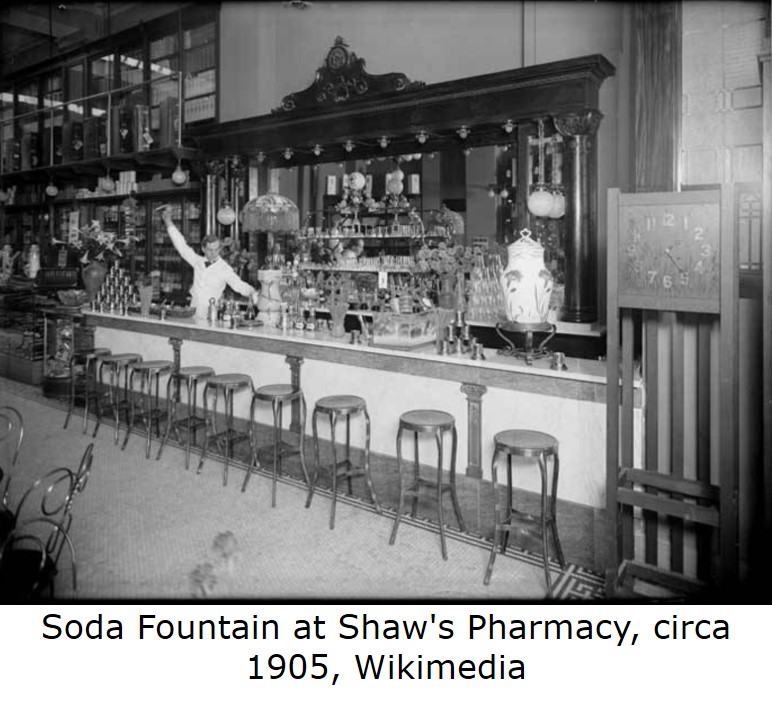
Since healthy soda water was often mixed with medication, selling it at pharmacies made sense. Phosphoric acid mixed with lemon or orange fruit syrup created a pleasant phosphate beverage. The drinks often contained cocaine and caffeine, a combination that could treat a headache and pep someone up. Many pharmacists created their own secret formulas.

John Pemberton, the creator of Coca-Cola, was one such pharmacist. He had earned a medical degree and married his college sweetheart before the Civil War.

When war broke out, he joined the Confederate Army and became a lieutenant colonel. He suffered a saber wound in the chest and became addicted to morphine.

His search for a less addictive alternative to morphine led to the creation of Coca-Cola. His first attempt was an alcoholic beverage based on a French coca wine. However, when Atlanta passed prohibition legislation in 1886, he changed the formulation to remove the alcohol.

He accidentally dropped some medicine mixture into carbonated water while working at a soda fountain. It gave him the idea to sell it as a soft drink rather than a medicine.

With temperance movements around the nation, soda fountains grew in popularity. They provided an alternative to bars as gathering places. Beverages served there also became popular.
Coca-Cola syrup’s base ingredients were coca leaves (cocaine) and kola nuts (caffeine). Both were common and completely legal at the time. Kola was sometimes spelled with a ‘C.’ The combination of the two words gave the drink its name.

After 1904, Coca-Cola removed most of the cocaine from its process. After this time, the drug was extracted from the leaves before adding them to the syrup. Thus, the taste remained without the addictive element.

In 1911, there was a push to remove caffeine because of its habit-forming nature. Eventually, the amount of the stimulant was reduced, but it wasn’t removed altogether.

Dr. Pemberton and his heirs didn’t realize much profit from the business. He sold off various interests in the company to feed his continued morphine addiction. Apparently, Coca-Cola didn’t solve that problem.

All of this seems like a roundabout way to come up with the refreshing beverage we enjoy today.

***


“Mending Sarah’s Heart” in the Thimbles and Threads Collection

Four historical romances celebrating the arts of sewing and quilting.

Mending Sarah’s Heart by Suzanne Norquist

Rockledge, Colorado, 1884

Sarah seeks a quiet life as a seamstress. She doesn’t need anyone, especially her dead husband’s partner. If only the Emporium of Fashion would stop stealing her customers, and the local hoodlums would leave her sons alone. When she rejects her husband’s share of the mine, his partner Jack seeks to serve her through other means. But will his efforts only push her further away?


Suzanne Norquist is the author of two novellas, “A Song for Rose” in A Bouquet of Brides Collection and “Mending Sarah’s Heart” in the Thimbles and Threads Collection. Everything fascinates her. She has worked as a chemist, professor, financial analyst, and even earned a doctorate in economics. Research feeds her curiosity, and she shares the adventure with her readers. She lives in New Mexico with her mining engineer husband and has two grown children. When not writing, she explores the mountains, hikes, and attends kickboxing class.

Friday, September 11, 2020

Time for a Break . . . Have a Coca Cola

Coca Cola: It's the Real Thing 

by Martha Rogers

I don't imagine there are many people in the United States or even in the world who haven't heard of Coca Cola. A lot of people call any kind of soda in a bottle or a can Coke, but there is only one true Coke and that's Coca Cola which has been around since 1885 and began as a nerve tonic to help overcome a drug addiction.

A Confederate Colonel, John Pemberton had been wounded in the Civil War and became addicted to heroine. He had a medical degree and begin research into a way to combat his addiction. He owned a drugstore, Pemberton's Eagle Drug and Chemical House in Columbus, Georgia. He registered a nerve tonic, Pemberton's French Wine Coca, and introduced it at his store. He may have been inspired in his research by a French-Corsican coca wine to which he added the African kola nut as a source of caffeine. 

A year later, in 1886, Atlanta and Fulton County passed prohibition legislation. Pemberton promptly marketed a non-alcoholic version of his "Coca-Cola:The Temperance Drink" which appealed to many who chose it as their drink of choice during the prohibition. It sold at Jacob's Pharmacy in Atlanta, Georgia on May 8, 1886 for five cents a glass.

Since soda fountains were already popular because of the belief that carbonated water was good for the health, Pemberton's new drink could be marketed and sold as a patent medicine. Pemberton claimed it to be a cure for morphine addiction, indigestion, nerve disorders, and headaches among other things.


Here's a picture of a fountain dispenser at Fleeman's Pharmacy in Atlanta in 1948 and was called "Boat Motor" because of its resemblance to a boat motor. 

Three versions of Coca-Cola emerged and were sold by three separate businesses. Four business men joined with Pemberton to form a co-partnership and combined versions to come up with one. No papers were signed as it was a verbal arrangement. This allowed Asa Candler to acquire a stake in the company in 1887. John Pemberton declared that the name "Coca-Cola" belonged to his son, Charley, but others could use the formula.

Several years of going back and forth with the formula and ownership as new companies formed until, in 1888, Dr. Pemberton died with his remaining shares being sold to Asa Candler. Shortly thereafter, he brought back all the remaining interests to gain complete control of the company. A few years later in July of 1894, Charley Pemberton also died, leaving control to Asa Candler who had already officially formed the Coca Cola company in 1892, six years after the first drink was created.


For many years Candler was content with merely selling the syrup to bottling
companies by contract. However, legal problems plagued the company for years bottlers subcontracted to other companies. The contract specified that the bottles would be sold for 5 cents each with no duration. This led to the fixed price from 1886 to 1959. 


Advertising began promoting the drink and in 1894, the first outdoor sign appeared in Cartersville, Georgia. The syrup was even sold over the counter as a remedy for upset stomach. Here is an example of an early ad.


Coupons were distributed for free Coca Cola as an advertising ploy to promote the drink in the 19th century

 By the time of its 50th anniversary, Coca-Cola had become a national icon. It was even declared kosher and certified by Atlanta Rabbi Tobia Geffen who was the first person to see the top-secret ingredient list. Then the company made minor changes so it would be accepted by the American Jewish population.

Here is a picture of the original framed Coca-Cola artist's graphic. It was presented to Charles Howard Candler on July 12, 1944 when Coca-Cola celebrated the sale of the "1 Billionth Gallon of Coca Cola" Syrup.


In 1931, the company commission Haddon Sundblom to
paint a picture of Santa Claus with a Coca-Cola in his hand. Santa then became related to Coke products and have been shown all over the world. Other ads have featured a variety of people and subjects from polar bears to start athletes to movie stars.


Many of us may remember all the controversy surrounding the company's attempt to introduce the "New Coke" and what a tremendous failure it was as consumers didn't want any meddling with the tried and true. Today it is available in a variety of flavors from Coke Zero to Cherry flavored and caffeine free. In addition Coca Cola offers all kinds of drink like water, tea, and other carbonated drinks with 500 brands and 3,900 beverage choices.


Coca Cola Museum in Las Vegas  


Coca Cola products are now sold in almost every single country in the world, and from its humble beginnings as a medical remedy for addiction and various ailments, its grown to the largest drink company in the world and one of 50 largest companies. 

If you had bought just one share of Coca Cola stock when it was IPO'd in 1919 and held it it, you would now have 9,216 shares after 11 stock splits. Those shares would now be worth than $400,000. Not a bad investment. 

What is your favorite soft drink, soda, pop or whatever you may call it in your part of the country? If you'll leave your email address, you will be eligible for the drawing of the novella described below. 

It's September so can Christmas be far behind? A Gift of Love is now available.


Cherie Kenton came home to Edenville to become business manager of her aunt’s floral shop. Although the town held bad memories for her, the object of that memory didn’t live there anymore. Then, Troy McNeil moved home to partner with his father in his law firm, and his office sat directly across the street from the floral shop. Ten years of the memory of how he humiliated her at their prom has built a wall around Cherie’s heart. It’s a wall Troy is determined to tear down and win back the trust and love of the only girl he has ever truly loved. Will his one selfish mistake as a teenager ruin their chances of ever finding happiness, or will this be the Christmas for the gift of love to reunite their hearts?


Martha Rogers is a free-lance writer and multi-published author from Realms Fiction of Charisma Media and Winged Publications. She was named Writer of the Year at the Texas Christian Writers Conference in 2009. She is a member of ACFW and writes the weekly Verse of the Week for the ACFW Loop. ACFW awarded her the Volunteer of the Year in 2014. Her first electronic series from Winged Publications, Love in the Bayou City of Texas, debuted in the spring of 2015.  Martha is a frequent speaker for writing workshops and the Texas Christian Writers Conference. She is a retired teacher and lives in Houston with her husband, Rex. Their favorite pastime is spending time with their twelve grandchildren and five great-grandchildren. 

Monday, September 22, 2014

It Started in the Great Depression

By Marilyn Turk


Atlanta, 1929

Samuel pulled his wooden wagon behind him, hurrying to fetch all the things Mother needed back home at the boarding house.  His mother had too much to do already, taking care of six children and the boarders. Soon as he loaded up the groceries at the corner store, he’d rush home to help her get dinner ready. There’d be beans to snap, corn to shuck, then dishes to wash afterwards.

While he was at the store, he noticed he could buy six Coca-Colas for a quarter. His eight-year-old mind had an idea. What if he bought those six bottles and sold them each for a nickel? He’d make a nickel for himself! Sam bought the Cokes and added them to the other things in the wagon. Soon as he finished up with the dinner chores, he’d take the drinks around the neighborhood and try to sell them. His idea worked, and soon he was going back to the store again and again for more Cokes. 

When one of his customers suggested he ice the bottles down, he borrowed some chips of ice from his mother’s icebox, and sales picked up. Eventually, he set up a stand in his yard and sold even more drinks when he added Orange Crush and NuGrape. As the heat of summer ebbed, Sam turned to magazine sales until at the age of twelve, he was old enough to have his own newspaper route.


Times were tough in the Depression, but Sam learned how hard work paid off. The lessons he learned as a child would carry throughout his life as he persevered through hardships to become one of the world’s most successful businessmen.

You see, Sam was the first name of S. Truett Cathy, but because of a speech impediment he had as a child, the name Truett was easier for him to pronounce. Eventually, the impediment disappeared and so did his first name.


Truett Cathy died on September 8, 2014 at the age of 93, leaving a legacy in the business he founded in 1946, Chick Fil-A. He also left a legacy of sound work ethic, moral character and generosity exemplified in the thousands of lives he touched.

In addition to his work, Truett Cathy served his community by establishing scholarships, children's homes, and Christian summer camps. One of his mottoes was "You can't outgive God." Mr. Cathy said the more he gave to God, the more God gave him.

Mr. Cathy taught a Sunday school class for 13-year-old boys more than forty years, believing this age group to be critical in the development of young men. Another of his famous sayings was “It’s Better to Build Boys than Mend Men.”

A pioneer in the food business, Mr. Cathy is credited with inventing the chicken sandwich. He was also one of the first restaurants to open a fast-food concept in a shopping mall. However, when his policy to stay closed on Sundays ran into opposition from shopping malls wanting him to stay open seven days a week, he decided to build more free-standing restaurant. 


Many people told him he’d lose revenue from his decision, but he stayed firm to his belief that Sundays should be days of worship for himself and his employees. And loss of revenue? The Chick Fil-A Corporation posted over six billion dollars in sales in its 1800 locations in 2013.

Space doesn’t permit all the stories about Truett Cathy and how he impacted others – from giving them jobs to helping them out financially, not to mention lessons he taught about character. A Bible verse he lived and taught was “A good name is more desirable than great riches,” from Proverbs 22:1.

I had the honor of meeting Mr. Cathy when I worked in the restaurant business and my sons had the blessing of going to his Camp Winshape for boys (so named for “shaping winners”) at Berry College in Rome, Georgia. He was one of my heroes.

The world lost a good man when Mr. Cathy died, but his legacy will live on in the lives of his children (who are at the helm of the company now), his descendants, and in the lives of others he touched for years to come. 
S. Truett Cathy 1921-2014


a Rafflecopter giveaway