Showing posts with label Dutch and Belgian Resistance. Show all posts

Saturday, July 5, 2025

WWII Smit-van der Heijden Escape Line: Part Four - A Network is Exposed; Tom Applewhite's Narrow Escape

By Mary Dodge Allen

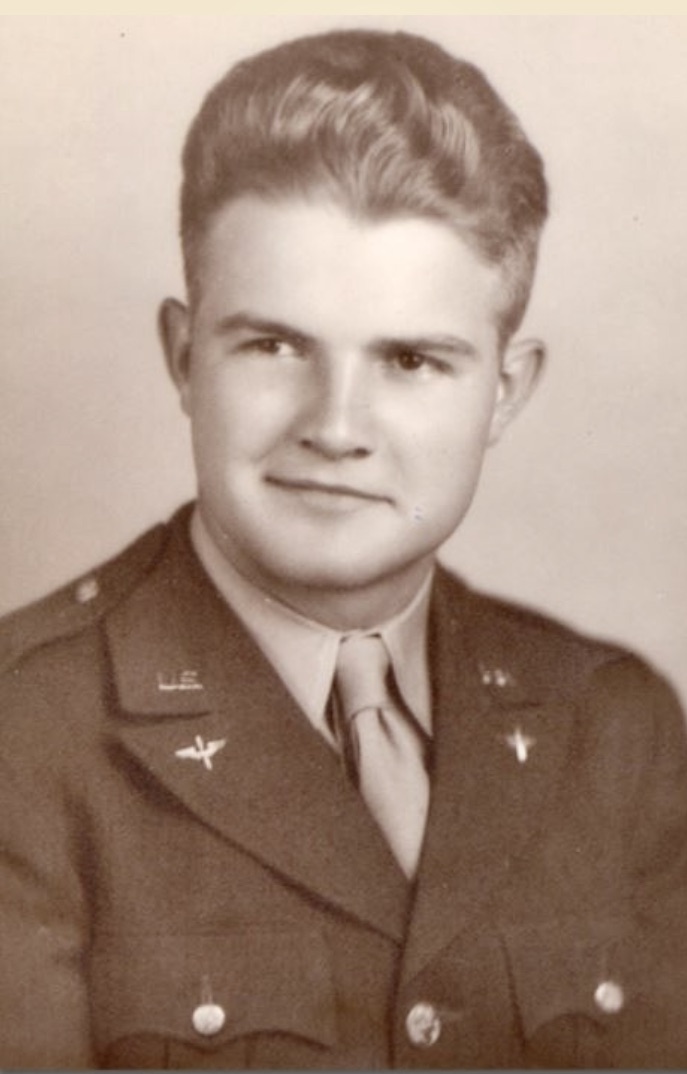
Tom Applewhite, a U.S. Army Air Corps bombardier was picked up by the escape line after his B-17 bomber, “The Wild Hare” crashed in a Dutch field on November 11, 1943.

Tom Applewhite, U.S. Army Air Corps, circa 1942 (Public Domain)

This blog is the conclusion of a Four-Part series on the Dutch – Belgian Resistance. Part One, Part Two and Part Three describe how the Smit-van der Heijden Escape line was established, its network of contacts, and airman Tom Applewhite’s journey to the escape line’s safe house in Brussels. To read the previous blogs, click here: Part One.  Part Two   Part Three

The Day Before The Arrests:

On the afternoon of November 14th, Tom left the Smit-van der Heijden escape line safe house, guided by Ernest van Moorleghem, a Brussels police official. Ernest was deeply involved in the Resistance and often served as a contact between escape lines. He guided Tom to a fishmarket in the Brussels district of Schaerbeek. 

Fishmarket operator, Prosper Spilliaert (Far Left); and next to him, his wife, Yvonne de Rudder; 
(Far Right) his stepson, Rene Warny; with friends and unidentified Allied airman. (Public Domain)

This fishmarket, run by Prosper Spilliaert, served as a clearinghouse, operated by a separate Resistance group called Service EVA. Its members specialized in interrogating airmen to make sure they weren’t German agents. Then the airmen were passed on to safe houses and given new clothes and false ID papers. Service EVA guides had connections with the Comet Line, which would move the Allied airmen through France and Spain.

Spilliaert’s stepson, Rene Warny took Tom into a room where they photographed airmen to create false IDs. He pointed out bullet holes in the wall. Days earlier, they had uncovered two German agents posing as Allied airmen, and Spilliaert shot them on the spot.

Disaster Strikes! Betrayal and Arrests:

On November 15th - the day after Tom Applewhite reached the Brussels fishmarket - Tom’s crewmate, Nello Malavasi, top turret gunner/engineer for their B-17 named “The Wild Hare,” was arrested in Turnhout, Belgium, along with Willem Schmidt, a guide with the Smit-van der Heijden line.  

American Airman Nello Malavasi, on Left; Guide Willem Schmidt, on Right (Public Domain)

How this happened remains unclear, perhaps their appearance or nervous behavior alerted German officials. After the arrest, Willem Schmidt underwent harsh interrogation and, under duress, agreed to cooperate. He arranged for Charlotte Ambach to meet him at the Brussels train station, so she could guide Malavasi to the safe house (her Brussels apartment).  

When Charlotte approached them at the train station, she was arrested. The man standing with Willem Schmidt, (posing as Nello Malavasi) was a member of the German military police. In a matter of hours, many others involved in the escape line were arrested, including: Charlotte’s mother, Elise Chabot; and Ernest van Moorleghem. 

From Left: Elise Chabot, Charlotte Ambach and Ernest van Moorleghem (Public Domain)


From Left: Karst Smit, in uniform; Ernest van der Heijden (Public Domain)

The two Dutch men who established and ran the Smit-van der Heijden Escape Line - Karst Smit, a Dutch border patrol officer, and Eugene van der Heijden, a Dutch teacher - were tipped off about the arrests in Brussels. They both went into hiding.

The Tragic Outcome:

Willem Schmidt and Ernest van Moorleghem were executed.

Charlotte and her mother Elise were imprisoned in Germany, but on May 6, 1945, the prison was liberated by Allied soldiers, only days before their scheduled execution on May 22nd. 

(Charlotte and Ernest van Moorleghem had been madly in love. She never married, and during her long life, she kept a photo of Ernest on a table in her living room.)

Karst Smit was eventually arrested and sent to a series of concentration camps. He survived.

Eugene van der Heijden escaped capture, but his father and two of his three brothers (who operated a safe house) died in concentration camps. Eugene helped his mother carry on, despite the heavy burden of their deaths.

Tom Applewhite in Danger:

Members of Service EVA were alarmed by the number of arrests and feared the fishmarket might be next. On November 16th, Tom Applewhite was moved to the home of businessman Arthur Schrynemakers, where he stayed for a month. While there, Tom met a Jewish family also hiding there.
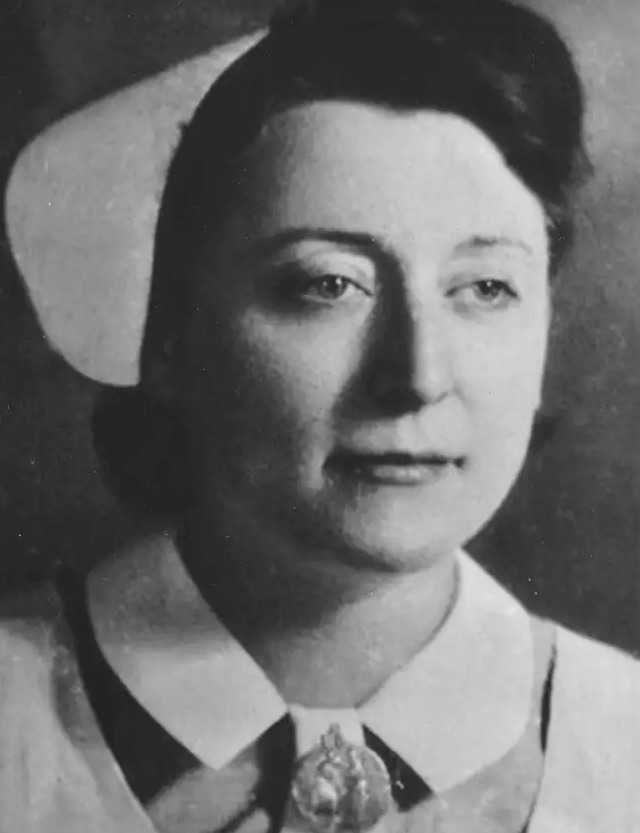
Nurse Yvonne Bienfait (Public Domain)

On December 19th, Tom was moved to another safe house, the Brussels apartment of nurse Yvonne Bienfait. Because of the recent arrests, she became suspicious Tom was a German agent when she saw him using a German-made razor (a gift from Arthur Schrynemakers). 

Two men with Service EVA arrived to give Tom a "medical" exam, which included examining his teeth. (Tom didn’t realize he was in danger of being killed.) These men marked the patterns of Tom's dental fillings, so they could radio them to London. Allied officials confirmed Tom’s identity as an American airman. 
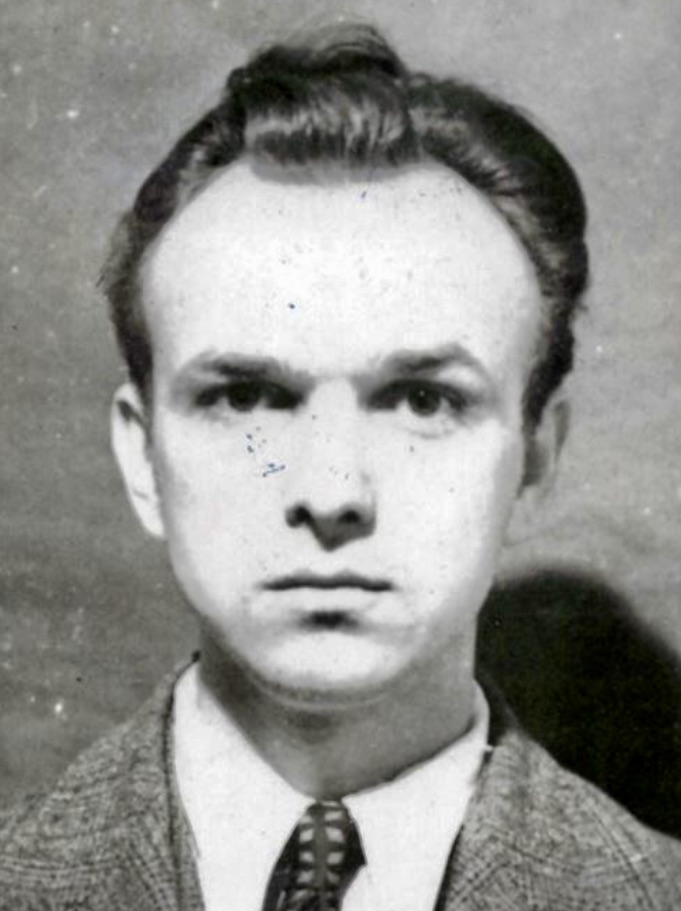
False ID photo of Jockey Wiggins (Public Domain)

While at nurse Bienfait’s apartment, Tom met American airman, Jockey Wiggins, whose foot was injured when he bailed out of his B-17. Yvonne Bienfait had been taking care of his wound. These two airmen would travel together from now on. 

On December 23rd, a Service EVA guide took the men to the Brussels train station and placed them in the hands of a Comet Line guide. He traveled with them to Blandain, the last Belgian train stop before the French border. 

In Blandain, they were met by the daughter of local physician. She brought them to the family home, where they met their next guide, code named, “Diane.” The men were served dinner, including a cake decorated with Allied flags. Then they waited at the house until they got a signal from a customs officer that the French border was clear of German patrols. 

Amanda Stassart, Comet Line guide, code named: "Diane" (Public Domain)

Crossing Into France:

In the darkness, “Diane” guided Tom and Jockey through snowy fields across the border into France. They walked to the farmhouse of Andre Dewauvrin, mayor of the village, Camphin-en-Pevele. After eating a hot meal, they spent the night in his dairy barn.

Farmhouse of Andre Dewauvrin (recent photo by Bruce Bolinger)

The next day, “Diane” guided them onto a tram going to the city of Lille. A young woman on the tram asked the two airmen to light her cigarette. They couldn’t speak French, so they ignored her, which drew attention and placed them in danger. “Diane” quickly created a distraction, screaming that the woman must be a ‘whore’ trying to pick up her “brother” and “fiancé.” The woman got off at the next stop.

From Lille, “Diane” traveled with Tom and Jockey by train to Paris, and handed them to other guides who took them to the apartment of a kind, aristocratic woman, Madame Elizabeth Buffet, where they spent Christmas. 

From Left: Sgt. Stanley Munns, RAF tail gunner; Elton Kevil, U.S. Army Air Corps B-17 waist gunner
False ID photos (Public Domain)

The following day, new guides, working with French railway staff, smuggled them and two additional Allied airmen – Stanley Munns and Elton Kevil - aboard a train to Bayonne, a city near the Spanish border. They were told to pretend to be asleep during the entire overnight trip, to discourage others from initiating a conversation. 

On December 27th, as soon as they reached Bayonne, the four airmen were immediately shuttled onto another train headed north, to the town of Dax. (Earlier that night, German patrols had discovered two people trying to cross into Spain, and they had dumped their dead bodies in the Bayonne town square.) 

Jean-Francois Nothomb, Comet Line guide, code named: "Franco" (Public Domain)

A Comet Line guide, “Franco” met them in Dax. He and another guide provided bicycles and they all cycled 45 miles to the Café Larre, in Anglet, a small town near Bayonne. Here they met Pierre and Marie Elhorga, Comet Line associates of “Franco.” 

From Left:  Cafe Larre in Anglet; Pierre and Marie Elhorga (Public Domain)

After a hot meal, they spent the night in the second floor bedrooms. This café was popular with German soldiers, and sleep was difficult, listening to the enemy soldiers carousing, one floor below. 

At dusk on December 28th the four airmen cycled behind “Franco” to the River Nive and then crossed it after dark in a rowboat. On the other side, they picked up new bicycles, and “Franco” guided them to a rendezvous with four Basque guides.

Crossing Into Spain:

These guides walked with them to a barn near the Spanish border. Here they received espadrilles (jute-soled shoes that deaden the sound of footsteps) and sturdy hiking staffs. The night was cold, and a mixture of snow and rain fell. They were careful to avoid German patrols as they headed toward the border. They crossed into Spain near Marker 74.   

French-Spanish Border Marker 74 (recent photo by Bruce Bolinger)

Crossing the Pyrenees mountains in the cold, wet weather was an ordeal for all of them. Climbing was steep and slippery. Their shoes and clothes were wet, and their freezing feet were bleeding. Jockey Wiggins struggled to walk when the wound on his foot reopened. Stan Munns fell and nearly broke his leg, Tom helped to support his weight as they walked on.  

The western Pyrenees in winter (Public Domain)

They were in constant danger of being discovered by Spain’s Guardia Civil. Although Spain was nominally a neutral country, its fascist government was pro-Nazi. Captured airmen could be turned over to the Germans or placed in Spanish prisons. 

On December 31, 1943, they reached the Baztan Valley, where a car was waiting. The four airmen were driven to a pub in San Sebastian, run by a British couple. After a hot meal, a warm bath and fresh clothing, another car drove them to the British embassy in Madrid. The men were so exhausted, they slept most of the way.

After a week of rest at the embassy, the four airmen were transported separately to the port of Seville – one in an ambulance, another in a diplomatic car, but Tom unfortunately traveled in the back of a flatbed truck with several drunken sailors. 

Einar Apeland, Captain of Norwegian merchant ship, "Lisbeth" 
(photo courtesy of Alf Einar Apeland)

On January 7, 1944, Tom Applewhite, Jockey Wiggins, Elton Kevil, Stan Munns and another airman, John Hurst, boarded the Norwegian merchant ship, “Lisbeth,” bound for the British outpost at Gibraltar. They faced danger from undersea mines and traveled with no lights at night, so they wouldn’t be spotted by German subs. 

On January 11th the “Lisbeth” finally reached Gibraltar. Days later, Tom and the other airmen were flown back to England. 

After the War:

Tom Applewhite, editor of the 1946 Memphis State College yearbook
(photo courtesy of University of Memphis)

Tom Applewhite finished his education at Memphis State College (later, the University of Memphis). He got married, had children and worked in business as a sales manager. He passed away in January 2007.

Undated photo of Tom, his wife Lorraine and their daughter (courtesy, Tom Applewhite)


Author's note: While writing this blog series, I've felt a deep admiration for all the ordinary people who risked their lives to help others during the harsh and dangerous conditions of Nazi occupation. They generously provided shelter and food to those in need (at a time of food shortages and strict rationing). And they bravely faced danger every day, as they saved persecuted Jews, escaped POWs and Allied airmen from death in concentration camps or prison camps.

Sources: I am grateful to Bruce Bolinger, who compiled and published an online treasure trove of information about the Dutch-Belgian Resistance during WWII. For more information, you can click on these links:  


https://wwii-netherlands-escape-lines.com/airmen-helped/articles-about-the-line/dutch-and-belgian-heroism-part-ii/

______________


Mary Dodge Allen is currently finishing her sequel to Hunt for a Hometown Killer. She's won a Christian Indie Award, an Angel Book Award, and two Royal Palm Literary Awards (Florida Writer's Association). She and her husband live in Central Florida. She is a member of American Christian Fiction Writers and Faith Hope and Love Christian Writers. 


Recent release, anthology devotional: El Jireh, The God Who Provides


Mary's story, entitled: A Mother's Desperate Prayer, describes her struggle with guilt and despair after her young son is badly burned in a kitchen accident. When we are at the end of all we have, El Jireh provides what we need. 

Click the link below to purchase on Amazon:

https://www.amazon.com/El-Jireh-God-Who-Provides/dp/1963611608


Mary's novelHunt for a Hometown Killer won the 2022 Christian Indie Award, First Place - Mystery/Suspense; and the 2022 Angel Book Award - Mystery/Suspense.

Click the link below to buy Hunt for a Hometown Killer at Amazon.com:


Link to Mary's Spotlight Interview:   Mary Dodge Allen Author Spotlight EA Books


Thursday, June 5, 2025

WWII Smit-van der Heijden Escape Line: Part Three - A Network in Danger; Airman Tom Applewhite's Experience

By Mary Dodge Allen

The Smit-van der Heijden escape line was established in the Spring of 1942, by two Dutch men - Karst Smit, a Dutch border patrol officer stationed in the village of Hilvarenbeek near the Belgian border; and Eugene van-der Heijden, a teacher in the village. By November 14, 1943, this escape line had been operating for nearly a year and a half. 


WWII era map, (Public Domain)

The Dutch village of Hilvarenbeek is located in the Brabant region (lower pink section), near the Belgian border, just north of Turnhout, Belgium - depicted as a black dot in the white section.
Brussels, Belgium is indicated by a large red dot. 


Part One and Part Two of my four-part blog series describe how the Smit-van der Heijden Escape line was established, its network of contacts, and how Tom Applewhite, a U.S. Army Air Corps bombardier was picked up by the escape line after his B-17 bomber, “The Wild Hare” crashed in a Dutch field. To read the previous posts, click on: Part One and then click on: Part Two


Karst Smit, On Left;  Eugene van der Heijden, On Right (Public Domain)

On the morning of November 14, 1943, after spending the night in a chicken coop near the Dutch village of Hilvarenbeek, airman Tom Applewhite met with Eugene van der Heijden, who was going to be his guide across the border into Belgium, all the way to the safe house in Brussels.

Tom Applewhite, U.S. Army Air Corps, circa 1942 (Public Domain)

Eugene didn’t have a false ID for Tom, because the escape line felt pressured to move him as soon as possible. Tom’s B-17 had crashed only twenty-five miles from Hilvarenbeek, and local German authorities were looking for him and another crewman still at large - Nello Malavasi, the top turret gunner/engineer on “The Wild Hare.”

Eugene gave Tom a briefcase full of newspapers and told him to pretend to be his clerk. They crossed the Belgian border on bicycles, using hidden paths that ran through a heavily-forested area. Once over the border, there were mainly open fields, and they risked being spotted by German patrols. 

The border near Hilvarenbeek, where Eugene and Tom crossed into Belgium 
(recent photo by Bruce Bolinger)

They safely reached the escape line’s first stop in Belgium, the Segers Café in the small town of Weelde. The café owner, Maria Segers-Ooms generously provided food and money she could spare to help Allied fliers. Her husband owned the butcher shop next door, which had livestock pens behind the building. Eugene and Tom stashed their bicycles inside the pens.


Maria Segers-Ooms (center, kneeling with arms folded) in front of Segers Cafe
Others unidentified, possibly family members/friends (Public Domain)

Tom and Eugene stood at a bus stop in front of the café and waited for the bus that would take them to the town of Turnhout. Because the Germans had confiscated gasoline for military purposes, citizens devised other ways to power vehicles. The bus between Weelde and Turnhout used a charcoal burner.

Photo of the charcoal-powered bus between Weelde and Turnhout (Public Domain)

In Turnhout, they took a train to Antwerp, and then took another train to Brussels. Because Tom had no ID papers, he was relieved that officials never approached him to check them.

Eugene warned Tom that changing trains in Antwerp was especially dangerous. The Abwehr (German Military Intelligence) operated a false escape line, called the KLM Line. Abwehr agents often posed as contacts at the Antwerp train station, trying to fool guides into handing over Allied airmen. 

After reaching Brussels, Eugene guided Tom to the safe house in the apartment building at #4 Rue Jules Lejeune. (Before an Allied flier was delivered to the safe house, an escape line contact would alert them by phone, using an alias because Germans often wire-tapped phone lines.)

#4 Rue Jules Lejeune - A Blue Arrow points to the safe house apartment on the third floor.
(recent photo by Bruce Bolinger)

Elise Chabot lived in the apartment with her 21-year-old daughter, Charlotte Ambach. Her other daughter, Madelon Frisque was married and lived in an apartment on the floor above. Elise Chabot, (twice divorced), was Dutch, but she acquired German citizenship after she married German businessman, George Ambach in 1920. 

Elise and Charlotte, circa 1942 (Charlotte may be at her desk, at 'Organisation Todt')
(Photo array by Bruce Bolinger)

Elise Chabot’s attractive daughters, Charlotte and Madelon were twins, born in Germany in 1922. Both were fiercely anti-Nazi, like their mother. Their birthplace and fluency in German served as a good cover for their work in the Resistance. People assumed they didn’t oppose the Nazi occupation. Whenever neighbors commented on the number of young men (Allied fliers) coming to the apartment, Charlotte, young and attractive, convincingly passed them off as boyfriends.

Madelon secretly worked for a Resistance organization that helped people who were denounced by collaborators as anti-Nazi. She had an administrative job that required her to sort the letters denouncing people. Instead, she made most of these letters “disappear,” saving many lives. 

Charlotte took a job as a stenographer for the “Organisation Todt,” the company run by high-ranking Nazi construction engineer, Fritz Todt. This company was responsible for building the German Autobahn network, along with roads and bridges in occupied countries. Charlotte secretly made carbon copies of the papers she typed at work, such as train destinations, road and bridge construction plans, and she passed them on to Allied intelligence agents.

Hitler and Fritz Todt, who is pointing at the scale model of a new Autobahn (Public Domain)

When escape line guide Eugene van der Heijden reached #4 Rue Jules Lejeune, he escorted airman Tom Applewhite to the third floor apartment via the service elevator, just off the kitchen. Tom stayed at the safe house only a short while, because he had no ID papers. Soon, the next guide arrived - Ernest van Moorleghem, a district police official. He would take Tom to the next stop, where ID papers would be provided.

Ernest van Moorleghem (courtesy of Charlotte Ambach)

Charlotte and Ernest worked closely together and were madly in love with each other. Ernest van Moorleghem had become deeply involved in Resistance activities and served as a contact between escape lines. To maintain the security of these separate escape lines, Ernest never told Elise and Charlotte where he took the Allied airmen. 

On the afternoon of November 14th, Ernest guided Tom to a fishmarket in the neighboring Brussels district of Schaerbeek. The fishmarket was a clearinghouse of sorts, run by a separate Resistance group called Service EVA. 

This Resistance group specialized in interrogating airmen to make sure they weren’t German agents. Then they passed them on to their own safe houses and provided them with new clothes and false ID papers. Service EVA had connections with the Comet Line, which would move the Allied airmen through France and into Spain.

Nobody was prepared for the disaster that was to happen in a matter of hours! On November 15th Tom’s crewmate, Nello Malavasi, top turret gunner/engineer for “The Wild Hare,” would be arrested in Belgium, along with his escape line guide, Willem Schmidt. This action would expose the escape line network and lead to more arrests.

Stay tuned for my concluding blog on July 5th; WWII Smit-van der Heijden Escape Line: Part Four – A Network is Exposed; Tom Applewhite’s Narrow Escape.

______________


Mary Dodge Allen is currently finishing her sequel to Hunt for a Hometown Killer. She's won a Christian Indie Award, an Angel Book Award, and two Royal Palm Literary Awards (Florida Writer's Association). She and her husband live in Central Florida. She is a member of American Christian Fiction Writers and Faith Hope and Love Christian Writers. 


Recent release, anthology devotional: El Jireh, The God Who Provides


Mary's story, entitled: A Mother's Desperate Prayer, describes her struggle with guilt and despair after her young son is badly burned in a kitchen accident. When we are at the end of all we have, El Jireh provides what we need. 

Click the link below to purchase on Amazon:

https://www.amazon.com/El-Jireh-God-Who-Provides/dp/1963611608


Mary's novelHunt for a Hometown Killer won the 2022 Christian Indie Award, First Place - Mystery/Suspense; and the 2022 Angel Book Award - Mystery/Suspense.

Click the link below to buy Hunt for a Hometown Killer at Amazon.com:


Link to Mary's Spotlight Interview:   Mary Dodge Allen Author Spotlight EA Books


Monday, May 5, 2025

WWII Smit-van der Heijden Escape Line: Part Two - German Infiltrators; An American Airman's Experience

By Mary Dodge Allen

In April 1942, two men in the Netherlands organized an escape line for Allied fliers: Karst Smit and Eugene van der Heijden. Part One of this four-part blog series appeared last month on April 5th. It describes the beginning of Dutch and Belgian Resistance efforts and how this escape line was established. To read Part One click this link: Part One


Karst Smit, Left Photo;  Eugene van der Heijden, Right Photo (Public Domain)

Karst Smit, age 24 was a member of the Marechaussees (Dutch border patrol) stationed in the Dutch village of Hilvarenbeek, near the Belgian border. Eugene van der Heijden was a 25-year-old Dutch teacher who lived in Hilvarenbeek.

In the Spring of 1942, Smit and van der Heijden began working together to help Jews and POWs who had escaped from Germany. They found local safe houses to provide food and shelter, until Smit could arrange for them to cross the border into Belgium.

Months later, as they began encountering Allied airmen seeking to avoid capture, Smit and van der Heijden expanded their escape line operation. They established contacts with trusted Resistance members in Belgium, to shelter Allied airmen and place them into the hands of larger escape lines that could guide them to freedom, through France and into Spain. 

The Dutch-Belgian border near Hilvarenbeek (recent photo, Bruce Bolinger)

The Dutch-Belgian border near Hilvarenbeek was heavily-forested. Karst Smit, along with fellow border officers he’d recruited, knew hidden paths they could use to guide the POW’s across the border. Sometimes they would dress an airman in the upper half of a police uniform, and then drive him across the border, seated in the sidecar of their one and only BMW police motorcycle. (The officers mostly patrolled the border on bicycles.)

The Marechaussees (Dutch border patrol officers) at Hilvarenbeek: #1 - van Gestel; #2 - Albert Wisman; #3 and #4 - unknown; #5 - Karst Smit; #6 - Gerard Schrier; posing on the station's only BMW motorcycle with sidecar (Identification obtained by Bruce Bolinger)

A German Imposter – Discovered:

The Germans were always searching for ways to infiltrate the escape lines and close them down. In September 1943, a man who had parachuted into the Netherlands was brought to Smit. To explain his accent, he claimed to be a French-Canadian RAF flier, with German parents. 

Smit was suspicious. He gave the man a questionnaire designed for RAF fliers, which included technical terms and general questions, such as: “What do you write on the back of the leave form?” 

The man couldn’t answer them. He changed his story several times during interrogation, which convinced Smit and other members the man was a German infiltrator. By this time, he had met too many people in the escape line, so they had to eliminate him. Months later, Smit learned the “Canadian” RAF flier was actually a German agent called “Captain Kopp.”

Tom Applewhite’s Escape Story:

The last Allied flier to be assisted by this escape line was Tom Applewhite, a 22-year-old U.S. Army Air Corps B-17 bombardier, from Memphis, Tennessee. 

Tom Applewhite, U.S. Army Air Corps, circa 1942 (Public Domain)

On November 11, 1943, Tom’s B-17 bomber named “The Wild Hare” was returning from a bombing mission over Germany, when it was shot down. It crashed in a field near a Dutch city known by the locals as Den Bosch. 


Crew of "The Wild Hare" taken in 1943: Tom Applewhite, bombardier, Front row, Far Right; John McGowan, pilot, Front row, Far Left; Nello Malavasi, top turret gunner/engineer, Far Left, standing   behind the pilot; other crewmembers, unknown. (Public Domain)  


As Tom bailed out, he counted chutes and saw that everyone else had also bailed out. (Tom would find out later that one crewmember was killed as he landed, and the rest were captured by the Germans - except for himself and top turret gunner/engineer Nello Malavasi.)

Tom was knocked out when he landed. As he regained consciousness, he realized he was being carried away from the field by two farm workers. He was taken to a farmhouse, revived, and fed brown bread sandwiches, while workers disposed of his parachute and flight suit. Tom was then hidden in a remote barn outside the village, because German troops were searching the area.   

Field where Tom landed (recent photo by Bruce Bolinger)

Another local farmer, Peter “Peek” de Noo, had seen the crash and came to Tom’s aid. At dusk, he guided Tom to his farmhouse, located outside the nearby village of Well. Peek de Noo and his wife Nellie sheltered Tom for two nights and provided civilian clothes and wooden shoes. Members of Peek’s family visited Tom and provided meals for him.

On Left: Peter "Peek" de Noo and his wife, Nellie with their children
On Right: Peek's brother, Adriaan de Noo, a chauffeur for a local surgeon (Public Domain)

German troops began searching house-to-house in Peek’s village. Tom had to be moved. Peek’s brother Adriaan de Noo was put into contact with Arnoldus “Nol” van Dijk, who knew the local contacts for the Smit-van der Heijden escape line – brothers Fons and Jacques Raaijmaakers.


The Raaijmaakers brothers: Fons (Left) and Jacques (Right) (Public Domain)

On November 13th Peek’s brother Adriaan guided Tom to a field outside the village of Bokhoven, where Fons and Jacques were waiting. Nol van Dijk was also there, to personally verify Adriaan de Noo’s identity to the two brothers.  

Tom traveled with Fons and Jacques on bicycles for several miles, to a rendezvous with a pair of new guides. Tom cycled behind these new guides for several more miles, until they arrived at a tavern after dark.

Jan Naaijkens (Public Domain)

At the tavern, Tom met Jan Naaijkens, a teacher who worked at the same school as Eugene van der Heijden. They set out on bicycles, with Jan cycling several feet ahead. It was cold, drizzling and dark, well after the German curfew. The two men had agreed to alert each other if they saw any sign of danger, by whistling a certain tune. The tune “Anchors Away” turned out to be the only one familiar to both of them.

After both bicycles broke down, they walked late into the night, until they reached the outskirts of the village of Hiivarenbeek. Jan delivered Tom to a safe house - the van der Heijden family home. 

Elisabeth van der Heijden (Public Domain)

Eugene van der Heijden’s mother, Elisabeth served Tom a hot meal. Then one of the Marechaussees (thought to be Albert Wisman), arrived and took Tom to a chicken coop that was hidden and insulated by bales of hay. Tom spent the rest of the night there. The coop was also being used by Dutch university students in hiding, to avoid being sent to Germany as forced laborers. 

Dutch students cooking breakfast in their chicken coop hide-out (Public Domain)

The students cooked breakfast on the morning of November 14th. Shortly after Tom finished eating, Euguene van der Heijden arrived. He would take Tom across the border into Belguim and then guide him to the safe house in Brussels. 

Eugene didn’t have a false ID for Tom, because the escape line felt pressured to move him as soon as possible. Tom’s B-17 had crashed only twenty-five miles from Hilvarenbeek, and local German authorities were looking for him and another crewman still at large - Nello Malavasi, the top turret gunner/engineer on “The Wild Hare.”

Nobody was prepared for what was to happen the following day, November 15th, as one of the Smit-van der Heijden guides, Willem Schmidt, was escorting airman Nello Malavasi through Belgium. Schmidt would make a disastrous decision that would expose the network and lead to arrests.

Stay tuned for the third installment of my four-part blog on June 5th; WWII Smit-van der Heijden Escape Line: Part Three – A Network in Danger; Airman Tom Applewhite’s Experience. 

_____________


Mary Dodge Allen is currently finishing her sequel to Hunt for a Hometown Killer. She's won a Christian Indie Award, an Angel Book Award, and two Royal Palm Literary Awards (Florida Writer's Association). She and her husband live in Central Florida. She is a member of American Christian Fiction Writers and Faith Hope and Love Christian Writers. 


Recent release, anthology devotional: El Jireh, The God Who Provides


Mary's story, entitled: A Mother's Desperate Prayer, describes her struggle with guilt and despair after her young son is badly burned in a kitchen accident. When we are at the end of all we have, El Jireh provides what we need. 

Click the link below to purchase on Amazon:

https://www.amazon.com/El-Jireh-God-Who-Provides/dp/1963611608


Mary's novelHunt for a Hometown Killer won the 2022 Christian Indie Award, First Place - Mystery/Suspense; and the 2022 Angel Book Award - Mystery/Suspense.

Click the link below to buy Hunt for a Hometown Killer at Amazon.com:


Link to Mary's Spotlight Interview:   Mary Dodge Allen Author Spotlight EA Books


Saturday, April 5, 2025

WWII Smit-van der Heijden Escape Line: Part One - Dutch and Belgian Resistance Begins

By Mary Dodge Allen 

On May 10, 1940, the German army began its invasion of Luxembourg, the Netherlands, and Belgium. The Dutch and Belgian armies rose up against the invaders but were overwhelmed by the German Blitzkrieg (“Lightning War”), and by May 28th all three countries had surrendered. 

German troops marching into an unnamed Dutch city (Public Domain)

Eugene van der Heijden, a 24-year-old teacher in the Netherlands, recalls his shock at the swiftness of the invasion:

“The memories of those first weeks of the war have stayed etched in my mind as when the stream of German troops marched on the country road past our house on their way to the front in Belgium and France... I still see my father running after a German who had pinched his bicycle from behind our house. Luckily, he [my father] had the forethought to let the air out of the tires. The German angrily threw the bike into the ditch. Triumphantly, my father returned with his bike.”

Eugene van der Heijden (Public Domain)

The surrender of France on June 14th came as an even larger shock, along with the tyranny of occupation that followed. As the shock wore off, anti-Nazi resistance grew. Ordinary people began risking their lives to defy, harass and outwit the Germans. 

Resistance Groups Form:

Undated photo of anti-Nazi graffiti (Alamy)

Individual acts of resistance, like writing anti-Nazi phrases on walls, or ringing church bells to drown out a Nazi rally in a town square, soon led to the formation of Resistance groups. Some groups focused on specific goals, like sabotage, gathering intelligence to pass onto the Allies, or publishing underground newspapers. 

One of the most daring examples of an underground newspaper was the November 9, 1943 counterfeit edition of the Brussels newspaper, Le Soir. This newspaper, known as “Fake Le Soir,” looked like a regular issue, but contained anti-Nazi articles, along with illustrations and classified ads ridiculing the Germans. 

Resistance members hijacked Le Soir’s delivery trucks that morning and delivered the fake issue to newspaper stands across the city. It was a sellout! The upper corner of the front page showed a B-17 with its bomb bay doors open. And in the lower corner, a photo of Hitler with his hands on his chest, saying, “I did not ask for this.”

"Fake Le Soir" November 9, 1943 (Public Domain)

Resistance Expands – Escape Lines:

The Resistance groups that held the most danger for members were escape lines, and yet many ordinary citizens risked their lives to assist POWs, Jews and Allied airmen. Those arrested by German authorities were tortured for information about other members and then killed or sent to death camps. Many used code names to protect their true identities. 

The largest, well-known escape lines were: The Comet Line, The Pat O’Leary Line and the Shelburne Line. But other escape lines existed and even intersected with the larger lines, including the escape line organized by two men in the Netherlands, Karst Smit and Eugene van der Heijden.

The Smit-van der Heijden Escape Line – Beginning: 

Photo of Jagers Regiment, during Dutch Army mobilization, 1939; Karst Smit is seated in the center, third person to the right of the sign, wearing a white shirt. (Public Domain)

Karst Smit, age 24, served in the Jagers Regiment of the Dutch army during the German invasion. When the occupation took hold in 1940, he joined the Marechaussees, the Dutch police responsible for patrolling the country’s borders, under control of the Germans. In January 1942, Smit was stationed in Hilvarenbeek, a Dutch village near the Belgian border. 

Karst Smit, in a Marechaussee uniform, circa 1942 (Public Domain)

In April 1942, Smit encountered two French army POWs, who had escaped from Germany. They had already crossed the Netherlands on foot and were weary and half-starved. But they were determined to continue across Belgium and return to France. Smit was moved to help them. He knew about a local family with a reputation for kindness to others, so he met with local teacher, Eugene van-der-Heijden (mentioned earlier in this blog) and enlisted his family’s help.

The large van der Heijden family had already been helping local men to avoid forced labor, by providing food and a hiding place in a chicken coop. (A 1941 German ordinance required Dutch men aged 18 to 24 to work as laborers in German factories.) 

The van der Heijden house (recent photo by Bruce Bolinger)

The van der Heijden home sat in a perfect location for a safe house – in a remote area surrounded by trees and fields, and only a short walk from Smit’s police barracks in Hilvarenbeek. The family agreed to provide food and shelter for the French POWs, until Smit helped them to safely cross the border into Belgium.

This experience prompted Smit to form a group to help other escaped POWs. He organized a network of friends to watch the Dutch-German border, looking for escapees. They would provide food and clothing for the POWs and arrange train transportation to Hilvarenbeek. 

The region south of Hilvarenbeek was heavily-forested. Smit, along with fellow border officers he’d recruited, knew hidden paths they could use to guide the POW’s across the border. They also provided them with false ID documents confiscated from black market smugglers. 

The Network Expands:

In a matter of weeks, the escape line began encountering Jews and Allied fliers needing help. Karst Smit and Eugene van der Heijden found more local safe houses, but they soon realized that helping escapees across the border into Belgium was only the first step. They needed to establish contacts with trusted Resistance members in Belgium, to provide shelter and place Allied fliers into the hands of larger escape lines that could guide them to freedom, most often through France and Spain.

The van der Heijden family. Upper left: Josephus - father, Eugene, Gustaf, Marcel; Lower left: Jef, Elisabeth, mother. (photo array by Bruce Bolinger)

Eugene’s father, Josephus van der Heijden was born in the Netherlands and worked as a tobacco wholesaler. His mother, Elisabeth was originally from Belgium. Many family members and friends on the Belgian side of the border could be relied on to provide help in the form of food, shelter and other services. 

#4 Rue Jules Lejeune - A Blue Arrow points to the safe house apartment on the third floor. 
(recent photo by Bruce Bolinger)

A safe house at #4 Rue Jules Lejeune was established in Brussels, and escape line guides were recruited to escort Allied fliers there. Eugene van der Heijden had both Dutch and Belgian ID documents. He worked as a guide, escorting Allied fliers through Belgium to this safe house in Brussels. Eugene used the alias “Vox” (translation, “Fox”), to disguise his true identity. 

Smit often needed to send mail to his contacts in Belgium, but letters sent across the border from the Netherlands risked being examined by the Germans. He enlisted help from the wife of a local shipping agent. Her sister, Octavie lived on the Belgian side of the border and regularly came across to work as a housekeeper. Octavie agreed to hide Smit’s letters in her undergarments before crossing back into Belgium, where she could safely mail them. 

Other Hilvarenbeek villagers offered their services:

Jacques Naaijkens, publisher of the village’s weekly newspaper, used his printing press to produce false ID papers. The Putters brothers, who worked in a tailor shop with a view of the road entering the village, alerted Smit when Germans were approaching. Mr. Hendriks, the village baker, made bread for the Allied airmen and other escapees. 

As the members involved in the escape line grew, the danger also increased – not only from imposters sent by the Germans to infiltrate the line, but also from local Nazi collaborators, who reported any unusual activities. 

Smit needed additional guides to escort Allied fliers to Brussels, and he began recruiting Dutch men he trusted, who were in hiding to avoid forced labor in Germany. Smit would eventually regret recruiting one of them - Willem Schmidt, a university student from Utrecht. 

Stay tuned for the second installment of my four-part blog series on May 5th; The WWII Smit-van der-Heijden Escape Line: Part Two - German Infiltrators; An American Airman’s Experience. 

_______________


Mary Dodge Allen is currently finishing her sequel to Hunt for a Hometown Killer. She's won a Christian Indie Award, an Angel Book Award, and two Royal Palm Literary Awards (Florida Writer's Association). She and her husband live in Central Florida. She is a member of American Christian Fiction Writers and Faith Hope and Love Christian Writers. 


Recent release, anthology devotional: El Jireh, The God Who Provides


Mary's story, entitled: A Mother's Desperate Prayer, describes her struggle with guilt and despair after her young son is badly burned in a kitchen accident. When we are at the end of all we have, El Jireh provides what we need. 

Click the link below to purchase on Amazon:

https://www.amazon.com/El-Jireh-God-Who-Provides/dp/1963611608


Mary's novelHunt for a Hometown Killer won the 2022 Christian Indie Award, First Place - Mystery/Suspense; and the 2022 Angel Book Award - Mystery/Suspense.

Click the link below to buy Hunt for a Hometown Killer at Amazon.com:


Link to Mary's Spotlight Interview:   Mary Dodge Allen Author Spotlight EA Books