Showing posts with label Edmond. Show all posts

Tuesday, October 18, 2016

Edmond, OK History: The Schoolhouse Pt 3 Wedding of the Century

The Wedding of the Century


By Alanna Radle Rodriguez

I’m so glad you’re back for the conclusion of my blog on the 1889 Territorial Schoolhouse in Edmond, because this blog covers something that is truly and dearly close to my heart. It’s been a few months since my last post about the schoolhouse, so let me recap.

The land run of Unassigned Lands in Oklahoma happened on Friday, April 22, 1889. Edmond was a small town settled that day. The ladies of Edmond formed the Aid Society and did enough fundraisers that they were able to build the first free school in the territory. It was open for the first church service on August 11, 1889, just shy of four months after the land run, and it was the site for the first funeral recorded in the county. It was also the site for the first recorded wedding in the county on August 11, 1889, probably after the Sunday service. Over the ten years it served as a schoolhouse, church and meeting place, many weddings took place there. The last one was held on Saturday, April 17, 1897. Over 117 years later, in 2014, the schoolhouse saw another first. Another wedding! And I was the bride!


The first wedding in over 117 years!
My husband, Judge—yes, that’s his first name—and I met in an Old West reenactment group back in 2000. We both treasure history and family heritage. I had started volunteering at the Territorial Schoolhouse once they opened it up for public tours a year after the Oklahoma Centennial in 2007. The Preservation Trust allowed us to have the wedding at the schoolhouse. We found out that it really isn’t set up for weddings, so there won’t be any more in the foreseeable future. Because we love history, we wanted our wedding to be like it would have been back in 1889. Our wedding attire was period specific. We also did little decorating in order to keep everything in the schoolhouse like it was. Since Edmond is located in tall prairie grasslands, I wanted my bouquet to look like I, or someone else, had gone out in the prairie and picked wildflowers. Due to the fact we both have Scottish heritage, we also wanted to have a Celtic influence in our wedding.

My bouquet that held my great-great grandmother's crocheted doily

Unmarried women would wear their tartans on the left shoulder where married women would wear theirs on the right. Now typically, a Scotsman would marry into the bride’s clan and take her tartan, but sometimes the Scotswoman would marry into the groom’s clan, too. It’s called Changing of the Tartans. Since my husband is a veteran, he wore the Armed Forces tartan, the Blackwatch. I wanted to honor his service so I changed my tartan. But don’t worry, I still have my old tartans and wear them too.

 
Walking down the isle on my daddy's arm, my maiden tartan on my left shoulder


A daddy handing off his daughter

Changing the tartans, putting on my new tartan. On the right shoulder
Another Celtic wedding tradition we did was the Loving Cup and Sharing of Bread. The Loving Cup is an important part of a Celtic marriage. It symbolizes unending love. It’s actually a source of our modern tradition of the Wedding Toast. Directed by the minister, the couple drinks three “toasts” as a salute to Past Love (past loves), Current Love (the love you feel for each other today) and Future Love (love that will grow as you are together through the years). It is much older than Communion. The “sharing of the bread” was purely a symbolic gesture alluding to the willingness to put the other’s needs before your own and to provide for their sustenance and well being. Both are older than taking Communion, although we did choose to do a first Communion as a married couple and offered it to anyone who wanted to join us.

 
The Loving Cup
Sharing of Bread
A common Celtic wedding tradition, which we also did, was hand-fasting. This is where the term “tying the knot” originated. Hand-fasting was recognized as a binding contract of marriage between two families, or clans, even before weddings became a function of State or a responsibility of the Church. Along with taking vows and exchanging rings, the couple’s hands were bound together by a cord, generally a strip of tartan, signifying the joining of their lives in a sacred union. Today, it is a symbol to honor the couple’s commitment to one another, to acknowledge that their lives and their destinies are now bound together. My sister did a hand-fasting during her wedding ceremony, and she braided together three cords, one cord her favorite color, one cord her husband’s, and a white cord representing Christ binding them together.


Hand-fasting
The Knot has been tied!
Rings exchanged
My sister's hand-fasting cord
We all know how important wedding vows are. It’s a life covenant, not only between man and woman, but between the couple and God. We chose to say Old Irish wedding vows. They express what we really craved, not only between each other, but between us and God.

Repeating our vows
So on this day, two years ago, we bound our hearts, our futures, our lives and our families to the other. Here is a copy of the vows we took:

“I , Judge, promise you, Alanna, that I will stand beside you in sunshine and storm, in darkness and light, through good times and bad. Will you accept me as your husband?

I will. I, Alanna, promise you, Judge, that I will stand beside you in sunshine and storm, in darkness and light, through good times and bad. Will you accept me as your wife?

I will.”

Together, we said:

“I have joined my life to yours

To stand by your side and sleep in your arms

To be a joy to your heart and food to your soul

To work as partners and live as a family

While we grow old.”

Happy Anniversary, my husband, my muirnait (beloved), my anmchara (soul friend). I love you.


Born and raised in Edmond, Oklahoma, Alanna Radle Rodriguez is the great-great granddaughter of one of the first pioneers to settle in Indian Territory. Alanna loves the history of the state and relishes in volunteering at the 1889 Territorial Schoolhouse in Edmond. Her first published story, part of a collaborative novella titled Legacy Letters, came out September 2016. Alanna lives with her husband and parents in the Edmond area. She is currently working on a historical fiction series that takes place in pre-statehood Waterloo, Oklahoma.

Facebook.com/AlannaRadleRodriguez
Pinterest.com/alannaradlerodr/

Sunday, September 18, 2016

Edmond, OK History: The Kivlehen House


By Alanna Radle Rodriguez
The finished Kivlehen House in 1910

Original 1902 Specifications
Thirteen years after the Unassigned Lands in Oklahoma were opened and settled, Banker James Kivlehen decided to build a house in the growing town of Edmond. Two years into building it, on December 26, 1904, he married Mattie. Almost three years later, on December 3, 1907, they welcomed their only child, a daughter named Colleen. 


Because every piece of wood was cut by hand, the house wasn’t completed in 1910, eight years after construction started. James, Mattie, and young Colleen, moved into what the newspaper called “one of the largest residences in Edmond.” 

Over the years, Mr. Kivlehen took an active role in the community and local government. In 1917, he became the 16th postmaster, served as Edmond’s City Treasurer for 18 years, sat on the City Commissioner’s board, and the Chamber of Commerce. James also served as President of the, now UCO, Central State University Alumni Association. He died in his home in 1957. 

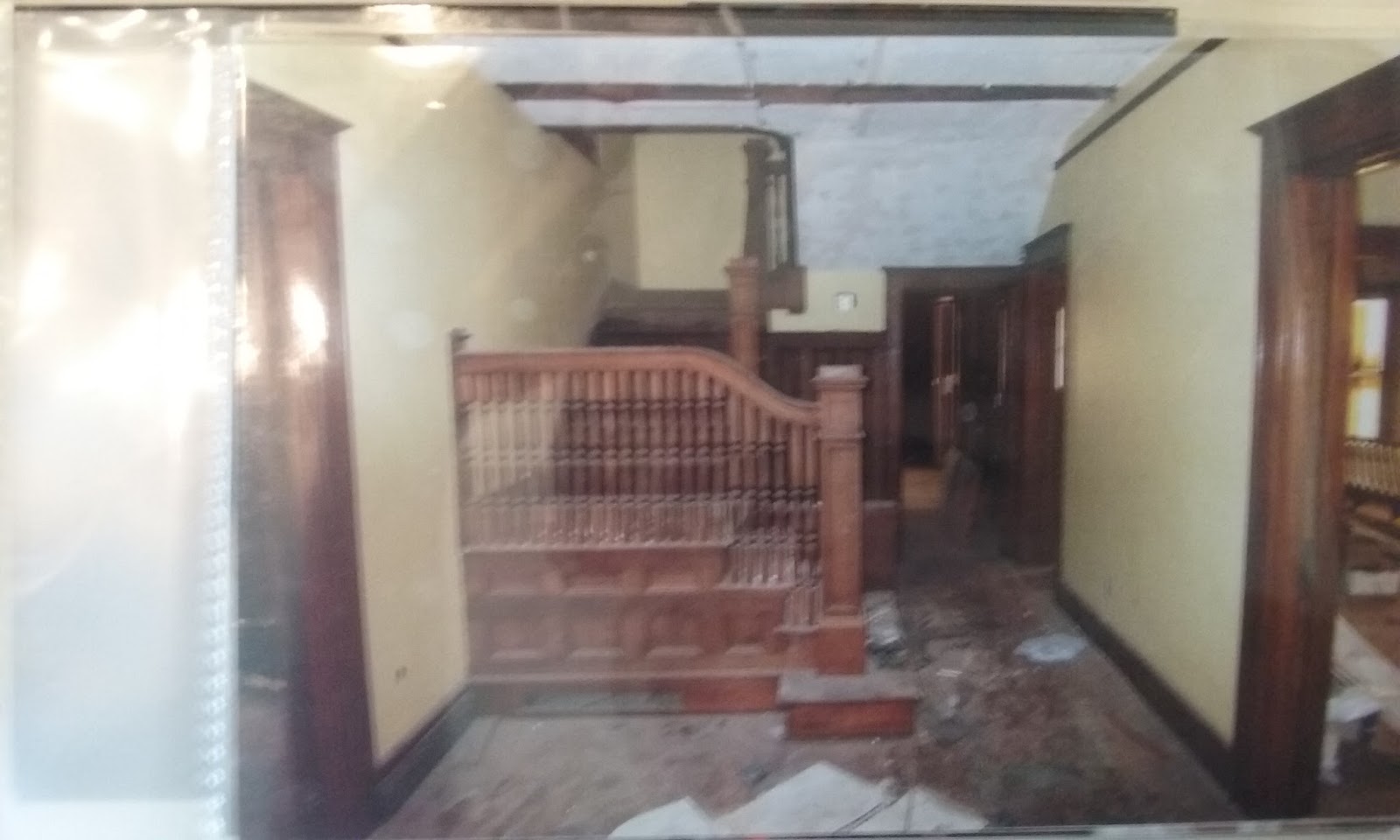
The Kivlehen house has seen many owner over the years. As with most stories, there is a dark period when the Kivlehen house devolved into serious disrepair. However, Mariana Lloyd and her son, Ben, had plans to change that. They purchased the house with the intent to restore it to its former glory and set up their real estate office inside it. The original estimated cost to build the house back in the early 1900s was $5,000. The Lloyds purchased it for $175,000 in 2006, and over the next two years, spent $400,000 in restorations. Mariana described it as a “Labor of Love”. They also wanted it added to the National Register of Historic Places. Within the application, they had to include pictures with detailed descriptions of every big and little change they had done. Eleven pages, forty three subjects, approximately one hundred and twenty pictures, and two years later, the process had been completed.
Holes they drilled to add blow-in insulation
One of many sections of the Application for National Register
The old front stair case, being renovated
Finished hall and stair case in 2016

Mariana Lloyd wanted to keep as much of the original wood, walls, floors and windows as possible. Much of the southeast parlor had to be redone because it had been eaten by termites. Ben found a company in Wewoka, Oklahoma, that
Front Parlor Original windows
matched the windows as closely as possible to the originals. They were able to keep all of the original doors. The staircase in the main entry just needed sanding and polishing. In the kitchen, a wall had been taken out to put in a railing for the back staircase during a past remodel, which turned out to be a support wall. The closet in the bedroom above the kitchen had shown the failure. The closet door didn’t match with the frame. Although, they left it because they thought it was a funny example of the repairs, they did replace the supporting wall. The back staircase is not used today because the stairs are too steep, according building code.

Back staircase with railing, no support wall


Back Staircase with new supporting wall and stairs too steep to use

Bedroom above kitchen closet door

One interesting thing they discovered was related to the flooring. The outer part of all the rooms was made of pine while the center was oak. Pine was more costly than oak when the house was built. The family would cover the center of the floor with a rug to hide the less costly oak wood, leaving the pine exposed.
Pine boards going horizontal where they can be seen, oak boards vertical to be covered by rug

Original Pocket Doors
The most frustrating thing the Lloyds experienced in restoring the house was getting it finished. By the end, they “wished
The Kivlehen House in its new life
the bleeding would stop," Ben said. The city and National Register of Historic Places couldn’t agree with each other. One issue was the pocket doors they strived to save. “The remodeling truly ended up being a Labor of Love,” Mariana said. The city wanted the pocket doors taken out for fire safety. In a compromise, Ben put stoppers into the tracks so the doors couldn’t be completely closed, but could be pulled out and shown.


Placard in front yard


Pictures of Mrs. Mattie and Mr. James Kivlehen
hang in the front hall
The Lloyds' most favorite part of the renovation was to see it finished. They moved their team into their new offices and have hosted countless tours of the historic home.


You can contact them at: 
Mariana Lloyd and
Ben Floyd
525 Realty Group
525 N. Jackson
Edmond, OK 73034
http://www.525realtygroup.com


The Kivlehen House at Christmas, 2010


Born and raised in the Edmond, OK area, Alanna Radle Rodriguez is the great, great, granddaughter of one of the first pioneers to help settle the area in what is now Seminole, Oklahoma. The fourth generation in a line of women in her family to be born in Indian Territory/Oklahoma, she has lived in her beloved state all her life. With her knowledge of surrounding area history, her heart relishes in volunteering at the Oklahoma Territorial Schoolhouse in Edmond. She lives with her husband and parents in the Edmond area, currently working on a historical romance set in pre-statehood Waterloo, Oklahoma.

Saturday, June 18, 2016

Goodnight to a Landmark

 By Alanna Radle Rodriguez


Dr. Arthur and Edith Ruhl on the porch of their two-story house
and medical practice
Dr. Arthur Ruhl and his wife, Edith, of Edmond, Oklahoma, built a home at the corner of 1st and Normal (now called University), in 1908. In 1928, he jacked up the house about twelve feet and built a new first floor, which was the exact floor plan as the original first floor, then he settled the raised part of the house onto the new floor. He added sunrooms on the south and east, giving the house have eighty windows. Dr. Ruhl was the first automobile owner in Edmond, and he did the same thing to the garage. He painted the stucco house a yellow shade with a blush of peach, saying that the peach “gave it the radiance of an Oklahoma sunrise or sunset.”

Original arched doorway in renovations in 1989
Original arched doorway in May, 2016
After Edith’s death in 1979, the big yellow house sat vacant for years—years that caused much decay. But in 1989, it had a second chance for life. Martha and Gary Hall bought it with the intention of making the historic home a Bed and Breakfast. On a small, young family’s budget, they gutted the interior and slowly put it back together. They struggled to find a name that fit their dream. They settled on Arcadia, which means peaceful or pastoral: The Arcadian Inn Bed and Breakfast. Martha said, “It was a God thing.” Welcoming their first guests in September of 1990, they opened with five guest rooms, while the couple and their two young sons called the first floor and back of house home. They moved into the garage apartment in 1995. In 1996, they purchased the house directly west of the B&B and opened two new rooms, the Captain’s Quarters in July of 1996 and the Magnolia in November of 1997.
The Arcadian Inn Bed and Breakfast, May 2016
The Halls moved from the garage apartment to the neighboring house in 2000. Since many people thought the B&B was out by Lake Arcadia and were looking for a country getaway, the Halls began building honeymoon cottages on 80 acres of woods they already owned between Edmond and Guthrie. They called it Aaron’s Gate Country Getaways. By 2006, they had three cottages up and running. In 2008, the Halls made another move, but this time Gary and Martha moved to Aaron’s Gate, while their adult son, Mark, moved onto the property at the B&B with his family.
Prairie Gypsy Room, sliding door
While interviewing Martha, I asked what her favorite room was at the Arcadian. ”Do you have a favorite child?” she replied with a smile on her face. She went on to explain that it depends on the season. “Christmas is Remembrance, Crown Jewel for Valentine’s Day, late May-June is the Magnolia so you can enjoy the blooms on the Magnolia tree. I love Prairie Gypsy because it’s so vibrant and unique.”

The Crown Jewel Room
Next I asked, “What was your favorite time of year as a B&B owner and hostess?” She replied, “Christmas. Every room has a Christmas tree in it. The front parlor boasts a huge tree that we call the Angel Tree because it displays my angel ornament collection. For the fall and through the holidays, we serve Pumpkin pancakes with apples, pecans and brown sugar along with our ‘to die for’ Vanilla Butter Sauce. Happiness and love are in the air.”


I asked her, "What is your most boring time?"
“Hmmm…our slow times are when people have spent all their money and can’t do something extra, January—after Christmas, April—Tax time, the first week of school in the Fall—school clothes. Boring as an innkeeper? Waiting for 10 pm to get here. We considered that we were off duty and could get comfortable. We decided a long time ago to be available for our guests, to wait on them here at the Inn. Being available can be somewhat boring. We do love to wait on the guests, though, and pamper them.”
The Crown Jewel
After the first hard-learned lesson their first Christmas, they made sure to close on the 24th at noon and open again at noon on the 26th. Martha says this about winter and a getaway. “There is NO better place to be than at the Inn or in a cottage for a snow storm. Just too romantic.”—As for mixing being an innkeeper and bad weather,—“One Saturday night, we had a tornado bearing down on Edmond. I don’t do well with those. But the guests were all gathered on the front porch waiting for it to get to town. Someone was sharing a bottle of wine. Gary was inside following one of the local stations. The phone rang and it was another local station! They wanted to know what was happening at the Arcadian Inn. I said, ‘We are having a tornado watch party on the front porch.’ They asked, ‘Is the wind blowing hard?’ I answered matter of factly, ‘No, the front porch flag banners are blowing with a slight breeze,’ to which she frantically replied, ‘That’s the calm before the storm! Get everyone downstairs quickly!’ I went out to the porch and was just telling everyone what the lady from the station had said when Gary came out and gave us the all clear. The station he was listening to said the storm was now on the east side of I-35! It did a lot of damage in Piedmont and west Edmond but we saw nothing! Everyone was safe and had a good time.”

But as with any good story, there must come an end. May 31st, 2016 marked the last day the historic Arcadian Inn B&B welcomed guests. Martha and Gary Hall are retiring after 25 years. The historic lot has been bought by the "Normal" school across the street, now known as University of Central Oklahoma. “Prairie Gypsy and the Crown Jewel will be the two rooms I’ll miss the most.” But have no fear. They are still keeping Aaron’s Gate, now calling it Arcadian Getaways.

Contact them at:

Arcadian Getaways
2600 East Camp Dr. Guthrie, OK 73044
www.arcadianGetaways.com – Phone: (405)201-1632
info@arcadianinn.com


Born and raised in the Edmond, OK area, Alanna Radle Rodriguez is the great, great, granddaughter of one of the first pioneers to help settle the area around what is now Seminole, Oklahoma. The fourth generation in a line of women in her family to be born in Indian Territory/Oklahoma, she has lived in her beloved state all her life. With her knowledge of surrounding area history, her heart relishes in volunteering at the Oklahoma Territorial Schoolhouse in Edmond. She lives with her husband and parents in the Edmond area, currently working on a historical romance set in pre-statehood Waterloo, Oklahoma.