Showing posts with label George Whitefield. Show all posts

Sunday, January 25, 2026

The Great Awakening


Many of us remember from school that from the early 1600s into the 1730s, many colonists came to the country to freely worship God without fear of persecution. While fraught with difficulties, life in colonial America must have also been filled with many examples of God’s blessing on those faithful enough to seek Him in this new land.

But in the 1650s, the Age of Enlightenment began. This was a 130-year period where many of history’s great thinkers—scientists, inventors, philosophers, and others—began to challenge societal thinking, particularly in the area of religious belief. Rather than basing one’s life on faith in God, the new standard was to reason, investigate, question, and analyze. Men such as Francis Bacon, John Locke, Voltaire, and Sir Isaac Newton published works discussing discoveries, advancements, and enlightened views. Literacy increased, and people devoured the words of such men.

Also during this time, changes in the Church of England affected the faith of churchgoers. In 1688, the Church of England became the reigning church in that country. While at first this seemed a good idea, it caused other religions, sects, and denominations to be suppressed. Rather than living from true conviction, people worshipped out of habit, ritual, and complacency.

The life of faith in the Colonies and worldwide was waning. All of these events set the stage for The Great Awakening.

Herrnhut

The first stirrings of revival began in Germany, when 

believers from Moravia fled
Count von Zinzendorf
to their country to escape persecution. They found a friend in Count Nikolaus Ludwig von Zinzendorf, who welcomed them to stay in a settlement he established on his land. They named their little community Herrnhut, or “The Lord’s Watch.” When seeds of discord grew among the Moravians in 1727, Count von Zinzendorf called for a time of prayer. Twenty-four Moravians rose to pray, each taking an hour’s shift to pray around the clock. As time went on, more people joined in, and the presence of God became so strong in their meetings that people would lay prostrate on the floor for as much as eight hours, soaking in God’s Spirit. What started as a call to prayer to overcome discord ended up lasting for 100 years! In the first sixty-five years of this movement, the Moravians sent over 300 missionaries to share the Gospel around the world. Before sending out their people, they would hold funerals for the missionaries, since each intended to give their lives for Christ. There are even accounts of Moravian missionaries selling themselves into slavery in Jamaica in order to have opportunity to share Christ with the slaves. What dedication!

Revival Spreads to America

Frelinghuysen
In America, the Dutch-Reform church in New Jersey sought a minister. In January 1720, they called upon German Theodorus Jacobus Frelinghuysen. Knowing of the great movement of God in Herrnhut, Frelinghuysen challenged his parishioners to examine their lives and repent of sin and to live rightly. This man’s bold revivalist approach caused many began to live differently, setting off a revival through the Middle Colonies.


As word of the Dutch-Reform’s revival reached the English speakers, they called
Gilbert Tennent
for a revivalist preacher like Frelinghuysen. Gilbert Tennent, an Irish-born Presbyterian minister who had settled in Pennsylvania, stepped up. Tennent’s father had started Log College (later known as Princeton University) in order to turn out ministers, and Gilbert was a proud graduate. Convinced that many church-goers were not true believers, he preached with a focus on sin, sin’s consequences, repentance, and the need for continual inner change. Response to his sermons was great, and many returned to God and began to live their lives differently. From here, the revival spread to the Baptists in Pennsylvania, Virginia, and beyond.

Jonathan Edwards
The next major wave fell with Jonathan Edwards. Ordained a minister in 1727, he worked under his grandfather, Solomon Stoddard, in one of the largest and wealthiest congregations in the American colonies—that of Northampton, Massachusetts—until Stoddard’s death in 1729. Edwards took the church over then, boldly speaking about sin and the need of God’s grace. Revival soon broke out among the Protestant congregations. His most famous sermon, Sinners In The Hands of An Angry God, had his congregants weeping on the floor as they repented to God. During many such sermons, the listeners shook as the Holy Spirit fell upon them, and there were documented cases of miraculous healings and the dead being raised to life.

During this period, church congregations doubled or tripled in size. The
David Brainerd
colonists’ morals moved back toward godly principles, colleges were formed (many to prepare men for ministry), and a heart for missions emerged. One such missionary, David Brainerd, dedicated his life to sharing the Gospel with the remote Indian tribes in Colonial America. He endured much loneliness, depression, and illness to pursue God’s call, and died of consumption contracted while preaching to his beloved Indian people. Interestingly, he died in the home of Jonathan Edwards, a dear friend.

Meanwhile, Across the Pond…


John Wesley
Waves of revival were crashing over Britain as well, led by two friends who met at Oxford—John Wesley and George Whitefield. In 1736, Wesley went to America to preach to the Indians, though he hadn’t truly committed his life to Christ yet. It was on the ship to America that a raging storm blew in. Everyone grew fearful the ship would be torn apart except one man, a Moravian missionary, who prayed to God in perfect peace. This man’s example and testimony softened Wesley’s heart, and he later was converted at the Aldersgate Street Prayer meeting in 1738. He became an itinerant preacher who traveled well over 250,000 miles on horseback to preach roughly 40,000 sermons. He wrote some 230 books, including journals and commentaries of the Bible, and with is brother Charles, penned roughly 9,000 hymns, some which are still sung today.


George Whitefield
George Whitefield stayed in Britain at first, preaching and stirring British hearts to repent and live for Christ. Eventually, he traveled to America also, preaching in Jonathan Edwards’ church and befriending Gilbert Tennent. During his ministry, he preached in almost every town in the British Isles and crossed the Atlantic Ocean seven times. He often preached in fields to crowds of 30,000+. Just as with his American contemporaries, hearers would become so convicted of their sin, they would shake and fall to the ground under the power of God’s spirit. 

Only as the stirrings of the American Revolution began in the mid-1760’s did the fire of revival wane.


Jennifer Uhlarik discovered the western genre as a pre-teen, when she swiped the only “horse” book she found on her older brother’s bookshelf. A new love was born. Across the next ten years, she devoured Louis L’Amour westerns and fell in love with the genre. In college at the University of Tampa, she began penning her own story of the Old West. Armed with a B.A. in writing, she has won five writing competitions and finaled in two other competitions. In addition to writing, she has held jobs as a private business owner, a schoolteacher, a marketing director, and her favorite—a full-time homemaker. Jennifer is active in American Christian Fiction Writers and lifetime member of the Florida Writers Association. She lives near Tampa, Florida, with her husband, teenaged son, and four fur children.

Now available for purchase

Nine romance stories of the Oregon Trail by Amanda Cabot, Melanie Dobson, Pam Hillman, Myra Johnson, Amy Lillard, DiAnn Mills, Anna Schmidt, Ann Shorey, and Jennifer Uhlarik.

Tuesday, August 28, 2018

How the First Great Awakening Started the American Revolution

by Tamera Lynn Kraft

In the 1730s and 1740s, a spiritual fervency swept the American colonies. It was called the First Great Awakening. Fiery ministers like Jonathan Edwards and George Whitefield preached about having a deep personal relationship with Jesus Christ and a standard of personal holiness. Many cast off the religious traditions of relying on the religious leaders to tell people what God wanted and started searching the Scriptures and seeking their own relationship with Jesus. Even many church goers had salvation experiences. This caused a revolution in the church, but that was only the beginning of more than one revolution.


Whitefield preached at both Harvard and Yale. At Harvard, it was reported, “The entire college has changed. The students are full of God.” Whitefield became so popular that he drew daily crowds of 8,000 people. In Boston, he drew a crowd of 23,000, larger than the entire population of Boston at the time. Even Benjamin Franklin wrote about the impact of his preaching. He was the cultural hero of the day.


The impact was huge. In New England alone, 25,000 to 50,000 people joined the church and claimed to have salvation experiences. When Jonathan Edwards preached “Sinners in the Hands of an Angry God”, people held on to the posts of the church for hear they would go to Hell before they had a chance to repent. Many universities sprang up for the purpose of training ministers. The colonies united under the umbrella of revival.


It affected the political thought in the colonies as well. People became more democratic believing that the church should be self-governed, not governed by the state. It also welcome people from every walk of life. The church became a melting pot elevating all members of society as equals. As the colonies united in democratic thought, the Church of England – the Anglican Church, sought to crush this awakening causing a divide between England and the colonies.


Founding fathers were also influenced by the Great Awakening:


  • John Adams studied at Harvard and considered becoming a minister.
  • Samuel Adams was deeply impacted and sought a political revolution to separate the church from England’s influence.
  • Benjamin Franklin and George Whitefield were friends. Some believe Franklin might have become a Christian in latter life.
  • James Madison was very devout and fought for freedom of religion and checks and balances in government because of the depravity of man.
  • John Witherspoon published several books on the Gospel.
  • Although there’s no direct connection between George Washington and the Great Awakening, we know that Washington was a devout Christian who even wrote a prayer book.
  • 54 of the 56 signers of the Declaration of Independence were devout Christians. Only Benjamin Franklin and Thomas Jefferson were not.
  • The first act of the Continental Congress was to pray. They prayed at the beginning of every session, and they prayed before voting to declare independence and signing the Declaration of Independence.
The Great Awakening started a spiritual revival that led to the American Revolution and the birth of modern democracy.


Tamera Lynn Kraft has always loved adventures. She loves to write historical fiction set in the United States because there are so many stories in American history. There are strong elements of faith, romance, suspense and adventure in her stories. She is managing editor of Mt Zion Ridge Press. Her novel, Red Sky over America is due to be released September 1st.

Saturday, April 28, 2018

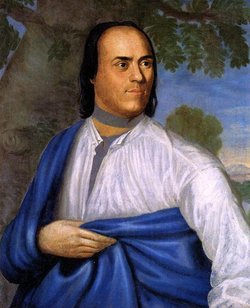
How a Native American Brought the Great Awakening to the Indians


by Tamera Lynn Kraft


Samson Occom was born in a wigwam in 1723, part of the the Mohegan tribe near New London, Connecticut. His parents were Joshua and Sarah Ockham. He was a direct descendant of Uncas, a famous Mohegan chief. The Mohegan lived as nomads and traveled often.

At the age of 16, Occom heard his first sermon during the Great Awakening. His mother Sarah was one of the first Mohegan converts. Samson was stirred by what he heard and began to study English so he could read the Bible for himself. 

A year later he became a Christian under the preaching of James Davenport. He started going to a school for Indians and white boys started by evangelist Eleazar Wheelock. He spent four years at Wheelock’s school and was a gifted student, but poor eyesight prevented him from going to college.
He taught school and ministered to the Montauk Indians for eleven years. He used many creative methods including singing and card games as teaching devices. When Azariah Horton, the white Presbyterian minister to the Montauk, retired, Samson took his place as pastor. Samson married Mary Fowler in 1751, and they had ten children.

Samson was paid by the church but received a much smaller salary than the white men doing the same job. To make ends meet, he bound books and carved spoons, pails, and gunstocks for his white neighbors. Despite the prejudice he faced, Samson was ordained in 1759 by the Presbyterian Church, one of the first Native Americans to be ordained.

His passion was to share the Gospel with other Native Americans and was commission by the Scotch Society of Missions to preach to the Cherokee in Georgia and Tennessee. Fighting among the Cherokee and white settles put those plans on hold, so instead Samson went to New York to preach among the Oneida.

In 1765 Samson traveled with George Whitefield, Great Awakening preacher, during his sixth preaching tour in the colonies. Later that year, he traveled to England with Nathaniel Whitaker to raise money for Wheelock’s Indian Charity School. Over the next two years, he preached over 200 sermons in England and was well received. He raised over 11,000 pounds, the most ever raised for a ministry in the colonies. While in England Samson visited with John Newton, writer of Amazing Grace, and received an honorary degree from the University of Edinburgh which he politely declined.

When he returned to America in 1768, Samson found that Wheelock had failed to care for his wife and children as Wheelock had promised. Samson’s family was living in poverty. The rift widened when he learned Wheelock had used the money he’d raised to move the school to New Hampshire and decided to exclude Indians. Wheelock renamed the school Dartmouth.

Samson was a prolific writer throughout his lifetime. He kept a diary from 1743 to 1790 about his work that became an historic document. In 1772, Samson preached a temperance sermon at the execution of a Native American who murdered a man while he was drunk. That sermon became a best seller. He also wrote and published hymns. He is recognized as the first Native American to become published.

When Samson became a defender of land claims of the Montauk and Oneida against speculators, false rumors were spread that he was a heavy drinker and not even a Mohegan. Although these reports were untrue, he lost the support of his denomination and several missionary societies. He wrote an autobiography to defend himself, but it did little good.

Throughout the 1770s and 1780s, Samson preached among the Mohegan and other tribes in new England. After the Revolutionary War, he settled in Brothertown, New York on a reservation for New England Indians where he established the first Indian Presbyterian Church. In 1791, he died while gathering wood to finish the new church building.

His legacy continued after his death through his children, students, and converts who also ministered to Native Americans. Two of his students also became authors. Besides being the first Native American who was published, Samson fought for Native American rights, spread the Gospel to New England tribes, and promoted education for Native Americans.

Tamera Lynn Kraft has always loved adventures and writes Christian historical fiction set in America because there are so many adventures in American history. Her Novels, Red Sky over Americaand Alice’s Notionsand her novellas Resurrection of Hopeand A Christmas Promiseare available on Amazon and at Barnes and Noble.

Saturday, January 28, 2017

How the First Great Awakening Changed America


by Tamera Lynn Kraft
 

In the mid 1700s, traveling evangelists like Jonathan Edwards, George Whitefield, and John Wesley preached along the countryside of the British colonies, and the seeds were planted for America to become a great nation.

It really started almost 100 years earlier, in 1630, when John Winthrop, one of the Pilgrims, preached a sermon entitled A City on a Hill. The text for the verse was Matthew 5:14  Ye are the light of the world. A city that is set on an hill cannot be hid. Winthrop said that God ordained the colonies in America to be that city on a hill. They were the New Jerusalem that would evangelize the world with the Gospel.

Over the next eighty years, colonists forgot those awesome words and had drawn away from God. Church attendance was at an all time low, and few felt Christianity played a major role in their lives. Church service were dry and dull, and most who did go to church did so out of religious duty.

When these preachers came on the scene it changed America for the better. They were fiery, emotional, and commanded attention. When Jonathan Edwards preached Sinner in the Hands of an Angry God, it was reported members of the congregation held on to the church beams fearing the wrath of God and the fire of Hell. Conviction spread all over the colonies, and people responded by having a "born again" experience with God that changed their lives forever.

Many denominations rose up during this awakening including Methodists, Presbyterians, and Baptists. Christians now felt they could have a personal experience with God and learn Scripture and doctrine for themselves instead of only relying on church leaders. Congregational leadership was determined by the congregations, not by church headquarters.

One of the biggest changes that took place during this awakening was that everyone was included. Slaves and poor men came to the meetings and were saved. It created a national unity and identity that later set the stage for the American Revolution where men fought for One Nation Under God. not a nation ruled by a denomination or a state church. The colonies had learned that the people decide on the leaders that rule them instead of letting the rulers dictate their nation's politics and religion.

Tamera Lynn Kraft has always loved adventures and writes Christian historical fiction set in America because there are so many adventures in American history. She has received 2nd place in the NOCW contest, 3rd place TARA writer’s contest, and is a finalist in the Frasier Writing Contest.

Her novellas Resurrection of Hope and A Christmas Promise are available on Amazon and Barnes and Noble.