Showing posts with label 1700's. Show all posts

Friday, March 1, 2024

Unexpected Legacy Series: Jeanne-Marie Bouvier

By Matthew J. Elliott


Have you ever been in a situation where it just felt like you were dealt the worst hand life could possibly have given you? I think we can all say that we’ve been there, so I won't dwell on it, but that is the kind of background Jeanne-Marie Bouvier came from. Does that name sound even remotely familiar to you? How about Madame Guyon? Well, she is known to many who have read her book “Experiencing the Depths of Jesus Christ” as one of the most influential women of faith the 1600s produced. This particular book was even publicly burned in France (more on that later), but it still found its way into the hearts and minds of thousands and thousands of Christians seeking to understand the value of experiencing a deeper faith. 

As a child, she was born into a wealthy family but dealt with childhood illnesses that kept her from living a normal life. Due to these constant ailments, her education was neglected far more than it should have been. She was even shipped off to live with nuns more than a few times as a child and never really given an opportunity just to be a kid. Her parents were devout Christians but when she was the ripe old age of 15, she was forced to accept a marriage proposal to someone 22 years older than her, whom she had never met. While he too was well endowed, Jeanne-Marie still endured long periods of neglect and a demanding home-life. Her life was not the kind of life one might imagine could belong to a person who eventually became such an advocate for the Christian faith. Everything she struggled with as a young sickly maiden could not prepare her for the struggles she faced with barring children, appeasing an overbearing spouse who gave into his demanding mother who had no interest in the woman her son married, and becoming a widow at the age of 28. Of the five children she gave birth to Jeanne-Marie outlived two of them and still had to deal with their father's mother. 

François Fénelon

Her life, while endowed, was filled with tribulation. So how does a woman with so much pain and suffering end up leaving a legacy like hers? It all comes back to her affinity for making faith a priority even amid everything she faced. In truth, she embraced the practice of Christian Quietism. This is a way of thinking that, according to those who lived by it, taught that spiritual peace and perfection were attainable through contemplating completely the ways of God, and nothing else. Those who sought a life of Quietism strived to rid themselves of human desire and become a completely passive individual, in the spiritual sense. While there is a lot of debate on these practices still today, the point I am making is that Jeanne-Marie Bouvier devoted her entire life, post-marriage, to finding ways for her to embrace a path in life that encouraged a deep and meaningful faith. This is where her legacy began to reveal itself to the world she lived in, but not in the way some may have expected.

In the late 1600s, Madame Guyon was arrested by church leaders who believed that her theology was flawed. While this was a brief imprisonment, her reputation was ruined. In an effort to find support for her beliefs, she began reaching out to others. Eventually, she found the support she was looking for through her cousin, a priest named François Fénelon. He was a French philosopher and would eventually become the archbishop of Cambrai, as well as one of her biggest advocates. Even with his support, Madame Guyon’s beliefs continued to cause her issues and she was arrested again and imprisoned from 1695-1702. Despite all this, she would eventually pick up the pen, so to speak, write everything down, and continue to pursue her beliefs, relentlessly. In her eyes, these beliefs would lead her to a complete understanding of the depths of Jesus Christ. 

Before all this, Madame Guyon had already released material in the form of a book called "A Method of Prayer." It has served many roles over the years and has constantly been a story that questions the reality of what faith is, and what it means to experience it deeply. This book caused so much opposition in France that a group of Roman Catholic priests serving in Dijorn gathered a total of 300 copies and burned them. On the other side of that coin, there was a Frenchman, who took 1500 copies and flooded his community with them. In truth, Madame Guyon is considered one of the most influential leaders of her time. In the end, she was denounced as a heretic by the religious tribunal and forced to live out the rest of her days in solitude until her death. After her eventual death,  this story found new life under the name “Experiencing the Depths of Jesus Christ” and to this day is considered one of the greatest Christian writings of all time. 

Bastille: Where Madam Guyon was imprisoned

It is a very unlikely story indeed, but this unexpected legacy has influenced believers as much, and, maybe even more, than Brother Lawrence and his short little book. The Practice of the Presence of God. While one cannot deny the simplicity of Brother Lawrence, many consider Madame Guyon’s detailed approach to quietism and devoted prayer a more unexpected legacy. A sickly child, devalued by her family, grew up and found herself in an unhappy marriage where she lost two of her children; One day became an undeniable advocate for devoted prayer and deep faith. She was rejected by so many throughout her life but always stood firm in her faith. This example of dedication has played a vital role in the lives of people across 100s of years. The results speak for themselves and it just goes to show that unexpected legacies are all around us. 

Do you believe that there are those who have a similar legacy today?


~ Biography ~

Matthew James Elliott (M.J. Elliott) is a passionate writer who loves to encourage and inspire others. He has served in various ministry roles for over 15 years, which has given him a unique perspective on people and Biblical History. Matthew holds a degree in Biblical Studies from Oklahoma Wesleyan University, with a focus on Pastoral Care, Christian Education, and Worship.

Matthew is happily married to Traci, and they have three children named Leyla, Caleb, and Hannah, who bring them immense joy and inspiration. As a writer, Matthew's goal is to share love, equip others, and edify them for the greater good. He loves connecting any amount of scripture to his stories and uses his knowledge of Biblical History to do so often.

You can find Matthew's works on Amazon, Goodreads, Facebook, and His Website. He has written Devotionals, An Episodic Series, Novellas, and even Commentaries for The Gospel Daily.


~ Highlighted Release ~

https://amzn.to/3wwp8Ht
Are you ready to dive into a captivating series that delves into the journey of a young runaway slave who discovers God in his quest for redemption? Finding Philemon is exactly that kind of series. Follow along on the unexpected journey as Onesimus embarks upon his path of faith and new beginnings.

Throughout this journey, Onesimus will encounter life-changing events that will transform the depths of his heart and aid him in discovering the redemption that only God can offer, and ultimately his way back to his former master Philemon.


----

Sources:

Guyon, J. (1997). Madame Guyon: An autobiography. Whitaker House: 1st edition.

https://www.gcu.edu/blog/theology-ministry/theology-thursday-madame-jeanne-guyon-life-transformed-through-prayer

Guyon, J. (1685). Experiencing the Depths of Jesus Christ. SeedSowers.


Wednesday, October 2, 2019

Dala Horses, a Swedish Tradition

by Susanne Dietze

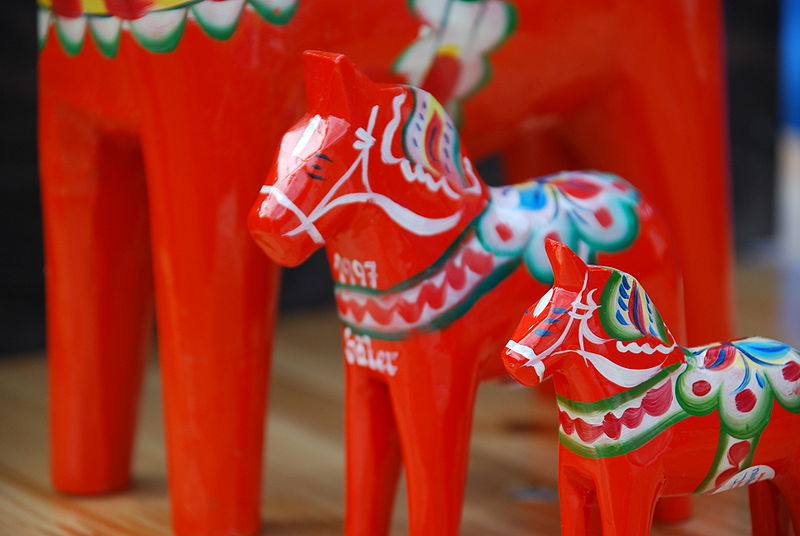
Once a toy, the carved, painted wooden Dala Horse, also known as a Dalecarlian horse or Dalahäst, has become a symbol of Sweden, as well as Dalarna, the province from which it originated. 
File:Three dalecarlian horses.JPG
Dalecarlian horses in three different sizes. Public Domain.
It isn't known precisely when Swedes first started carving Dala Horses as toys for their children, but they have been around for centuries, most likely fashioned from wood scraps from furniture making, the local industry. Legend says they became the national toy in the winter of 1716, a time of war. Soldiers were quartered in private homes in the Mora area of Sweden, and families and soldiers alike suffered from the severity of the winter. Food was scarce.

According to the legend, a soldier boarding with a family carved a Dala Horse from scrap wood and painted it bright red, a color which was available due to pigments produced from a nearby copper mine. He painted a harness and saddle onto the horse in the kurbits style, which is a decorative motif referencing the kurbit plant which shaded Jonah as he waited outside Ninevah for the city to receive its judgment.

The soldier gave the toy to the household's child, and in return, the mother provided him a bowl of soup. He crafted another horse and received more soup, and his fellow soldiers took to carving horses to barter for food, as well. 
Dala Horse from around 1950. Public Domain.
Others insist the wooden horses are relics of pre-Christian paganism in Scandinavia, and note that some Viking graves contain small wooden horses. Later, it's suggested wooden horses were tied to witchcraft.

However Dala Horses were first crafted and used, however, in the eighteenth century, the making and enjoying of small horses grew in popularity. Children carved them as well as adults. Eventually, Dala Horses came to stand as representatives for Swedish culture, handicrafts and for the country itself.

While popular in Sweden, the horses were little known in America until the World Exhibition of 1939 in New York. A 2.5 meter Dala Horse stood sentry outside the Swedish pavilion, and visitors loved it. In the following year, 20,000 Dala Horses were shipped to New York.

While most often seen as bright, orange-red toys (or even as statues in town squares), they are also painted blue, white, black, or other colors, and are sometimes left plain. Swedish store Ikea even sells black-and-white versions. 
File:Dalahäst i avesta.jpg
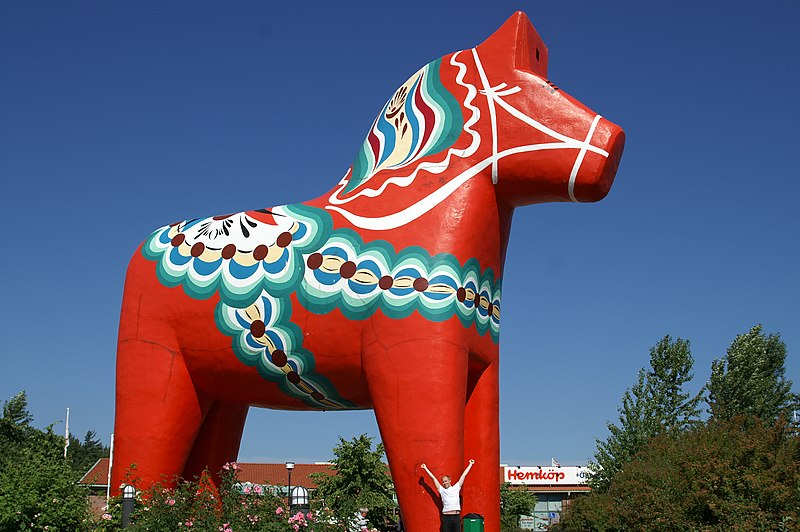
Huge dalecarlian horse near Avesta (Dalarna). Public Domain.
While some are now mass-produced, Dala Horses are most often crafted of pine, hand-carved, so no two horses are identical in size or shape. Some aficionados consider the only authentic Dala Horses to be those originating in the Dalarna village of Nusnäs, where a quarter million horses are made each year.

They are considered must-have souvenirs for those visiting Sweden, and today, they can be found in homes across the globe.

***
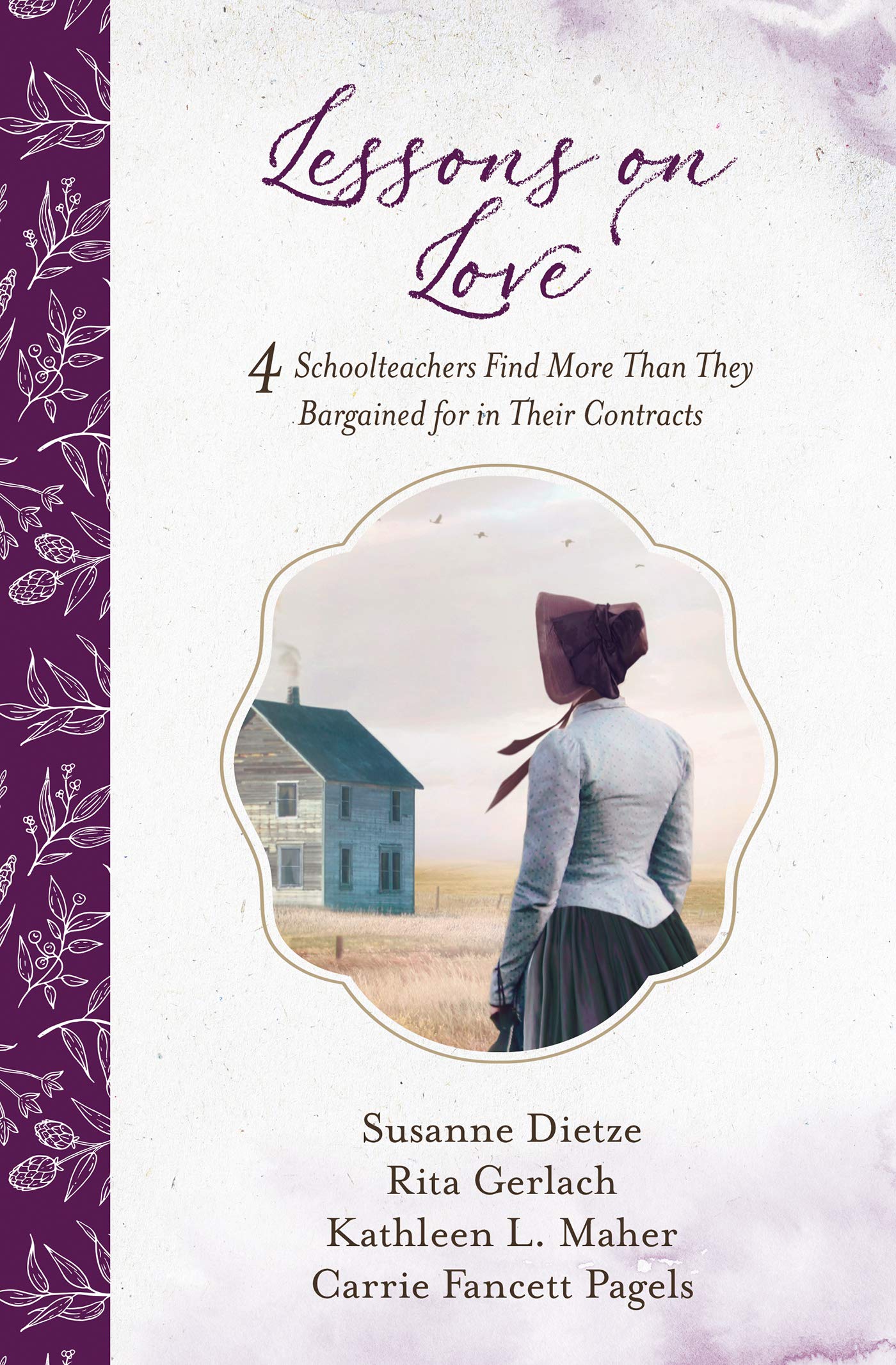
GIVEAWAY: I incorporated a special Dala Horse in my newly released story, Love in Any Language, part of the Barbour Collection Lessons on Love. If you'd like to win a copy, let me know in the comments. I'll randomly pick a winner tomorrow, Oct 4, 2019, at 9 am pacific time. Void where prohibited.
***
RITA-nominated Susanne Dietze is an award winning, bestselling author. You can learn more about her and the story on her website, www.susannedietze.com.

Thursday, August 29, 2019

Childbirth in Colonial America


by Elaine Marie Cooper


In a recent conversation with my very pregnant daughter-in-law, we discussed childbirth practices, from the time I gave birth to my son—her husband—to the current trends. Back when I had my babies, hospital births were the norm and mostly male physicians delivered babies. 
Today, my daughter-in-law sees a doctor regularly but will have a midwife assisted birth in the hospital. If any complications occur, a doctor is just a step away.

While most childbirths throughout history have involved midwife assistance, the last centuries of doctor-assised birthings may leave many with misunderstandings about the history of giving birth. In summation, midwives have delivered most of earth’s inhabitants throughout the millenia. 
In fact, the introduction of male-assisted birth practitioners in the late 18thcentury was quite shocking to many.
         In 1998, I was thrilled to visit the Smithsonian Institution in Washington, D.C. While I have forgotten many of the historical displays, one definitely stands out in my memory. It was a poster depicting a “Man Midwife.” 
The title alone was enough to intrigue me, especially since I was a registered nurse, then working in a mother/baby unit at a local hospital. The display at the Smithsonian highlighted the debate going on in the late 1700s concerning male physicians undertaking the business of delivering babies. I believe I remember the phrase “Half Man, Half Midwife: Man Midwife.” 

This picture shows a person of two parts— half physician with his tools of the trade, including forceps and medications; the other half, a female midwife with her arms outstretched in motherly care. The symbolism of interfering medical practitioner vs. comforting, female arms was loud and clear. But the image was also prompted by the disapproval of many who were offended by males becoming involved in such intimate medical care of women.
  A letter addressed to “All men in general and to all married men in particular,” was written in 1764 by Philip Thicknesse. His words expressed his outrage at the growing practice:

“Let it be remembered that my motive is thereby to put a stop to impure acts, immodest actions, and the indelicate, unchaste, and unnecessary transactions of Men Midwives, such as they avowedly and publicly profess and such that every man of sense, decency, sentiment, and spirit must and will disapprove, or be totally indifferent as to his wife’s conduct or his own honor.”

             Considering the history of childbirth, it is not surprising that only female midwives were considered the acceptable assistants in the birthing process. 
Since earliest recorded childbirths in the Bible, midwives were called upon to assist in a birth. And ever since Bridget Lee Fuller delivered the first Colonial babies on board the Mayflower in 1620, midwives had established themselves as the ones to call upon when labor began in the New World. For the next 200 years, midwifery reigned.
 Midwives did not go to school to learn the craft—the skill was taught by other women. There was no formal training in the early colonies until 1765 when an institute for training was offered in Philadelphia. But many could not afford such schooling and most still apprenticed under more experienced trainers. Many midwives were widows who delivered babies as a way to make a living.

  When a pregnant woman knew that birth was imminent, she “called her women together” for the event. Friends, relatives, the midwife—whoever a woman wanted to attend her and speak words of comfort to her—became a part of the birthing scene. It was definitely a female affair, although occasionally, husbands were needed to assist.
  Childbirth in Early America was especially difficult. One in eight births resulted in the death of the mother, usually as a result of exhaustion, dehydration, infection, or excessive bleeding. Women often looked toward impending childbirth with dread, one referring to it as “the greatest of earthly miseries.” 

  A midwife with great skills was highly valued. A diary kept by a late 18thcentury midwife from Maine named Martha Ballard describes the difficult life that she faced—fording rivers in winter, spending hours and days tending to laboring patients, and occasionally, preparing a deceased patient for burial. But Martha’s record was a successful one for the times: Out of 996 deliveries, there were only four fatalities.
  Highly devoted to her profession, Martha continued delivering infants in her community until just before her death in 1812 at the age of 77.
  But long before Martha Ballard passed away, the tide was beginning to turn.
  By the late 1700s, doctors in England had begun to play a greater role in childbirths. They, in turn, influenced American doctors who trained across the ocean and then brought these ideas home. The practice of physician-assisted childbirth became popular in the urban areas of Philadelphia, Boston, and New York. These man-midwives brought with them medications and forceps. While the forceps could be helpful during difficult deliveries—perhaps saving many infants and mothers who would otherwise have died—the physicians tended to interfere more in a delivery rather than allowing the child to be born at a natural pace like the midwives.
  By 1790, midwifery was losing ground to the doctor-assisted delivery. But midwives continued to reign in many areas as the main caregivers of laboring women.            
Today the art of midwife-assisted deliveries is on the rise. Approximately 9% of American babies slip into the world with the help of a midwife. There are currently over 12,000 Certified Nurse Midwives in the United States.
 The shift towards the middle ground, with many certified midwives assisting births and physicians available in case of emergency, makes it seem like the perfect time for my daughter-in-law to give birth.   
(Update on my daughter-in-law: She gave birth on August 17 to Endeavor James Cooper, 8 lbs. 13 oz. Endeavor "Indy" was born on my son's birthday—his daddy! Brianna had a midwife assisted delivery.) 


Elaine Marie Cooper is the author of several historical novels including War’s Respite(Prequel novella) and Love’s KindlingLove’s Kindling is available in both e-book and paperback. They are the first two books in the Dawn of America Series set in Revolutionary War Connecticut. Cooper is the award-winning author of Fields of the Fatherless and Bethany’s Calendar. Her 2016 release (Saratoga Letters) was finalist in Historical Romance in both the Selah Awards and Next Generation Indie Book Awards. She penned the three-book Deer Run Saga and has been published in numerous magazines and anthologies. You can visit her website/ blog at www.elainemariecooper.com


Friday, April 5, 2019

Rise of the Beach Machines Part 2

DRAFT Photograph of a trade card of Amidas & Mary Surflen, bathing machines. C 1775. Courtesy of The British Museum

Rise of the Beach Machines Part 2 continues the practice of sea-bathing which began as a private way to bathe and swim unfettered by heavy clothing yet maintain modesty from prying eyes, and evolved into a successful, structured form of tourism. Although my research indicates that many people considered bathing machines to be unnecessary and laughable, it was still the only way a decent woman could take a swim in the sea without losing her respectability.

By the 1770's, seaside establishments were advertising new comfortable buildings that catered to women and men while they waited their turn to bathe, as well as personal water guides to ensure their experience was without drama.  According to this 1750 trade-card, the umbrello Machine allowed the woman seven square feet of space to change out of her street clothes, and then a ten-foot length under the umbrella to walk or swim without anyone seeing her. 


DRAFT Photograph of a trade card of Dunn, bathing machine maker, c 1750. Courtesy of The British Museum

(Note the use of "f" vs "s" in the 18th century ads.)

Margate, England, is a good example of the tourist trade that evolved at many beach locations in the UK, on the continent, and even as far as Australia and New Zealand over the next hundred or so years. In the image below, we can't tell if the bathing machines are for men or women, but they form a tight line to block the view of crowd, many of whom are waiting for their turn. Along with a puppet stage in the center of the picture, there is an onsite photographer with his wagon of samples and equipment. 


Margate, the beach. C 1890. Courtesy Digital Collections NYPL

Bathing machines are most often referred to as something for the privileged or higher classes due to the need for keeping their dignity while wearing clothing that stuck like a second skin when wet. However, the other reason was the cost. The use of a bathing machine was meted out in 30 minute segments. Sometimes the machine wasn't taken down to the water until the bather knocked on the wall that she, or he, was ready. Most times, however, the bather had to endure removing layers of clothing while on the move. Horses and men were both used in moving the machines and participants report the ride could be as smooth or jerky depending on the texture of the beach.

Valuable Hint by John Leech, Punch, 1849. Public Domain

In the 1817 book Isle of Thanet and the Cinque Ports by E. W. Brayley, the terms for use of a bathing machine for 30 minutes were:

The Bath and the Beach, or All About Bathing, published 1871 in Brighton and London, explains the rules of running a bathing machine establishment, which includes a number painted on the front and back of each bathing machine, as well as either, For Ladies, or, For Gentlemen, painted on a conspicuous part of each one. Surprisingly, machine owners were also required to provide free gowns or dresses for female bathers, and free bathing drawers or "other suitable covering as will prevent indecent exposure of a person" for the males. 


Bathers in rented gowns, Ostend, Belgium, ca 1910-1915. Courtesy LOC

The bathing machines were built in a similar fashion with smaller wheels in the front for turning and large ones at the back. Some machines had a front entry door as well as the back water exit, but other machines were positioned with the back to the shore and the same door used for both. It all depended on whether the machines were pulled into the water, or backed in and then walked out. Also, some bathing machines were kept in the water all day and the patrons were required to walk out to them. 


Bathing Machines, Ostend, Belgium, ca 1910-1915. Courtesy LOC

A life buoy was another requirement of the bathing machine, as well as a seventy-two foot minimum length safety rope attached to the front in case the machine needed to be pulled through heavy waves. Finally, there needed to be a twenty-four foot minimum length rope behind the machine for the use of the bathers.

The rope in this image taken from London's Marshall & Snelgrove Department Store advertising in the 1 August 1, 1887 issue of Lady's World may not be up to regulation length, but the bathing costumes are quite trendy. 


Bathing Costumes from Marshall & Snelgrove, Oxford, Lady's World, 1 August 1887. Public Domain

Twenty years prior, women's bathing costumes looked like these 'bathing dresses', as featured in Godey's Lady's Book, 1868. 


Bathing Dresses, Godey's Lady's book 1868. Courtesy Digital Collections NYPL
Apparently, the custom of using bathing machines took time to cross to North American shores and when it did, it appeared to be received as a novelty for entertainment and not its true intention of private bathing.

Evening public ledger. (Philadelphia [Pa.]), 15 July 1915. Chronicling America: Historic American Newspapers. Lib. of Congress.

So, what do you think about the use of a beach machine? Necessary? Extravagant?

Check out Rise of the Beach Machines Part 1 for more history and photos of beach machines, including those of royalty.


~~~~~~~~~~~~~~~~~~~~~~~~~~~~~~~~~~~

Anita Mae Draper is a veteran of the Canadian Armed Forces who served twenty years on Air bases with her eyes on the skies. She uses her experience and love of history to pepper her stories of yesteryear's romance with hardship, faith, and joy. Anita Mae Draper's published stories appear in Barbour Publishing, WhiteFire Publishing, and Guideposts Books. Readers can enrich their story experience with visual references by checking out Anita's Pinterest boards. All links available on her website at www.anitamaedraper.com


Tuesday, January 29, 2019

Conestoga Wagons: America's First Trucks


If you watch enough old western movies or TV shows, you’ll likely see covered wagons traveling over prairies and across deserts as Easterners braved the frontier westward. And if you’re like me, you might mistakenly call them a Conestoga Wagon. In actuality, these wagons were updated versions and are referred to as Prairie Schooners as their billowing white covers crossing the prairies resembled the sails on a schooner sailing across the water. 


Prairie Schooner


Conestoga Wagons actually preceded the use of Prairie Schooners and were designed not for transport of humans, but for cargo. In fact, the first known Conestoga wagon was built in 1717, named after the Conestoga Valley in Lancaster County, Pennsylvania in which it was built. 


These early “workhorses of the American Road,” as Conestoga expert Ned Hector calls them, ranged in size from 14 to 26 feet and could weigh up to 3,000 pounds, without freight onboard. They were typically pulled by three teams of horses, although sometimes two teams. There were no seats on these wagons as the teamsters either walked alongside or rode the horse on the left, directly in front of the wagon.

Some wagons had a “lazy board” which was pulled out from behind the front wheels and allowed a teamster to sit. I imagine the lazy board was a relief for sore feet on long hauls.

The horses were fitted with arched harnesses that carried bells—five for the lead team, four for the middle, and the right wheel horse (where the driver did not ride) carried three bells. These sound-makers served the purpose of alerting others on the road that a team was approaching on the narrow highway. If the bells were silenced, another wagon on the opposite side would know the oncoming Conestoga had pulled over to allow them passage. 

If a wagon broke down, protocol dictated that anyone who assisted the teamster to get back on the road would be gifted the bells as payment. So the term, “I’ll be there with bells on” originated with wagons who arrived fully bedecked after a successful drive. 

Conestoga wagons were made from seasoned wood, air dried for three to four years. They were equipped with a feed box, a water bucket for the horses, a tool box, and a tar bucket to grease the wheels. Wheel lock chains were used for going down steep hills so the wagon did not run into the horses.

An authentic Conestoga was generally painted blue on the wagon portion and the wheels painted red. Here is an antique Conestoga: 


Wagons filled with freight generally traveled ten to twelve miles per day. They traveled on the right side of the road since the teamster rode the horse on the left. This began the tradition in the United States of driving on the right side of the road. 


For more information on Conestoga Wagons, check out these websites: 


Elaine Marie Cooper has two new E-book releases: War’s Respite (Prequel novella) and Love’s Kindling. Love's Kindling will soon release in paperback. They are the first two books in the Dawn of America Series set in Revolutionary War Connecticut. Cooper is the award-winning author of Fields of the Fatherless and Bethany’s Calendar. Her 2016 release (Saratoga Letters) was finalist in Historical Romance in both the Selah Awards and Next Generation Indie Book Awards. She penned the three-book Deer Run Saga and has been published in numerous magazines and anthologies. You can visit her website/ blog at www.elainemariecooper.com


Sunday, December 9, 2018

Christmas Traditions in the 1700s

By Tiffany Amber Stockton


Last month, I shared about the history of the New York Symphony. If you missed that post, you can read it here: https://www.hhhistory.com/2018/11/new-york-symphony-debuts.html.

Now, let's go from the crafted instruments of music to holiday traditions.

* * * * *

Christmas Traditions - 1700s

I wavered and pondered and struggled over the topic I'd select for today's post. With Christmas right around the corner, I didn't want anything to feel "contrived." On the other hand, the theme seemed perfect.

So, today, I'm going to cover Christmas traditions in the 1700's.

Christmas wasn't always celebrated the way it is today. In fact, the Puritans of Massachusetts banned any observance of Christmas, and anyone caught observing the holiday had to pay a fine. Connecticut had a law forbidding the celebration of Christmas and the baking of mincemeat pies! A few of the earliest settlers did celebrate Christmas, but it was far from a common holiday in the colonial era.

The first record of Christmas trees in America was for children in the German Moravian Church's settlement in Bethlehem, Pennsylvania, Christmas 1747. Actual trees were not decorated, but wooden pyramids covered with evergreen branches were decorated with candles.

The custom of the Christmas tree was introduced in the United States during the War of Independence by Hessian troops. Decorations included lace, ribbon, tin, food items and lit candles. Most other early accounts in the United States were among the German settlers in eastern Pennsylvania. Just as the first trees introduced into Britain did not immediately take off, the early trees introduced into America by the Hessian soldiers were not recorded in any particular quantity. Even so, it is known that the Pennsylvanian German settlements had community trees as early as 1747.

Decorations were still of a 'home-made' variety. Young Ladies spent hours at Christmas Crafts, quilling snowflakes and stars, sewing little pouches for secret gifts and paper baskets with sugared almonds in them. Small bead decorations, fine drawn out silver tinsel came from Germany together with beautiful Angels to sit at the top of the tree. Candles were often placed into wooden hoops for safety.

One of the primary reasons Christmas wasn't celebrated is due to its pagan association. Puritans and Protestants alike frowned upon any connection to this celebration. Any observance was made primarly by German and Dutch colonists in the Middle Colonies. German gifts such as nuts and apples were given to needy children by St. Martin and St. Nicholas know to be the forefathers of Santa Claus as we know him today. Kris Kringle evolved from the German name for the Christ Child (Christkindlein). Dutch settlers coming to America changed St. Nicholas to Sintr Claes who became the gift giver.

However, as the dawning of a new century approached, we begin to see a greater occurrence of the traditions so many celebrate and enjoy today.


* * * * *

NOW IT'S YOUR TURN:

* Do you have any German or Dutch ancestry/roots that have influenced what you do today?

* What traditions are special in your home?

* What traditions did you have a child that you continued with your own family?


BIO

Tiffany Amber Stockton has been crafting and embellishing stories since childhood, when she was accused of having a very active imagination and cited with talking entirely too much. Today, she has honed those childhood skills to become an author and speaker who also works as a force for literacy as an educational consultant with Usborne Books. On the side, she dabbles in the health & wellness and personal development industry, helping others become their best from the inside out.

She lives with her husband and fellow author, Stuart Vaughn Stockton, along with their two children and two dogs: Nova, a Shiba-Inu/Besenji mix and Nugget a Corgi/Chihuahua mix, in Colorado. She has sold twenty (21) books so far and is represented by Tamela Hancock Murray of the Steve Laube Agency. You can find her on FacebookTwitterGoodReads, and LinkedIn.

Friday, October 26, 2018

George and Martha Washington--A True Love Story


George and Martha Washington’s journey together began after Martha’s first husband died, July 1757, leaving her a very wealthy widow and mother of four children. The earliest written record of George and Martha’s connection appeared the following year (March 1758) when George wrote a note to his servants in his financial records after remarking on a visit to the widow Curtis (Martha’s married name).
             
Less than a year later, January 1759, George and Martha were married at her estate in New Kent County, Virginia. The marriage may not have started out as
George and Martha Washington's' wedding
a true love story as George wrote to an acquaintance that Martha was “an agreeable partner.” Not exactly a loving endearment, but soon that would change. By the end of 1759, the new blended family of George, Martha, and her four children had moved to Mount Vernon. This move was a step down for the uber-wealthy Martha, but she soon adapted to the smaller estate, and she and her children lived contently and in comfort.

After moving to Mount Vernon, George wrote his English agent and expressing his excitement to enter retirement with Martha. He wrote, “I hope to find more happiness in retirement than I ever experienced amidst a wide and bustling World.” If only he knew what his future held. His world would become so much more “wide and bustling”.                                           
Martha Washington
                   
Though his retirement would be short-lived, the Washington’s love continued to blossom. In 1767, almost ten years into the marriage, a rare letter written by Lund Washington, a distant cousin of George’s, for Martha expresses how much she misses her husband while he’s away handling politics and his assets. She also begins the message with “My Dearest” and ends it with “your most Affectionate, Martha Washington.”

As the fight for America’s independence began to heat up, George accepted the position of representative for Virginia at the first continental congress in Philadelphia, PA. While traveling to Philly with fellow delegates, Patrick Henry and Edmond Pendelton, Pendelton wrote about Martha in a letter, “She seemed ready to make any sacrifice and was cheerfull though I knew she felt anxious. She talked like a Spartan mother to her son going into battle. ‘I hope you will stand firm – I know George will.”

Martha ordered the burning of all personal correspondence after George’s death. A common thing for those days. There are three known letters that escaped destruction, one was reportedly found behind the drawer of Martha’s writing desk, possibly by her granddaughter. In the letter George expresses his apprehension and anxiety “on a subject which fills me with inexpressible concern - and this concern is greatly aggravated and Increased, when I reflect upon the uneasiness I know it will give you” It’s obvious that he doesn’t want to cause his beloved wife any trouble. He continues to explain that he’s accepted the potion of Commanding General to the entire army of the new American Cause. 
 
George Washington
George, Martha and family
During the Revolutionary War, Martha was noted by other officers who were close to George as being a good, supportive and loving wife. The Marquis de Lafayette wrote to his own wife that he found Martha Washington: “a modest and respectable person, who loves her husband madly…”. Nathan Green also wrote: “Mrs. Washington is excessive fond of the General and he of her. They are very happy in each other.”

The hard-fought victory of the new independent country, United States of America, could have led to a slower paced lifestyle that the Washington’s longed for, but instead George Washington had a bigger roll to play in the founding of the new country’s government . . . First President of the United States.

Martha showed her disappointment that their dream of being together at Mount Vernon would once again go unfulfilled, but she committed to stand by her husband’s side as he served two terms as president. And she did. Again, many of George and Martha’s peers would write about the couple’s endearment to one another.

March 15, 1797, the Washington’s finally were able to return to a normal life at Mount Vernon. Though the retirement was short lived when, two years later and after forty years of marriage, George Washington died on December 14, 1799. Martha was heartbroken and reported cried she would soon follow her beloved husband for she had nothing left for which to stay. She died on May 22, 1802.

George and Martha Washington’s marriage may have begun as a match made of financial need, but, in the end, the union proved to be one America’s greatest love stories.

Do you have your own love story to share? A long marriage, a lost sweetheart . . . Please, leave a comment below if you’d like to share your true love story with all of here at Heroes, Heroines and History.

Be blessed and choose happy my friends.

Until we meet next month,

Michele 


Citation: George Washington letter to Martha from June 18, 1775. 
http://www.tudorplace.org/article/reading-room-people/letter-from-george-washington-to-his-wife-martha-washington-june-15-1775/ 

Pictures: 
commons.wikimedia.org and en.wikipedia.org


Award winning author, Michele Morris’s love for historical fiction began when she first read Laura Ingalls Wilder’s Little House book series. She grew up riding horses and spending her free time in the woods of mid-Michigan. Married to her high school sweetheart, they are living happily-ever-after with their six children, three in-loves, and ten grandchildren in the sunshine state. Michele loves to hear from readers on Facebook, Twitter, and through the group blog, Heroes, Heroines, and History at HHHistory.com. She is represented by Tamela Hancock Murray of the Steve Laube Agency.

Wednesday, September 12, 2018

Kitchens of Famous Americans


Modern American kitchen. https://goo.gl/images/AWbmhc


Most of us think of open concept kitchen and living areas as the latest trend in home building. The truth is, from the earliest days of Colonial history until the Victorian Age, open concept described the architectural style of most homes unless the owner was quite wealthy. 


Since my husband and I are painting the small kitchen in our South Florida condo, and I want to make use of every square inch even though it’s not open concept, I began to wonder about the history of kitchens in America. That’s just the way my mind rolls. The Library of Congress is a great resource, so I started my research there. Browsing through the archives, I stumbled upon photos of restored kitchens used by our founders and other well-known Americans. 

The kitchen has always been the heart of the home, but in the founding days of our Republic and during westward expansion, kitchens also served as living room, bedroom, and dining room as well…unless you lived at the White House or in wealthier homes where kitchens were housed in separate buildings to keep the house cool and as a deterrent to fire. Until modern times, kitchens were designed for function, not frivolity.


Historically accurate chuckwagon used
for modern-day reenactments. https://goo.gl/images/6n5sp9


Even chuckwagons, used for storing food and cooking utensils and driven by cattlemen or pioneers headed west across the prairies, could be classified as kitchens, albeit rudimentary ones. The actual cooking was done over an open campfire.


Let’s look at a few of the kitchens used by people whose names you’ll recognize.


Photo by Carol M. Highsmith, photographer. Kitchen in the Ford Mansion. The mansion was the site of the "hard winter" December through May 1780 quarters of George Washington and the Continental Army at The Morristown National Historical Park in Morristown, New Jersey. Morristown New Jersey United States, 2017. -08-25. Photograph. https://loc.gov/item/2017882224/.


In most American history books, the author will describe the hard winter of 1780 when George Washington’s Continental Army tied rags around their freezing feet and ears and huddled over campfires with little to eat. As the leader of the army, Washington stayed in the Ford Mansion, but even though he enjoyed better rations at a table warmed by the kitchen fireplace, he regularly rode among his troops to rally their spirits.


After securing our freedom and serving as the first President of the United States, George Washington and his wife Martha retired to their large country estate named Mount Vernon. The home and its gardens and outbuildings sit on the banks of the Potomac River in Fairfax County, Virginia, and underwent expansion under Washington’s ownership. The Washington family had owned land there since 1674 when George’s great-grandfather put down roots. 


Detroit Publishing Co., Copyright Claimant, and Publisher Detroit Publishing Co.
Martha Washington kitchen at Mt. Vernon.
Mount Vernon Estate Mount Vernon Estate United States Virginia, None.
[Between 1900 and 1920] Photograph.
https://www.loc.gov/item/2016796113/


In 1775, the kitchen had been significantly enlarged from the original just before Washington assumed command of the Continental Army in Boston. It was comprised of three workrooms on the ground floor and a loft where food was stored and where the cook presumably slept. 


After Washington’s death, the inventory of the estate showed the kitchen was equipped with skillets, a griddle, a variety of pots and pans, a toaster, fire spits, coffeepots, and much more. 


Detroit Publishing Co., Copyright Claimant, and Publisher Detroit Publishing Co.
The Kitchen, Paul Revere House, Boston, Mass.
Boston Boston. Massachusetts United States, ca. 1909. Photograph.
https://www.loc.gov/item/2016814827/


The original three-story home of Colonial patriot Paul Revere is the oldest in downtown Boston. Built in 1680, rather than placing the kitchen in a separate building, it was housed in a two-story extension built on the back of the house. The prosperous silversmith and engraver is best known for his midnight ride in April 1775 to alert volunteers that the British were at the colonial militia’s doorstep. The battles of Lexington and Concord followed. No doubt, because of Revere’s wealth, his table would have been laden with the best the marketplace afforded.


Barnett Mcfee Clinedinst, photographer.
Kitchen, New White House.
Washington, D.C., ca. 1902. Nov. 1906. Photograph.
https://www.loc.gov/item/2002735757/


Of course, one of the most famous kitchens in America is that of the White House in Washington, DC. The photo above was taken early in the 20th Century when Theodore (Teddy) Roosevelt served as the 26th President of the United States. We can only assume the kitchen was well-equipped to handle state dinners and the hosting of world dignitaries.

Learn more about the history of kitchens at the Library of Congress or Wikipedia.org. With the advent of the Internet, there is no subject that you can’t study, including the lowly kitchen.

If you have a photo or know a story about the kitchen of another famous American, would you please share it with us? 


***


My feisty Irish bride Kate O'Brien McKean asks her husband for an annulment in Dreams of My Heart, book 1 of The Reluctant Brides series, setting off a chain reaction of events that endangers them both. The historical romance set in 1875 Montana Territory is published by Mountain Brook Ink. The book is available at Amazon in both ebook and print and free with Kindle Unlimited. 


Barbara J. Scott


After a career spent acquiring and editing books by numerous bestselling Christian authors, Barbara J. Scott has returned to her true love—writing. She is currently writing the second book in the Reluctant Brides series—Love of My Heart. Barbara and her husband Mike recently moved to the Ft. Lauderdale area to be closer to two of their four grandchildren. Reading, writing, and research are her passions. Want to know more? Connect with Barbara at www.BarbaraJScott.com.