Showing posts with label Tamera Lynn Kraft. Show all posts

Friday, September 28, 2018

How Ohio Almost Started the Civil War


by Tamera Lynn Kraft

Before the Southern states succeeded from the Union in 1860, a small Christian college in Ohio almost caused the Civil War. It all started in 1850 with the Fugitive Slave Act. Before 1850, owners of slaves in slave states could not easily retrieve their slaves if they escaped to free states. Many of the escaped slaves settled in Ohio. When the Fugitive Slave Act was enacted, slave owners could not only chase their slaves down in states like Ohio, but abolitionists in free states were forced to aid them and hand over these slaves or be convicted of a crime.

That didn’t sit well with most Ohioans, but the students at Oberlin College were enraged by the law. Oberlin College was the only college at the time that allowed both blacks and women to graduate with a college degree alongside white men. A religious fervor had filled the campus, and Charles Finney from the Second Great Awakening had become the college president. Oberlin students felt it their duty to live out their Christian life in the culture of the times. 
Graduates became missionaries overseas, preached abolition in the South, and women’s suffrage and equal rights for all.

Since the Fugitive Slave Act, many escaped slaves settled in Oberlin and were warned by residents whenever slave catchers were around. In September, 1858, a federal agent arrested a fugitive slave, John Price, in Oberlin and transported him to nearby Wellington intending to take him to Kentucky. Half the town of Oberlin chased the agent down and took Price back. He was secretly moved to Canada by an Oberlin College professor. 20 men were arrested and charged with impeding the capture of a fugitive slave.

The trial caused such an uproar in Ohio, there were discussions about succeeding from the United States. The federal agents were arrested for kidnapping because they violated Ohio’s constitution against slavery. Ohio Governor Salmon P. Chase was an abolitionist, but he talked the crowds out of succeeding. Many wanted him to run for president in 1860, but he stepped aside for the good of the country. He felt a moderate anti-slavery candidate, Abraham Lincoln, would have a better chance of winning.

Red Sky Over America, is about a woman abolition who attended Oberlin College shortly before the Oberlin Wellington Rescue.

Tamera Lynn Kraft has always loved adventures. She loves to write historical fiction set in the United States because there are so many stories in American history. There are strong elements of faith, romance, suspense and adventure in her stories. She is managing editor of Mt Zion Ridge Press. Her novel, Red Sky Over America, is available in print and e-book. She is also a contributor to the From the Lake to the River Buckeye Christian Fiction Anthology.

Tuesday, August 28, 2018

How the First Great Awakening Started the American Revolution

by Tamera Lynn Kraft

In the 1730s and 1740s, a spiritual fervency swept the American colonies. It was called the First Great Awakening. Fiery ministers like Jonathan Edwards and George Whitefield preached about having a deep personal relationship with Jesus Christ and a standard of personal holiness. Many cast off the religious traditions of relying on the religious leaders to tell people what God wanted and started searching the Scriptures and seeking their own relationship with Jesus. Even many church goers had salvation experiences. This caused a revolution in the church, but that was only the beginning of more than one revolution.


Whitefield preached at both Harvard and Yale. At Harvard, it was reported, “The entire college has changed. The students are full of God.” Whitefield became so popular that he drew daily crowds of 8,000 people. In Boston, he drew a crowd of 23,000, larger than the entire population of Boston at the time. Even Benjamin Franklin wrote about the impact of his preaching. He was the cultural hero of the day.


The impact was huge. In New England alone, 25,000 to 50,000 people joined the church and claimed to have salvation experiences. When Jonathan Edwards preached “Sinners in the Hands of an Angry God”, people held on to the posts of the church for hear they would go to Hell before they had a chance to repent. Many universities sprang up for the purpose of training ministers. The colonies united under the umbrella of revival.


It affected the political thought in the colonies as well. People became more democratic believing that the church should be self-governed, not governed by the state. It also welcome people from every walk of life. The church became a melting pot elevating all members of society as equals. As the colonies united in democratic thought, the Church of England – the Anglican Church, sought to crush this awakening causing a divide between England and the colonies.


Founding fathers were also influenced by the Great Awakening:


  • John Adams studied at Harvard and considered becoming a minister.
  • Samuel Adams was deeply impacted and sought a political revolution to separate the church from England’s influence.
  • Benjamin Franklin and George Whitefield were friends. Some believe Franklin might have become a Christian in latter life.
  • James Madison was very devout and fought for freedom of religion and checks and balances in government because of the depravity of man.
  • John Witherspoon published several books on the Gospel.
  • Although there’s no direct connection between George Washington and the Great Awakening, we know that Washington was a devout Christian who even wrote a prayer book.
  • 54 of the 56 signers of the Declaration of Independence were devout Christians. Only Benjamin Franklin and Thomas Jefferson were not.
  • The first act of the Continental Congress was to pray. They prayed at the beginning of every session, and they prayed before voting to declare independence and signing the Declaration of Independence.
The Great Awakening started a spiritual revival that led to the American Revolution and the birth of modern democracy.


Tamera Lynn Kraft has always loved adventures. She loves to write historical fiction set in the United States because there are so many stories in American history. There are strong elements of faith, romance, suspense and adventure in her stories. She is managing editor of Mt Zion Ridge Press. Her novel, Red Sky over America is due to be released September 1st.

Saturday, July 28, 2018

America's First Patriotic Song

by Tamera Lynn Kraft

The Star Spangled Banner, the US National Anthem, was not written until the war of 1812. America the Beautiful was not published until 1892. Battle Hymn of the Republic was a Civil War era song sung by the Union Army. My Country Tis of Thee, written in 1832 and our first traditional national anthem, was the United Kingdom's National Anthem with the words changed. The Star Spangled Banner didn't become the official anthem until 1931.

Even though these well known patriotic songs weren't written until well after the United States became a country, there was a patriotic song that became popular during the Revolutionary War. Liberty Song was written by Founding Father John Dickinson. The song was first published in the Boston Gazette in 1768. It was one of the first patriotic songs and included the phrase, "United We Stand, Divided We Fall," for the first time in the sixth verse.

In 1770, the words were changed to reflect growing hostilities toward Great Brittain, and the song was renamed The Massachusetts Song of Liberty.

Here are the original lyrics:

Come, join hand in hand, brave Americans all,
And rouse your bold hearts at fair Liberty's call;
No tyrannous acts shall suppress your just claim,
Or stain with dishonor America's name.
Chorus:
In Freedom we're born and in Freedom we'll live.
Our purses are ready. Steady, friends, steady;
Not as slaves, but as Freemen our money we'll give.Our worthy forefathers, let's give them a cheer,
To climates unknown did courageously steer;
Thro' oceans to deserts for Freedom they came,
And dying, bequeath'd us their freedom and fame.
ChorusTheir generous bosoms all dangers despis'd,
So highly, so wisely, their Birthrights they priz'd;
We'll keep what they gave, we will piously keep,
Nor frustrate their toils on the land and the deep.
ChorusThe tree their own hands had to Liberty rear'd;
They lived to behold growing strong and revered;
With transport they cried, "Now our wishes we gain,
For our children shall gather the fruits of our pain."
ChorusSwarms of placemen and pensioners soon will appear
Like locusts deforming the charms of the year;
Suns vainly will rise, showers vainly descend,
If we are to drudge for what others shall defend.
ChorusThen join hand in hand, brave Americans all,
By uniting we stand, by dividing we fall;
In so righteous a cause let us hope to succeed,
For heaven approves of each generous deed.
ChorusAll ages shall speak with amaze and applause,
Of the courage we'll show in support of our Laws;
To die we can bear, but to serve we disdain.
For shame is to Freedom more dreadful than pain.
ChorusThis bumper I crown for our Sovereign's health,
And this for Britannia's glory and wealth;
That wealth and that glory immortal may be,
If She is but Just, and if we are but Free.
Chorus
Added in the 1770 Version:
Come swallow your bumpers, ye Tories, and roar,
That the sons of fair freedom are hampered once more;
But know that no cut-throats our spirits can tame,
Nor a host of oppressors shall smother the flame.
Chorus:
In Freedom we're born, and, like sons of the brave,
Will never surrender, But swear to defend her;
And scorn to survive, if unable to save.
If you'd like to listen to it, here is the YouTube link. I don't think it will replace the Star Spangled Banner any time soon.

Tamera Lynn Kraft has always loved adventures. She loves to write historical fiction set in the United States because there are so many stories in American history. There are strong elements of faith, romance, suspense and adventure in her stories. She is executive editor of Mt Zion Ridge Press.

Thursday, June 28, 2018

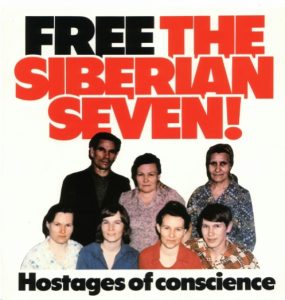
The Siberian Seven

by Tamera Lynn Kraft


After the Russian Revolution in 1917, Russia became a communist nation and over the next 70 years amassed a great deal of territory, becoming the Soviet Union. One of the goals of the Soviet Union was to completely eliminate religion from society. This is where the policy of separation of church and state came from. The goal was to wipe the church from having any voice in public. Bibles were banned, and churches were closed. Although the government didn't outlaw all religious expression in private, preferring to educate and encourage citizens to give up religious beliefs, many Communists leaders participated in militant atheism.

This caused many horrific instances of persecution. Churches were closed, and the assets given to the state. Parents had children taken away from them for teaching them Christianity. Christians were arrested, tortured, imprisoned and sometimes killed for their faith. While all Christians were at risk, Pentecostals, Baptists, and Adventists were targeted the most.   These small group of evangelicals frustrated the government because their numbers kept growing in the face of persecution. No matter what the Communist government did to them, they could not get them to recant. Most who were caught and arrested received 20 year prison sentences at the Gulag or were committed to insane asylums for the rest of their lives if they weren't tortured and killed.

In the 1960s and 1970s, the government was coming down hard on Pentecostalism, showing propaganda movies depicting Pentecostals as bloody fanatics and lunatics. In 1963, two Pentecostal Christian brothers petitioned the United States to give them asylum. The US refused because they didn't want to make the growing tensions with the USSR worse. The brothers were thrown in prison for five years. 

In 1968, after getting out of prison, Pyotr and his wife again petitioned the US and were again denied. Pyotr was sent to a mental institution, and his wife received a three year prison sentence. In 1978, the Pentecostal Christians again petitioned the US. This time, an Alabama pastor sponsored them and they were accepted. Now the problem was getting permission to leave the USSR.

In June, 1978, seven Pentecostals had the courage to go to the American Embassy. One of them distracted the guards while the other six escaped into the embassy gate and than managed to make his way inside. How they did this is a little foggy because these Soviet guards were diligent. They claimed it was a miracle. It was also a miracle that the Americans in the embassy accepted them into the building. They lived in the embassy basement until they were allowed to leave for the United States five years later on June 27, 1983.

Tamera Lynn Kraft writes Christian historical fiction set in America because there are so many adventures in American history. Her Novels, Red Sky over America and Alice’s Notions and her novellas Resurrection of Hope and A Christmas Promise are available on Amazon and at Barnes and Noble.

Monday, May 28, 2018

Myths about Captain John Smith of Jamestown Colony

by Tamera Lynn Kraft

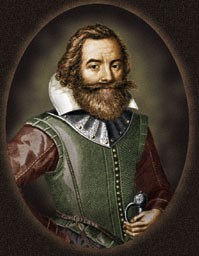
Captain John Smith was an explorer who led Jamestown Colony, the first permanent English settlement in North America. He was a larger than life man who captured the imagination of historians and school children alike. His life was full of adventure and intrigue, but the facts most people know about John Smith are myths and legends instead of facts.

Some of the biggest myths surrounding Captain John Smith are stories about him and Pocahontas. Pocahontas was an Indian girl, daughter of Chief Powhatan, who hung around Jamestown. According to legend, she was so in love with John Smith that when her father threatened to kill him, she begged for his life. Some even belief that John Smith and Pocahontas married. John Smith was the first to perpetuate part of this myth. He claimed that when he was captured by Indians, Pocahontas threw herself across his body to save him.

The truth is historians belief John Smith might have exaggerated the story. Soon after the incident happened, he never mentioned Pocahontas' part in the Powhatans releasing him without harm. Over ten years later, Captain Smith told the harrowing tale in a letter to Queen Anne introducing Pocahontas and asking the queen to treat her with dignity. One historian, David A. Price, believes the incident might have happened but suggested Captain Smith was in no real danger. He could have been involved in a ritual that symbolized his death and rebirth as a member of the tribe.

Whatever the case, Pocahontas and Captain Smith were not in love. When Captain Smith was captured, Pocahontas was only ten or eleven years old. It's also not true that she converted Captain Smith to the Indian religion. After spending years around the settlers at Jamestown, Pocahontas was converted to Christianity and took the name Rebecca. In 1614, she married John Rolfe, a tobacco farmer, and in 1616, she travelled to London with her husband where she died of an unknown virus.

Another myth is that Captain John Smith was highly revered by the other colonists. This also is only partially true. During the voyage to the New World, the colonists for the Virginia Company had papers that were to remain sealed until they reached the new land. Apparently Captain Smith was involved in a mutiny aboard ship, and Captain Christopher Newport and the crew planned to execute him when they landed at Cape Henry. When they did arrive at Cape Henry, the letter was opened, and the colonists found out the man they were planning to execute was appointed one of the leaders of the new colony. This saved Captain Smith from the gallows.

A year later, Captain Smith became the president of the council. He proved his leadership abilities, saving the colonists from starvation, by initiating strict policies including an order, “He that will not work shall not eat." He built the first well in the fort and repaired many of the buildings. Even though his leadership helped to save the colony, not everyone liked Smith. One night, while he was sleeping on the boat, a mysterious gunpowder explosion went off causing him to be injured. Some historians suggest it might have been an attempted assasination.

Another myth is that Captain John Smith lived in Jamestown for the rest of his life. The truth is he arrived in Jamestown in 1607, became president of the council in 1608, and sailed to England because of his injury for the gunpowder explosion in 1609. Captain Smith never returned to Jamestown. He died in 1631 in England at the age of 51.


During his years in England, John Smith encouraged colonization in America by writing accounts of his time there and giving detailed maps of the land. He was a major part of the Jamestown Colony even though he was only there for three years.


Tamera Lynn Kraft has always loved adventures and writes Christian historical fiction set in America because there are so many adventures in American history. Her Novels, Red Sky over America and Alice’s Notions and her novellas Resurrection of Hope and A Christmas Promise are available on Amazon and at Barnes and Noble.

Saturday, April 28, 2018

How a Native American Brought the Great Awakening to the Indians


by Tamera Lynn Kraft


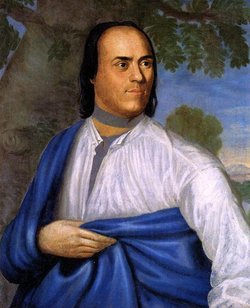
Samson Occom was born in a wigwam in 1723, part of the the Mohegan tribe near New London, Connecticut. His parents were Joshua and Sarah Ockham. He was a direct descendant of Uncas, a famous Mohegan chief. The Mohegan lived as nomads and traveled often.

At the age of 16, Occom heard his first sermon during the Great Awakening. His mother Sarah was one of the first Mohegan converts. Samson was stirred by what he heard and began to study English so he could read the Bible for himself. 

A year later he became a Christian under the preaching of James Davenport. He started going to a school for Indians and white boys started by evangelist Eleazar Wheelock. He spent four years at Wheelock’s school and was a gifted student, but poor eyesight prevented him from going to college.
He taught school and ministered to the Montauk Indians for eleven years. He used many creative methods including singing and card games as teaching devices. When Azariah Horton, the white Presbyterian minister to the Montauk, retired, Samson took his place as pastor. Samson married Mary Fowler in 1751, and they had ten children.

Samson was paid by the church but received a much smaller salary than the white men doing the same job. To make ends meet, he bound books and carved spoons, pails, and gunstocks for his white neighbors. Despite the prejudice he faced, Samson was ordained in 1759 by the Presbyterian Church, one of the first Native Americans to be ordained.

His passion was to share the Gospel with other Native Americans and was commission by the Scotch Society of Missions to preach to the Cherokee in Georgia and Tennessee. Fighting among the Cherokee and white settles put those plans on hold, so instead Samson went to New York to preach among the Oneida.

In 1765 Samson traveled with George Whitefield, Great Awakening preacher, during his sixth preaching tour in the colonies. Later that year, he traveled to England with Nathaniel Whitaker to raise money for Wheelock’s Indian Charity School. Over the next two years, he preached over 200 sermons in England and was well received. He raised over 11,000 pounds, the most ever raised for a ministry in the colonies. While in England Samson visited with John Newton, writer of Amazing Grace, and received an honorary degree from the University of Edinburgh which he politely declined.

When he returned to America in 1768, Samson found that Wheelock had failed to care for his wife and children as Wheelock had promised. Samson’s family was living in poverty. The rift widened when he learned Wheelock had used the money he’d raised to move the school to New Hampshire and decided to exclude Indians. Wheelock renamed the school Dartmouth.

Samson was a prolific writer throughout his lifetime. He kept a diary from 1743 to 1790 about his work that became an historic document. In 1772, Samson preached a temperance sermon at the execution of a Native American who murdered a man while he was drunk. That sermon became a best seller. He also wrote and published hymns. He is recognized as the first Native American to become published.

When Samson became a defender of land claims of the Montauk and Oneida against speculators, false rumors were spread that he was a heavy drinker and not even a Mohegan. Although these reports were untrue, he lost the support of his denomination and several missionary societies. He wrote an autobiography to defend himself, but it did little good.

Throughout the 1770s and 1780s, Samson preached among the Mohegan and other tribes in new England. After the Revolutionary War, he settled in Brothertown, New York on a reservation for New England Indians where he established the first Indian Presbyterian Church. In 1791, he died while gathering wood to finish the new church building.

His legacy continued after his death through his children, students, and converts who also ministered to Native Americans. Two of his students also became authors. Besides being the first Native American who was published, Samson fought for Native American rights, spread the Gospel to New England tribes, and promoted education for Native Americans.

Tamera Lynn Kraft has always loved adventures and writes Christian historical fiction set in America because there are so many adventures in American history. Her Novels, Red Sky over Americaand Alice’s Notionsand her novellas Resurrection of Hopeand A Christmas Promiseare available on Amazon and at Barnes and Noble.

Wednesday, March 28, 2018

100 Steps to Freedom

by Tamera Lynn Kraft

Before the Civil War, Ohio had the largest Underground Railroad of any state in the Union. It is believed that every county in Ohio had a route. Many slaves would escape over the Ohio River and through Ohio on their way to Canada. This was a dangerous undertaking because, even though Ohio was a free state, the Fugitive Slave Law made it so anyone helping escaped slaves could be fined and jailed, and the slaves would be returned to their masters.

Parker's Foundry in Ripley, Ohio
Ripley, a small town in Ohio, helped more slaves escape than any where else. Ripley is located on the banks of the Ohio River across from Mason County, Kentucky.

One man who helped slaves escape was a freed black man named John Parker. Parker. He was educated by his master in Virginia and eventually bought his freedom. He traveled to Ohio and opened a foundry on Front Street facing the Ohio River. He was the first black man to earn a patent for one of the inventions he used in his foundry. At night, he would search the Ohio River looking for escaped slaves and helping them find their way to an Underground Railroad Station. In my novel, Red Sky Over America, Parker has a minor role.

Rankin House
Reverend John Rankin, a Presbyterian minister, owned a house on top of a hill in Ripley and also had a large role in the Underground Railroad. He built one hundred steps to the house that could be seen on the other side of the river. At night, he would light a lantern and hang it from the porch to signal slaves that it was safe to cross. It is estimated over 2,000 slaves escaped through the Rankin House. None of them were ever recaptured.


Harriet Beecher Stowe wrote her famous novel, Uncle Tom’s Cabin, about the escape of the slave, Eliza, after hearing the story from Reverend Rankin. I also added John Rankin's house in my new novel, Red Sky Over America. The story takes place on the Ohio River where all these exciting events happened.

Tamera Lynn Kraft has always loved adventures and writes Christian historical fiction set in America because there are so many adventures in American history. She has received 2nd place in the NOCW contest, 3rd place TARA writer’s contest, and was a finalist in the Frasier Writing Contest. Her Novels, Red Sky Over America and Alice’s Notions and her novellas Resurrection of Hope and A Christmas Promise are available on Amazon, Barnes and Noble, and at other online stores.