During WWII, Hitler's Third Reich drafted all manner of men into their army, both Nazi and anti-Nazi alike. In fact, according to Stalag, U.S.A: The remarkable story of German POWs in America, by Judith M. Gansberg, only about 10-15 percent of Germany's enlisted men were hard-core Nazis. Those considered anti-Nazis or resisters were quickly sent into combat zones. Thus, as I mentioned in my WWII novel Season of My Enemy, most of the German prisoners of war sent to work in Wisconsin's agricultural industry were not hardened Nazis, but mostly young men anxious about their homes and families back in Germany. Men who quietly did the work required while they waited out the war. Prisoners who were true Nazis like Hitler’s SS (recognized by paperwork and telltale tattoos) were sorted out upon entry to the country and sent to special, tightly-controlled prison camps.
Now and then a Nazi sympathizer did manage to slip through, but even then, they were usually found out and dealt with accordingly, sometimes amongst the prisoners themselves. As you might imagine under such circumstances, there was a varying difference of opinions among the prisoners. Factions formed within the larger camps between those of differing political attitudes. Those still sympathetic to the Nazi cause might try to exert influence and control over the other prisoners or even attempt to take over a camp. This was a problem that couldn’t be entirely solved. Nevertheless, by war’s end, the U.S. military court-martialed, sentenced to death, and hanged fourteen PWs found guilty of murder within the camps. Many others were convicted of lesser crimes and made to complete prison sentences before they could be repatriated to Germany after the war.
My post today is only referring to the German prisoners. Korean prisoners captured among Japanese units frequently volunteered to join the U.S Army. They were rejected, but it is believed they did so sincerely because the Japanese had conquered their country and then drafted them. Yet, they added yet another division to an already testy situation in some of the camps.
In prison camps like Wisconsin’s Fort McCoy, bands of prisoners staged a few riots, work stoppages, and other forms of resistance. Occasionally there were acts of personal aggression toward guards. Refusing to cooperate in daily tasks were forms of more passive resistance. If an undetected Nazi or SS tried stirring up trouble in the ranks, procedures were in place to identify agitators and have them removed. Most of the German barracks then coexisted in an attitude of resignation and peaceful cooperation.
The Geneva Convention recognized that it was the duty of prisoners to attempt escape, and in it they set parameters of punishment for such offenses. Attempted escapes could result in up to thirty days of hard labor and thirty days on bread and water or both. The decision would be made by the camp’s commanding officer. However, if a prisoner was caught in the very act of escape, authorities retained the right to shoot them on sight.
There are numerous stories of escapes that ended peaceably, some by Japanese prisoners and some by Germans. The most obvious opportunities came with the Germans who had gained the opportunity to go off base to work. Content with their lot for the most part, many departures were of the adventure-seeking variety. German PWs sometimes walked away from their work or camp simply to see the sights, take a swim, or to visit the ladies and local eating and drinking establishments. They often returned undetected in time for morning roll call. Some prisoners even located extended family members in the region and joined them for dinner or other pleasurable pastimes before returning to their camps or being picked up and brought back.
As for the citizens who lived near the PW camps, they held one of two views. There were those who feared the prisoners being housed so nearby and working among them, certain that the Germans intended to kill them in their beds. Then there were those who had little or no fear of the prisoners or of their possible escape. Some locals visited the camps either to sight-see out of curiosity, or to inquire as to some relative back in Germany, since so many Wisconsinites had come from Germany themselves or held some other familial connection.
History is rife with the telling of families who had PWs working on their farms, or who worked beside them in the fields and factories, and later corresponded with the former prisoners after the war. Some sent care packages to them in Germany. Some became sponsors when PWs wished to immigrate back to the States after their repatriation.
This short blog doesn’t give me space to share the many anecdotes I read about in my research for Season of My Enemy, but I hope that if the history of the German PWs intrigues you, you’ll look into it. The following 12-minute video is a concise, fascinating, and at moments astounding look into this bit of American and German history.
LAST CHANCE!
Heroes, Heroines, and History is winding up August and our month-long, Three Million Views Celebration! If you haven’t entered yet for one of our big drawings, it’s your LAST CHANCE to enter to win part of a giveaway of over 60 books in 18 prizes! One grand prize will consist of 10 books, two readers will win a second prize containing 5 books, and there will be 15 winners of a third prize containing 2 books each. There are several ways to earn entries, such as following, or commenting on the HHH blog each day. Thank you for being part of the HHH community, and best wishes in the giveaway! Enter at this link:
A couple weeks ago, I watched a 2011 movie titled Fort McCoy, which is the primary camp in Wisconsin where prisoners were sent during WWII before many of them were later sent to temporary branch camps to work. The movie is based upon the true story of a barber's family who lived next door to the camp and interacted with some of the prisoners during the war. (A compelling movie, but rated R for some violence.)
I couldn't recall if I'd ever seen the movie before. Parts were familiar, but it may be that I never saw the whole thing, or that I wasn't thinking about writing a WWII novel at the time I viewed it. Either way, it was interesting to see this take on the period and camp life, after having written my novelSeason of My Enemy, which released just last month.
However, since a number of book reviewers found the author's note at the end of Season of My Enemy interesting and informative, I thought I should share a little more about camp life at both Camp McCoy and the branch camps.
Why were they brought here?
As I mention in my author's note, German prisoners captured after 1942 were sent here from England. As England was basically standing alone against the Germans by that point, they were housing several hundred thousand Germans taken captive, mostly from the African campaigns. But then a rumor circulated that Hitler intended to air drop weapons to the prisoners. By then America had gotten into the war, so our government agreed that, logistically, it was in the best interest of all to to put the prisoners on our empty troop and supply ships returning from Europe, and keep them here in the U.S. Besides the many Germans brought to the U.S., there were also Japanese, Italians, Koreans, Russians, and prisoners of other nationalities incarcerated here.
Most Americans were unaware of their presence, an intentional effort by the government. Officials worried that knowledge of the "PW" presence would cause panic and fear of escape or, worse still, retaliation.
Camp McCoy
The military planned to use pre-existing military bases for the camps. One of those camps, Camp McCoy in west-central Wisconsin, had been built as an artillery camp after the Mexican-American war and named for Major General Robert Bruce McCoy who conceived the idea for it. By WWI, improvements were made that built it into a major training camp. It didn't officially become named "Camp McCoy" until 1926. Then, in the 1930s, it served as a supply base for the Civilian Conservation Corp (CCC). However, with another World War looming on the horizon, Camp McCoy once again became a training ground for the military and, soon enough, a relocation camp for prisoners. (Ford McCoy has played many roles over the years since. Recently, Fort McCoy has served as a housing and relocation site for Afghan refugees.)
During WWII, there were approximately 35 buildings at Camp McCoy. Kitchens, bath houses, messes, and barracks were enclosed inside a 20-acre compound. Later on, the Japanese built their own bath house so they could practice specific bathing rituals. Six guardhouses equipped with powerful spotlights looked over the perimeter fence that was buried five-and-a-half feet deep to discourage digging. McCoy also kept a kennel of trained guard dogs which were used to patrol the border. For entertainment--and to strike dread in the hearts of prisoners--handlers sometimes showed off their dogs' skills in camp demonstrations.
Prisoners Go to Work
Most prisoners remained within the confines of the camp. There, they completed maintenance and general construction building barracks, roads, and clearing bombing and artillery ranges. They ran the laundry and the incinerators, worked in the kitchen, and performed routine cleaning and other tasks that would free some of the American GI's for important military duty.
Per the treaty of 1926, prisoners could never be forced to work. However, with Camp Ellis, Camp Custer, and Fort Sheridan also in the upper Midwest, Wisconsin capitalized on the opportunity to use prisoners to fulfil labor shortages brought on by the war. A system was devised for prisoners to leave the compound to work in canning factories, on farms, and in other agricultural endeavors and to be paid in camp script--like coupons. Some were marched to factories, but most were transported in trucks to their work location.
Not all the prisoners were allowed to do this. Those considered hardened Nazis or sympathizers remained inside McCoy's fencing. But for those who were allowed to work, the government set up branch camps around the state. In Wisconsin, there were 38 of these branch camps. Housing was, in some cases, unique. Tent cities sprang up in fields and on fairgrounds, while other barracks were set up in old hotels, a curling rink, and even a ballroom and in an abandoned insane asylum.
The scrip prisoners earned equaled about 80¢ a day and could be used to purchase personal supplies in the camp canteens; items such as stationery, cigarettes, soap, socks, sweet treats, and even beer.
In researching my novel, I also found it interesting that many prisoners were able to have savings accounts established for their unspent scrip, and when the war ended, they actually went home with a few dollars in their pockets. However, if their route home took them through France, their savings were usually confiscated. The route through England allowed them to keep their wages and was usually quicker too.
Camp Life
Though many of us have grown up learning the horror stories of starvation among Allied prisoners of war overseas during the war, Axis prisoners here in the states were well cared for, per the Geneva Convention rules that food and housing be equal to the host's military and, in many cases, out of simple human courtesy. Initially, at Camp McCoy, the prisoners were fed the very same things as the American G.I. guards, by 1943 a Prisoner of War circular allowed them to be fed with more of their ethnically traditional foods, as long as the food didn't cost more than the original rations and nothing was wasted.
Soon, the Japanese were able to have rice, sukiyaki, dried fish and pickles included in their menus, while the Germans enjoyed pigs' knuckles, pork, and wurst.
Pigs' Knuckle
Bratwurst
Local citizenry was a bit incensed about the good treatment at times, although some farmers and factory-owners were known to feed their work crews liberally or to bring them treats. Not until 1945, when American soldiers were liberated from captivity in Germany and their poor health conditions discovered, and inspections of their prison quarters were taken into account, did the quality and quantity of prison camp food deteriorate.
Nevertheless, prior to that point, the military made every effort to accommodate prisoners. Church services were available, and each branch camp had a chapel. At some of the branch locations, congregations local agreed to let prison guards march or truck the prisoners to their churches if they wished to attend. At Camp McCoy, the Japanese were even given leave to build a Buddhist shrine. During holidays, traditional foods were provided. Some prisoners even celebrated Hitler's birthday and the Asian new year.
There were other amenities given to the PWs also. Routine medical and dental care were provided and even surgery if necessary. Prisoners were able to send out weekly correspondence, limited to alternating one postcard one week and one short letter the next--censored, of course. They also received incoming mail and care packages, though sporadically as the war lengthened and became more chaotic overseas. Some of the prisoners who remained on base worked in the mail room, woodworking, and other service shops.
Recreation
Camp Life wasn't all work. Many forms of recreation were offered to keep the prisoners content. Often the YMCA provided amenities such as books, musical instruments, art supplies, stationary, and other hobby materials. Prisoners could get rid of excess energy in their free time with volleyball, fist ball, soccer, or calisthenics. Sometimes branch camps held intramural soccer matches or they were given opportunity to swim. In larger camps, PWs were able to watch movies and news reels--usually beset by propaganda--or they could join chorus groups, quartets, and theatrical groups. Some prisoners even had pets ranging from birds and dogs to orphaned fawns.
Once a month, many of the larger camps were open to visitors. You might wonder at this if you didn't realize that Wisconsin has a large German immigrant population. Many German prisoners had relatives here in Wisconsin or other parts of the United States. There's a story of one young woman from Chicago whose brother was visiting their German homeland when war broke out. The brother was summarily drafted into the German army, captured, and wound up as a prisoner back at Fort McCoy. The young woman drove up from Chicago every month to see him. This is not an unusual story of German prisoners with family in the states.
All in all, the prisoners were treated very well while they were confined in Wisconsin. Many reported going home in better health and with more weight than when they arrived. Despite very strict discipline, there were never any reports of abuse in the camps.
Next time I'll share more about the PW experience here and about escape attempts and repatriation. Many of the historic tidbits I mentioned above found their way into Season of My Enemy. If you haven't read it, be sure an join the HHH bloggers next month for our 30-Million-Views celebration where you can have a chance to win a copy along with a multi-author prize package.
Available in Paperback, E-Book, Large Print, Audio
or talk to your local library about acquiring the Library-Bound version.
When we think of prisoners of war during WWII, we naturally think of death camps, starvation, abuse, and a long season of suffering. We don't usually think about prisoners of war held here in the United States — of Germans and Japanese soldiers sitting out the war on American soil.
We might think of internment camps, of the tragic affair of American-born families of Japanese heritage who were taken from their homes, families, and businesses and housed behind fences, feared as "threats". Americans of German descent were scorned and ridiculed, and some of them were arrested and confined as well.
Yet, we rarely consider the many thousands of prisoners shipped here from overseas to be incarcerated in camps and the tens of thousands of those menwho were sent to work in American fields and factories. Yet they were.
When I wrote my novel Season of My Enemywhich releases on June 1st, I was inspired by many accounts of the lives of those prisoners and of the Americans who were affected by their presence here. Here are just a few of the true stories/incidents that gave me inspiration for my novel:
Clem Batz of Sun Prairie, Wisconsin watched the prisoners work. He said, “I was about 11 years old at the time, so it would have been 1945. There was a crew of German prisoners for the farm, and the fellows picked the corn by hand. It was all picked by hand ‘til the 50s, so they’d pick the corn and throw it in the wagon. At noon, they’d bring lunch for them (from the branch camp) and they’d always bring a guard. That was kind of funny because they never had a guard while working. My dad spoke German fluently, and he’d have them quit a little early to relax and visit a little bit.”
Ruth Barrette was a teenager during the summer of '45 she spent picking cherries with German prisoners — boys about her own age — in her family’s orchard. She called that season a turning point in her life. As pails filled with ripe fruit, the boys shared with her the longing they had of returning home to families torn apart by a war they never asked for. Residents of rural farm communities like the one where Miss Barrette lived soon came to learn the German prisoners who were allowed to work were not Nazis at all, but young men and boys drafted into Hitler's reign of terror. Here in Wisconsin, where about a third of the population is of German descent, many of those prisoners might have been distant relatives, a fact that was not lost on Wisconsinites.
Unlike what Japanese-Americans endured in the western coastal states, the German prisoners in the upper Midwest were treated with a certain degree of hospitality. David Rumachik, a preteen at the time, remembered his father hiring German men and boys as young as thirteen to pick their family's 60 acres of tomatoes. He said, “My mother talked to them and set out bowls of fruit for them. They were people, just like us, so it was hard for me to look at them and think that they were the enemy."
In my coming novel, Fanny O'Brien's mother sets out lunch for the prisoners and sometimes gives them slices of baked bread after working the pea harvest. That bit of inspiration came from situations like that of Marge Lind who recalls her father hiring workers to help with the pea harvest on the Linds' farm. Due to a lack of the usual migrant workers during the war, the soldiers who were housed in a large cattle barn near the Baptist Church were trucked in to work the fields. The POWs cut and loaded pea vines onto a truck sent to the viners. Then the peas would be gleaned off and shipped on to a local cannery. Lind said that at noon the men gathered at the family's dooryard where lunch was served. "They were just teenage boys, nice kids that my mother baked bread for,” she said in later life. “For years my folks got letters from some of the boys after they returned home. There was that kind of a connection.”
Another woman whose mother grew up during that time states, "My mother lived at Mike Miller's orchard/picking camp as a girl. Her dad managed it. She has always told us stories of talking with these men behind the fence. They would show her pictures of their own children and get teary-eyed. If grandma baked cookies the girls would sneak them through the fence. When the men were gone working in the orchard, grandpa would take the girls in the mess hall to sweep and clean."
Military chaplains or local ministers held services for German prisoners, and it was not uncommon for nearby congregations to allow military guards to truck PWs to services. Be that as it may, the army kept most prisoner locations on the low-down, as not not everyone was keen on having the prisoners in their areas or working alongside American men and women in their communities. Many American soldiers who fought in horrible conditions overseas or were captured themselves, gave a good deal of kickback in their opinions about the supposed "cushy life" of the German prisoners. After the war, many records from the camps were destroyed.
In an effort to protect photograph copyrights, I don't include a lot of pictures in this post, but here's a link to 22 historic photos of German soldiers who worked in Wisconsin's fields and factories during WWII and formed relationships with citizens, including a photograph of Kurt Pechmann whose story I share below.
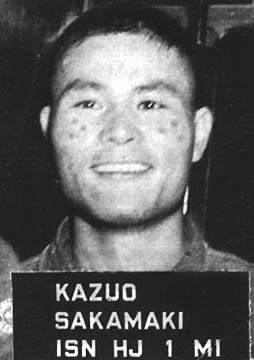
Not to give an incomplete picture, yes, there were Nazis taken as prisoners. Camp McCoy in west-central Wisconsin housed 5000 German prisoners, and some of them were known Nazi sympathizers. The camp also housed 3,500 Japanese and 500 Koreans and a number of Italians also. McCoy even held America's first World war II POW, Kazuo Sakamaki — America’s first World War II POW — captured during Japan’s attack on Pearl Harbor. Sakamaki was a Japanese naval officer whose midget submarine ran aground. Out of the ten men operating five such two-man subs, only Sakamaki survived. After unsuccessfully attempting to scuttle his sub, he collapsed unconscious on a beach where he was found by American soldier David Akui and taken into custody.
Sakamaki in U.S. custody
Outside of Camp McCoy, however, approximately 13,000 more German soldiers were placed at some thirty-eight make-shift camps all over the state — and this is just speaking of Wisconsin. 511 such camps existed in states all across the Union, camps dedicated to housing prisoners who worked in the agriculture industry. Here, they set to work harvesting all manner of crops including sugar beets — a critical commodity used for making the industrial alcohol needed to manufacture munitions and synthetic rubber.
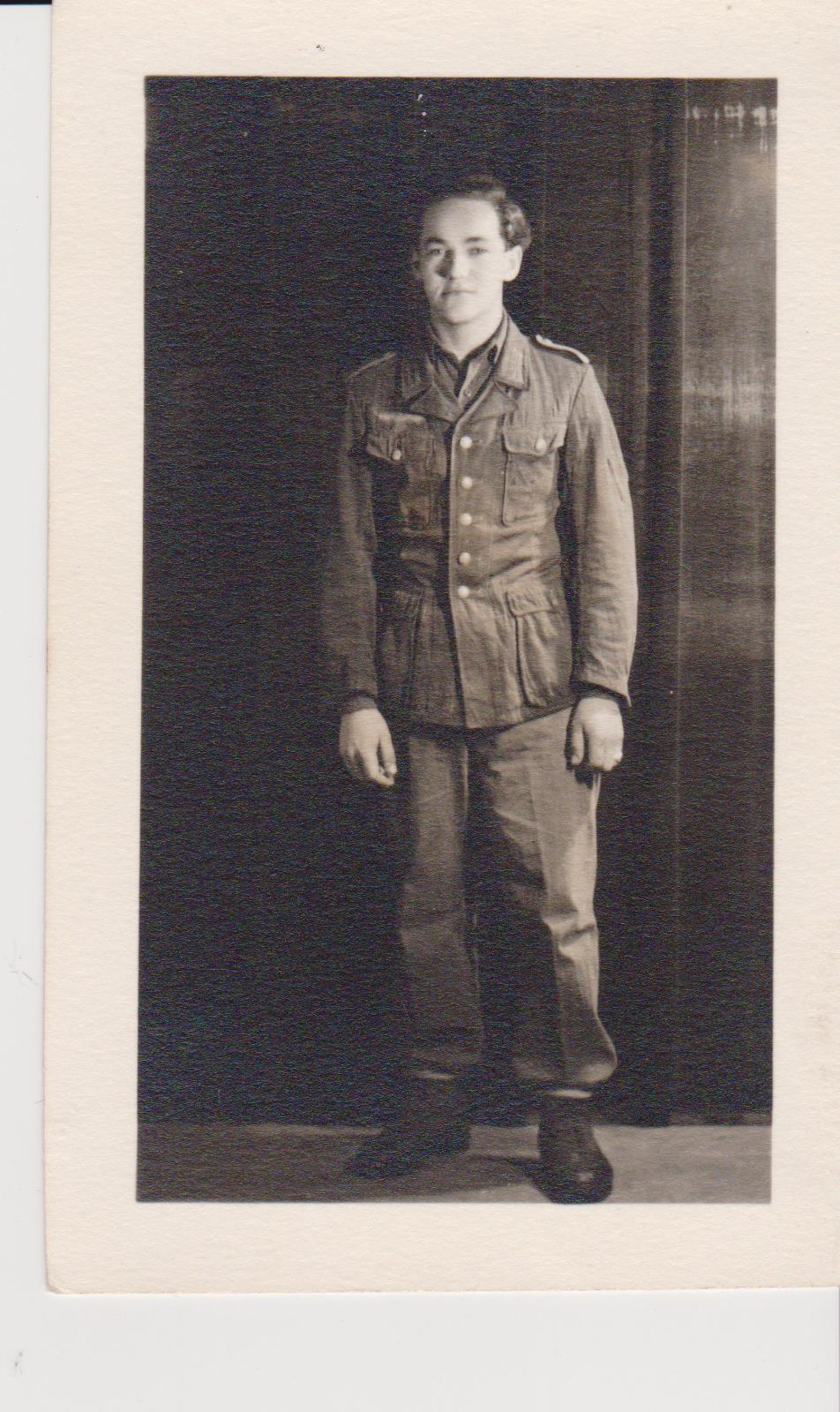
Probably one of the most well-known accounts of a German prisoner, one that had a strong influence on my novel Season of My Enemy, is the story of Kurt Pechmann, a German granite cutter who had been drafted into the army and assigned the inglorious task of digging ditches. When his infantry division was moved to Russia, he said that lice helped keep them awake and alive as temperatures fell as low as eighty below zero. After surviving frostbite and being transferred to Italy, he stole olives to survive, but he was eventually captured by British forces. Because he'd always been told and believed that Americans, British, and Russians were bad, he was convinced he must be a Nazi. However, after arriving in the U.S. and enjoying his first meal of smoked bacon and "bread that tasted like cake", he began noticing the differences in life from what he'd always been told.
Sent to work in a Wisconsin canning factory along with his fellow prisoners, he enjoyed coffee and chocolate donuts topped with sprinkles as a snack handed out to those working the midnight shift. Working on a farm, he and his fellows were complimented for their work ethic, given a feast from the farmer, and in another town a truck even brought them a keg of beer once a week.
Kurt Pechmann in Camp Hartford in 1945
Many prisoners shared a camaraderie with the guards, were allowed to form soccer teams, and even enjoyed films which at first consisted of propaganda but later included popular entertainment. Some even took college courses and acquired degrees.
After the war, all prisoners were repatriated back to Germany, but as many as 5000 Germans who'd previously been prisoners like Pechmann emigrated back to America through proper channels, and their descendants live here today.
After Pechmann was repatriated, he married and came back to America with his new wife Emilie. Here, he established himself as a businessman in stone masonry and memorials. Along with creating tombstones, he also went on to build and repair monuments to American veterans. He was later recognized in a letter from President Ronald Reagan and given an honorary Purple Heart.
WHAT ABOUT SABOTAGE AND TROUBLE-MAKERS?
In my research, I discovered that only compliant prisoners were allowed to work outside of the main or branch camps. Within the branch camps themselves, comrades disciplined trouble-makers. As in my novel, some prisoners might stage work stoppages for some reason, but only a very few made attempts at sabotage or escape. Usually, if there was an escape, it turned out to be one or two men who walked off the compound in search of a beer or some women.
The more sensible prisoners preferred being well-fed, well-treated, and not being shot at. Some guard did uncover weapons such as wire cutters, hand saws, hammers, knives, or sharpened screwdrivers. If an undetected SS officer joined other PWs, he usually tried to stir up trouble and resistance. (Another inspiration for my story.) Trouble-makers were usually quickly spotted and rooted out.
MY NOVEL IS ROMANTIC, BUT DID AMERICAN WOMEN REALLY FALL FOR PRISONERS?
Well, you tell me. I'll point out that it was illegal for a POW to marry in the U.S.; however, after the war Washington enabled the fiancés of former POWs to set sail for Italy on surplus troop transports with a chaperone such as an aunt or mother. Each war bride carried two trunks of personal luggage along with the documents required for a legal marriage in Italy. By marrying in Italy, the women could then legally bring their new husbands back to America to live. Do you think that answers the question?
So is there a small, rosy side to WWI history? While I don't under-emphasize the horrors and atrocities of that or any war (including in my novel), to see that in at least one small aspect there was a time and place where people remembered that their enemies were human beings with hearts as aching and wanting as their own, well . . . that is a good thing.
With that, I'll conclude. Here are a few other resources I used while writing my novel, which may interest you also:
fa
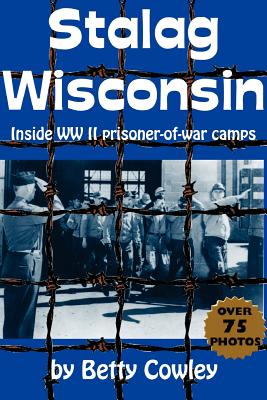
"Stalag Wisconsin: Inside WWII Prisoner-of-War Camps" by author Betty Cowley features more than 350 interviews, and serves as a comprehensive history of Wisconsin camps. This book was a real treasure as I wrote Fannie's story.
An article that encapsulates much of the German POW experience:
For my fellow Wisconsinites, here is a list of all the WWII branch camps in Wisconsin and their locations.
Season of My Enemy
The realities of WWII come to a Wisconsin farm bringing hope and danger.
Only last year Fannie O’Brien’s future shone bright, despite the war pounding Europe. Since her father’s sudden death however, with one older brother captured and the other missing, Fannie has had to handle the work of three men on their 200-acre farm, with only her mother and two younger siblings to help. That is until eight German prisoners arrive as laborers and, as Fannie feared, trouble comes with them.
Crops take precedence, even as accidents and mishaps happen around the farm. Are they leading to something more sinister? Suspicion grows that a saboteur may be among them. Fannie is especially leery of the handsome German captain who seems intent on cracking her defenses. Can she manage the farm and hold her family together through these turbulent times, all while keeping the prisoners—and her heart—in line?
Keep updated on Season of My Enemy and my other books, and get in on some monthly drawings by signing up for my newsletter right here.