Showing posts with label Gettysburg. Show all posts

Friday, November 26, 2021

The Woman Behind Lincoln's Thanksgiving Proclamation

 By Cindy Regnier

Sarah Josepha Hale
 Yesterday, most Americans celebrated the Thanksgiving holiday, the day we traditionally eat a turkey dinner and give thanks for the blessings we have and will receive. I’m sure you learned in school about the First Thanksgiving celebrated by the Pilgrims and Indians. You probably also learned that then President Abraham Lincoln issued a proclamation establishing Thanksgiving as a national holiday in 1863. 
Lincoln's proclamation

Mr. Lincoln is sometimes referred to as the Father of Thanksgiving, but have you ever heard of the Mother of Thanksgiving? Her name is Sarah Josepha Hale. Mrs. Hale doesn’t have a mention alongside President Lincoln in most history books, but she was nevertheless an integral part of the 1863 proclamation.
 

Civil War
The Civil War Battle of Gettysburg in July 1863
came at great cost to this nation and it was mentioned in Lincoln’s proclamation as follows: I do therefore invite my fellow citizens in every part of the United States, …to set apart and observe the last Thursday of November next, as a day of Thanksgiving... And I recommend to them that while offering up the ascriptions justly due to Him …, they do also, with humble penitence for our national perverseness and disobedience, commend to his tender care all those who have become widows, orphans, mourners or sufferers in the lamentable civil strife in which we are unavoidably engaged, and fervently implore the interposition of the Almighty Hand to heal the wounds of the nation and to restore it as soon as may be consistent with Divine purposes to the full enjoyment of peace, harmony, tranquility and Union.


Even so, it probably didn’t come to his mind to make this declaration because of the battle or even the story of the Pilgrim’s feast, It was, in fact, the result of the prodding of Sarah Josepha Hale, best known for her role as the editor of Godey's Lady's Book, 

and as the author of the nursery rhyme Mary Had a Little Lamb. As early as 1827 as editress (as she preferred to be called) of Boston Ladies Magazine, Mrs. Hale wrote essays calling for Thanksgiving to be celebrated as a national holiday. By 1946 as editress of Godey’s she called for a letter-writing effort by readers to initiate the undertaking. She wrote to Presidents Taylor, Fillmore, Pierce, and Buchanan in her attempts. Finally on September 28, 1863, 36 years after she began her quest, she wrote to President Lincoln pleading for this holiday to be established.

With this “bug in his ear” and the aftermath of Gettysburg fresh in his mind, President Lincoln succumbed to the many requests he had received from Sarah’s supporters and directed his Secretary of State, William Henry Seward,
William Henry Seward

to write the proclamation. The new national holiday was considered a unifying day after the stress of the Civil War. Before Thanksgiving's addition, the only national holidays in the United States were Washington's Birthday and Independence Day. Hale's efforts earned her the nickname "Mother of Thanksgiving".

Bunker Hill Monument

Mrs. Hale supported many causes in her tenure as editress of Godey’s including founding the Seaman's Aid Society and working to preserve Mount Vernon. She raised funds for the Bunker Hill Monument, wrote poetry and prose and established what would now be called a craft fair, Boston’s Quincy Market. Hale advocated for the economic independence of women focusing on the education and development of women She remained the editor of Godey's Lady's Book until it was sold, in 1877. She died in 1879 at the age of ninety-one.

Sarah Hale monument Newport, NH
Enjoy your turkey leftovers and with a nod to Sarah Josepha Hale, let me know your favorite Thanksgiving tradition. Mine is all the leftovers!

 Scribbling in notebooks has been a habit of Cindy Regnier since she was old enough to hold a pencil. Born and raised in Kansas, she writes stories of historical Kansas, particularly the Flint Hills area. Cindy is married to her husband of 38 years, has two grown sons, a son residing in heaven, and two beautiful daughters-in-law. Her experiences with the Flint Hills setting, her natural love for history, farming and animals, along with her interest in genealogical research give her the background and passion to write heart-fluttering historical romance.

Tuesday, April 9, 2019

Jennie Wade - Gettysburg Memories


About six months ago, my daughter and I were blessed to be able to take an epic trip from our Minnesota home to visit the nation's Capitol and several historic sites along the way.

For my daughter's birthday, I gave her the gift of a guided tour of the Gettysburg battlefield, a real treat for both of us. Our guide, Jim, was excellent, and I highly recommend, if you're going to Gettysburg, that you hire one of their knowledgeable and well-trained guides.

Arriving in the small Pennsylvania town the night before our scheduled tour, we decided to walk around town and see some sites.

Next door to our hotel was the Jennie Wade House. It's always interesting to me to see a place in person that I've only read about before. Like meeting a person you've only corresponded with on paper in the past.


Mary Virginia Wade, known as Jennie, was a Gettysburg resident and seamstress. Her father, a tailor, had been committed to an asylum for the insane, and Jennie (also known as Ginnie) and her mother took in sewing to make ends meet. When war came to her doorstep, she and her mother, along with Jennie's younger brother and a 6 year old disabled boy they had care of,  left their own home to go across town to stay with Jennie's sister. It wasn't that they thought they would be safer there, but because Jennie's sister, Georgia, was pregnant. She gave birth just before Confederate forces overran the town.

Jennie and her mother, Union supporters, did what they could to support the Union troops, including baking bread and providing water.

The house, now known as the Jennie Wade House, though in reality it belonged to her sister, suffered much damage during the fighting, sustaining more than 150 bullet strikes, as well as taking an artillery shell. (The shell went through the roof and lodged in the eaves, where it remained, un-exploded for 15 years!)

Early on the third morning of the battle, Jennie rose to knead bread dough. Confederate soldiers began firing south toward the battlefield, shooting the north side of the Wade House. One bullet passed through two doors, hit Jennie in the back, and went through her heart, killing her and making her the only civilian killed during the three days of battle.

Jennie was quickly buried, but later she was interred at the Evergreen Cemetery next to Corporal Johnston (Jack) Skelly, to whom it was believed Jennie was engaged. A portrait of Jack was found in her pocket when she died.


An American flag flies over Jennie's grave day and night at the Evergreen Cemetery, only the second woman in American history to be given that honor. (The other being Betsy Ross.)

Jennie was 20 years old when she died. A statue memorializes her life in front of the house where she was killed.

Available May 1st! Learn more HERE.

Dreams of Finding Mr. Right Go Wrong in the Old West

The Bride’s Dilemma by Susan Page Davis
Wyoming, 1883
Eve Martin arrives in Cheyenne to learn that man she came to marry is in jail, accused of a violent murder. Should she get on the next eastbound train, or has God brought her here to help save Caleb Blair’s life?

Romancing the Rancher by Linda Ford
Montana, 1886
Amelia expects a safe home for herself and her niece as mail-order bride to Zach Taggerty. Only Zach has never heard of her, and the last thing he needs is more complications in his life.

The Marriage Sham by Vickie McDonough
Texas, 1888
Mail-order bride Zola Bryant is devastated. Her newlywed husband is dead. But even worse, they were never truly married because the man who wed them was an outlaw not a preacher. What will she do now that her life and reputation are in tatters?

The Galway Girl by Erica Vetsch
Kansas, 1875
A mail-order mix-up sends Irish lass Maeve O’Reilly to the Swedish community of Lindsborg, Kansas. Will Kaspar Sandberg consider it a happy accident or a disaster to be rectified as soon as possible?


Best-selling, award-winning author Erica Vetsch loves Jesus, history, romance, and sports. She’s a transplanted Kansan now living in Minnesota, and she married her total opposite and soul mate! When she’s not writing fiction, she’s planning her next trip to a history museum and cheering on her Kansas Jayhawks and New Zealand All Blacks. You can connect with her at her website, www.ericavetsch.comwhere you can read about her books and sign up for her newsletter, and you can find her online at https://www.facebook.com/EricaVetschAuthor/ where she spends way too much time!


Thursday, October 23, 2014

Joshua Chamberlain, A True Hero

Joshua Chamberlain, a man of surprises—
and a giveaway

Hello from Susan Page Davis!

Most Americans have heard of Joshua Lawrence Chamberlain. He was a Civil War general on the Union side, best known for his gallantry at Gettysburg. But Chamberlain had many other skills and virtues.

Did you know that Joshua Lawrence Chamberlain:

• Was a college professor? He took a sabbatical from his teaching post at Bowdoin College in Brunswick, Maine, to serve in the war with no prior military experience.

• Started his teaching career as a professor of rhetoric and was later named a professor of modern languages? He was fluent in nine languages other than English: Greek, Latin, Spanish, German, French, Italian, Arabic, Hebrew, and Syriac. He at some point taught every course in the curriculum at the college except science and mathematics.

• Was known as The Lion of the Round Top for his valiant defense
 
during the Battle of Gettysburg? He later received the Medal of Honor for his actions there. Having volunteered in 1862 and begun as a lieutenant, Chamberlain had been promoted to colonel of the 20th Maine regiment by this time.

• Was wounded six times during the war, including a critical wound at Petersburg?

• Was erroneously declared dead in Maine newspapers after the Battle of Petersburg? He was promoted to brigadier general by Ulysses S. Grant, who thought Chamberlain was dying, but he convalesced and went on to lead his men in to the end of the war.

• Served in 20 battles and numerous skirmishes and had six horses shot from under him?

• Was perhaps saved by his wife’s picture, when a bullet hit the frame in his breast pocket? The bullet fired in the skirmish at Quaker Road in 1865 traveled under his skin and along his ribs. His men thought he had been shot in the chest and were amazed when he kept encouraging them to attack. They won the skirmish.

Chamberlain in 1876, when he
 was president of Bowdoin College
• Had the honor of commanding the Union troops at the surrender ceremony for the Confederate army at Appomattox Court House, Virginia? His order to his men to “carry arms” as a show of respect for the surrendering southerners drew criticism from some Union sympathizers.

• Served four terms as governor of Maine after the war? He twice broke the record for highest percentage of votes for governor at that time.


Photo Credit: Brian Hendrix
• Faced down a crowd of men threatening to kill him? In 1880, the former governor was called in to help settle a post-election dispute. A band of armed men had taken over and occupied the Maine State House. Chamberlain was able to talk them into laying down their guns and going home.


• Is thought to be the last Civil War soldier to die of his wounds from that war. In 1914, at the age of 85, Chamberlain finally succumbed to the lingering effects of his wounds. 


I could tell you lots more about Joshua Lawrence Chamberlain, the quiet professor who became one of America’s greatest heroes. We’ll leave it there today. Which of these points surprised you most?
Leave a comment and enter the drawing for one of my Maine books: Maine Brides, Hearts in the Crosshairs, or Mainely Mysteries.


Susan Page Davis is the author of more than fifty published novels. A history major, she’s always interested in the unusual happenings of the past. She’s a two-time winner of the Inspirational Readers’ Choice Award, and also a winner of the Carol Award and the Will Rogers Medallion, and a finalist in the WILLA Awards and the More Than Magic Contest. Visit her website at: www.susanpagedavis.com .

Monday, March 17, 2014

A HOUSE DIVIDED

In 1861 the debates and philosophical differences over the question of slavery and states rights eventually moved out of the parlors and convention halls of our towns and became stark, bloody reality on the fields and in the woods of our country. The country went to war, and our nation was so divided that brother fought against brother, cousin against cousin, and even in some instances father against son as the Civil War raged.

The division even invaded the White House. Mary Todd Lincoln's three sisters were married to Confederate officers, and it was rumored that her sympathies lay with the South instead of with the Union. Formal charges were about to be made until President Lincoln himself intervened.

In my Civil War novel, His Steadfast Love, the heroine, a Texas young woman, falls in love with a Union
officer before the war. When the conflict begins her brother joins the Confederacy, and she is torn between two men she loves. They actually meet at the Battle of Shiloh. This scenario was repeated many times in real life.

A West Point artillery instructor had a brilliant student that, against tradition, he kept as an assistant because he had so much admiration for him. As it turned out, the student commanded the Union forces which fired on Fort Sumter, and the instructor was the commander of the Fort.

Thousands of men switched sides during the war, most of them by desertion, but some formally resigned and went to the other side. Captain Frank C. Armstrong of the 2nd U.S. Cavalry fought first at Bull Run for the North, resigned the next month and went south to become a brigadier general for the Confederacy.

When Confederate forces regained Galveston, the general who took Confederate soldiers aboard the Union ship in the harbor to claim it found a young Federal lieutenant on the deck dying. It was his own son.

On a farm in Pennsylvania not far from Gettysburg, the father defended the homestead, while one son fought in the surrounding woods for the North and the other for the South. *

*From The Civil War, Strange & Fascinating Facts, Burke Davis, Fairfax Publishing, 1982)

Until I did the research for my novel, I really did not have a good understanding of what devastation our nation experienced during this awful war. May nothing like this ever happen again in the United States of America.

Golden Keyes Parsons writes historical fiction, and is also a popular retreat/conference speaker. Her highly acclaimed Darkness to Light Series (Thomas Nelson Publishing) chronicled the journey of her French Huguenot ancestors in 17th century France. Her fourth novel, His Steadfast Love, is a Civil War novel set in Texas. Her latest releases are ebooks (WhiteFire Publishing) – a biblical fiction series entitled Hidden Faces, Portraits of Nameless Women in the Gospels. Golden lives in Waco, TX, with her husband, Blaine, where they enjoy their children, grandchildren and great-grandchildren and are avid sports fan of their alma mater, Baylor University. You can contact her at www.goldenkeyesparsons.com.

Friday, July 19, 2013

The Battle of New York City--the week Manhattan burned


July is a big month for Civil War anniversaries. Gettysburg and Vicksburg coincided with Independence Day celebrations in a big way, marking the sesquicentennial of those turning point US victories. But a little known battle also shares its 150th anniversary this month, and that is the Battle of New York City, also known as the Civil War Draft Riots.


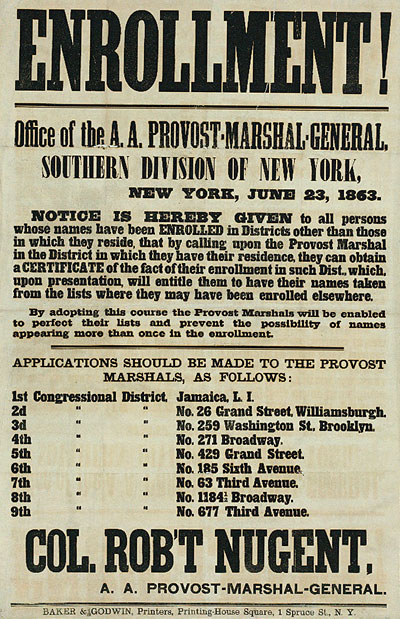
Shortly after Lee's defeat at Gettysburg and the end of the siege at Vicksburg dividing the Confederacy along the Mississippi River, Lincoln's Conscription Act was scheduled to take affect all over the North. An attempt to replenish the army after two years of heavy casualties, Congress passed the Enrollment Act on March 3. It would be drawn by lottery among all able bodied men from 20 to 45, including aliens intending on becoming citizens. Two particular exceptions to the draft were black men, since they were not yet considered citizens until the    Amendment, and also those able to secure a replacement by buying a $300 Commutation fee. A quota was set for each Congressional district, and on Saturday July 11 the first of these lotteries was drawn--peacefully.


Over the weekend in New York City, however, a growing resentment brewed among several factions: Copperheads who resented the Lincoln administration's executive overreach, the immigrant Irish, and other working class city dwellers competing with freed blacks for laboring jobs. They felt targeted by this law that gave exception to the rich and to black men but left them no way out but to serve. By Monday the 13th, large swarms of protesters converged on the draft office on Third Avenue and 47th Street,  and the biggest civil insurrection in American history had begun.

From July 13-16 1863, Manhattan blazed under mob rule culminating in businesses looted, widespread arson of homes and government buildings, and indiscriminate lynching of peaceful black men. Republican sympathizing papers were targeted, Brooks Brothers Clothiers was ransacked, and a black orphanage was razed. The Irish found themselves on both sides of this struggle--thousands of them protesting what they felt was a prejudicial and unjust law, taking to the streets or holding political, religious, and journalistic influence, while many others battled blazes as firefighters, restored order as police, and defended neighbors as concerned citizens.


Troops from Gettysburg were called up to finally put an end to the mayhem, many of them Irish New Yorkers themselves. In the end, over 100 black men had been killed in a tragic spate of misguided vigilantism and revenge for policies they had nothing to do with. Many black men longed to serve in the fight for their freedom, in fact, and would have answered the call to arms willingly given a chance. After the riots, thousands of the surviving black population fled Manhattan, haunted by four days when New York City burned.


My novella Bachelor Buttons is a slice of Irish life during this tumultuous event in New York's Civil War history. I am offering copies of this ebook romance to three random commenters, and will select winners on July 21 at 10 AM eastern. Please leave a comment below to enter.

Kathleen L. Maher’s novella Bachelor Buttons releases May 1 as part of a Civil War sesquicentennial collection by Helping Hands Press. She won the 2012 ACFW Genesis contest for unpublished writers. Represented by Terry Burns of Hartline Literary Agency, Kathleen blogs about New York State history.  She and her husband live in a 100-year-old farmhouse in upstate NY with their three children, two Newfoundland dogs and a tuxedo cat.