Showing posts with label Godey's Lady's Book. Show all posts

Wednesday, March 29, 2023

The Growth of Magazine Popularity in America


The first ever published magazine, considered by many to be the precursor to those which followed around the world, was produced in 1663 by theologian and poet Johann Rist. Lasting for five years, it led the way to many other periodicals produced across England, France, and Italy to satisfy the reading appetites of young intellectuals. Before long, other types of gazettes sprouted up, some strictly aimed at gentlemen and others for ladies, including those published strictly for amusement. Le Mercure Galant, later renamed Mercure de France, was one such magazine credited to French writer and playright Jean Donneau de Vize. It contained some news, songs, verses, and gossip. The rag was very popular in France. 

Here in America, the first published magazine was produced in 1741 by Philadelphia printer Andrew Bradford, who beat out his newspaper rival Benjamin Franklin in the race to first introduce a magazine to the public. Unfortunately, neither or their publications enjoyed success. Bradford's lasted a whopping three months, and Franklin's lasted only three months longer. Here's an example of each, with Bradford's on the left and Franklin's on the right.


Their lackluster performance didn't deter him or others from launching new magazines, however. Franklin later went on to publish the more successful Gazette which ended up outliving him by ten years. Even after that run, his print shop went on to house the beginnings of highly successful Saturday Evening Post. A fellow named Charles Alexander decided to print a poem by a blind girl, and once he had 200 people subscribed to receive the poem, he approached the print shops new owner, Samuel Atkinson, with the idea of beginning a gazette to be printed in time for a Saturday delivery. The post went on to chronicle the changes in the country for generations. But even besides that magazine, by the end of the 18th century, there were more than one hundred magazines that had at least given publication a shot.


One of the first ladies' magazines to be published in America with raging success is one you've probably read about in some favorite historical fiction.
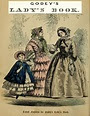
Godey's Lady's Book was also published in Philadelphia in 1830 by Louis A. Godey and enjoyed success for forty-eight years. It's circulation started at ten thousand subscribers but jumped to forty thousand within two years. By 1860, there were 150,000 people (presumably women) subscribing to Godey's. While it contained the usual stories, poetry, and articles of interest, it was probably most known for the hand-tinted fashion plate included at the beginning of each publication. There were also illustrations for patterns that included measurements for women to sew at home. Later, the magazine even included a piece of sheet music for piano. It is thought that an image of a Christmas tree on one cover was influential in more Americans putting up the decoration in their homes.


Fashion Plate from an 1865 Issue

Embroidery Pattern From an Issue of Godey's Lady's Book

For a real peek into the world of Godey's, here is a link to a free streaming of an 1840 archived copy: GODEY'S LADY'S BOOK. And for more information specifically on Godey's, check out Janalyn Voigt's post on the topic from a few years back here on HHH. 

Many other magazines have a rich historical beginning and long-lasting life in America. By the 1800s, besides magazines geared specifically toward men or women, there were magazines for the literary minded, the outdoorsman, the political-minded, animal lovers, and lovers of science. In fact, one of the first special-interest magazines produced in the land was The American Journal of Science founded in 1818. That magazine still exists today. I'd call that quite a run.


While researching my upcoming novel Polly (Apron Strings, Book One, releasing January 2024), I was surprised to discover that there was a long-standing history of magazines and journals aimed at the hospitality industry. My heroine Polly subscribes to The American Restaurant in 1920. 

Although early on only the wealthy could afford magazine subscriptions or even the cost of single issues from newsstands, that changed, of course, as time went on. Today we can enjoy most of our favorite magazines by mail, from the library, online or by device, and many others are offered for free, paid for by the cost of advertising.

Do you still read magazines? Do you have a favorite today or from the past? 

If you are receiving this post by email, please go directly to the HHHistory blog to leave a comment or reply.

Read and write on,
Naomi

Last time I shared the opening line from The Deepest Sigh. This one is one from The Softest Breath, the second in the Echoes of the Heart series. Remember Jacob Hessman, a character from The Deepest Sigh? In book two, Jacob has his own journey to take and story to tell, as does my heroine, Gwen Smith.
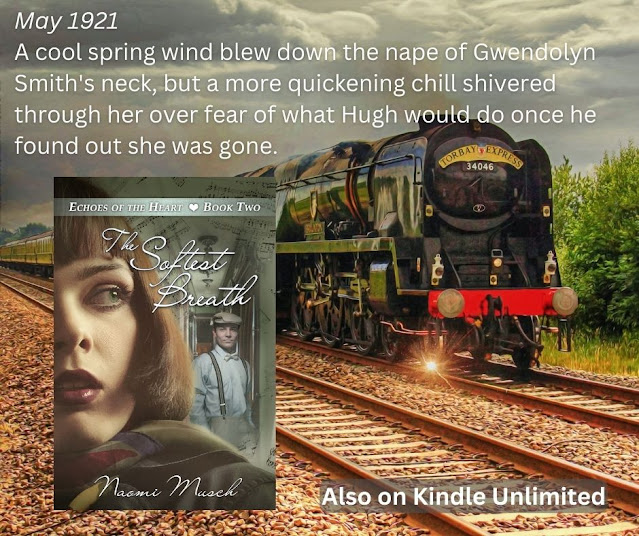

Check out the series here.

Naomi sends out monthly encouragements and updates to her newsletter subscribers, including sneak peaks, cover reveals, and occasional giveaways. To stay in touch, she'd love it if you signed up to join her.

Friday, November 26, 2021

The Woman Behind Lincoln's Thanksgiving Proclamation

 By Cindy Regnier

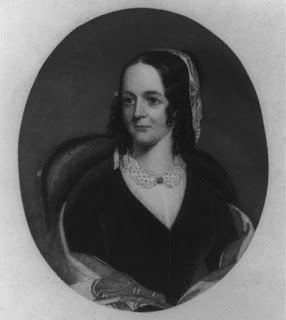
Sarah Josepha Hale
 Yesterday, most Americans celebrated the Thanksgiving holiday, the day we traditionally eat a turkey dinner and give thanks for the blessings we have and will receive. I’m sure you learned in school about the First Thanksgiving celebrated by the Pilgrims and Indians. You probably also learned that then President Abraham Lincoln issued a proclamation establishing Thanksgiving as a national holiday in 1863. 
Lincoln's proclamation

Mr. Lincoln is sometimes referred to as the Father of Thanksgiving, but have you ever heard of the Mother of Thanksgiving? Her name is Sarah Josepha Hale. Mrs. Hale doesn’t have a mention alongside President Lincoln in most history books, but she was nevertheless an integral part of the 1863 proclamation.
 

Civil War
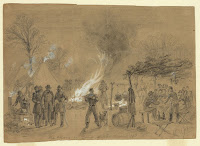
The Civil War Battle of Gettysburg in July 1863
came at great cost to this nation and it was mentioned in Lincoln’s proclamation as follows: I do therefore invite my fellow citizens in every part of the United States, …to set apart and observe the last Thursday of November next, as a day of Thanksgiving... And I recommend to them that while offering up the ascriptions justly due to Him …, they do also, with humble penitence for our national perverseness and disobedience, commend to his tender care all those who have become widows, orphans, mourners or sufferers in the lamentable civil strife in which we are unavoidably engaged, and fervently implore the interposition of the Almighty Hand to heal the wounds of the nation and to restore it as soon as may be consistent with Divine purposes to the full enjoyment of peace, harmony, tranquility and Union.


Even so, it probably didn’t come to his mind to make this declaration because of the battle or even the story of the Pilgrim’s feast, It was, in fact, the result of the prodding of Sarah Josepha Hale, best known for her role as the editor of Godey's Lady's Book, 

and as the author of the nursery rhyme Mary Had a Little Lamb. As early as 1827 as editress (as she preferred to be called) of Boston Ladies Magazine, Mrs. Hale wrote essays calling for Thanksgiving to be celebrated as a national holiday. By 1946 as editress of Godey’s she called for a letter-writing effort by readers to initiate the undertaking. She wrote to Presidents Taylor, Fillmore, Pierce, and Buchanan in her attempts. Finally on September 28, 1863, 36 years after she began her quest, she wrote to President Lincoln pleading for this holiday to be established.

With this “bug in his ear” and the aftermath of Gettysburg fresh in his mind, President Lincoln succumbed to the many requests he had received from Sarah’s supporters and directed his Secretary of State, William Henry Seward,
William Henry Seward

to write the proclamation. The new national holiday was considered a unifying day after the stress of the Civil War. Before Thanksgiving's addition, the only national holidays in the United States were Washington's Birthday and Independence Day. Hale's efforts earned her the nickname "Mother of Thanksgiving".

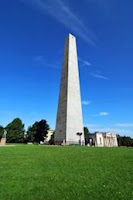
Bunker Hill Monument

Mrs. Hale supported many causes in her tenure as editress of Godey’s including founding the Seaman's Aid Society and working to preserve Mount Vernon. She raised funds for the Bunker Hill Monument, wrote poetry and prose and established what would now be called a craft fair, Boston’s Quincy Market. Hale advocated for the economic independence of women focusing on the education and development of women She remained the editor of Godey's Lady's Book until it was sold, in 1877. She died in 1879 at the age of ninety-one.

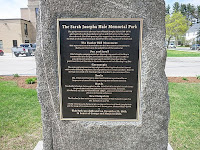
Sarah Hale monument Newport, NH
Enjoy your turkey leftovers and with a nod to Sarah Josepha Hale, let me know your favorite Thanksgiving tradition. Mine is all the leftovers!

 Scribbling in notebooks has been a habit of Cindy Regnier since she was old enough to hold a pencil. Born and raised in Kansas, she writes stories of historical Kansas, particularly the Flint Hills area. Cindy is married to her husband of 38 years, has two grown sons, a son residing in heaven, and two beautiful daughters-in-law. Her experiences with the Flint Hills setting, her natural love for history, farming and animals, along with her interest in genealogical research give her the background and passion to write heart-fluttering historical romance.

Sunday, May 19, 2019

Godey's Lady's Book: an Important Historical Record


Fashion plate from Godey’s Lady’s Book (1840)

Welcome to my new obsession! This is Janalyn Voigt, author of the Montana Gold western historical romance series. While researching The Forever Sky, the fourth Montana Gold novel, I stumbled across a valuable original resource. How I missed this record while researching before this, I’ll never know. It was extremely popular in its day.

Godey's Lady's Book: an Important Historical Record

Godey’s Lady’s Book (also known as Godey's Magazine and Lady's Book), was established in 1836 when Louis Godey merged the Boston Ladies’ Magazine with the Philadelphia periodical, Lady’s Book. Godey employed Sarah Josepha Buell Hale as editor of the newly-minted magazine. Under her guidance, the number of subscriber ranks swelled to 150,000 by 1860, just prior to the Civil War.
Fashion Plate from Godey's Lady's Book (1861)
Godey felt that the magazine should strike a neutral pose during the War Between the States (as the conflict was known back then). However, Hale was a devoted nationalist and used the magazine to subtly sue for unity. She used editorials, letters to the editor, fiction, and poetry to support her views. Her efforts did alienate some readers, and the periodical lost about a third of its subscribers. The publication recovered and continued as an influential voice in America until 1878. By then both Godey and Hale had passed away, and Godey’s Lady’s Book was absorbed into Puritan magazine.
Nightcap, Godey’s Lady’s Book (1840) 

Content

Godey’s Lady’s Book is an important historical and cultural record it is possible to view today. That makes it exciting for a historical fiction author like myself. I also enjoy reading archived issues on a personal level. I enjoy learning about history and love cooking historical recipes, for the way they connect me to the past.

Godey’s Lady’s Book provided entertainment, information, and education to American women. One of its biggest draws was the use of hand-colored fashion plates that brought American women news of the latest apparel. Detailed descriptions and patterns accompanied the plates. The magazine also contained historical biographies and articles on a wide range of subjects of interest to women of the day. Topics included dance, riding, hygiene, hair tutorials, remedies, household tips, recipes, house plans and many others. Every issue contained two pages of sheet music arranged for the pianoforte. At a time when people socialized by gathering to enjoy musical evenings, this was important. Besides fashion plates, the periodical boasted other beautiful illustrations.

Illustration; Godey's Lady's Book (1861)
The periodical became an important literary magazine with celebrated contributors like Harriet Beecher Stowe, Edgar Allan Poe, Herman Melville, Nathanial Hawthorne. I noticed during my perusal that poetry, often shunned today, took a primary place in the pages of Godey’s Lady’s Book. It warmed my heart as a novelist to see fiction given pride of place, second only to the demands of fashion.

How the times have changed! Gone are the days when ladies spent time together in the parlor sipping tea while reading poems and stories to one another. But we, dear reader, can recapture the gentle art of living through the pages of Godey’s Lady’s Book.

About Janalyn Voigt

Janalyn Voigt fell in love with literature at an early age when her father read chapters from classics as bedtime stories. When Janalyn grew older, she put herself to sleep with tales "written" in her head. Today Janalyn is a storyteller who writes in several genres. Romance, mystery, adventure, history, and whimsy appear in all her novels in proportions dictated by their genre. Janalyn Voigt is represented by Wordserve Literary. 

Learn more about Janalyn, read the first chapters of her books, subscribe to her e-letter, and join her reader clubs at http://janalynvoigt.com.


About Montana Gold


Based on actual historical events during a time of unrest in America, the Montana gold series explores faith, love, and courage in the wild west.

Learn More>>