Showing posts with label Leprosy. Show all posts

Friday, May 1, 2015

HIstorical Cures for Leprosy and #Giveaway!

Blogger: Amber Schamel


How far would you go to cure a life threatening disease? Would you try whatever the physicians gave you? Drink human blood? Snake venom? Would you risk being stoned by your neighbors?
 
Last month we discussed leprosy in Bible times and the Jewish view of the disease. This month, we're going to take a look at some other nations and the ways they treated the disease.

In Greece: Blood was a treatment for leprosy, specifically the human blood of children or virgins. The patient would drink blood, or bathe in it. This method was also known in ancient Egypt and China. This practice was in use all the way up till 1790 when we have a record of dog blood being used in the De Secretis Naturae. Lamb's blood was also mentioned around that time.

Other treatments included cobra venom, bee stings, snake bites, scorpions and even frogs. The waste of certain fish were also experimented with.  in 1913, a french scientist tried an increase of bee stings, up to 4000, in order to cure it.

I really can't imagine where they came up with these ideas, and why they thought it would work. But that comes from my 21st century vantage point. ;)
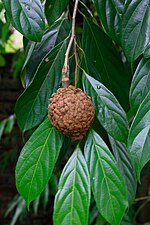

Chaulmoogra Nut
By the early 20th century, doctors began injecting patients with the oil from the chaulmoogra nut. This seemed to work for some folks, but was very painful and unreliable.

Did you know that leprosy victims in the U.S. were not allowed to vote until 1946?

In the 1950's, doctors discovered the dapsone pills, which seemed to work. However, after some time the leprosy virus built up a resistance to dapsone, and results plummeted.

The modern day cure for leprosy was developed on the island of Malta in the 1970's. What they discovered was that if you treat the disease with multiple drugs, you will have success. This has become known as Multiple Drug Therepy (MDT). The modern treatment combines dapsone, rifampicin (or rifampin) and clofazimine. It can take 6 months to a year, or sometimes more for the treatment to work.

Today, according to the American Leprosy Mission, someone is diagnosed with leprosy every two minutes. Even though they have found a cure, many cannot afford it. Ministries such as ALM raise money to help those suffering with this horrible disease.

Leave a comment below to be entered in the drawing to win Amber's book, The Healer's Touch.


Aaliyah's last chance at winning her husband's love is destroyed when she is banished from her home as an 'unclean' sinner, exiled to the leper colony. When a chance at being cured comes in the form of a rumor, she must risk her life to appear in public, or die a leper.


Amber Schamel is the author of The Swaddling Clothes and the Days of Messiah series. She writes riveting stories that bring HIStory to life. Connect with Amber on her website, www.AmberSchamel.com or Facebook, Goodreads, or Twitter.

Wednesday, April 1, 2015

Leprosy: The Ebola of Bible Times?

Blogger: Amber Schamel Bringing HIStory to Life

Incurable disease. Those two words have terrified people for thousands of years. The recent Ebola epidemic caused panic across the globe. In Bible times, leprosy was the disease that was perhaps the most feared of them all, because like Ebola, it was contagious, miserable, with no known cure. 

What is leprosy?

Leprosy is mentioned 68 times in the Bible, however the modern definition of leprosy, and what was considered leprosy during Bible days differs. In the Old Testament, leprosy was defined as any infectious skin disease, which would include Hansen's Disease, which is what we typically think of today as leprosy. The term "Hansen's disease" was not established—giving a proper definition to the disease—until 1873. 
The 10 Lepers Come to Jesus

Leprosy is one of the oldest diseases in the world, dating possibly as far back as 4000 B.C. The first records of the disease date 600 B.C. in India, China and Egypt.  It is typically thought of as a skin disease, but really it's more accurately defined as a disease of the nervous system. The bacteria attacks the nerves, which in turn leads to the loss of feeling in affected areas and also causes skin lesions. A patient can come in contact with the leprosy bacteria, but they may not show symptoms for 5-20 years. This is what made it difficult to control in Ancient times. 

Leprosy is spread by multiple skin contacts, as well as by droplets from respiratory tracts, such as saliva or nasal discharge that are transmitted from person to person. A member of a household could be infected with the disease, and unknowingly transmit it to others before the symptoms start to occur. 


A 24 yr. old man infected with leprosy
Once the symptoms become apparent, leprosy is a frightening disease because of the lepromas, which are tumor-like growths that mar the patient's skin. In actuality, most of the deformities experienced by lepers are not from the disease in itself, but the result of injuries they cannot feel. For example, they may burn or cut themselves and never even notice. 

Leprosy in Bible Times

In Bible days, leprosy was viewed as a curse from God. This view was probably gleaned from Scriptural references. 


Miriam, Moses' sister was smitten with leprosy after she publicly criticized him for marrying an Ethiopian woman. Moses prayed for his sister, and after being shut out of the camp for seven days, God healed her, and she was made clean. (Numbers 12)


Naaman, the Captain of the hosts of Syria was a leper, who was healed after he followed the instructions of Elisha. Elisha's servant, Gehazi was afterwards smitten with the disease as a curse from God, because he took money for a miracle that God had performed.

Lepers were forced to live outside the city, in what is known as a leper colony. In ancient Israel, lepers were not allowed to come into the cities. If a leper should pass someone on the road, they were to call out "unclean" so that the passerby would know to keep their distance.

The Levitical Laws regarding the disease of leprosy is found in Leviticus 13-14. These laws aided in the prevention and containment of the disease.

The Sacrifice

If somehow the leper was healed of their disease, there was a special sacrifice that had to be made at the Temple in order to cleanse them and allow them back into society. The person to be cleansed would bring two turtle doves before the priest. One turtle dove would be killed inside an earthen vessel, and its blood sprinkled upon the living bird. The living bird would then be set free.

This sacrifice makes a beautiful type. Leprosy represents sin, but we are cleansed from the sin because an innocent dove (Jesus Christ) is killed in an earthen vessel (God in flesh, buried in a tomb) and His blood sprinkled upon us as an atonement for our sin. We are then set free, just like the second bird of the sacrifice.

This research played an important role for me as I wrote the Days of Messiah series. The Jews in Jesus time would not yet have the insight to understand the shadows of this sacrifice, so they were left guessing. It adds an interesting element to the scenario. :)


To learn more about Leprosy (Hansen's Disease) today, and what modern medicine can do for it, see Jillian Kent's post from March 29th.

Amber Schamel writes stories that bring HIStory to life. She is the author of the Days of Messiah Series, and The Swaddling Clothes.  Visit and connect with Amber at www.AmberSchamel.com

Sunday, March 29, 2015

An Exploration of Hansen’s Disease aka Leprosy and a $15 Amazon Gift Card

And a leper came to him, imploring him, and kneeling said to him, “If you will, you can make me clean.” Moved with pity, he stretched out his hand and touched him and said to him, “I will; be clean.” And immediately the leprosy left him, and he was made clean.  Mark 1:40-42 ESV 
A woman with Hansen's disease in Sri Lanka being visited
 by my daughter.
Leprosy is a word we don’t think about much in the western world. Though prevalent in Biblical times it shouldn’t invoke the fear that it did then but the stigma against leprosy lives on in the world today.  As you probably know leprosy causes terrible disfigurement for those who contract the disease and sometimes they even loose fingers, toes, limbs, and suffer nerve damage. A couple years ago my daughter, Meghan, went on a mission trip to Sri Lanka along with others who are active in Youth With A Mission. The major religions in Sri Lanka are Buddhism (69 percent), Hinduism (15 percent), Christianity (8 per cent) and Islam (7 percent). It was the first time I’d ever really thought about what leprosy is like in modern times. Wasn’t there a cure for it today?

Meghan explained that those who have Hansen’s Disease at the colony (there were approximately
fifty) she visited were very happy to see people who were not afraid of them and who were willing to pray with them. Her team also played music for them and the women loved to dance. You'll see more pictures of Meghan and the residents living in the colony throughout this post. It’s hard to imagine how isolated these people are from the rest of society. They face discrimination throughout the world and at least twenty countries refuse to permit them to travel, marry, or work. More on that subject can be found here.

Leprosy remains endemic in poorer parts of the world. In 2006 there were approximately 260000 new cases reported world wide. India currently has about 54% of all the new leprosy cases in the world, followed by Brazil with about 17%, then Indonesia with about 7%. Other countries reporting more than 1000 new cases in 2006 include: Angola, Bangladesh, China, The Democratic Republic of Congo, Madagascar, Myanmar, Nepal, Nigeria, The Philippines, Sri Lanka and Tanzania.
When I decided to write this blog post and began my research I immediately found Neil White’s memoir called, In the Sanctuary of Outcasts. This amazing book takes you to Carville, Louisiana where I discovered there was a Federal Medical Center that housed federal prisoners with residents who suffered from Hansen’s Disease also known as leprosy. In my ignorance I didn’t think leprosy existed any longer in America. 
An article on WebMD states, “Today, about 180,000 people worldwide are infected with leprosy, according to the World Health Organization, most of them in Africa and Asia. About 200 people are diagnosed with leprosy in the U.S. every year, mostly in the South, California, Hawaii, and some U.S. territories.”   And the CDC reports that it is now easily treatable with combined use of antibiotics.

From the CDC:  
The bacteria that cause Hansen's disease grow very slowly. It may take 2-10 years before signs and symptoms appear.
Symptoms mainly affect the skin, nerves, and mucous membranes (the soft, moist areas just inside the body's openings).
The disease can cause:
•Skin lesions that may be faded/discolored
•Growths on the skin
•Thick, stiff or dry skin
•Severe pain
•Numbness on affected areas of the skin
•Muscle weakness or paralysis (especially in the hands and feet)

•Eye problems that may lead to blindness
•Enlarged nerves (especially those around the elbow and knee)
•A stuffy nose
•Nosebleeds
•Ulcers on the soles of feet
Since Hansen’s disease affects the nerves, loss of feeling or sensation can occur.
The CDC offers information about many diseases including leprosy. Here’s a link:  

In Chapter One of Neil White’s memoir he states, “Through the windows I saw a man limping in the hallway. He stopped at the last arched window … He was a small black man wearing a gentleman’s hat. Through the screen his face looked almost flat. … I waved. He waved back, but something was wrong with his hand. He had no fingers.”

 I encourage you to read more about Neil’s amazing journey as he enters Carville as a federal convict and learns to love his fellow residents who suffer with Hansen’s Disease. Here’s a link to his book.

Carville is now used as a camp for high risk youth.
 
Secrets of the Heart by Jillian KentI’m giving away a $15 Amazon gift card as a way of spreading a little joy. Today is Palm Sunday, leave a comment regarding something you’ve learned from this post or the links provided or some experience or knowledge you have pertaining to Hansen’s disease and you will be eligible to win.

 I’ll pick the winner via Random.org on Saturday, April 4th prior to Easter Sunday. All comments must be in by midnight Pacific Time(in order to win) on Friday April 3rd . A little gift for your Easter basket.  Please join me in praying for those affected throughout the world with Hansen’s disease.