Showing posts with label Linda Shenton Matchett. Show all posts

Friday, August 5, 2022

Maryland, My Maryland: Part 2 (AND HUGE GIVEAWAY)


Thank you for joining me on another virtual visit to the beautiful and historic state of Maryland. For those who missed the first post in the series can read about the Capital Region here https://www.hhhistory.com/2022/07/maryland-my-maryland-part-1.html.  Today we’re going to make our way to the Southern Region which is comprised of Calvert, Charles, and St. Mary’s County, and the southern portions of Anne Arundel and Prince George’s counties.

As one of the original thirteen American colonies, Maryland was founded by George Calvert, 1st Baron Baltimore, a member of parliament and later Secretary of State under Britain’s James I. After losing his influence for a number of reasons, he resigned his political office in 1625 and made a public declaration of his Catholicism. It was at this time he was named Baron Baltimore as part of the peerage of Ireland.

Initially, his interest in colonization was for business reasons, but eventually, he would create a refuge
WikiImages
on the southeastern peninsula on the island of Newfoundland for persecuted Irish and British Catholics. However, the area’s cold climate was not to his liking, and he looked for a more hospitable spot. Traveling south, he discovered the area that would become the state of Maryland, then sought a new royal charter to settle the area. Unfortunately, he died five weeks before the charter was sealed, leaving the colony to be managed by his son Cecil.

On March 25, 1634, the English ships, the Ark and the Dove landed at St. Clements Island in St. Mary’s County. The vessels held a group of Catholics and Protestants. Despite their plan to live together peacefully, tension slowly developed over the differing beliefs of the founders, colonists, and English government. As a result, the Act Concern Religion was proposed, then passed by the General Assembly and is said to be the first legislative act allowing “liberty of conscience” in the Western World. Religious freedom was now codified into law, and would later serve as the foundation for the First Amendment of the U.S. Constitution. A short time later, Charles County would be named for the third Lord Baltimore, and Calvert County for the family.

The Southern region, bordered nearly three-quarters by water, began as a rural, agriculture (mostly tobacco), oyster fishing, and crabbing region and would remain so for more than two hundred years. During the steamboat era, the region would be linked by copious passenger and freight ships operating on the Chesapeake Bay.

The Civil War divided the state, and the Southern Region was primarily sympathetic to the Confederacy as evidenced by the several people who helped President Lincoln’s assassin John Wilkes Booth escape through the area. Large numbers of Union occupying troops and patrolling river gunboats prevented the state’s secession, but according to many reports, frequent nighttime smuggling across the Potomac River to Virginia was commonplace.

Pixabay/Rebounding Falcons
Geographically, the region is in the subtropical climate zone with hot, humid summers and mild to chilly winters with lots of precipitation year-round. Because of its proximity to the ocean, oysters, crabs, and striped bass are among the more popular foods to be had, although a notable dish from the region is stuffed ham, the stuffing a mixture made from cabbage, kale, onions, spices and seasonings that is inserted into deep slits slashed in a whole corned ham.

Portions of the Southern region have evolved from rural farmland into “bedroom communities” of
Pixabay/Engel9
neighboring Washington, DC. There are seven military bases (including Fort George G. Meade which plays a part in my upcoming release) in the region, and the U.S. Naval Academy is located in the state’s capital Annapolis. Additionally, numerous government agencies, power plants, research facilities, and “beltway bandits” (companies who contract with the government) call the Southern
region home. However, vacationers still appear in droves to visit Solomon’s and Broomes Islands as well as take up residents in the hundreds of summer cottages that dot the region, unsurprising considering the more than five hundred miles of shoreline on the Patuxent River, Potomac River, and Chesapeake Bay and its many tributaries.

Some of the regions famous (and infamous) natives or residents include Matthew Henson, co-founder of the North Pole; Dr. Mudd, the physician who conspired with John Wilkes Booth to assassinate Lincoln; First Lady Louisa Adams, wife of President John Quincy Adams; Star Spangled Banner composer Francis Scott Key, and authors Tom Clancy and Dashiell Hammett.

_________________ 

Estelle's Endeavor - Releasing September 26, 2022

Will a world at war destroy a second chance at love?


Estelle Johnson promised to wait for Aubry DeLuca, but then she receives word of his debilitating injuries. Does she have the strength to stand by him in his hour of need?

Aubry DeLuca storms the beaches at Normandy, then wakes up in the hospital, his eyes bandaged. Will he regain his sight? Will the only woman he’s ever loved welcome him home or is he destined to go through life blind and alone?

Pre-order link: https://amzn.to/3oqK3EO


Linda Shenton Matchett writes about ordinary people who did extraordinary things in days gone by. A volunteer docent and archivist for the Wright Museum of WWII, Linda is a former trustee for her local public library. She is a native of Baltimore, Maryland and was born a stone’s throw from Fort McHenry (of Star Spangled Banner fame). Linda has lived in historic places all her life, and is now located in central New Hampshire where her favorite activities include exploring historic sites and immersing herself in the imaginary worlds created by other authors. Learn more about Linda and her books at http://www.LindaShentonMatchett.com


To celebrate reaching 3 Million views, HHH is hosting a HUGE giveaway of over 60 books in 18 prizes, so there are many chances to win! One grand prize will consist of 10 books, two readers will win a second prize containing 5 books, and there will be 15 winners of a third prize containing 2 books each. There are several ways to earn entries, such as following or commenting on the HHH blog each day. Thank you for being part of the HHH community, and best wishes in the giveaway! http://www.rafflecopter.com/rafl/display/ce16d9c612/

Wednesday, January 5, 2022

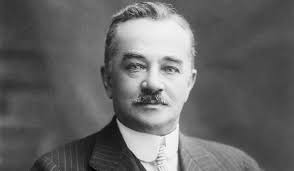
Milton Hershey: The Chocolate King


wikiImages
Born in Derry Township, Pennsylvania on September 13, 1857, Milton Hershey was raised in a Mennonite community where he spoke Pennsylvania Dutch. His parents were as different as day is from night. His mother came from a prominent family of conservative preachers, and her ancestors had been among the wealthier Swiss emigrants fleeing religious persecution for the New World in the 1700s. A practical, hard-working woman, Veronica “Fanny” Snavely dressed soberly and modestly. Independent and well-spoken despite a limited education, Henry Hershey was a romantic. He dressed to impress: vest, frock coat, striped pants, and a silk high-top hat. Unfortunately for Fanny and Milton, his father struggled to hold and job, and often left the family for the next great opportunity. 
 
Milton’s formal education ceased after the fourth grade, but he was a life-long student. When he was fifteen years old he went to work for Joseph C. Royer’s Ice Cream Parlor and Garden. Not only did the obvious benefits come with the job where you get to ingest your mistakes, but the shop was a half block from City Hall and close to the main market where farmers sold their produce and meat. He met pretty girls, ambitious men, and prominent visitors. 
 
In addition to scooping ice cream, Milton was also responsible for making the various candies sold by the shop, the most common of which were all made of boiled sugar such as lemon drop, lollipops, and the very popular marshmallows. At this time, chocolate was only just being produced in solid form. It was also expensive and not readily available to the “masses.” 
 
Milton would change that after his visit to the 1893 Columbian World Exposition in
mhskids.org
Chicago. By then he had started, succeeded, failed, then succeeded again with four candy companies. The latest, The Lancaster Caramel Company, employed 1,300 employees in two factories. After seeing Germany’s J.M. Lehmann’s machine that turned raw cocoa beans into chocolate bars, Milton was convinced that there was great commercial potential for European-style chocolate in America. 
 
At the end of the fair, he purchased the Lehmann equipment, saying, “Caramels are a fad. Chocolate is a permanent thing.” He came home and sold his caramel company for one million dollars and set up the Hershey Chocolate Company. By New Year’s Day 1894, Milton was making cocoa powder for drinking, baking chocolate, and sweet chocolate coatings that could be poured over caramels. It would be another two years before he could devise a solid bar that would be sold to the public. 

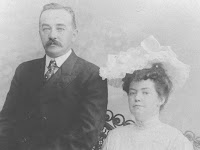
By the time he was forty years old, friends and family were convinced Milton was a confirmed bachelor. And perhaps he would have remained so if he hadn’t met the twenty-five-year-old daughter of Irish immigrants, Catherine “Kitty” Sweeney. Slim with long auburn hair that she wore pinned up, she caught Milton’s eye immediately. Within a year, they were married. He hadn’t even told his mother, he was courting anyone. 
 
Pixabay/mjimages
In 1900, using proceeds from the sale of The Lancaster Caramel Company, he acquired farmland about thirty miles from his birthplace. There he could obtain the large supplies of fresh milk needed to produce the milk chocolate he’d finally perfected after years of trial and error. 
 
Construction on the facility began March 2, 1903, and when completed in 1905, the factory was the largest chocolate manufacturing plant in the world. Milton used the latest mass production techniques, and his candy became the first nationally marketed product of its kind. 
 
What’s your favorite Hershey’s candy? 
 ___________________ 

Linda Shenton Matchett writes about ordinary people who did extraordinary things in days gone by. A volunteer docent and archivist for the Wright Museum of WWII, Linda is a former trustee for her local public library. She is a native of Baltimore, Maryland and was born a stone’s throw from Fort McHenry. Linda has lived in historic places all her life, and is now located in central New Hampshire where her favorite activities include exploring historic sites and immersing herself in the imaginary worlds created by other authors. Learn more about Linda and her books at  http://www.LindaShentonMatchett.com 

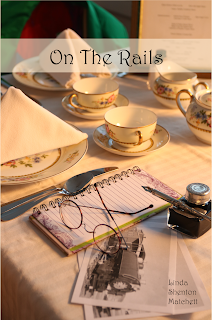
On the Rails: A Harvey Girl Story

Warren, Ohio, 1910: Katherine Newman loves being a teacher, but she loves Henry Jorgensen more, which is why she’s willing to give up her job to marry him. But instead of proposing, Henry breaks up with her. Devastated, Katherine seeks to escape the probing eyes and wagging tongues of her small town. A former Harvey Girl, Katherine’s mother arranges for Katherine to be hired at the Williams, Arizona Harvey House. Can she carve out a new life in the stark desert land, unlike anything she’s ever known?

Henry Jorgensen loves Katherine with all his heart, but as the eldest son of a poor farmer can he provide for her as she deserves? The family’s lien holder calls in the mortgage, and Henry must set aside his own desires in order to help his parents meet their financial obligation. But when Katherine leaves town after their breakup, he realizes he’s made the biggest mistake of his life. Can he find her and convince her to give their love a second chance? 

Purchase Link: https://amzn.to/3puuxHX