
By Marie Wells Coutu
The words we conjure in our heads get translated through either our fingers or our voice to a computer, and automagically spurt out of an inkjet or laser printer.
I have no idea how letters get turned into a number code, sent over a cable or through the air, then back to letters printed on paper. I’m dating myself, but when I started my career, the IBM Selectric typewriter was a fabulous invention, especially its ability to backspace and delete words, then retype over them.
I have no idea how letters get turned into a number code, sent over a cable or through the air, then back to letters printed on paper. I’m dating myself, but when I started my career, the IBM Selectric typewriter was a fabulous invention, especially its ability to backspace and delete words, then retype over them.
 |
As a former journalist and now author, I’m attached to this antique letterpress type case that hangs in my home. (Author photo) |
As a college journalism major, I was required to take a course on the foundations of printing. We got hands-on experience—from building a box camera to setting type by hand to operating a flatbed platen printing press. And one summer, I worked at a small weekly newspaper where the advertisements were still produced on a Linotype.
So when I visit a museum today and see a form of handset type or a platen press or a Linotype machine, I can tell my husband, “I’ve used that.”
If you didn’t have those opportunities, you may be interested to learn how words historically went from the mind of the author to the printed page, and some terms from the early days that continue in use, but with slightly different meanings.
Fast-forward past the Chinese man who gets credit for inventing paper and the many civilizations that used woodcuts to print text and images on papyrus and cloth. Zoom into 1440, when Johannes Gutenberg developed the first printing press using metal movable type. One of the first publications he produced was the Bible. His invention eventually led to making the scriptures available to the common man.
So when I visit a museum today and see a form of handset type or a platen press or a Linotype machine, I can tell my husband, “I’ve used that.”
If you didn’t have those opportunities, you may be interested to learn how words historically went from the mind of the author to the printed page, and some terms from the early days that continue in use, but with slightly different meanings.
Fast-forward past the Chinese man who gets credit for inventing paper and the many civilizations that used woodcuts to print text and images on papyrus and cloth. Zoom into 1440, when Johannes Gutenberg developed the first printing press using metal movable type. One of the first publications he produced was the Bible. His invention eventually led to making the scriptures available to the common man.
This hand-operated platen press is like the one I operated to print party invitations to fulfill a requirement for my college class.

Gutenberg’s press was built of wood, and it wasn’t until 1800 that an Englishman built a printing press with a metal frame, making it lighter, more durable, and capable of handling larger sheets of paper. These early presses were flatbeds, meaning paper was pressed against the type one sheet at a time.
About the mid-1800s, an American printer developed a rotary press, speeding up the process by mounting the type on a revolving cylinder and printing on a continuous roll of paper.
Initially, type was created with individual letters and kept in a wooden tray, called a case. Each case contained multiple pieces of all characters that might be needed in a particular font and size. Including every lower case and capital letter, number, and various symbols resulted in 89 or more compartments in each case. The cases, still found occasionally in antique stores, were essentially shallow drawers that fit into a cabinet containing several fonts in various sizes.
If you’re familiar with designing publications, you are aware of the need for spacing between lines of text. Traditionally, this spacing was called leading, because a slim bar of lead, the soft metal used to make type, was inserted between lines. Different thicknesses could be used to provide the desired amount of space.
Mergenthaler’s second Linotype machine (photo from Library of Congress collection)

Whether set by hand or by Linotype, the slugs of type would be lined up in a form. Multiple forms were then assembled in a galley, creating a full page or multiple pages for printing. A galley would be used to print a single copy, or proof, to be used to check for errors. Even today when composition is done by computer, proofs sent to authors to review and approve before printing are sometimes called galleys.
The next major step forward came with the introduction of the offset printing press for paper in 1903. This process transfers the image from a metal plate onto a rubber cylinder, which then imprints the text or photos onto paper. Offset printing had been in use for printing on metal and other substances, but its use on paper allowed for large-scale printing of newspapers and magazines.
Around 1970, the transition began from the hot metal type produced by a Linotype machine to “cold type” based on photographic processes. Chunks of text would be printed and “pasted up” into the final page design. This led to a rapid adoption of offset printing, because the paste-up could be photographed and easily etched into a thin metal plate for use on rollers. The combination of cold type set by computers and huge web, offset presses is still used by most newspapers and larger book publishers today.
Beginning in 1985, desktop printing and digital presses changed the production of newspapers, magazines, and books, and the tools of hand typesetting and Linotypes are now relics found primarily in antique stores and museums. However, many of the terms used by the earliest printers have been adapted to current technology.
 |
Hand setting type letter-by-letter forced me to learn to read upside-down and backwards. How many of the words in this form can you read? Hint: do not try to make a cohesive paragraph. (Author photo taken at the Hannibal, Missouri, History Museum) |
Sources/For more information:
The history of printing | The evolution of print from Gutenberg to now
Printing Museums
Newspaper Production | HowStuffWorks
Printing press | Invention, Definition, History, Gutenberg, & Facts | Britannica
Compositor's Tools - Letterpress Commons
Printer's jargon: hot type
The Museum of Printing, Haverhill, Massachusetts

Multi-award-winning author Marie Wells Coutu finds beauty in surprising places, like undiscovered treasures, old houses, and gnarly trees. All three books in her Mended Vessels series, contemporary stories based on the lives of biblical women, have won awards in multiple contests.
She is currently working on historical romances set in her native western Kentucky in the 1930s and 1940s. Her historical short story, “All That Glistens,” won honorable mention in the 2023 Saturday Evening Post Great American Fiction Contest. In her newsletter, she shares about her writing, historical tidbits, recommended books, and sometimes recipes.
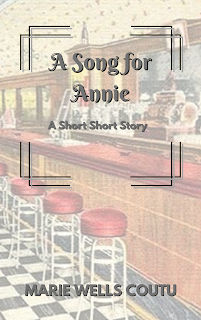
Another historical short story tells of a cafe waitress who waits for the love of her life to come back to her after the war. “A Song for Annie,” is available free when you sign up for Marie's newsletter here.


:max_bytes(150000):strip_icc():format(webp)/James-Gordon-Bennett-2000gty-56a488be3df78cf77282dd40.jpg)


