Showing posts with label Song for the Hunter. Show all posts

Saturday, July 29, 2023

The Volsted Act - a Law with Loopholes (and a Free Book)


America is a nation known, in part, for the ingenuity of its people. 

While the same might be said of individuals around the world—after all, we’re all made in the image of our Great Creator—Americans seem to have a special penchant for finding ways to accomplish goals even when the path seems blocked. That's been particularly true if the way is forcibly blocked by government. We've been pesky rebels for a long time. Ha!

The roaring twenties is indicative of that mentality. When we think of that era, we imagine jazz music, loosening dance and dress styles, and most poignantly, the illegal alcohol trade. It’s almost hard to separate the twenties from images of speakeasies and gangsters. 

Photo by cottonbro studio, Pexels.com

(Case in point, with my book Polly coming out next January, it was difficult to find a cover image of a model who wasn’t a flapper.) Nope... Not Polly.

Nope, that's not Polly.
(photo by Victoria Rain - pexels.com)


At any rate, let’s take a look at how we got to those roaring years.

Temperance organizations existed in nearly every state earlier in the century. By January 1916, when a constitutional amendment of Prohibition was actually passed federally, alcohol had already been banned by statute in over half the states in the country. The 18th Amendment merely established Prohibition across the entire land.

HOWEVER, even though the law was made, it lacked some teeth. It took the Volsted Act, passed the following October, to actually clarified the law by stating that "beer, wine, or other intoxicating malt or vinous liquors" meant any beverage that was more than 0.5% alcohol by volume. In fact, the Act also stated that even owning an item designed to manufacture alcohol was illegal, and it set specific fines and jail sentences for violating Prohibition. That's why those secreted stills out in the woods were illegal to have, even if they were empty or idle. 

This makes it easy to see why there were people who saw a lot of money to be made by "rum-running" or "bootlegging". Lucrative but dangerous work.

Here's a 2-minute, tongue-in-cheek presentation of the effects and outcome of the Volsted Act, performed as a silent movie. It's cute, but really does make its points.


PARALLELS

I always like to look at history as it regards our current times and situations. Can you think of laws that Congress is trying to pass (national or state level) that could have such sweeping ramifications as to prevent even owning a piece of equipment that could be used to make something considered "illegal"? 

I believe this is why it’s important for citizens to monitor the reach of government.

INGENUITY

Back to prohibition... 

Of course, that old fashioned American ingenuity kicked in before the Volsted Act was enforced. Americans not willing to give up their chances to imbibe soon discovered loopholes in the January law. For instance, since it wasn't ratified for nearly a year, that gave plenty of time for people to store up their personal supply. Stockpiling and hoarding became a big deal. History is fraught with examples of raids in which these stockpiles were sought after and removed.

Also, the Volsted Act didn't actually say individuals couldn't drink liquor. If it was prescribed by a doctor, it then became legal. There quickly became quite an uptick in prescriptions for alcohol.

Prescription for Medicinal Supply of Spirits
By US Treasury Department - ha.com, Public Domain, https://commons.wikimedia.org/w/index.php?curid=63943871

Of course, many turned to producing the product themselves, either for personal use or mass distribution. Next month, I'll talk a little more about this fascinating era that didn't end until the repeal of Prohibition in 1933.


Do you get my newsletter? If not, you can sign up here. And don't forget to join the new Facebook Apron Strings Readers' Group, where eleven authors are posting and chatting over recipes, history, fashions, and snippets from the Apron Strings series of books releasing throughout 2024. It's just plain fun! 

FREE BOOK
ON MONDAY JULY 31 THROUGH FRIDAY, AUGUST 4!

Book 2 in The Voyageurs Duology

Mark your calendar!


Thursday, December 29, 2022

Three Popular Cookies a Hundred Years Ago, and Recipes for Today!

Once again, I find myself researching weird things for my work-in-progress, a novel taking place in 1920 simply titled "Polly", which will release a year from now in January 2024, as the first in the Apron Strings collection by various authors.

Today I'm delving into baked goods, and I'm learning about the most popular cookies in the 1920s. By the way, did you know that the history of cookies in general dates back to seventh-century Persia? Thought of throughout generations as hand-held cakes or wafers, they showed up in the cookbook Goode Huswife’s Jewel by Thomas Dawson way back in 1596.

With that, let’s take a look at three still-popular favorites from a hundred years ago. Grab a cup of tea and maybe a left-over Christmas cookie too, because this post might give you a craving.
Image by Michaela from Pixabay

The 1920s had an orange-flavored palette, and I discovered a myriad of recipes for baked goods with that tang. Vitamin C was discovered in 1927, and freshly squeezed orange juice became popular at breakfast time. Maybe because oranges have been so popular to give to children at Christmas time, it seemed in the natural progression to develop Orange Drop Cookies.


Orange Drop Cookies

2/3 cups cold but slightly-softened butter

3/4 cup granulated sugar

1 large egg

1/2 cup (4 ounces) orange juice

2 tablespoons orange zest

2 cups all-purpose flour

1/2 teaspoon baking soda

1/2 teaspoon baking powder

1/2 teaspoon salt


Icing

2 1/2 tablespoons slightly softened butter (33 grams, 1.2 ounces)

1 1/2 cup confectioner's sugar (182 grams, 6.4 ounces)

1 1/2 tablespoons orange juice

2 teaspoons orange zest

If icing seems too thick, add a few more drops of orange juice. It's been suggested that brushing on icing works slick. Sprinkle with orange zest if you like.

~~~
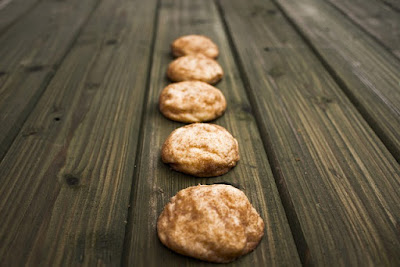
 

Snickerdoodles - Image by RockYourCradle from Pixabay

Another popular cookie from a hundred years ago and one that was first baked in 1891 by Cornelia Campbell Bedford is the cookie with the name to make you giggle: the Snickerdoodle. Ms. Bedford was a New York cooking teacher and newspaper writer who been working on a recipe for the Cleveland Baking Powder company when she came up with a sugar cookie covered in sugar and cinnamon. Once published, the fame of the recipe quickly spread. Here's my favorite version of the cookie.

Snickerdoodles

Preheat oven to 350 degrees. Cream together:

½ cup butter

½ cup shortening (for all of my baking, I always use shortening made with “meat fats” rather than vegetable oil shortening. By the way—this is a secret to terrific pie crusts too.)

½ cups sugar

2 eggs

In a separate bowl, mix:

2 ¾ cup flour

2 teaspoons cream of tartar (cream of tartar is also the secret ingredient to fabulous sugar cookies)

1 teaspoon baking soda

¼ teaspoon salt

Fold into wet ingredients, mix well. Make a small bowl of cinnamon sugar by mixing approximately 2 Tablespoons sugar with 2 teaspoons cinnamon. Scoop into 1” balls, and roll each ball into cinnamon sugar. Bake 8-10 minutes.

 ~~~

 
Oatmeal Cookie & Coffee - Image by letitaly from Pixabay

The lowly oatmeal cookie can easily elicit excitement for the coffee and cookie dunking crowd, or draw groans for children looking for something more thrilling than their breakfast cereal in a cookie. Oatmeal cookies have been popular for eons, however, because of their versatility. From stuffing them with raisins to the ever-popular chocolate chips, to just eating them plain or with a hint of cinnamon added, the only real expectation for oatmeal cookies is to have a chewy texture and a pleasingly subtle sweetness.

Here at our house we’ve adapted this classic to Oatmeal Scotchie status but with a secret ingredient that no one will notice or identify, but it will embolden the sweetness and upgrade the texture to oh-my-word goodness. Yum-yum-yum!

Favorite Oatmeal Cookies

Blend:

1 cup white sugar

1 cup brown sugar

2 eggs

¾ cup shortening (I usually use 1 stick of butter and ¼ cup actual shortening, made with meat fats)

¼ cup warm water

1 teaspoon vanilla

In another bowl, mix together:

3 cups oatmeal

2 cups flour

1 teaspoon baking soda

½ cup coconut (the secret ingredient. Even if you don’t like coconut, you’ll like these cookies.)

Add dry ingredients to wet. THEN, add ½ bag of butterscotch chips and mix well. I usually double this recipe to use the whole bag. Plus, I have a lot of grandchildren to help me eat them.

~~~~~

There you go. Copy and print these out for your recipe folder! 

If you are interested in more about the history of cookies in general, I recommend reading this thorough post from What’s Cooking America.

What are some of your favorite traditional or vintage cookies?

Do you know that on New Year’s Day, it’ll be one year since the release of Song for the Hunter? Here’s what one Amazon reviewer said: 

"Rife with tender romance and poetic prose, Musch leads readers through a cross-cultural love story that not only entertains but points to the hope that all of us seek—to be loved for ourselves and to give love in return. A finely tuned inspirational, historical romance, Song for the Hunter opens a window into the fur trade era of the 1700’s and portrays a realistic and insightful glimpse into the life of Ojibwe and Métis at that time in history." 

Haven't read it yet? Get it here!

To all the readers and fellow writers on Heroes, Heroines, and History, I pray you'll have a safe and blessed New Year! ~Naomi

Sunday, February 27, 2022

Author Spotlight on Naomi Musch


Hello, friends! Welcome to my wilderness! That greeting puts a lot of my writing into a nutshell because I like to write my stories with settings in wilderness or rural areas. Some works are set in small towns, but I usually stay clear of the big cities, mainly because I've never been a city girl, and I don't think I could write about city living authentically. I'm a country gal through and through! The picture on my banner is from the edge of my yard. It's quite literally "the back forty".

My love of history is heavily influenced by stories of the colonial frontier--of the frontiersmen, explorers, trappers, traders, and indigenous people who populated the land in the central and upper parts of our country over 200 years ago. I always figured that most of my stories would be set in the Revolutionary or pre-Revolutionary period. Alas, I could never have imagined I’d eventually be writing stories from that time all the way up to post WWII! May I introduce you to my writing journey over several periods of history?

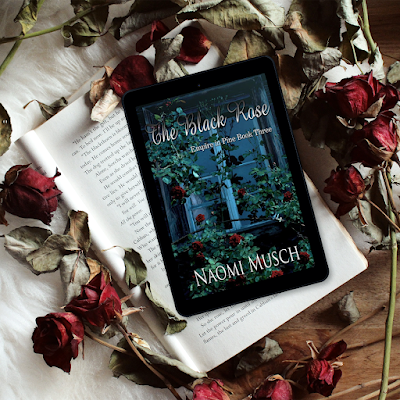
My first published series was set during the mid-late 1800s in Wisconsin. The Empire in Pine series chronicles the rise of the logging and railroad era via a family saga of three generations of women who experience the adventure and romance of the period. It's a mix of historical women's fiction that contains romantic threads and redemptive themes. Titles include The Green Veil, The Red Fury, and The Black Rose, and they are best read in order.

It was easy going back to my Empire in Pine research when I recently wrote a lighter romance called Not for Love, just released in Barbour’s new Lumberjacks & Ladies novella collection. In that story, a young widow writes a letter to the lumber camps in search of a man willing to marry her and act as a husband "in name only" to help her keep and run the farm she started to build with her deceased husband. 

Lumberjacks & Ladies is my first book available on audio. What a thrill!


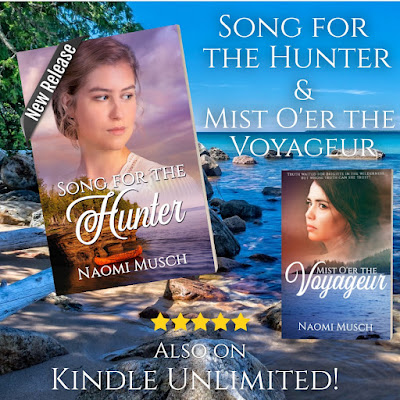
After my Empire in Pine series, I went back to writing a story which had long lived on my heart: Mist O’er the Voyageur. It’s a story that takes place in my beloved Lake Superior region during the fur trade--a romantic adventure between a voyageur and Metis woman who disguises herself to join a voyageur's brigade while searching for her fur-trade father in the wilderness. Now the sequel is out too: Song for the Hunter, in which Metis hunter Bemidii Marchal puts his life on the line for the love of a French woman who may reject him when she learns the devastating secret he hides.


Another story set in an even earlier period is A Tender Siege, a novella of the French and Indian war involving a Highland soldier wounded in the wilderness near Fort Pitt when it is under siege by Pontiac’s Native forces. Readers can find it in part of a collection called The Highlanders.


Then one day I got the idea for a story idea based on Genesis 29, when Jacob married Leah and later Rachel, but set in a different period. So of course I wasn’t going to write a novel about a man marrying two women, but what if, during WWI, a man—a farm hand—married one farmer’s daughter while he pined for the other? Sounds nasty, but I promise it doesn’t cross lines. It’s a story about a man and woman who God deals with in deep ways. These characters carry such deep burdens in their marriage that only the Echoes of the Heart can express them. The Deepest Sigh turned out to be one of my favorite novels. In fact, it compelled me to write a series, continuing with The Softest Breath, and The Brightest Hope. Each book tells the story of another character that comes along, and about a hero who has an involved character arc. Readers have said that people who love Francine Rivers will enjoy these books.


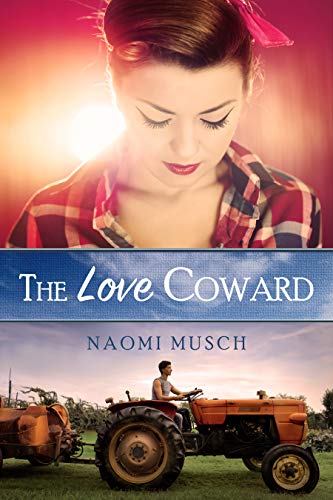
By the time I signed to write a story for Barbour's new Heroine’s of WWII series, I’d long since shed my notions of sticking to the colonial period—though I hope to write something set during that era again. I had some practice writing about the post-WWII era when I published The Love Coward a sweet story of second chances, and now my novel Season of My Enemy, set on a Wisconsin farm during WWII, will release in June. 
Literally a few days ago, Barbour pulled down the cover we’d worked on for the book and came up with a new one. I'm not 100% sure it's final even yet, so watch for the official re-reveal soon.


I’ve become more and more open to writing in different eras. I feel quite at home in the Americana period of the first half of the 20th century, but also in the 1800s of the upper Midwest and the rough and tumble wilderness frontier of the 1700s. I’ve even written a couple contemporaries that are a romp to spin out from time to time, though my first and biggest love is still historical. I’m not sure where it’ll all lead to next. I’m working on another possible WWI story about spies and sabotage in a Wisconsin port town. We’ll see how it goes! It’s all in God’s hands, and I’m content to leave it there.

Thanks for traveling with me down memory lane as I reflect back to writing these books. If you’re interested in these or other stories I’ve written, catch me at the usual social and bookish places. I do a monthly drawing in my newsletter Northwoods Faith & Fiction. In March I’ll be hosting a drawing for a signed copy of Song for the Hunter, so don’t miss the chance to get on board!

Until later,

Naomi  
Wednesday, December 29, 2021

A Midnight Kiss—Where did the New Year’s tradition come from?


I have to admit, I remember being quite young when I became intrigued by the idea of a kiss at the midnight stroke of the New Year. I believe old movies fraught with escalating tension between the hero and heroine had a lot to do with it. Even if the main characters weren't doing the kissing, and it was all taking place in the background beneath a shower of confetti, flying corks, and a garbled rendition of Auld Lang Syne, the film makers sure seemed to make that countdown kiss a big deal. But why?

Where did the midnight New Year’s kiss come from?


I’m not too happy to tell you, because it was apparently loaded with a history of promiscuity and pagan ritual. Like some other holiday traditions we celebrate today, the New Year's kiss stems all the way back to those ancient Romans who seemed to have had the market cornered on combining adoration of their pagan gods with merry-making to the extreme. In the case of the New Year’s kiss, the Roman practice surrounded Saturnalia a god they celebrated in terms of farming and winter solstice. In fact, even some of our Christmas traditions are entwined with that one, such as decorating with wreaths and boughs and giving gifts, though now of course, Christian households take a different meaning to those activities. The entire atmosphere of the Roman event that lasted from December 17th-23rd was filled with a carnival atmosphere that broke down class barriers, such as between slaves and masters, and involved—you guessed it—a lot of kissing and—ahem—other carnal activities.

By the time we move up history’s timeline to the period of the Renaissance, the meaning of the midnight kiss had come along as a form of expressing and hoping for “good luck”. By this period the masked-ball party had popularized, so a lot of kissing license was taken behind supposed anonymity, as was other forms of promiscuity. We won’t go there.

As the New Year’s tradition of the midnight kiss evolved in English and German folklore, it was said that an individual's yearly destiny would be determined by the first person he or she encountered in the new year. For very superstitious folks, I can see why that would be concerning. Sooner rather than later, people took the bold step of determining their destiny by choosing who they wanted that “first person” to be. And voilà! the modern New Year’s smooch was born.

Fiction writers and movie makers have been trying to create the best New Year’s kissing scenes ever since. Well, kissing scenes in general. Here's a classic.


If you want to close out 2021 with a story that contained my favorite “book kiss” of the year, check out the brand new one by Candice Sue Patterson—Saving Mrs. Roosevelt. The hero and heroine’s first kiss in that story is a sizzler, and in a fabulously romantic setting! Did you have a favorite this year?

Be sure to pop back to the blog tomorrow (and every month on the 30th) to discover some terrific books which are sure to drop some pretty lovely kisses in the pages—chaste ones of course!

Until next year, here’s to you and yours as we step into 2022. May God pour his kiss of blessings on you in ways beyond your fathoming. May you have profound peace, deep joy, and pleasurable reading!

Happy New Year! Mwah! 😘

Naomi Musch

Drop by my website for a FREE 2022 Calendar, easy to download and print. It’s really pretty!


Song for the Hunter
I have a NEW RELEASE! It’s so hot off the press, the ink is barely dry!

Métis Hunter Bemidii Marchal has never played his flute to court a maiden.
Now tragedy has brought his path alongside golden-haired Frenchwoman Camilla Bonnet’s, whose fear of him he longs to wipe away. But the secret he hides could turn her heart away—and demand his life.

Available at:

Monday, November 29, 2021

A Brief History of Lake Superior's Fabulous Apostle Islands (Lake Superior Pearls & Perils, Part One)


In just another month, I will be celebrating the release of Song for the Hunter, a new novel set in a place which people from all over the world have come to admire and enjoy, the magnificent Apostle Islands. The archipelago of twenty-two islands (no, not twelve!) sits off the Bayfield Peninsula, the most northern point in Wisconsin. Twenty-one of the islands as well as part of the mainland are protected by the National Park Service making the area part of the Lake Superior National Shoreline. The Apostle Islands have a vast history of culture and commerce. Let's take a short overview.

Lake Superior is truly an inland sea. It is wild and unpredictable, a blue gem covering 31,700 square miles. It averages 483 feet deep, but at its deepest point is nearly three times that at 1333 feet. By surface, it is the largest lake in the world, and it holds more water than all the other Great Lakes combined, plus three more Lake Eeries. Are you amazed yet? Having claimed hundreds of shipwrecks (including the famous Edmund Fitzgerald which sunk during a horrific storm on my 14th birthday), the lake is said to have taken more than 10,000 lives, and those are the ones history tells us about. Now consider... 

Wild Lake Superior photo courtesy of Dan Grisdale Photography

The islands have been home to the Ojibwe people for some 600 years, at least. Some say thousands. In any event, they consider these islands to be a sacred place, and commerce has traveled the lake by canoe for centuries. Then came the fur traders and voyageurs. 10,000 lives gone to a watery grave probably falls far short of the actual number, or so I would imagine.

Canoes in a Fog, Lake Superior (1869) Frances Anne Hopkins

Although Frenchman Pierre Francois Xavier de Charlevoix is credited for giving the islands their current name--purportedly either to honor Jesus' twelve apostles or to recognize the twelve largest islands--the natives place name for the islands has always been Wenabozho ominisan. Wenabozho is the name of a cultural hero who, they claim, made the islands. The Ojibwe's main village was on Madeline Island, the largest of the islands (and where the adventures in my new novel largely take place). The Ojibwe name for the island is Moningwunakauning which means "home of the yellow-breasted woodpecker". From their village there, and from other villages on the mainland, the people were able to fish all year round, hunt game and collect wild rice in the fall, gather furs in winter, collect maple syrup in the spring, and gather wild edible food all summer long.

Apostle Island Sea Caves, Image by David Hamilton from Pixabay

Europeans also found safety and refuge from Lake Superior's wild waters, as well as gathering resources among the islands. One of Wisconsin's oldest settlements is there on Madeline Island, established by Jesuit priests Claude Allouez and Jacques Marquette in the 1660s. It soon became home to a French trading post, and later when American's won the war against France, was turned over from the North West Company to American Fur Company jurisdiction. 


Historical marker located on Hwy 13 between Washburn and Bayfield WI, looking from the mainland shore toward the island.


Madeline Island, Big Bay State Part;
View from my hero's campsite in Song for the Hunter

Stories of exploration, intrigue, heroism, and intrigue abound about the region both on the water and on shore. Between the French explorers, the fur traders, the voyageurs, and the missionaries, it is a region ripe with history as well as natural beauty. And all this before we even get to the era of the Great Lakes fishing and shipping fleets! (I'll share some of these stories in future posts of Lake Superior Pearls and Perils).

I hope this wets your appetite for a look into the area or maybe a planned vacation to the islands sometime! At the very least, I hope you'll investigate my upcoming book Song for the Hunter. There is also a 2018 novel set one year prior titled Mist O'er the Voyageur.

If you have or plan to read either book, I'd be happy to send you a novelette (pdf or mobi) set between the two stories--a sort of extended epilogue to Mist and a prequel to Song called The Long-Awaited Spring. Just drop me a note with your request and an email address!

Until the next historic tale of Pearls & Perils on the lake,
Naomi
Song for the Hunter, coming January 4, 2022, pre-order available:

Wed to a trading company partner to escape life in Montreal under her harsh father's thumb, Camilla Bonnet finds herself tragically widowed and pregnant in the Upper Country frontier. When her brother fails to return for her from Fort William, she is cast on the mercy of the trading post owner's family. She also draws comfort from Bemidii Marchal, a Métis hunter who soothes away her misgivings as he finds his own refuge on Lake Superior's Madeline Island.

Bemidii’s thoughts of courting a maiden are cut short when he raises his knife against a company man at Fort William’s Great Rendezvous. No one will believe he killed to protect his sister—least of all the beautiful Frenchwoman on Madeline Island who stirs his affections—not when she learns that her brother is dead and Bemidii stands accused of his murder. As the sharp blade of truth divides them, will Bemidii survive the justice of powerful men who are a law unto themselves?

JOIN ME at a Christmas Extravaganza Facebook Party next week to try and win a copy of the book, not to mention a spree of other prizes!


Friday, October 29, 2021

A Cure for What Ails You - Home Remedies Then and Now


I’m a wee under the weather as I write this tonight (back on October 21), so I’m thinking about what I can do to relieve the symptoms of my illness while it runs its course. For that reason, as I sip some chamomile and mint tea, my post this month will be brief.

Image by Fuzzy Rescue from Pixabay

Since the beginning of creation, people have incorporated a wide variety of home remedies to treat illness. In pioneer times, people boiled pine needles into tea and treated colds with it. I don’t know if they even understood Vitamin C, but they knew those needles contained something they needed. If I remember my history correctly, this was also a remedy to abate scurvy. I’m thinking of boiling some fresh pine needles tomorrow.

Our predecessors also made a broth of hot peppers for the same purpose. That doesn’t sound very appealing, so I think I’ll forgo the peppers. I could try a cough syrup from mullein leaves though, as this HHH blogger mentions.

Mint has been ever popular for its soothing effects (which is why I love my Sleepytime tea), and it’s an aid in preventing nausea and kidney stones. It’s also supposed to help with swelling and inflammation—good to know for lots of reasons.

Funny aside: A couple years ago, after I’d had some surgery and was given a powerful pain reliever, I accidentally mixed up the pain reliever with my weekly RA medication of which I was assigned eight tablets, once a week. I usually only took four at a time on that day…thankfully! Yes, I took four of those ONE-ONLY pain pills and got verrrry sleepy and nauseous. I called the poison hotline, and while they didn't think I was likely to keel over, they urged me to have someone sit with me and help me stay awake. My hubby was at work, and I didn’t want to panic him (for which he scolded me later) but my daughter and son-in-law came to sit with me until the effects wore off. Guess what I drank while they were here? Yep, mint tea. It did soothe my upset tummy!

Some home remedies were meant to be used as preventatives. Spring tonics were made up by women in their homes to prevent the seasonal ailments we all know today. When I read about what went into some of those tonics, everything from sarsaparilla (seemed to be a common one) to burdock, sassafras, cherry, and dogwood bark—just to name a few of the ingredients—I could only admire the pioneers’ determination to stock their medicinal chest. Different concoctions of these ingredients were boiled up into a sort of syrupy liquid before being added to whiskey and doled out a spoonful at a time, several times a day, to the woman’s family. Most of those ingredients I’d be hard pressed to find, especially in northern Wisconsin, but if I was a pioneer, I can definitely imagine myself stirring up my botanicals over the cook stove.

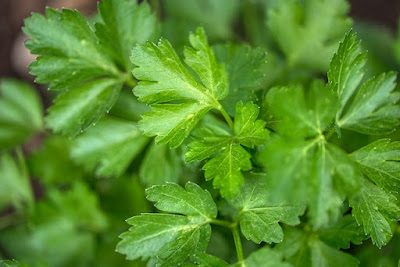
I have dried my own raspberry leaves (high in vitamins and antioxidants) and dandelion (preventing bone loss, liver damage, and high blood sugar) and a few things as preventatives like that. It's said that boiled parsley can ease a child’s fever (and supposedly help with jaundice, and gall stones). Hm… I have a parsley plant about to end its season, and I already treat parsley like it's the seasoning to end all seasonings. Maybe I’ll boil it and give the ibuprofen a break.


I won’t go into the turpentine plasters, oatmeal pastes, and urine for use in hand creams—none of which I will ever try, I assure you.

Mold from fruit was used to treat skin infections—but of course! I’m sure that’s why the idea for penicillin seemed a somewhat obvious study to Alexander Fleming.

This could become an extensive blog post, but posts on home herbal remedies abound, so I won’t go on, plus I’m sleepy and I need my box of tissues. There are entire books written for hobby herbalists. Even when writing fiction, I get a little overwhelmed with the choices and study of what my characters might have used to treat an ailment or injury.

What about you? Do you have home remedies you stand by? What’s the most outlandish you’ve come across? Do you enjoy reading about them in fiction? Writers, have you done some research in this area? I’d enjoy hearing about it.


Naomi is a multi-published author whose great love is historical fiction. She will have three new books releasing in 2022. Song for the Hunter and the Lumberjacks and Ladies collection are now available for pre-order. Readers are urged to sign up for her newsletter so they don’t miss a single update on new fiction (or the occasional free read). 

Naomi is at home in the Northwoods with her husband Jeff near their adult children and ever-expanding passel of grandchildren. Visit her website and find her newsletter sign-up form at https://naomimusch.com/

Mark your calendars: Naomi’s novel The Black Rose will be offered FREE November 5th, 6th, and 7th.


When Jesilyn Beaumont betrays her twin in the worst possible way, a fall from grace leads her to a boom town where the living is hard and dangerous. Can a lumber camp preacher rescue her from a life of shame, and will her sister ever be able to forgive?