Showing posts with label Echoes of the Heart. Show all posts

Saturday, March 29, 2025

Music For Our Souls - George Matheson - "O Love That Will Not Let Me Go"


When I recently uploaded my novel The Softest Breath to audiobook, I was reminded of a beautiful hymn in the climax of the story. I can't tell you it's significance to the story without a huge spoiler, but in the process, I was called back again to the beautiful lyrics based upon Jeremiah 31:3; 2 Corinthians 5:14; and Romans 8:35.


That hymn is titled "O Love That Will Not Let Me Go", and it is the most famous piece written by George Matheson (1842-1906), a Scottish minister who had gone blind at age twenty, but went on to become a brilliant scholar at Edinburgh University. I
n 1870 was awarded a Doctor of Divinity degree.

He was also a prolific writer and was said to have an astonishing ability to memorize lengthy passages. Some who heard him preach remarked that they had not realized he was blind. 

Reverend Matheson published one volume of verse called Sacred SongsBut of all his written works, he said that none came to him like the famous hymn he wrote on June 6th, 1882, the night of his sister's wedding. It was late in the evening, while he was alone in the manse at Innelan, Argyleshire, Scotland, and the rest of his family had stayed the night in Glasgow. He tells that some grave suffering had happened to him, which was known to him alone, but caused mental anguish. It was then the verses flowed. He said:

"I have no natural gift of rhythm. All the other verses I have ever written are manufactured articles; this came like a dayspring from on high."
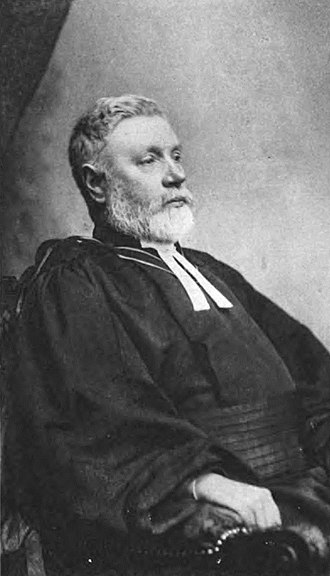
Rev. George Matheson, Church of Scotland
Photo: Wikipedia Commons

Truly, Matheson's hymn speaks well to the brokenhearted who are yearning after hope and clinging to God's promises. The opening word of each stanza point to the faithfulness and provision of our great God: Love--for He holds tightly to us and nothing can snatch us from His hand, Light--for He forever promises guidance to our paths, Joy--that runs deep, and no one can take away, and Cross--reminding us of the One Who suffered for us, that we might have hope eternal, even amid our own sufferings.

Here are the lyrics to that worshipful hymn:

O Love that will not let me go,
I rest my weary soul in thee;
I give thee back the life I owe,
That in thine ocean depths its flow
May richer, fuller be.

O Light that foll’west all my way,
I yield my flick’ring torch to thee;
My heart restores its borrowed ray,
That in thy sunshine’s blaze its day
May brighter, fairer be.

O Joy that seekest me through pain,
I cannot close my heart to thee;
I trace the rainbow through the rain,
And feel the promise is not vain,
That morn shall tearless be.

O Cross that liftest up my head,
I dare not ask to fly from thee;
I lay in dust life’s glory dead,
And from the ground there blossoms red
Life that shall endless be.

The music was written in 1884 by Albert L. Peace, a gifted musician. His tune was titled St. Margaret (Peace).


Gaither Vocal Band - O Love That Will Not Let Me Go (Live)
.
If you enjoyed this post, you might also enjoy my previous "Music for Our Souls" posts, as well as a recent post by Cindy Ervin Huff: Jesus Love Me-A Simple Hymn with Global Appeal and a Grammy Winner.

__________________________________

Echoes of the Heart is now on AUDIO!

If you're curious about how Reverend Matheson's hymn found its way into the climax of The Softest Breath, you can find it along with the entire Echoes of the Heart series here.

If you've already read these books, write to me and let me know if you remember what happened. naomimusch (AT) naomimusch.com



Sunday, February 27, 2022

Author Spotlight on Naomi Musch


Hello, friends! Welcome to my wilderness! That greeting puts a lot of my writing into a nutshell because I like to write my stories with settings in wilderness or rural areas. Some works are set in small towns, but I usually stay clear of the big cities, mainly because I've never been a city girl, and I don't think I could write about city living authentically. I'm a country gal through and through! The picture on my banner is from the edge of my yard. It's quite literally "the back forty".

My love of history is heavily influenced by stories of the colonial frontier--of the frontiersmen, explorers, trappers, traders, and indigenous people who populated the land in the central and upper parts of our country over 200 years ago. I always figured that most of my stories would be set in the Revolutionary or pre-Revolutionary period. Alas, I could never have imagined I’d eventually be writing stories from that time all the way up to post WWII! May I introduce you to my writing journey over several periods of history?

My first published series was set during the mid-late 1800s in Wisconsin. The Empire in Pine series chronicles the rise of the logging and railroad era via a family saga of three generations of women who experience the adventure and romance of the period. It's a mix of historical women's fiction that contains romantic threads and redemptive themes. Titles include The Green Veil, The Red Fury, and The Black Rose, and they are best read in order.

It was easy going back to my Empire in Pine research when I recently wrote a lighter romance called Not for Love, just released in Barbour’s new Lumberjacks & Ladies novella collection. In that story, a young widow writes a letter to the lumber camps in search of a man willing to marry her and act as a husband "in name only" to help her keep and run the farm she started to build with her deceased husband. 

Lumberjacks & Ladies is my first book available on audio. What a thrill!


After my Empire in Pine series, I went back to writing a story which had long lived on my heart: Mist O’er the Voyageur. It’s a story that takes place in my beloved Lake Superior region during the fur trade--a romantic adventure between a voyageur and Metis woman who disguises herself to join a voyageur's brigade while searching for her fur-trade father in the wilderness. Now the sequel is out too: Song for the Hunter, in which Metis hunter Bemidii Marchal puts his life on the line for the love of a French woman who may reject him when she learns the devastating secret he hides.


Another story set in an even earlier period is A Tender Siege, a novella of the French and Indian war involving a Highland soldier wounded in the wilderness near Fort Pitt when it is under siege by Pontiac’s Native forces. Readers can find it in part of a collection called The Highlanders.


Then one day I got the idea for a story idea based on Genesis 29, when Jacob married Leah and later Rachel, but set in a different period. So of course I wasn’t going to write a novel about a man marrying two women, but what if, during WWI, a man—a farm hand—married one farmer’s daughter while he pined for the other? Sounds nasty, but I promise it doesn’t cross lines. It’s a story about a man and woman who God deals with in deep ways. These characters carry such deep burdens in their marriage that only the Echoes of the Heart can express them. The Deepest Sigh turned out to be one of my favorite novels. In fact, it compelled me to write a series, continuing with The Softest Breath, and The Brightest Hope. Each book tells the story of another character that comes along, and about a hero who has an involved character arc. Readers have said that people who love Francine Rivers will enjoy these books.


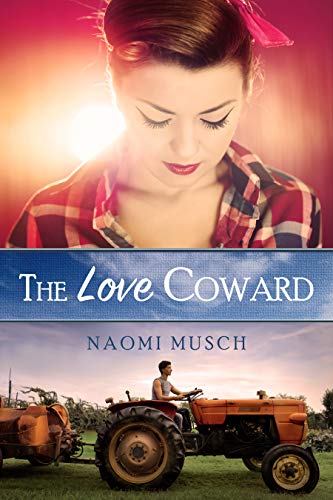
By the time I signed to write a story for Barbour's new Heroine’s of WWII series, I’d long since shed my notions of sticking to the colonial period—though I hope to write something set during that era again. I had some practice writing about the post-WWII era when I published The Love Coward a sweet story of second chances, and now my novel Season of My Enemy, set on a Wisconsin farm during WWII, will release in June. 
Literally a few days ago, Barbour pulled down the cover we’d worked on for the book and came up with a new one. I'm not 100% sure it's final even yet, so watch for the official re-reveal soon.


I’ve become more and more open to writing in different eras. I feel quite at home in the Americana period of the first half of the 20th century, but also in the 1800s of the upper Midwest and the rough and tumble wilderness frontier of the 1700s. I’ve even written a couple contemporaries that are a romp to spin out from time to time, though my first and biggest love is still historical. I’m not sure where it’ll all lead to next. I’m working on another possible WWI story about spies and sabotage in a Wisconsin port town. We’ll see how it goes! It’s all in God’s hands, and I’m content to leave it there.

Thanks for traveling with me down memory lane as I reflect back to writing these books. If you’re interested in these or other stories I’ve written, catch me at the usual social and bookish places. I do a monthly drawing in my newsletter Northwoods Faith & Fiction. In March I’ll be hosting a drawing for a signed copy of Song for the Hunter, so don’t miss the chance to get on board!

Until later,

Naomi