Showing posts with label The Love Coward. Show all posts

Sunday, October 29, 2023

Christians, Culture, and Halloween History--My Take On an Age-Old Debate


I really debated on whether or not to bring up the subject, but here goes...
 

Halloween. 

Or All Hallows Eve, as some call it. Reformation Day aside, I'm referring to the cultural holiday we all know well.

Right up front I'll tell you my personal feelings. I don't like it. Haven't liked it since I became a disciple of Jesus. Let's look back.

All Saints Day, November 1st, was set aside in the sixth century by Pope Gregory to honor and remember Christian martyrs and other faithful who had passed away. I can deeply appreciate that. At this very moment, those martyred for their faith are crying out before God's throne, 

"O Sovereign Lord, holy and true, how long before you will judge and avenge our blood on those who dwell on the earth?" (Revelation 6:10) 

So to me, a day set aside to reflect on the faith of those now in heaven and awaiting God's final restoration of all things is very respectful. 

But when this tradition was brought to the Celts of what is now Ireland, the U.K. and France, it began to mingle with the decidedly un-Christian beliefs and practices of Samhain held on October 31st. It is those pagan practices of some of my Celtic ancestors passed down through the generations with which I have the problem. 

On one end of the tradition, the time marked the end of harvest and the beginning of winter, when the old year ended and the new one began. It's a very understandable time to want to celebrate. Here's how I note that change of seasons. I admire my stocked pantry shelves in the basement and give thanks for the year's garden harvest. Then I put my feet up, grab a book, and enjoy a nice cappuccino to rest from my efforts.

My Harvest Safely Put By

However, back then, Samhain or All Hallows Eve, as it became known, was also considered to be a night when a door opened between our earthly world and the spirit world, allowing both good and evil spirits to pass between. 

This belief (fear) led people to dress in costumes and light bonfires in order to confuse and ward off the evil spirits. When Catholicism came to the Celts, the two events entwined--kind of like tends to happen with other holidays (Easter and Christmas come to mind). We lump the cultural with the spiritual, the holy with the traditions of men. We pick and choose which parts we want to keep and which parts we want to toss into the dust bin. 

In those times, not only did the Celts believe that the ghosts of the dead were walking the earth, they also depended upon some of the roaming spirits to help their Druid priests foretell the future. There are a number of other ties that remained bound between the two celebrations. Some of them are downright gruesome, others just questionable practices.

So here's my point. I'm not saying that it's wrong to celebrate certain holidays or seasons with festivity of various kinds, but with Halloween I draw my own personal lines. It's a little harder for me to sort the profane from the godly. For me, most of what passes as "fun" feels like a blatant invitation to evil. I don't think we can reason away things that do not honor our Heavenly Father.

October's end is, nevertheless, a great time to celebrate harvest and the finality of the warm season while preparing for the long, cold one ahead. I'm not put off by that at all. If family and friends want to hold an end-of-season harvest party, fine. Dressing up for costume parties can be fun anytime of year, not just at the end of October. And how about doing it as a favorite non-scary book character or an historical figure instead of a skeleton or witch? Playing games and sharing treats is exciting for children too, but does it have to be in association with trick or treat, with roots in the historical practice of "souling", which meant going door to door offering to pray dead people out of "purgatory" in exchange for "soul cakes"? Ick! 

Even more traditionally, maybe you could choose to spend time honoring loved ones and heroes of the faith departed. I absolutely endorse this. I'll be doing that in my own way.

Toying with the scary, the demonic, even the occult, and actually taking part in the practices that come from a culture of fear, death, and darkness under the guise of fun . . .well, that's just not for me. Nothing gets me out of a store and spending my money there quicker than seeing and hearing some of the giant, grotesque lawn statues they have on display. I literally can't take my grandchildren into one local store or they'll have nightmares after they leave. 

I'm afraid I might have stepped on some toes in posting about this. I don't mean to offend. These are my personal feelings, and if you disagree, you're free to do that. Nevertheless, as you pick and choose what and how to celebrate all the holidays coming up in the coming season, I suggest you follow your convictions with an ear tuned to God's still, small voice telling you whether or not He is being glorified. 

Remember that the devil is real, and he comes to steal, kill, and destroy. Always. He tries to make evil appear innocent. He wants us to compromise our faith. If you can celebrate the holiday without doing that, more power to you.

I have a different holiday I can't wait to celebrate. It's futuristic. It regards an event that hasn't happened yet, but it will happen one day, and I'll be there. It's the one when fear, death, and hell are forever banished. The one where Satan's power to deceive and destroy is stripped away forever.


Yes! God is going to crush Satan under OUR (believers) feet! Now that'll be cause for celebration.

I hope your autumn is full of beauty and blessing. May the grace of our Lord Jesus Christ be with you.

Naomi
https://naomimusch.com/

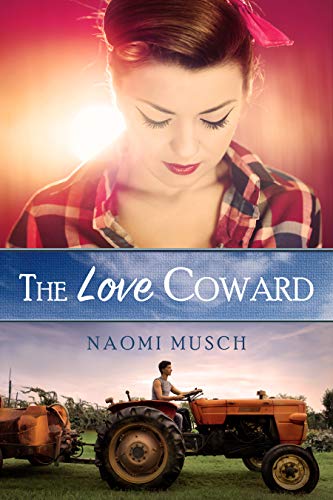
The Love Coward is a post-WWII novel that comes to conclusion around this beautiful time of year. If you're looking for a sweet read filled with vintage nuances of the season's harvest bounty, you might enjoy Tulla's story of recapturing love and life’s simple joys.


Naomi writes to change the story, and her heart beats for meaningful historical fiction. Author of numerous novels and award-winning short stories, she and her husband Jeff are at home in the Wisconsin Northwoods. Her perfect day is spent writing, roaming the farm, snacking from the garden, relaxing in her vintage camper, and loving on her passel of grandchildren.

Sunday, February 27, 2022

Author Spotlight on Naomi Musch


Hello, friends! Welcome to my wilderness! That greeting puts a lot of my writing into a nutshell because I like to write my stories with settings in wilderness or rural areas. Some works are set in small towns, but I usually stay clear of the big cities, mainly because I've never been a city girl, and I don't think I could write about city living authentically. I'm a country gal through and through! The picture on my banner is from the edge of my yard. It's quite literally "the back forty".

My love of history is heavily influenced by stories of the colonial frontier--of the frontiersmen, explorers, trappers, traders, and indigenous people who populated the land in the central and upper parts of our country over 200 years ago. I always figured that most of my stories would be set in the Revolutionary or pre-Revolutionary period. Alas, I could never have imagined I’d eventually be writing stories from that time all the way up to post WWII! May I introduce you to my writing journey over several periods of history?

My first published series was set during the mid-late 1800s in Wisconsin. The Empire in Pine series chronicles the rise of the logging and railroad era via a family saga of three generations of women who experience the adventure and romance of the period. It's a mix of historical women's fiction that contains romantic threads and redemptive themes. Titles include The Green Veil, The Red Fury, and The Black Rose, and they are best read in order.

It was easy going back to my Empire in Pine research when I recently wrote a lighter romance called Not for Love, just released in Barbour’s new Lumberjacks & Ladies novella collection. In that story, a young widow writes a letter to the lumber camps in search of a man willing to marry her and act as a husband "in name only" to help her keep and run the farm she started to build with her deceased husband. 

Lumberjacks & Ladies is my first book available on audio. What a thrill!


After my Empire in Pine series, I went back to writing a story which had long lived on my heart: Mist O’er the Voyageur. It’s a story that takes place in my beloved Lake Superior region during the fur trade--a romantic adventure between a voyageur and Metis woman who disguises herself to join a voyageur's brigade while searching for her fur-trade father in the wilderness. Now the sequel is out too: Song for the Hunter, in which Metis hunter Bemidii Marchal puts his life on the line for the love of a French woman who may reject him when she learns the devastating secret he hides.


Another story set in an even earlier period is A Tender Siege, a novella of the French and Indian war involving a Highland soldier wounded in the wilderness near Fort Pitt when it is under siege by Pontiac’s Native forces. Readers can find it in part of a collection called The Highlanders.


Then one day I got the idea for a story idea based on Genesis 29, when Jacob married Leah and later Rachel, but set in a different period. So of course I wasn’t going to write a novel about a man marrying two women, but what if, during WWI, a man—a farm hand—married one farmer’s daughter while he pined for the other? Sounds nasty, but I promise it doesn’t cross lines. It’s a story about a man and woman who God deals with in deep ways. These characters carry such deep burdens in their marriage that only the Echoes of the Heart can express them. The Deepest Sigh turned out to be one of my favorite novels. In fact, it compelled me to write a series, continuing with The Softest Breath, and The Brightest Hope. Each book tells the story of another character that comes along, and about a hero who has an involved character arc. Readers have said that people who love Francine Rivers will enjoy these books.


By the time I signed to write a story for Barbour's new Heroine’s of WWII series, I’d long since shed my notions of sticking to the colonial period—though I hope to write something set during that era again. I had some practice writing about the post-WWII era when I published The Love Coward a sweet story of second chances, and now my novel Season of My Enemy, set on a Wisconsin farm during WWII, will release in June. 
Literally a few days ago, Barbour pulled down the cover we’d worked on for the book and came up with a new one. I'm not 100% sure it's final even yet, so watch for the official re-reveal soon.


I’ve become more and more open to writing in different eras. I feel quite at home in the Americana period of the first half of the 20th century, but also in the 1800s of the upper Midwest and the rough and tumble wilderness frontier of the 1700s. I’ve even written a couple contemporaries that are a romp to spin out from time to time, though my first and biggest love is still historical. I’m not sure where it’ll all lead to next. I’m working on another possible WWI story about spies and sabotage in a Wisconsin port town. We’ll see how it goes! It’s all in God’s hands, and I’m content to leave it there.

Thanks for traveling with me down memory lane as I reflect back to writing these books. If you’re interested in these or other stories I’ve written, catch me at the usual social and bookish places. I do a monthly drawing in my newsletter Northwoods Faith & Fiction. In March I’ll be hosting a drawing for a signed copy of Song for the Hunter, so don’t miss the chance to get on board!

Until later,

Naomi  

Monday, March 29, 2021

160 Acres and a Plow


Hello, HHH readers and writers! Though we may be acquainted online or personally, I am a new contributor to the blog, so my first post will help you to get to know me better as I touch on some national history that has stirred my curiosity in a personal way.

Last fall I commissioned my photographer daughter for some pictures of our back forty. She took this shot off the edge of our yard (which is the same view as my banner above, but that was taken in a different year). The shot is framed is an old window from our falling-down barn. In fact, that barn stands just feet to the left of the spot where she stood to take this, so it’s the very view you’d get if you were looking out from inside the barn.


So why tell you this?

Because I’ve been thinking about the history of our property and land history in general. I had a suspicion that our property, like other acreage in parts of the Midwest (North and South Dakota, Nebraska, Kansas) may have been divided out under the Homestead Act of 1862 or one of the acts that followed. However, the more I search, the more this doesn’t seem to be the case for our place. Apparently, Wisconsin was a public domain state, meaning it was considered federal property. The government sent in land surveyors who divided the state up into 36 square-mile townships, and portioned out property in sections, making acreage for sale in the form of land patents. The first owner of a piece of property was called the patentee. When the property was sold to a private party, the document then became a deed. In viewing a 1911 map of land for sale by the Farmers Land and Cattle Company, Limited, it looks like our property was probably first sold under one of those patents. I still have to research our particular deed and abstract to figure out the details.

The Najt/Musch Farm

The first family to own our 160 acres was the Najt family from Czechoslovakia. They built the house in about 1915. When we began remodeling, we discovered crumbling Czechoslovakian newspapers used as insulation in the walls. They built the barn in 1930. Unfortunately, they brought in fill to create hillside approach to the hayloft. The dirt has since pushed in the northern foundation and will soon cause the demise of the entire structure. 


After the barn, they added the stone milk house, a beautiful little building. Those stones, as well as the stones of our basement, were gleaned from the property. We are fairly certain that the wood frame and most of the wall boards of the home were also milled directly from the building site.


We bought our 150 acres almost 24 years ago in 1997. Out of the original 160 acres, ten on the corner were partitioned off and sold by the previous owners. We’ve enjoyed meeting many people over the past couple of decades who expressed memories of coming to our farm to work or go sledding on one of the big hills in back. Interestingly enough, we used to live only two miles away, where the land was flat. Until we came to the farm, we had no idea such big hills were hidden back here. Tractoring on those hills is a real challenge. I can only imagine what it was like to clear the woods off them.

Surrounding our property are thousands of acres of woodland, mostly owned by paper companies. In the ground is a lot of rock. Our farm fields are intermittent piles of fieldstone pulled up by former owners as well as by our boys when they plow. Every year, I clear more rocks out of my garden that are forced up by frost heaves in the spring.

Although our property was not carved out of the 1862 Homestead Act, the Najts were true homesteaders in every other sense. They took these wild acres and settled them into a beautiful farm from scratch.

ABOUT THE HOMESTEAD ACT

All my curiosity did get me to researching the 1862 Homestead Act. You may have watched movies or read novels about settlers homesteading in the Dakotas or some other prairie state, braving the terrible winters and invasive insects to stand firm on their piece of land for five years so that they could claim it as their own. That’s pretty much the gist of the requirements. Anyone could file a claim, as long as they were 21 years old or the head of the household—man, woman, black or white—as long as they had never raised arms against the United States. (Native Americans were not allowed to claim, unfortunately.) Those who wanted a claim only had to file an $18 fee, live on the land, and improve it—a 12x14 building was required, or trees needed to be planted—and the land became theirs. About 40% of the people who tried succeeded.

But why the Homestead Act? I found the timing interesting, given it was passed during the Civil War.

Up until the war began, there had been arguments over what was to become of all the unsettled property in prairies states and upper Midwest. Land-grant laws had been proposed by northern Republicans before the Civil War, but they’d always been blocked in Congress by southern Democrats who wanted those states open to purchase by slave owners. One such law that did pass in 1860 was vetoed by Democratic president James Buchanan. Republicans held that the federal lands should be made available to everyday folk who wanted to own their own, small farm.

When the south seceded from the union, the southern Democrats in congress went too, so Republicans passed the bill allowing anyone with gumption to get a piece of the land, build a home, and farm it. On May 20, 1862, President Lincoln signed it into law. A man named Daniel Freeman was the very first person to do so. On January 1, 1863, the day the act went into effect, Mr. Freeman, a union soldier, said that he was leaving for St. Louis in the morning (he may have been a scout), but he convinced a clerk to open the land office just after midnight so he could file a claim for a homestead in Nebraska.

In all, the U.S. gave away 27 million acres in 160-acre sections by way of the Homestead Act. (That figure makes my jaw drop!) Homesteading continued until 1976 except in Alaska, where it continued until 1986. (Gee, I was old enough to try it!)

The graves of Daniel and Agnes Freeman at the Homestead National Monument of America – Note that his tombstone records him as a Soldier, Doctor, Sheriff, and Farmer. A True Pioneer.

 
I plan to continue to the search for our farm’s history. Since the days it was carved out of the wooded wilderness, it has been a dairy farm, a beef farm when my husband and I family raised beef, goats, chickens, pigs, and the usual menagerie of critters, and now under our sons' management, a whitetail deer farm and hunting preserve called Long Lake Farms and Long Lake Outfitters. The boys have rebuilt fences, pens, a barn, and replanted fields. It's had a total makeover! 

Meet Trip! He's a friendly yearling. He was born late in the season last year and has enjoyed some special attention.


I hope you feel like we're better acquainted now. What history do you know of the place where you live, be it small or large, or whether it's in town or in the country? I'd love to hear about it!

Naomi

I write historical fiction set in Wisconsin and the Great Lakes region. My most recent novel The Love Coward is a farm girl romance that takes place just after WWII. The story is set in the Mississippi River region in western Wisconsin. I'll be giving away a copy or two during Jenny Knipfer's Spring Garden Party held April 10th-11th on Facebook at "Journeying with Jenny". I hope you'll j
oin me along with thirteen other presenters!