Showing posts with label Spencer Penrose. Show all posts

Monday, March 9, 2020

Grand Opening! Colorado Springs (take 2)

By Tiffany Amber Stockton


Last month, I have no idea how it happened, but the main blog content from January got posted with my February blog instead of the content I prepared. My sincere apologies for that. What should have been an introductory post about the history of Colorado Springs ended up being a repeat of entrepreneurs founding America. If you missed that post in January, you can read it again here (winks): https://www.hhhistory.com/2020/02/grand-opening-colorado-springs.html.

Now, let's get on with what *should* have been posted last month.

My very first book series highlighted pioneers in America and their refusal to give up, no matter the circumstances. The same can be said of anyone establishing a new town or city. Since I have been living in Colorado Springs for more than a decade, I've been itching to explore the rich history right here. So, here we go!

COLORADO SPRINGS: GRAND OPENING

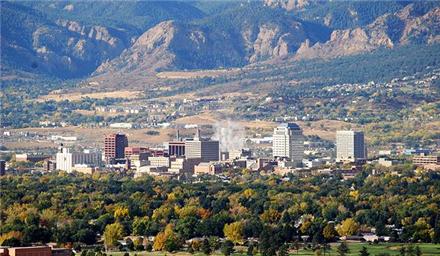
The 14,115 foot mountain called Pike's Peak has long been the focal point of everyone who lives in what is now the Colorado Springs area. The oral tradition of the Ute people call it Tava – or "Sun Mountain" – for the way it collects and reflects the morning's rays. The Spanish, who settled in northern New Mexico and explored the area beginning in the 16th century, called it "Almagre" for its vibrant red coloring.

The first American official to encounter the mountain was Zebulon Montgomery Pike, a young army lieutenant, who was dispatched to survey the southwestern boundary of the newly acquired Louisiana Territory -- thanks to Lewis and Clark. When he first saw the mountain looming in the distance, Pike named it Grand Peak. Deep snow prevented him from reaching the summit on his first attempt, but in 1810, he published the account of his expedition and literally "put the mountain on the map." As a result, his name is forever attached to the peak.

The discovery of gold spurred the first permanent settlement in the region. In 1859, Colorado City was established at the lower end of the Ute Pass trail. The rugged and wild supply camps sold goods and equipment to eager miners on their way west. Old Colorado City is still a distinctive community on the west side of Colorado Springs. It is an historic district with its own personality, quirky shops, and unique restaurants. It survives as a living legacy of the region's frontier spirit, and every year that legacy is celebrated with the annual Territory Days during Memorial Day weekend.

The Colorado Springs that exists today sprang from the imagination of General William Jackson Palmer, a Civil War hero and railroad magnate. He established Colorado Springs on July 31, 1871. Palmer had a distinct plan right from the start, to use the area’s enticing scenery, nearby mineral springs, and other amenities to attract residents to a "resort" town. He laid out the broad streets, hauled in 10,000 trees to make the city green and lush, and built lavish, European-style buildings.

Unlike a lot of other "boom" towns that happened due to miners seeking gold, Colorado Springs actually attracted wealthy residents, capitalists, intellectuals, artists, writers, and inventors right from the start. It served as a destination for tens of thousands of health seekers hoping the community's abundant sunshine and fresh air would cure tuberculosis. After the 1891 discovery of gold in Cripple Creek, just to the west of Pikes Peak, even more wealth came to Colorado Springs. For a time, the city had more millionaires per capita than any other place in the U.S.

Today, entrepreneurs and visionaries are still adding intricate layers to the economy here. Colorado Springs is at the same time an art colony, college town, military installation, destination for the high-tech industry, and home to the U.S. Olympic Committee headquarters. Yet, at the heart of it all, you can still find remnants of Palmer's healthful, attractive, community with an extensive park system, trails galore, red sandstone spires, and that ever-present feature mountain.

As Matt Mayberry (Colorado Springs Pioneer Museum, 2008) wrote: "The Pikes Peak region is a cultural and geographic confluence. It's where the mountains meet the plains, where the Southwest joins the heartland, where ancient cultures converge with 21st century society, and where the past informs the future. For some, it's stirring enough to inspire poetry."

NOW IT'S YOUR TURN:

* What might be a reason YOU would have traveled west to uncharted territory?

* If you had been one of the first people to discover the natural hot springs in this region, what would you have done?

* Have you ever visited Colorado Springs or anywhere in Colorado? Where and when?

* What did you like the most about today's post? What topics would you like to see covered in future posts?

Leave answers to these questions or any comments you have on the post below. Come back on the 9th of April (my son's birthday) for my next appearance.


BIO

Tiffany Amber Stockton has been crafting and embellishing stories since childhood, when she was accused of having a very active imagination and cited with talking entirely too much. Today, she has honed those childhood skills to become an award-winning and best-selling author and speaker who is also an advocate for literacy as an educational consultant with Usborne Books. She loves to share life-changing products and ideas with others to help better their lives.

She lives with her husband and fellow author, Stuart Vaughn Stockton, along with their two children and two dogs in Colorado. She has sold twenty (21) books so far and is represented by Tamela Hancock Murray of the Steve Laube Agency. You can find her on Facebook and GoodReads.

Sunday, February 9, 2020

Grand Opening: Colorado Springs!

By Tiffany Amber Stockton


Last month, I shared about America being partially founded by entrepreneurs and risk-takers. If you missed that post, you can read it here: https://www.hhhistory.com/2020/01/entrepreneurs-founded-america.html.

My very first book series highlighted some of those pioneers and their refusal to give up, no matter the circumstances. The same can be said of anyone establishing a new town or city. Since I have been living in Colorado Springs for more than a decade, I've been itching to explore the rich history right here. So, here we go!

COLORADO SPRINGS: GRAND OPENING

There are many who say America is becoming more and more geared toward the individual entrepreneur and less on the corporate world or company-dictated economy. Economists have predicted by the year 2025, more than 50% of Americans will own a "side gig" or be an entrepreneur of some sort...even if it's only part-time.

I honestly wouldn't mind this at all! Small businesses almost always come with a personal touch that is often overlooked, neglected, or completely missing with larger companies and "big box" stores. Think about your small towns that pretty much run America. What makes them so appealing? Why are they so often the subject of novels and movies? What made small towns thrive and in some cases cause them to become bigger towns or central cities?

The answer? Entrepreneurs.

Our nation was founded, quite literally, by entrepreneurs. In 1607 the Virginia Company sent three ships across the Atlantic and unloaded 109 passengers at what became Jamestown, Virginia. They had a goal in mind that didn't quite pan out to become successful. It was a joint-stock company, a relatively new invention that allowed people to invest in enterprises without running the risk of losing everything if the business did not succeed. By limiting liability, corporations greatly increased the number of people who could dare to become entrepreneurs by pooling their resources while avoiding the possibility of ruin.

Their attempt to establish American plantations introduced a rather new venture. Unfortunately, this venture also came with a rather steep learning curve, and the Virginia Company made almost every mistake that could be made as other industries developed and new ideas were introduced. Once John Rolfe introduced tobacco, it quickly became an export item and made Virginia rich. Other colonies followed suit, and that eventually led to cotton plantations as well.

However, plantations required supplies, wagon repairs, horses, medical attention, clothing for the workers, personal grooming, dry goods, legal services, and so much more. They couldn't often get or have all of that on their plantation, so they had to go into town for it. That's where the entrepreneurs were in abundance. And that's where the long-standing tradition of trading goods and services was at its best!

The smaller towns could be quite limited in the variety of their businesses. They would start with the basics of a blacksmith, apothecary, cobbler, mercantile, and a grain/feed shop. Some might also feature a candleshop, tailor, barber, doctor, lawyer, seamstress, library, and alehouse. The larger a town grew, the more diverse the businesses became. Whatever the need, there was a business that provided it. If the need existed and an existing business couldn't meet the need, someone would start a new one. If you couldn't afford to pay cash for goods or services, you offered your own goods or services in honest trade.

I would love to see America return to this in a greater manner. So much in business has lost the personal touch, the relationships, and the community feel. Who knows? Maybe with this increase in "side gigs," we'll see a little bit of the small business mentality growing again. I know I wouldn't mind!

NOW IT'S YOUR TURN:

* What might be a reason YOU would have traveled west to uncharted territory?

* If you had been one of the first people to discover the natural hot springs in this region, what would you have done?

* Have you ever visited Colorado Springs or anywhere in Colorado? Where and when?

* What did you like the most about today's post? What topics would you like to see covered in future posts?

Leave answers to these questions or any comments on the post below. Come back on the 9th of
March for my next appearance.


BIO

Tiffany Amber Stockton has been crafting and embellishing stories since childhood, when she was accused of having a very active imagination and cited with talking entirely too much. Today, she has honed those childhood skills to become an award-winning and best-selling author and speaker who is also an advocate for literacy as an educational consultant with Usborne Books. She loves to share life-changing products and ideas with others to help better their lives.

She lives with her husband and fellow author, Stuart Vaughn Stockton, along with their two children and two dogs in Colorado. She has sold twenty (21) books so far and is represented by Tamela Hancock Murray of the Steve Laube Agency. You can find her on Facebook and GoodReads.

Monday, November 9, 2015

A Living Legacy - El Pomar Foundation

By Tiffany Amber Stockton


Last month, I shared about the Cheyenne Mountain Zoo, America's only mountain zoo. This month, we bring it all home to the real source of Spencer Penrose's philanthropic ventures: the El Pomar Foundation. Read below to learn more about Penrose's ambitions and goals and what he aimed to achieve through this charitable organization.

EL POMAR FOUNDATION

Mr. Penrose's approach was straightforward: build for tomorrow. He did this in two ways. In a literal sense, he helped create some of Colorado Springs' most famous landmarks. Penrose first built The Broadmoor, a world-class resort in the foothills of Colorado's Rocky Mountains, and then went on to create legacies including the Pikes Peak Highway and the Cheyenne Mountain Zoo.

Penrose's second approach to building for tomorrow began in 1937 when he and his wife Julie established a living legacy, El Pomar Foundation. Through El Pomar, the Penroses supported cultural and civic institutions including the Colorado Springs Fine Arts Center, Central City Opera, and Fountain Valley School. Mr. Penrose left the majority of his estate to El Pomar upon his death in 1939. Julie Penrose succeeded her husband as El Pomar president and served in that position with a generous and indomitable spirit. She left the majority of her estate to El Pomar in 1956.

History and tradition don't always lead to innovation, but in the case of El Pomar Foundation these three words are intertwined.

History means they've been around a long time--since 1937 when entrepreneur Spencer Penrose and his wife Julie established a legacy to serve as a valuable resource for the people of Colorado.

Tradition means they do certain things year in and year out. Grantmaking is one example. El Pomar Foundation makes grants to nonprofit organizations in the state of Colorado--and has been doing so since the Foundation was established. Some grantees have been funded on a regular basis since the days when the Penroses made grant decisions themselves.

Innovation means the trustees of El Pomar are constantly looking for new ways to achieve the mission set forth by the Penroses-- to enhance, encourage and promote the current and future well-being of the people of Colorado. El Pomar's extensive programs are an example of innovation in action. The program details are all different, but together they support the same objectives of developing leaders and strengthening communities.

As El Pomar eagerly continues its journey into tomorrow, its direction comes from its past. Spencer and Julie Penrose's lives, as they lived them, provide the principles that will continue to guide their foundation now and in the future.

The city of Colorado Springs and surrounding towns have been extremely blessed by the bountiful gifts given by El Pomar Foundation. I can list off dozens of names of people I know who have been directly influenced or changed in some way by the generosity of this foundation. It's a gift that keeps on giving, and with the heart of the Penroses at its core, I'm certain it will continue for generations to come!

NOW IT'S YOUR TURN:

* Have you ever crossed paths in any way with The El Pomar Foundation? When and how?

* Do you have a favorite charity to which you donate or support?

* If you were to establish a charitable foundation of your own, what would be the top three (3) values by which you'd run the foundation? In other words, what would be most important to you to be achieved by the foundation?

Leave answers to these questions or any comments on the post below. Next month, I'll be spotlighting the Madrigal at Glen Eyrie Castle. Get ready for some Christmas revelry, Medieval style.


BIO

Tiffany Amber Stockton has been crafting and embellishing stories since childhood, when she was accused of having a very active imagination and cited with talking entirely too much. Today, she has honed those childhood skills to become an award-winning author and speaker who has partnered with Nerium International in the anti-aging and personal development industry, helping make people better from the inside out.

She lives with her husband and fellow author, Stuart Vaughn Stockton, in Colorado. They have one girl and one boy, a Retriever mix named Roxie, an Australian cattle dog named Timber, and two Betta fish. She has sold twenty (20) books so far and is represented by Tamela Hancock Murray of the Steve Laube Agency. You can also find her on FacebookTwitterPinterest, and LinkedIn.

Friday, October 9, 2015

Cheyenne Mountain Zoo - America's only mountainside zoo

By Tiffany Amber Stockton


Last month, I shared about the 5-star hotel and resort, The Broadmoor. It remains a world-renowned prestigious resort in Colorado Springs today. Next up is the Cheyenne Mountain Zoo, another contribution of Spencer Penrose to Colorado Springs when his own private collection of exotic animals became too much to handle on the grounds of the Broadmoor.

CHEYENNE MOUNTAIN ZOO

Cheyenne Mountain Zoo is America's only mountainside zoo, located southwest of downtown Colorado Springs, Colorado on Cheyenne Mountain in the United States at an elevation of 6,800 feet (2,100 m) above sea level. The Zoo covers 140-acre, of which 40 acres are in use. It is located west of The Broadmoor resort along the slopes of Cheyenne Mountain's lower north end. The animal collection includes more than 750 animals, representing nearly 150 different species, with more than 30 endangered species.

It was founded in 1926 by philanthropist Spencer Penrose to house his growing collection of exotic animals. In 1938, after substantial development, Penrose incorporated the Zoo as a non-profit public trust to the people of Colorado Springs. This trust was deemed "for the sole purpose of establishing and maintaining a zoological park to provide recreation, education, conservation and scientific facilities in the field of zoology and related subjects, and to preserve the Zoo in perpetuity for the people of the Pikes Peak region."

As an independent, non-profit 501(c)(3) organization, Cheyenne Mountain Zoo is one of only a handful of Association of Zoos & Aquariums (AZA) accredited zoos in the country that does not receive local or regional public tax support, nearly 100 percent of the Zoo's income is generated from earned revenues, gate admissions, gifts, membership dues, donations, and corporate sponsors and grants. This brings local support to a whole new level here in the Springs!

Exhibits
Cheyenne Mountain Zoo tries to continuously create new and updated exhibits that let visitors become active participants in their visit, encourage an appreciation and respect for the dignity and intrinsic value of all living things, and challenge the visitors to make a difference in the natural world.

African Rift Valley
Located near the main entrance and gift shop, the African Rift Valley exhibit houses the zoo's sizable Reticulated giraffe herd as well as Grant's zebra, Red river hogs, meerkats, African lions, and Black-and-white colobus, Cape vultures, Okapi, and Crowned crane. The exhibit runs along the east side of the main road. Reticulated giraffes flourish at the Cheyenne Mountain Zoo's African Rift Valley exhibit and are the largest herd in the United States. The public is able to hand feed romaine lettuce for a fee to the giraffes at inside or outside enclosures. The Cheyenne Mountain Zoo giraffe breeding program is the most prolific in the world with 199 births since 1954. There is also a giraffe web cam for online giraffe viewing or the herd outside along with zoo guests.

Asian Highlands
Resting on the Western mountainside, Asian Highlands exhibits Amur tigers, Amur leopards, Snow leopards, and Pallas' cats using architecture reminiscent of a Himalayan monastery. This is one of my favorite exhibits, primarily for the Amur tiger. My children know this is my favorite animal next to the lion, which is ironic considering I don't really care for cats all that much. :)


Aquatics
The Aquatics building houses Nile hippopotamuses, African penguins, beavers, and Burmese pythons. Also ins
ide the building is the "Leaping to the Rescue" exhibit with multiple amphibian species on display including the critically endangered Wyoming toad. Aquatics also houses a collection of fish living in a variety of aquariums.

Australia Walkabout
Renovated and reopened in 2015, guests are able to walk along with free-ranging Red-necked wallabies in a unique way inside their exhibit. Budgie Buddies is located here and houses the zoo's parakeet collection. Guests can hand-feed the birds with special seed sticks in a building with floor-to-ceiling windows and Colorado Springs as the background. The rest of the area exhibits Emu, American alligators, and a Matschie's tree kangaroo.

Bear Grottos
Spectacled bears and Asiatic black bears live in two moated exhibits with large trees and pools with a waterfall entering both exhibits.

Encounter Africa
Opened in 2013, the Encounter Africa exhibit is the largest addition in the zoo's history. Home to African elephants, Black rhinoceros, and more viewing of the meerkats and African lions, Encounter Africa offers a uniquely close view of some of the continent's most iconic animals. A sky bridge gives panoramic views of the city of Colorado Springs. We recently welcomed three new lion cubs to the pride, and they only just recently became old enough to be watched in the observation area. This is a photo I snapped during our last visit.

Monkey Pavilion
Originally opened in 1942 to house the big cats, the Monkey Pavilion exhibits a variety of the zoo's smaller primate and other mammal species. In 1995, the zoo demolished the old monkey house and transferred the animals to their new home in what is today called the Monkey Pavilion. Inside, guests can view; Black-crested mangabeys, Goeldi's monkeys, Geoffrey's marmosets, Black howler monkeys, White-cheeked gibbons, White-handed gibbons, Coatimundi, Black and white ruffed lemurs, Ring-tailed lemurs, Wolf's guenon, Sykes' monkey, and Two-toed sloths. Animals can be found in both indoor and outdoor exhibits.

My Big Backyard
Located in the heart of the zoo, My Big Backyard provides kids of all ages creative, hands-on experiences in the great outdoors. Chickens, Goats, Koi, and Rabbits can be seen here. There's also a clubhouse experience with an active honey beehive, enlarged egg replicas where children can get into them, and on hot days, a hose with a water mist for cooling off. This areas is connected to a playground slightly below via a gate-closed path, and from there, you have easy access to the carousel and main eatery area.

Primate World
Primate World is the home to the larger primate species at the zoo. Guests can see the great apes face-to-face in the indoor and outdoor enclosures. The building was originally built in the 1960s and renovated in the 1990s to be more stimulating for both the guests and the great apes. Primate World houses Orangutans, Western lowland gorillas, Siamangs, and Naked mole rats.

Rocky Cliffs
Mountain goats can be seen from above and below the cliffs nestled between a switchback road.

Rocky Mountain Wild
As America's only mountain zoo, Cheyenne Mountain Zoo is uniquely suited to showcase Colorado wildlife in its natural setting. Rocky Mountain Wild offers encounters with Moose, Mexican gray wolf, Mountain lions, Canada lynx, River otters, Grizzly bears, and Bald eagles. The bald eagle are free to fly and return without being held in captivity, but they have a nest and secluded area reserved just for them, and almost directly across from the Amur tiger is where you can find one of them. The others are closer to the Grizzly bears.

Scutes Family Gallery
The old Bird and Reptile building, in the Australia exhibit, built in the 1940s, was completely refurbished as a modern art gallery with more than 40 species of reptiles as the artwork.

The Loft
A kid-friendly space with counter-height exhibits, offering eye-level viewing for guests. Children learn what it takes to care for an animal at the zoo. Lessons on how to prepare diets, medications and enrichment are offered throughout the day.

RIDES & OTHER ATTRACTIONS

Carousel
Installed in the zoo in 1937, this 20 horse, 2 chariot historical carousel is located in the center of the zoo. Older than most of the people who ride it, this carousel was a popular attraction at the 1932 World’s Fair. A cherished feature of Cheyenne Mountain Zoo, it has been giving people of all ages a great ride since 1937. Now, restored to its original beauty, this antique carousel is a permanent attraction. Information about the history of this carousel can be found at the carousel entrance.

Mountaineer Sky Ride
An open-air chairlift style ride that takes guests above the Mountain goat, Grizzly bear and Amur tiger exhibits. Guests are then dropped off in an area west of the zoo not accessible by walking and ride round trip back down to see the rest of the zoo. At the top, you'll find a jungle gym area for kids, a rock wall, restrooms, small concession area, and a shaded resting place with historical facts inside.

Will Rogers Shrine of the Sun
Admission to the zoo includes the Russell Tutt Scenic Highway and Will Rogers Shrine of the Sun for that day, weather permitting. Built by Spencer Penrose between 1934 and 1937, it stands dedicated to Will Rogers who died in a plane crash in 1935. The elevation of the shrine is 8,136 feet on the top deck and provides breathtaking views of Colorado Springs and the Pikes Peak Region.

So, are you ready to come for a visit?

NOW IT'S YOUR TURN:

* Have you ever visited Cheyenne Mountain Zoo? When?

* Do you have a favorite zoo? Is it nearby or in another state?

* What is your favorite animal to visit at a zoo? Why?

Leave answers to these questions or any comments on the post below. Next month, I'll be spotlighting The El Pomar Foundation, an amazing charity with their investments in the community at a philanthropic high. Nearly everyone in Colorado Springs is aware of this foundation. You'll soon discover why.


BIO

Tiffany Amber Stockton has been crafting and embellishing stories since childhood, when she was accused of having a very active imagination and cited with talking entirely too much. Today, she has honed those childhood skills to become an award-winning author and speaker who has partnered with Nerium International in the anti-aging industry, helping others achieve optimal brain health, look younger, and live better.

She lives with her husband and fellow author, Stuart Vaughn Stockton, in Colorado. They have one girl and one boy, a Retriever mix named Roxie and and Australian cattle dog named Timber. She has sold twenty (20) books so far and is represented by Tamela Hancock Murray of the Steve Laube Agency. You can also find her on FacebookTwitterPinterest, and LinkedIn.

Wednesday, September 9, 2015

The Broadmoor Hotel: Luxury at its Finest

By Tiffany Amber Stockton


Last month, I shared a bit about the Pike's Peak Highway, as it's celebrating its 100th year since official construction began. Next up is the luxurious resort known as The Broadmoor, yet another contribution of Spencer Penrose to Colorado Springs.

THE BROADMOOR


"Broadmoor Hotel, Dec 2007" by Kari Sullivan
If ever there was a resort that gives new meaning to the word luxury, The Broadmoor is it! Situated on acres at the base of Cheyenne Mountain along the Front Range of the Colorado Rockies, this 5-star resort is aptly named "The Grand Dame of the Rockies" and is patterned after elegant European hotels with excellent service and cuisine. Whitney Warren (a cousin to the Vanderbilts) and Charles Wetmore, designers of Ritz-Carlton and Biltmore hotels, were commissioned as architects in 1917 to build The Broadmoor.

As I was researching the history of this famous hotel, I found myself fascinated by so many connections to things I love or other well-known people I've researched or who were highlighted in countless historical books I've read. Even more amazing to me is how I had lived my entire life without knowing a thing about this hotel until I moved here in 2007 after marrying the man who's now my husband. Many of you reading this have likely never heard of this hotel either. I suppose we simply don't travel in the proper circles where The Broadmoor would be mentioned alongside such well-known names like Ritz-Carlton and Biltmore. *grins*

Nevertheless, this hotel has a notable names list worthy of the Who's Who in American History books. Names such as Annie Oakley, who ran the shooting school; Frederick Olmstead, who designed the landscape for Central Park and who also landscaped The Broadmoor; Arnold Palmer, who helped design the hotel's third golf course; John D. Rockefeller, who was the hotel's first guest in June of 1918; and the list goes on.

"Broadmoor Lake Panorama to the West" by Tim Chambers
The architecture and color is like the grand hotels found on the coast of the Mediterranean, in an Italian Renaissance style. The pink stucco of the façade also helps to blend in to the Pikes Peak area landscape. The main buildings are connected on a circular path around a lake, and a walking bridge has recently been built across the middle of the lake. The original hotel building is Broadmoor Main built in 1918. The others—built between 1961 and 2001—are Broadmoor South, Broadmoor West, Lakeside Suites, and West Tower.

The Broadmoor has 779 rooms or spaces available for guests. Many of the Broadmoor South rooms have balconies and some have fireplaces. There are eighteen restaurants located in the main hotel buildings, golf club, pool cafes, Summit Restaurant, and Golden Bee pub. Broadmoor Golf Club has three golf courses, designed by Donald Ross, Robert Trent Jones, and Ed Seay and Arnold Palmer.

The full-service spa has an indoor pool, fitness center, 43 treatment rooms, relaxation room, and hair and nail salon. It offers more than 100 services. You could spend three weeks being pampered here and still not experience everything offered at the spa. The resort also has indoor and outdoor pools and tennis courts. There are 25 retail shops, including clothing boutiques and shops, a florist, sundry shop, jewelry store, and gift shop. Plenty of options to satisfy that shopping craving you might have.

"USA Colorado Broadmoor Back" by Keith Knapp
There is a 3/4-mile trail around Cheyenne Lake that is creek-fed and manmade. In the summer, it's fun to rent a bike or paddleboat to travel around the lake. The Stables at the Broadmoor offer horseback riding, and The Penrose Heritage Museum houses a collection of vintage carriages and automobiles, including race cars from the Pikes Peak Auto Hill Climb in the early 20th century. I made reference to this race in my monthly post on July 9th.

As if all of this isn't enough, The Broadmoor offers a luxurious mountain experience at their 16-acre Ranch on Emerald Green on Cheyenne Mountain. The current owner purchased the property and built a main lodge and ten cabins and restored other original buildings. There are two small lakes, horse stables, a gazebo, hot tubs, and an outdoor fire pit. Ranches are available for $800/night!

So, are you ready to come for a visit?

* Bonus Note:
A long-time favorite movie of mine (Ice Castles: 1978) was filmed at the former Broadmoor World Arena in 1977. It starred Lynn-Holly Johnson, a U.S. National figure skating medalist, and Robby Benson, the voice of The Beast in Disney's Beauty and the Beast. :)

* Did You Know?
- Forbes Magazine has given The Broadmoor a 5-star ranking for 54 consecutive years (as of 2015), the longest period of time as any establishment in the U.S.
- Forbes also gave the hotel a 5-star restaurant ranking in 2012, making The Broadmoor one of only three other hotel and restaurant combinations to receive the ranking.
- For a detailed history with other fascinating facts, check out The Broadmoor web site (http://www.broadmoor.com/five-star-hotel/)

NOW IT'S YOUR TURN:

* Have you ever stayed at The Broadmoor or visited at any time? What was the reason?

* Is there a luxurious resort hotel in another town that's your favorite? Or perhaps another one well-known for its high-class service and accommodations? What is the name and where is it located? Have you ever stayed there?

* What makes a hotel "high-class" in your opinion? What is required for you to give a hotel or resort the coveted 5-star rating?

Leave answers to these questions or any comments on the post below. Next month, I'll be spotlighting the famous Cheyenne Mountain Zoo, one of the nation's top zoos, ranked by the Zoo and Aquarium Association.


BIO

Tiffany Amber Stockton has been crafting and embellishing stories since childhood, when she was accused of having a very active imagination and cited with talking entirely too much. Today, she has honed those childhood skills to become an award-winning author and speaker who has partnered with Nerium International in the whole body anti-aging industry, helping others achieve optimal brain health, look younger, and live better.

She lives with her husband and fellow author, Stuart Vaughn Stockton, in Colorado. They have one girl and one boy, a Retriever mix named Roxie and and Australian cattle dog named Timber. She has sold seventeen (19) books so far and is currently seeking a new literary agent for representation. You can also find her on FacebookTwitterPinterest, and LinkedIn.

Sunday, August 9, 2015

Celebrating 100 Years: Pikes Peak Highway

By Tiffany Amber Stockton


Last month, I introduced Spencer Penrose, philanthropist and ladies' man, but also a significant financier for many attractions here in Colorado Springs. This month, I'll begin highlighting a few of the significant establishments made possible through Penrose's generous and charitable investments.

THE PIKES PEAK HIGHWAY


Though foot traffic and burro rides up Pikes Peak were common in the earlier days, the first crude road up the mountain opened in 1887. Built by the Cascade and Pikes Peak Toll Road Company, this new road on the north side of the mountain gave sightseers and thrill seekers the ability to reach the top of the mountain on a wagon or carriage seat. I don't know about you, but I'd prefer that over riding on the back of a donkey! Travelers could pay $1 and use their own vehicles,or $5 and be treated to a nine-hour ride on the Pikes Peak Carriage Line. Which one would YOU choose?

That carriage road saw consistent activity, but the construction of the Cog Railway on the south side of the mountain in 1891 drew the majority of passengers and travelers desiring to reach the summit. I've taken the Cog and driven the Highway, and while the drive is breathtaking in the expansive views you're granted, there's something to be said for riding in comfort while someone else is doing the driving. Considering the conditions of the carriage road, I can understand the preference of most travelers. Of course, there was also Barr Trail, a steep hiking path up the east face of the mountain with a halfway resting point at Barr Camp. Today, you can travel south from the trail and take the Cog Railway the rest of the way to the summit or down if you wish.


Thank goodness for Spencer Penrose! In 1915, he requested permission from the Secretary of Agriculture to refine and complete the carriage road to the summit of the mountain so it would be more suitable for the growing number of motored vehicles. It cost $500,000 to build. In exchange for his efforts and his financing, Penrose was granted a 20-year license to maintain the road and permission to charge a $2 toll for the duration of the agreement.

The very next year, Penrose sponsored an auto and motorcycle race up the mountain. This was the birth of what is now known as the Pikes Peak International Hill Climb, which I mentioned last month.

Twenty years later, the Highway was added to the State Highway Systems and responsibility for the management of the highway was returned to the U.S. Forest Service. For 12 years, they kept it toll-free, but without tolls to help maintain the road, the highway deteriorated and was almost abandoned. In 1948, a permit was granted to the city Colorado Springs to assume responsibility, and it still maintains it to this day.

In 1999, a settlement was reached to pave the entire highway, but due to opponents and other factors, the full paving didn't occur until 2011. My first drive up the highway was in 2007 when my then-fiance took me to the summit during a 1-week visit here about 10 weeks before we were married. At that time, the paving stopped around the height of timberline (roughly 12,000 feet), so the remaining distance was merely graded. You can see where the paving stopped in the second photo above and what the graded road looked like up close in the photo to the left.

I remember when they announced full paving, as it was right after my son was born, and 3 months later, I drove with my parents and my children to the summit. With an infant and a 2-year-old and concerns about how the altitude would affect them, we didn't stay long. However, I can proudly say both of my children have made it to the summit of Pike's Peak!

* Bonus Note:
Katherine Lee Bates made notations in her journal upon standing at the summit of Pike's Peak in 1893. Some of those words later became what we now consider to be a "classic anthem" for the United States in "America the Beautiful." In 1926, a strong push was made to establish that as our national anthem, but "The Star-Spangled Banner" was chosen by President Truman instead.

NOW IT'S YOUR TURN:

* Have you ever driven the Pikes Peak Highway? When?

* If given the choice of the Cog Railway, the drive up Pikes Peak Highway, or hiking up Barr Trail, which one would you choose? Why?

* Which of the 2 anthems for the United States is your favorite? If you love both, what is your favorite aspect or part for each one?

Leave answers to these questions or any comments on the post below.


BIO

Tiffany Amber Stockton has been crafting and embellishing stories since childhood, when she was accused of having a very active imagination and cited with talking entirely too much. Today, she has honed those childhood skills to become an award-winning author and speaker who has partnered with Nerium International in the whole body anti-aging industry, helping others achieve optimal brain health, look younger, and live better.

She lives with her husband and fellow author, Stuart Vaughn Stockton, in Colorado. They have one girl and one boy, a Retriever mix named Roxie and and Australian cattle dog named Timber. She has sold seventeen (19) books so far and is currently seeking a new literary agent for representation. You can also find her on Facebook, Twitter, Pinterest, and LinkedIn.