Showing posts with label birds. Show all posts

Sunday, March 20, 2022

WONDER GARDENS, BONITA SPRINGS, FLORIDA


Molly Jebber
Amish Historical Romance Author


Let's talk about the Everglades Wonder Gardens!


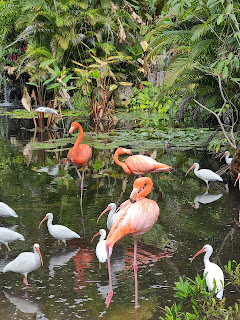
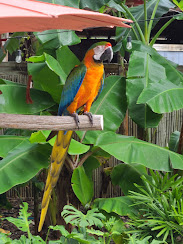
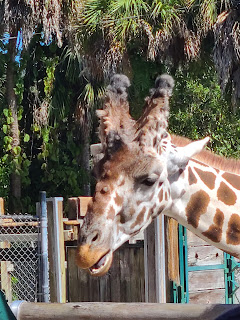
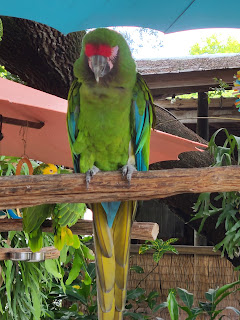
The Piper family opened a roadside attraction called the Reptile Gardens in 1936. As the establishment grew, the name was changed to the Everglades Wonder Gardens. For eight-five years, the Everglades Wonder Gardens has provided reptile attractions, singing and talking colorful parrots, flower transplants from around the world that have grown into beautiful gardens. During 1936 and until 2013, the Everglades Wonder Gardens rescued bears, tigers, bobcats, alligators, flamingos, parrots, many species of birds, monkeys, and more wildlife. They also provided educational programs.
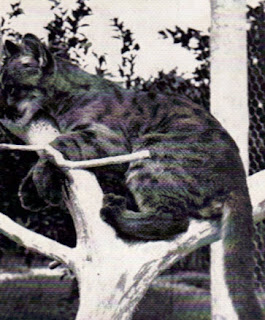
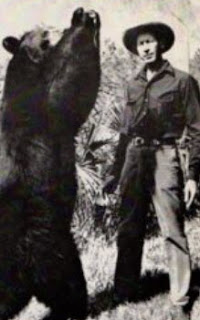


The Piper family closed the Everglades Wonder Gardens in 2013. John Brady, a local photographer and conservationist, John Brady took over the property as a tenant and reopened the park. With Ellie Krier's help, John Brady started the formation of the non-profit 501(c)(3), Bonita Wonder Gardens. And also with the help of the founding board members, which were Ray Carrol, President, Scott Klabunde board member and John Brady, and soon after, Dennis Gilkey, Trish Leonard, Jackie McCurdy, and Marjory Rubacky.


In July of 2015 the City of Bonita Springs recognized the economic, cultural and historic value of this zoological and botanical attraction and bought it to save the attraction from possible commercial development.
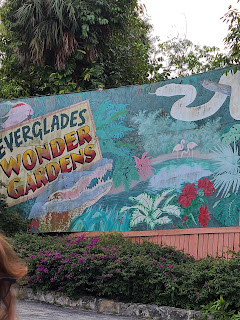


Today, David Rahaetih Webb serves as President & CEO, and manages along with the Board of Directors the Wonder Gardens. You'll find releasable birds and reptiles throughout the park along with it's banyan trees and plantings. The charitable donations for this organization provides for more than 300 resident animals, upgrading wildlife enclosures, growing the botanical beauty of the property, education programs and events, and further engaging the community to enjoy this wonderful attraction in the historical part of downtown Bonita Springs.
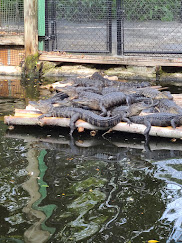


Throughout most of it's history, the community has supported the Wonder Gardens.


I hope you've enjoyed learning about the Everglades Wonder Gardens with me today! I visited not long ago and met "Kiwi", a colorful little parrot who sang, "Oh, what a beautiful morning, oh, what a beautiful day"! When asked, "What does the kitten say?" Kiwi replied, "Meow!" We had so much fun seeing all the attraction had to offer, but Kiwi remains our favorite.


Visit Molly


Friday, October 19, 2018

Birds that Symbolized Christianity in the Middle Ages

Birds represented the soul in medieval thought, capable of winging above worldly cares and possessions to reach God. The concept isn't hard to grasp. It ia, in fact, unforgettable. Individual birds took on special meanings in the Middle Ages, just as they do today. Some of the most notable are listed below and may surprise you.
This article is brought to you by Janalyn Voigt

Birds that Symbolized Christianity in the Middle Ages

Crane

When the lead crane tired during flight, that bird would drop to the rear of the flock, to be replaced by another. The first thus became last, an example of humility. Christians also looked to cranes for a reminder of vigilance. This connection began with Pliny the Elder, a Roman naturalist, who taught that a single crane clutching a stone in its claw kept watch over the flock at night. If the feathered sentry began to fall asleep, the stone would fall and wake the crane. In medieval heraldry, a crane holding a stone became the very image of watchfulness.  


Dove

Found in the pages of the Bible, the dove represented the Holy Spirit, peace and purity in the Middle Ages as it does today.


Eagle

It was once believed that eagles flew near the sun, then plunged into water to renew their plumage and restore their youth. This idea was based on Psalm 103:5: “…so that your youth is renewed like the eagle's.” (World English Bible) This association made the eagle a symbol of resurrection, new life, and Christ Himself.


Falcon

The falcon had two interpretations in the Middle Ages. As a persistent hunter, the wild falcon brought to mind evil thoughts and actions. However, the domesticated falcon represented the gentile converted to Christianity. This duality makes clear the peril of those separated from God and the mercy of God’s grace in offering salvation to all mankind.


Goldfinch

Because of a fondness for thistles thorns, the tiny goldfinch became a powerful symbol of the sacrifice of Jesus Christ in dying to save lost sinners.
  

Peacock

In ancient times, people suggested that peacock flesh would not decay. The birds were thought to be immortal. Peacocks shed and regrow their tail feathers, a feat that reminded people of the death and resurrection of Christ.


Pelican

In the Middle Ages, pelicans were considered attentive to their young. A pelican who brought no food to the nest might even wound itself so its young could dine upon their parent’s blood. The pelican thus symbolized the passion of Christ, who poured out his blood for a starving world.

Deutsch: Friedrich Justin Bertuch, Bilderbuch für Kinder, 1790-1830 (Eigenbesitz), Fabelwesen.by Bertuch-fabelwesen.JPG: Friedrich Johann Justin Bertuch (1747-1822)derivative work: Tsaag Valren (Bertuch-fabelwesen.JPG) [Public domain], via Wikimedia Commons

Phoenix

Introduced into Christianity possibly during the first century, the Phoenix was a mythical bird of surpassing beauty from the Egyptian dessert. This bird was said to burn itself on a funeral pyre, only to rise from its ashes, restored to youth and ready to live out another long lifespan. Popular in medieval art, the phoenix represented the death and resurrection of Christ.  

Note from the Author

Maybe it’s because I write allegorical fiction, but symbolism fascinates me. The creatures and objects chosen to represent Christian spiritual concepts, the Christian Church, and in many cases, Christ Himself, reveal a lot about medieval culture. Needless to say, I’m hooked on this study. Every third month I'll offer a new post on this topic.


About Janalyn Voigt


Janalyn Voigt offers readers a unique blend of adventure, romance, suspense, and whimsy. She creates breathtaking fictional worlds for readers. Known for her vivid writing, this multi-faceted author writes in the western historical romance, medieval epic fantasy, and romantic suspense genres.

Janalyn is represented by Wordserve Literary Agency. Her memberships include ACFW and NCWA. When she's not writing, she loves to garden and explore the great outdoors with her family.

Saturday, May 7, 2016

Medieval Pets and a GIVEAWAY!


As an animal lover it's easy for me to find a rabbit trail in historical research when it deals with animals. My husband and I have been forced to be away from home for an extended amount of time due to a clinical trial and that has left both him and me missing our four-legged friends. 

Kennedy doing her morning bible study.
 
So as you can imagine when I stumbled across Medieval pets in my research for my sequel, Sword of Trust, it had me at pets! We often have been told that medieval people did not have animals for pets, but in my research I'm finding that wasn't always the case. If we go back even further to bible times we find they had pets even in the Old Testament times. In II Samuel 12:3 we read: but the poor man had nothing except one little ewe lamb he had bought. He raised it, and it grew up with him and his children. It shared his food, drank from his cup and even slept in his arms. It was like a daughter to him.  That sounds very much like a pet to me!

Winchester: Can I go for a ride? PLEASE mom??
Jump forward to Medieval times again. Dogs were used for many purposes, hunting and protection being the most common. But Dogs as well as other animals were kept as pets. However, not without criticism. Keeping a pet was considered frivolous and a waste of food that could have gone to feed the poor. It's easy to understand this when so many of the peasants didn't have enough food to feed their family
 
Aiden: You want me to do WHAT?


None-the-less some people chose to keep pets anyway. Monks and more often nuns chose to keep dogs, cats and birds as pets. The church, unable to ban them from doing so did request that they limit the number they kept and asked they not take them into the church. (That really sounds like a pet! My animals never get to attend church service with me.)


Cats were another animal that were used for working purposes. As you can imagine they were used as mousers and to keep the number of other vermin under control. But cats as dogs were kept outside of the working animal as pets. Although they certainly weren't found in every home or even as much as people today have pets, they were kept for the owners entertainment and companionship. We even have medieval paintings with people and their pets.


While dogs and cats don't seem like odd pets, parrots and singing birds were another desired pet in medieval times. More unusual animals that I found reference to as being kept as pets were, monkeys, squirrels, and even badgers. 


In my upcoming sequel, Sword of Trust, I have a faithful dog, a pet cat, and a needy squirrel. I plan to have much fun writing these little characters into my story.  


Giveaway: To enter to win your choice of a copy of one of my books, my new release, Shattered Memories or my medieval, Sword of Forgiveness, tell me what is your favorite pet and why or tell me why you'd like to read one of my books. Don't forget to leave your email with your comment so I can contact you if you win. For extra entries share this post on FB and/or Twitter and let me know you shared. Ends 5/13


The Charleston earthquake has left destruction like nothing Doctor Andrew Warwick has ever seen. On a desperate mission to find the lady who owns his heart, he frantically searches through the rubble, where he finds her injured and lifeless. After she regains consciousness, the doctor’s hopes are quickly dashed as he realizes she doesn’t remember him. Things only get worse when he discovers she believes she’s still engaged to the abusive scoundrel, Lloyd Pratt. Now Drew is on a race with the wedding clock to either help her remember or win her heart again before she marries the wrong man.

Waking in a makeshift hospital, Olivia Macqueen finds herself recovering from a head injury. With amnesia stealing a year of her memories, she has trouble discerning between lies and truth. When her memories start returning in bits and pieces, she must keep up the charade of amnesia until she can find out the truth behind the embezzlement of her family’s business while evading the danger lurking around her.


Debbie Lynne Costello has enjoyed writing stories since she was eight years old.
She raised her family and then embarked on her own career of writing the stories that had been begging to be told. She and her husband have four children and live in upstate South Carolina. She has worked in many capacities in her church and is currently the Children’s director. Debbie Lynne has shown and raised Shetland sheepdogs for eighteen years and still enjoys litters now and then. In their spare time, She and her husband enjoy camping and riding their Arabian and Tennessee Walking horses. Visit Debbie Lynne at www.debbielynnecostello.com, www.theswordandspirit.blogspot.com,  https://www.facebook.com/debbielynnecostello , https://plus.google.com/+DebbieLynneCostello/posts, and https://twitter.com/DebiLynCostello