Cameos--a carving with a raised relief of contrasting color, that often depicts a person's profile or scene from mythology--are commonly made of shell, coral, lava, glass, or stone, and set in metal to be worn as jewelry. Queen Victoria of England adored them, and her affection for them set off a trend for women to wear them, followed to this day.
 |
| Queen Victoria wears cameos as pins and a bracelet in this portrait by Heinrich von Angeli, 1875. Public Domain. |
However, cameos have been around far longer than Queen Victoria, and they used to be worn by men as well as women. They were also worn differently than they are usually worn now: the notion of a woman pinning a cameo to the high, lacy neck of her dress, originated in the Edwardian period, about a hundred years ago.
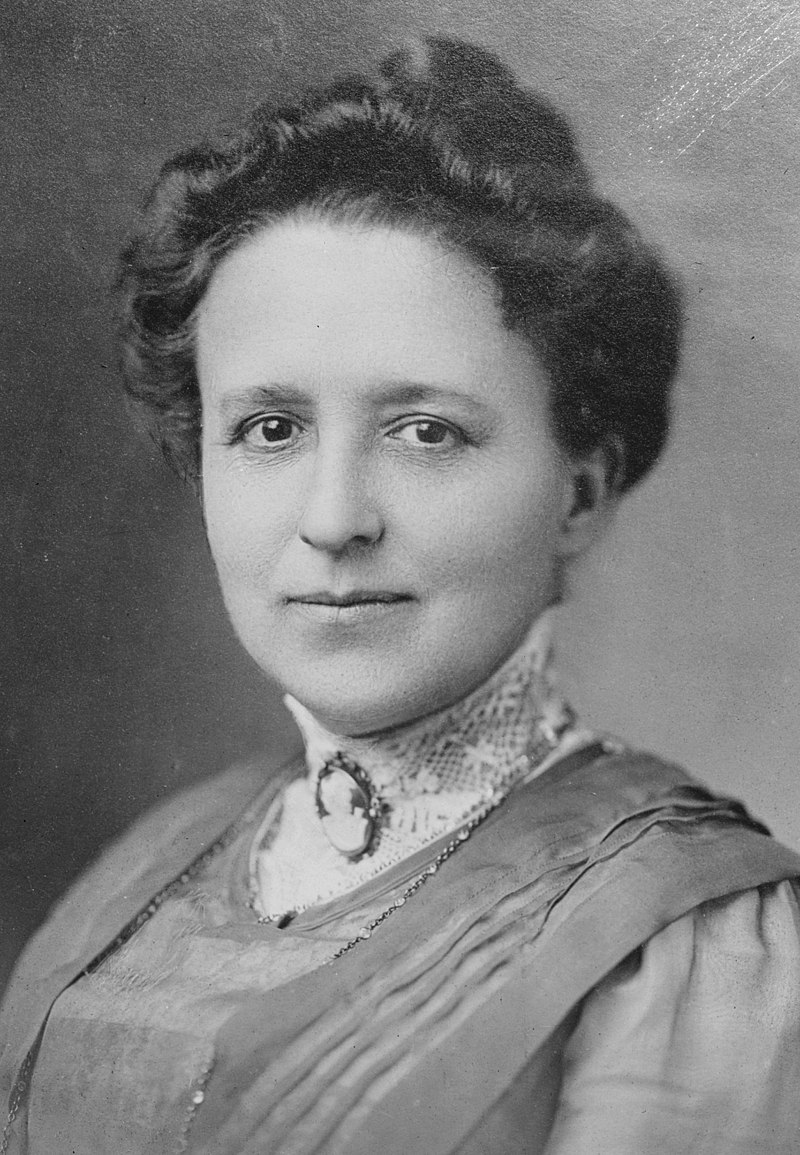 |
| Woman with cameo pinned to her throat, circa 1912. Photographer and subject unknown. Public Domain. |
Cameos are believed to have originated sometime around the 3rd Century BC. The Greeks and Romans created numerous cameos, featuring images of gods and goddesses or mythological scenes. They were worn as rings, earrings, or admired as
objets d'art.
Sometimes hidden messages were attached to them. For example, a Hellenistic young woman might wear a cameo depicting Eros to indicate she was romantically interested.
 |
| Athena wearing the ægis. Sardonyx cameo, late 1st century BC. The mount was added later: enameled gold by Josias Belle, late 17th century. Public Domain. |
Other cameos were created to honor political figures. The Blacas Cameo, showing the profile of Emperor Augustus, is rather large at almost 13 cm high. Carved from sardonyx, it was created sometime around 20 AD. The pose and details are symbolic, invoking the gods and highlighting Augustus' "divine attributes." This cameo is one of the "State Cameos" of Augustus that are believed to have originated in Augustus's inner circle.
Christians created cameos in the Byzantine era, often to be worn as
enkolpions, a devotional medallion or pendant. Common carvings include angels, saints, and scenes from the Bible.
Cameos' popularity waxed and waned through the centuries, but continued to be crafted from semi-precious gemstones like onyx and agate. They found a popular following in the Renaissance. Pope Paul II (1417-1471) was apparently an avid collector of cameos, and one fanciful story claims that he wore so many cameo rings, his hands got too cold, and he caught a chill that resulted in his death! (Other accounts say he died of a heart attack, stroke, or eating too much melon.) Regardless, he owned several, and much of his collection passed to Lorenzo de Medici.
Women began to wear and collect cameos during the Elizabethan Period as a display of wealth and status. Often cameos continued to depict Roman or Hellenistic gods or rulers, to give the appearance of antiquity.
 |
| Cameo Portrait of Roman Emperor Tiberias mounted on a ring, circa 1625-1675, Italy. Public Domain. |
Monarchs and wealthy folks around Europe continued to wear cameos in the coming years. Queen Anne of England gifted one to Pocahontas. Napoleon Bonaparte wore one to his wedding, and so enjoyed them that he even founded a Parisian school to teach the art of cameo carving to craftsmen.
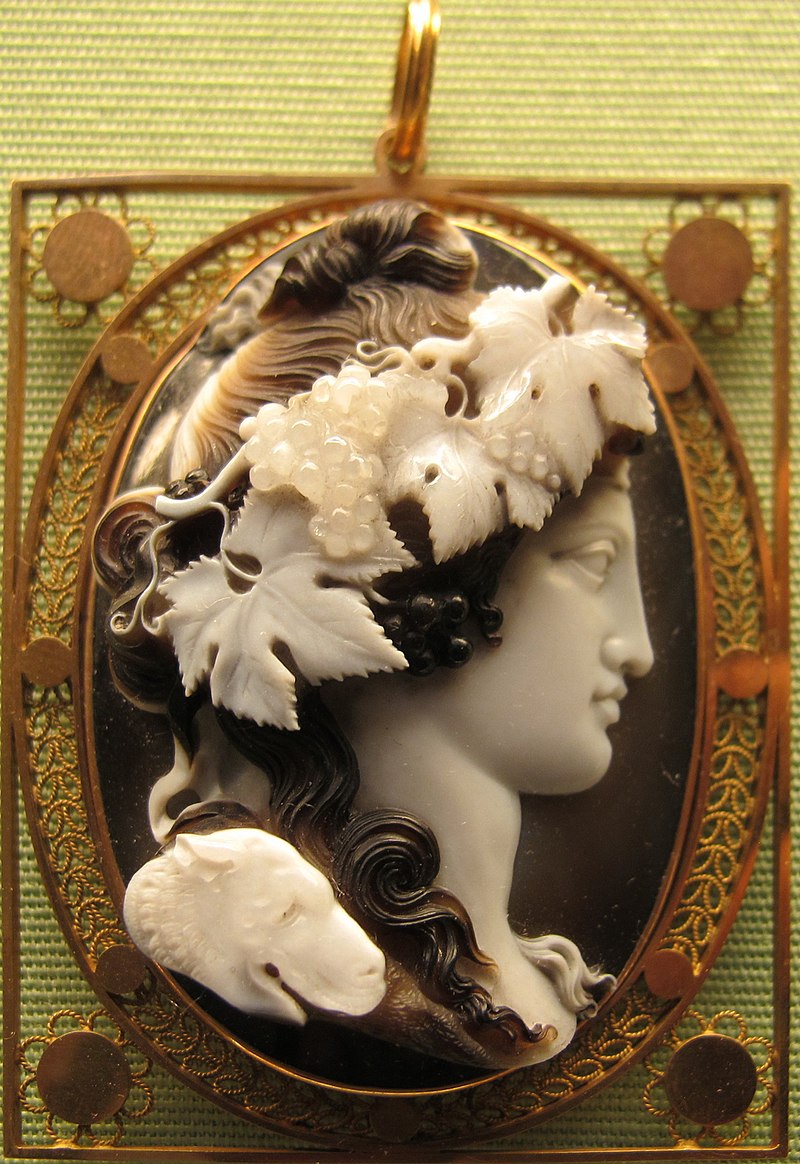 |
| Cameo circa 1800 by Benedetto Pistrucci, Italian gem-engraver. Public Domain. |
In the nineteenth century, the popularity of shell cameos grew (as opposed to more expensive semi-precious stones), and profiles became a popular subject matter for the masses.
 |
| Cameo bracelet with portraits of the Hunt Brothers, by William Morris Hunt, c. 1840, gold, shell. Public Domain. |
A new method of cameo carving came into being in the late 19th century, too: incrustation. An engraver carves a portrait, makes a cast of it, and from there produces a ceramic cameo which is then encased in glass. Although the process originated in Bohemia, French glassmakers became proficient, and the Bakewell Glass Company in Pittsburgh, Pennsylvania crafted beautiful pieces in this manner, from knobs to tumblers, vases to paperweights. (To see an example, visit
here.)
Today, cameos are mainly worn by women, and cameos can be purchased in any medium from agate to plastic.
What about you? Do you own a cameo?
***
Giveaway: Please comment below by 11:59 pm PDT, June 6, 2019, to enter to win a copy of Cameo Courtships. Include an email address. Void where prohibited.
A Family Heirloom Inspires Romance
In 1851, the “Victoria Cameo” is gifted by Queen Victoria to Letitia Newton, who though considered an old maid, soon has the attention of three gentlemen. Inspired by her own romance and quick marriage, Letitia decides to gift the cameo to other women in her family, hoping romance will follow....
***
Susanne Dietze is a 2019 RWA RITA-nominated author who has published fifteen romances with Timeless Heart. To learn more about her and her stories, please visit her website, www.susannedietze.com.




#/media/File:Mary-Margaret-Bartelme-Bain.jpeg)


