Showing posts with label etymology. Show all posts

Sunday, November 20, 2022

Wild West Sayings We Use Today, Part 40


Welcome to our last blog post in this series. I’ve enjoyed exploring the history of words with you. Today’s batch covers words that define secrets, commitment, and incessant noise.


Wild West Sayings We Use Today, Part 40

This post is brought to you by Janalyn Voigt

Whitewash


People have covered up uncomfortable realities for a long time, it seems. The figurative sense dates from 1762. This term has both literal and figurative meanings. To whitewash a building or fence is to cover it with a solution of slaked lime or chalk and water. Sometimes other ingredients are added. Whitewash glosses over imperfections and creates a shining white surface. The effect, however, is temporary. It’s not hard to see how the slang term emerged from the traditional practice. To whitewash a matter is to gloss over or hide an ugly truth. However, secrets have a way of coming out.

Historical Reference: You may recall Tom Sawyer using reverse psychology to trick his friends into whitewashing a fence for him in The Adventures of Tom Sawyer by Mark Twain (1876).

Tom wheeled and suddenly said: “Why, it’s you, Ben! I warn’t noticing.”

“Say—I’m going in a-swimming, I am. Don’t you wish you could? But of course

you’d druther work—wouldn’t you?”

Tom contemplated the boy a bit, and said: “What do you call work?”

“Why, ain’t that work?”

Tom resumed his whitewashing, and answered carelessly: “Well, maybe it is and

maybe it ain’t. All I know is, it suits Tom Sawyer.”

“Oh come, now, you don’t mean to let on that you like it?”

“Well, I don’t see why I oughtn’t to like it. Does a boy get a chance to whitewash a fence every day?”

That put the thing in a new light. Ben stopped nibbling his apple. Tom swept his

brush daintily back and forth—stepped back to note the effect—added a touch

here and there—Ben watching every move and getting more and more interested,

more and more absorbed. Presently he said:

“Say, Tom, let me whitewash a while.”

Tom considered, was about to consent; but he altered his mind. “No—no—I

reckon it wouldn’t hardly do, Ben. You see, Aunt Polly’s awful particular about this

fence. I reckon there ain’t one boy in a thousand, maybe two thousand, that can

do it the way it’s got to be done.”

“Oh come, now—lemme just try. Only just a little. I’ll be careful. Now lemme try.

Say—I’ll give you the core of my apple.”

“Well, here—No, Ben, now don’t. I’m afeard—”

“I’ll give you all of it!”

Tom gave up the brush with reluctance in his face, but alacrity in his heart. And

while Ben worked and sweated in the sun, the retired artist sat on a barrel in the

shade close by, dangled his legs, and munched his apple.

Example: Don’t try to whitewash that you’d rather sit in the shade than get some exercise.


Go the Whole Hog

To do or believe something to the fullest possible extent is to ‘go the whole hog.’ The original form of this American slang expression, ‘went the whole hog,’ traveled eastward to the UK and other English-speaking nations. However, Americans trended more toward ‘go the whole hog.’

Theories abound as to the origin of this phrase. It may have come from butchers asking customers whether customers wished to purchase part of a pig or `go the whole hog' (buy the whole pig). However, the expression may have meant to spend a whole `hog,' or ten-cent American coin. That is, unless it referred to an Irish shilling, which went by the same nickname. The mystery remains unsolved, but I think the butcher origin is the most probable.

Historical Reference: 'Go the whole hog' first appeared in print in American newspapers starting in 1827. The phrase came into widespread use in 1828. During the election that year, Andrew Jackson’s supporters were dubbed ‘whole hog Jacksonites.’ In January 1828, “The Middlesex Gazette” printed the following: “Mr. Barbour, you know, was formerly the Speaker, but not being willing "to go the whole hog," as the Jacksonites have it, they would not permit him again to be elevated to that high station.”

Example: Rather than go camping to save money on our vacation, we decided to go the whole hog and book a hotel room.

Yammer
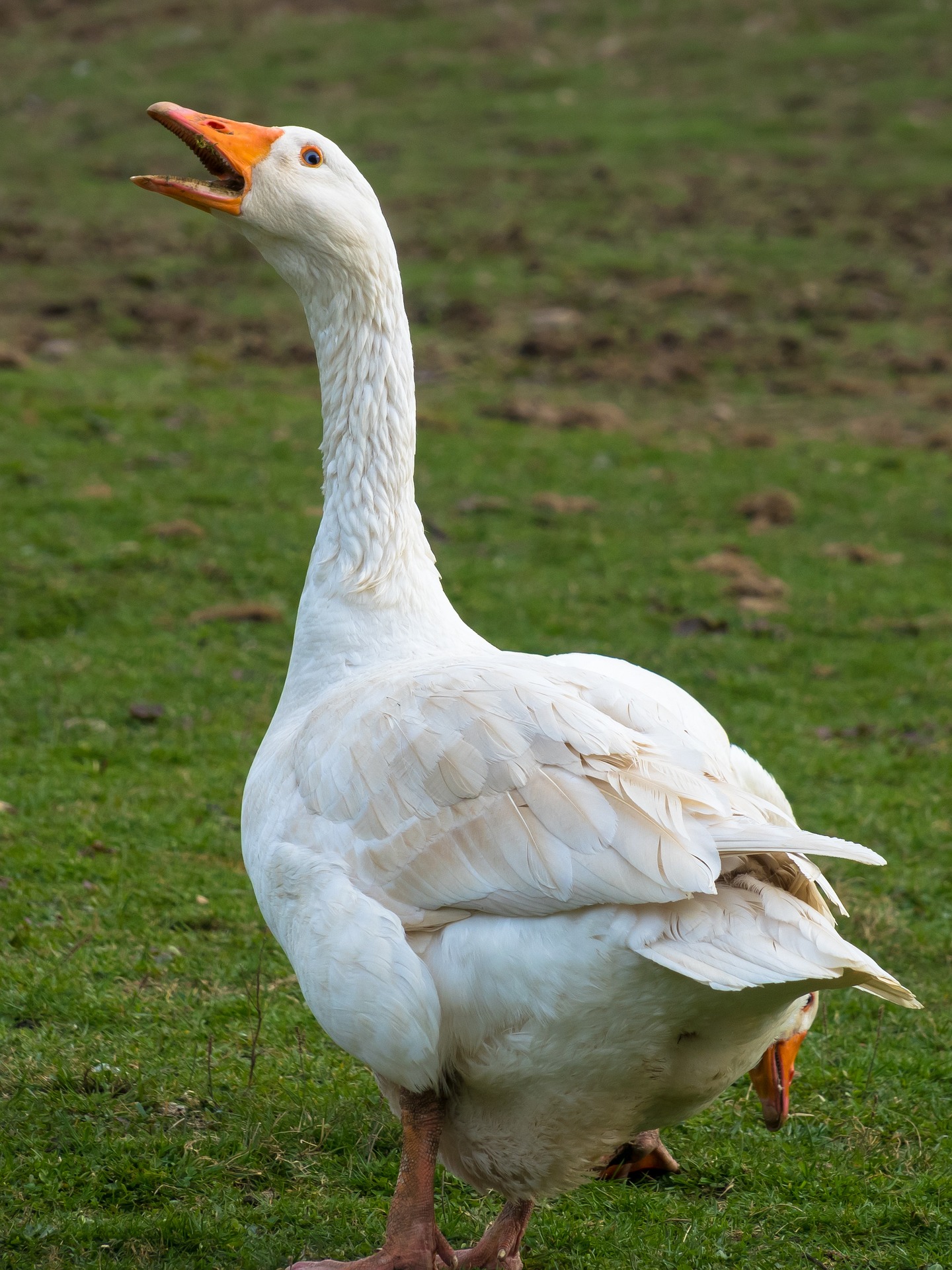
A person who yammers might utter persistent cries of distress or sorrow, whine and complain, or talk too much and/or too loudly. That’s quite a laundry list of definitions. Considering that yammer is an old term, it has had a few years to evolve.

Historical Reference: Yammer is an old term, having emerged in the late 15th-century. Meaning "to lament," it most likely came from the Middle Dutch jammeren and a related Middle English word, yeoumeren (to mourn, complain). Yeoumeren is as an alteration of the Old English geomrian (to lament). An Old Saxon word, jamar (sad, sorrowful) and the German jammer (lamentation, misery) are connected. Yammer acquired the sense of making an irritating racket from at least the 1520s.

Example: The passenger next to me wanted to yammer about politics, so I put on my headphones.

Final Thoughts 

We’ve arrived at the end of our blog series. Thanks for coming along on this journey into the history of words. While the series will end, I’ll continue on as a monthly blogger. Check back next month on the twentieth, for a fun look into the history of an enduring Christmas delicacy. You’ll find the latest news about me as an author and my books, below.

I’d love to know if you made any discoveries. ‘Yammer’ surprised me. Before researching this article, I only understood the word to describe excessive talking.


What's New with Janalyn Voigt

Finding yourself at a place where you can redefine your schedule is a rare treat. I'm in between series at the moment and thankful for the chance to breathe, reassess, and regroup before diving back in. 
It's exciting and a little stressful, but it's all in how you look at things. A poem I once wrote comes to mind. 

Focus
by Janalyn Voigt

Cracks split the pavement
And nurture weeds,
But in the garden flowers bloom.
     I choose my world.


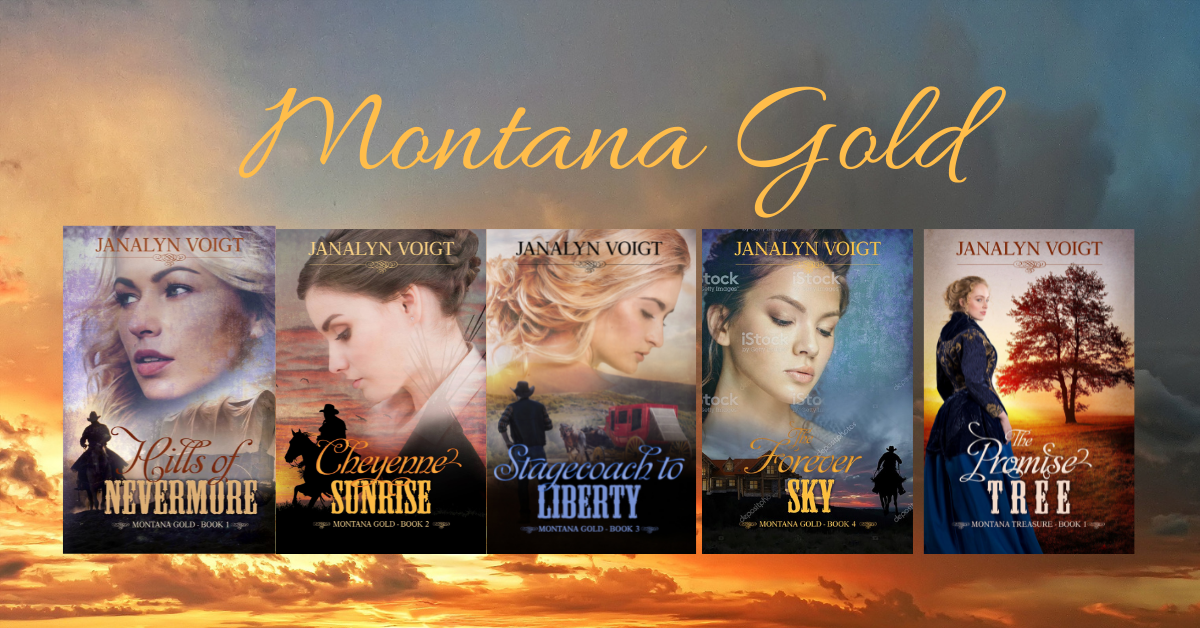
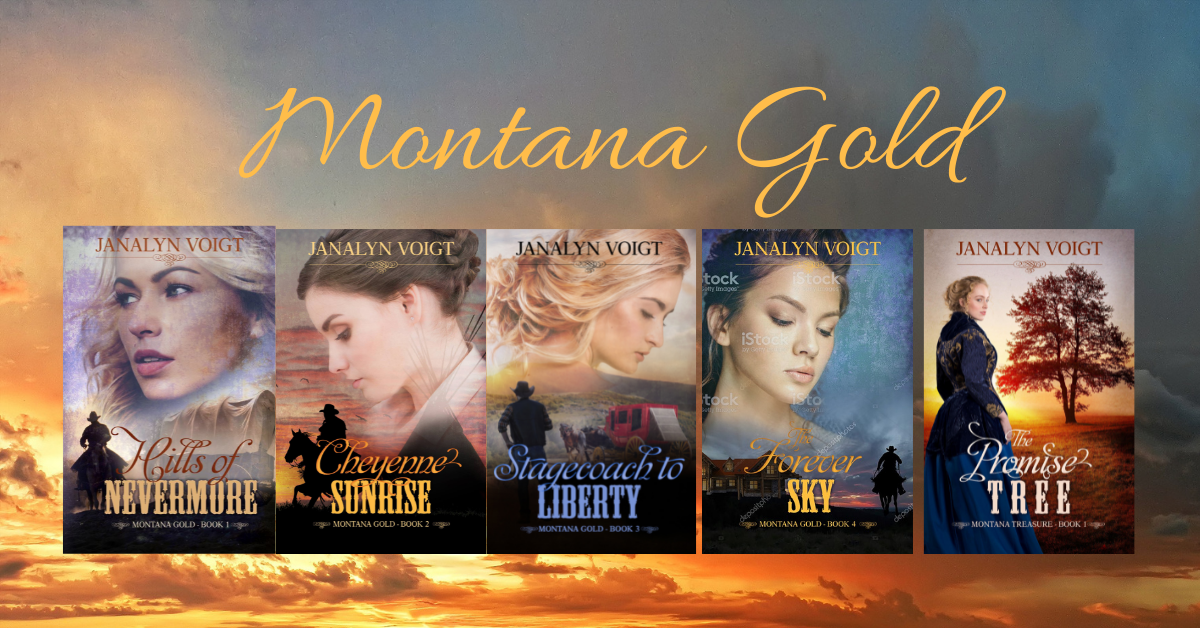
Discover Montana Gold


Thursday, October 20, 2022

Wild West Sayings We Use Today, Part 39

Hello, fellow word-history lovers. Dive into an all-new batch of sayings used in the Wild West and today. 


Wild West Sayings We Use Today, Part 39


Boy, do I have an interesting assortment for you today. Punishment, torment, striking, beating, and lying—we’ll look at some piquant word origins for fairly tame words. Enjoy them, and then read the announcement at the end of the post. Spoiler: I crave your thoughts.

Tuckered 

After a walk that went on a mile too many, a weary hiker might proclaim herself ‘tuckered out.’ We use this term today, as they did in the Wild West, to describe a state of utter fatigue. ‘All,’ ‘plumb,’ or another intensifier might tag along, I suppose in case the listener needs convincing.

This phrase originated in America. 'Tucker' is a New England colloquialism for 'to become weary.' Tucker may be rooted in the Old English ‘tuck’ (punish or torment). If you’ve ever suffered from sore feet during a hike, you’ll get the connection.

'Tuckered' gained popularity in the Wild West. ‘Plumb,’ meaning ‘entirely,’ usually preceded the term, which was often used to describe children.

Historical Reference: ‘Tuckered out’ has been around since at least 1839. The earliest print example appeared in the "Wisconsin Enquirer," a newspaper: “I reckoned to have got to the tavern by sundown, but I haven’t, as I’m prodigiously tuckered out.”

Example: “Johnny is all tuckered out after a day at the fair.”

Uppish

Someone who puts on airs in a snooty manner is called uppish in certain circles.


Some slang terms are fun to say, and this is one of them. The various forms—uppishness, upishnessly, and the similar uppity) also roll off the tongue. Uppish is a British slang term, which is no surprise. Societal classes are more important for a people who celebrates its monarchy. Not that a class structure doesn’t exist in America, but many who live in “the land of opportunity” are interested in rising above it. Still, there is a section of American society that might employ this term today. The Wild West saw its share of gold miners who struck it rich, landed cattle barons, and copper kings who gained untold wealth. Although many of these folks went from rags to riches, they lived with privilege. Long-held societal barriers began breaking down in the aftermath of the Civil War. I suspect that sheer necessity also had something to do with changing opinions. Widows didn’t always observe proper mourning periods, as one example.

Historical Reference: An early use of uppish in print has the not-so-nice title of A New Dictionary of the Canting Crew in its Several Tribes of Gypsies, Beggers, Thieves, Cheats &c., London: W. Hawes et al. (1699): “Uppish, rampant, crowing, full of Money. He is very Uppish, well lined in the Fob.”

Example: “Wearing a tuxedo to a wedding when you’re not the groom is a bit uppish.”

Whopper

Something unusually large can be called a whopper, hamburgers included. Given that the word originally signified ‘a big lie’—a nuance it retains today, you have to wonder if that was such a good name for a product. But I digress.

Historical Reference: ‘Whopper’ for a something impressively big is known from the 1620s. The lie meaning possibly emerged from the mid-15th century ‘whop’ (to strike or beat).

Example: He told a whopper about catching a whopper of a fish.

After stumbling across a list of Wild West sayings that I noticed were in use today, I decided to write this blog series. Finding a topic to write about each month can be tough, but studying words wraps it up fairly neatly. Along the way, I rediscovered the abiding love for word meanings that prompted me to read dictionaries for entertainment as a child. What can I say? Writers do such nerdy things. When I decided to go through the entire list, it never occurred to me that it would take years. I am proud to announce that next month I will complete that list. I’m batting around ideas for new topics. If you have any to suggest, please leave a comment to let me know.

Learn What’s New with Janalyn Voigt

I just turned in final edits for The Whispering Wind (Montana Gold, book 6), wrote the back cover copy, and suggested images for use in the cover. It feels good to be finished with the book, apart from answering any questions that arise during the proofreading process. Ending the series makes me a little sad, like I’m saying goodbye to family members. Someone wise once told me that change starts with endings and beginnings—and the endings always come first. I’ll take a moment to breathe before diving into the next projects. More on that next month.


Fall in Love with The Montana Gold Series


Explore faith, love, and courage in the Old West.

Tuesday, September 20, 2022

Wild West Sayings We Use Today, Part 38

Welcome back to another episode of learning the history of words. You may notice a difference in the artistry. I came across several illustrated images that I couldn't resist. I hope you enjoy them as much as I do. Interestingly enough, this month's bag of expression contains two that pertain to Davy Crockett, which many know as the king of the wild frontier. Enjoy!
 

Wild West Sayings We Use Today, Part 38


Swag

Businesses often distribute promotional swag, or goods received without payment. Today, the items are freely given, but the term did not originate so innocently.

Historical Reference: ‘Swag,’ which may have its roots in Scandinavia, acquired a number of definitions over time. In 1839, English criminals originated a slang sense of swag for stolen property. Several earlier meanings for ‘swag’ paint an interesting picture. As of 1303, according to the Oxford English Dictionary, the word meant ‘bag.’ By the 1580s, it described a ‘blustering person.’ When you think of a thief swaggering under the weight of an unwieldy bag of ill-gotten loot, it all makes sense.

Other meanings for swag include ‘stolen goods,’ ‘a bag of stolen items,’ ‘overweening confidence,’ ‘swaying to and fro,’ and ‘one with a swinging belly.’ You can’t make this stuff up.

Example: Readers expect authors to give out lots of swag at a book fair.

That Dog Won’t Hunt/That Old Dog Won’t Hunt


This expression for a failed idea or feeble excuse comes to us courtesy of the American South.

Historical Reference: Some suggest that our phrase imitates ‘that cock won't fight,’ hearkening to the days of cockfighting in England. This earlier phrase first appeared in a humor magazine called “The Loiterer,” by James and Henry Austen. And yes, those gentlemen had a famous sister named Jane. Here’s the excerpt, from September 5, 1789:

‘You may be sure that this eloquent harangue was not lost upon me, I immediately began to smoke the old Gentleman. “No, (thought I) that cock won’t fight.”’

Davy Crocket’s autobiography, published posthumously in 1836, contained the phrase, ‘that cock won’t fight.’ On August 9, 1843, the hunting dog version cropped up in a letter to a Washington, DC newspaper:

‘Don’t let the friends of Mr. Calhoun and those of Mr. Van Buren get at loggerheads, or anything beyond amicable sparring. We are ready to go for either of them, or for any other sterling Democrat, provided always that he will fight rather than give up Oregon, or any other portion of our country. Cass is much a favorite in this State. I put in a word (formerly) once in a while for Captain Tyler. “But that dog won’t hunt.”’

Example: I planned to travel through Yellowstone, but now the fire has broken out, that dog won’t hunt.


Too Big for His Britches

Today, as in the Wild West, we say that a conceited person is ‘too big for his (her/your) britches.’

Historical Reference: This term originated in at least the 1830s (although it is probably a lot older). The earlier term is ‘too big for one’s breeches,’ but it has been ‘modernized.’ It first appeared in the 1835 publication, “An Account of Col. Crockett’s Tour to the North and Down East," by none other than Davy Crockett: “I myself was one of the first to fire a gun under Andrew Jackson. I helped to give him all his glory. But I liked him well once: but when a man gets too big for his breeches, I say Good bye.”

Example: After receiving honors in college, he got too big for his britches.

That concludes this month's word-history session. See you next month for another round. Don't forget to check out my author news, below.

What’s New with Janalyn Voigt

I’ve been working hard to complete a final proofread for The Whispering Wind (Montana Gold, book 6) while also canning and preserving food for the winter. The tension between living in fictional worlds versus reality is very real for an author. I would love to spend all my time at the keyboard, but life pulls me away. 

I'm proud of The Whispering Wind, which completes the Montana Gold series. I have no more contracts lined up, and that's intentional on my part. From the outset, I've felt that I chased after my writing career, which took off before I felt ready. The pace started out fast and never let up. I want a moment to breathe and the chance to regroup. 

I'll still work to prepare the Tales of Faeraven epic fantasy series for rerelease under my own publishing brand. And then there are beta edits for a romantic mystery to complete. I'll also self-publish that title (Deceptive Tide). I'm likely to submit proposals to my agent for traditional contracts in the future, but spending time in the indie space is an adventure I don't want to miss.

Learn more about me and my books at the website for Janalyn Voigt.

Discover Montana Gold

Library Journal: "Manages to keep the reader glued to every twist and turn."
Learn more.


Saturday, August 20, 2022

Wild West Sayings We Use Today, Part 37

Greetings and welcome, literary adventurer. Let’s take a journey into a brand new bag of idioms that traveled through the Wild West into modern times. Soap, solder, wooden barrels and George Washington all enter the discussion, so let’s get going.


Wild West Sayings We Use Today, Part 37

Soft Soap


Today, as in the Wild West, using persuasive flattery in order to gain a benefit is to 'soft soap' another person or persons. This colloquial expression likens the slipperiness of soft soap to such cajolery.


Historical Reference: The earliest use of ‘soft soap’ in the figurative sense I could find occurred in 1840: “To see them flattering and soft soaping me all over.” “John Beedle’s Sleigh Ride" by John Neal

A now-obsolete synonym, ‘soft sawder,’ made its debut in "The Trotting Horse," a short story by Thomas Haliburton, who apparently coined it. Although much-used in the 19th century, it fell out of use by 1950. ‘Soft sawder’ was a phonetic spelling of soft solder, which melts at a lower temperature. It’s not hard to see the connection between the literal and figurative meanings.

Example: “No matter how much you try to soft soap me, I’m not interested in buying that car.”


Squatter

Someone who occupies land or a building without legal title or the owner’s permission is called a squatter.

Historical Reference: Squatting seems to have been going on for centuries, at least on land. This sense of the term dates from 1788, according to many reputable sources. It is recorded in 1880 in reference to buildings.

In a letter to George Washington dated 18 October 1788, one Brice McGeehon threw himself on Washington’s mercy. He requested that land belonging to Washington that he was living on with his family be given to him. The letter gives an interesting perspective on the problem of squatters, which was prevalent in America through Wild West times, and it still exists today.

Example: “I’m having trouble getting a squatter off my property.”

Stave Off

‘Stave off’ means to fend off, avert, delay, or hold someone or something threatening at bay. It is so old that it harkens to a now-defunct definition of the word stave. A curved slat that forms part of the side of a wooden barrel is what we know as a stave today. However, in the mid-1400s, ‘stave’ was the plural form of staff. Around 1595, stave developed a verb form which described warding off someone or something with a staff. From there, the figurative sense evolved.

Historical Reference: The first recorded use of ‘stave off,’ according to Merriam Webster, occurred in 1611.

Example: Take Elderberry extract to stave off a cold.

Thanks for exploring the often-fascinating history of words with me. I’m curious whether any of the expressions are familiar to you and which of them you’ve never heard before. What are your thoughts on the letter to George Washington?

What's New with Janalyn Voigt

The manuscript for The Whispering Wind (Montana Gold, book 6) has returned to me for line edits. If you didn't know, this is when an author or editor examines each line of a manuscript in detail. This results in a story that is very close to print-ready. It's exhaustive work that calls for alertness and concentration, but it's one of my favorite stages in developing a book for publication.

Once the line edits are done, several beta readers will check the manuscript for typos and other errors. Then I'll proofread it. My editor's turn will come next. 

When every question is answered and each 'i' dotted, the manuscript will go to my publisher's interior formatter to create Kindle and print versions. I'll receive a proof copy of the book to look over and approve. At some point I'll also work with the graphic designer assigned to create a winsome cover.  

Bringing a book to print really does take a village.

Learn more about Janalyn Voigt and the Montana Gold books.


To celebrate reaching 3 Million views, HHH is hosting a HUGE giveaway of over 60 books in 18 prizes, so there are many chances to win! One grand prize will consist of 10 books, two readers will win a second prize containing 5 books, and there will be 15 winners of a third prize containing 2 books each. There are several ways to earn entries, such as following, or commenting on the HHH blog each day. Thank you for being part of the HHH community, and best wishes in the giveaway!


http://www.rafflecopter.com/rafl/display/ce16d9c612/?


Wednesday, July 20, 2022

Wild West Sayings We Use Today, Part 36

All aboard as we begin another journey on the word-history train! Come along for the fun of it, and learn as you go. :)  

Clean as a Whistle

This phrase describes something that is spic-and-span. You might ask yourself, what’s so clean about an object you blow through? That’s a good question. It doesn’t help that the origin of ‘clean as a whistle’ is uncertain, but the best answer is that the meaning of this phrase evolved from its 18th-century meaning of ‘utterly complete’ to ‘pristine.’ Both nuances remain with the term today. When a child licks his ice cream bowl until it is empty, he leaves the bowl ‘clean as a whistle.’ I would still wash it though, and so would you. Once your dishes are ‘clean as a whistle,’ you wouldn’t mind using the bowl.

To complicate matters, the early form of this phrase was ‘clear as a whistle.’ Call to mind the peal of a whistle cutting through the air, and the ‘complete’ meaning becomes a lot more understandable. Why the phrase took on the meaning of ‘pure’ is not known, but theories abound. Maybe it comes from the fact that brass train whistles were kept clean. Or it could have happened because whistles need to be kept clean to exude their purest sounds. My favorite is that the clean, piercing sound of a whistle inspired the shift in meaning.

Historical Reference: The Oxford English Dictionary places the first occurrence of the idiom in the “The Dialect of Craven V1: In the West Riding of the County of York, with a Copious Glossary by A Native Of Craven, William Carr (1828): “The dialect of Craven, in the West-Riding of the County of York (anon.) 1824, 1828. s.v., ‘As clean as a whistle’, a proverbial simile, signifying completely, entirely.”

Example: She polished her silver teapot until it was clean as a whistle.

Small Potatoes

Today, as they did in the Wild West, ‘small potatoes’ described something of little consequence, importance, or worth. 

(Side note: I feel the need to defend the potato, which is rich in vitamins, minerals and antioxidants. Studies indicate they can balance blood sugar, reduce the risk of heart disease, and boost the immune system. Potatoes may also improve digestive health and combat signs of aging. Because potatoes are filling, they can curb hunger pains and cravings during weight loss.)

Small potatoes was well-established in America during the first part of the 19th century. It originated much earlier, however.

Historical Reference: Samuel Taylor Coleridge used a strikingly similar phrase with the same meaning in a letter to another English poet, Roberty Southey. Coleridge referred to William Wordsworth in the letter, which he dated ‘17th July 1797’: “Wordsworth is a very great man, the only man to whom at all times and in all modes of excellence I feel myself inferior, the only one, I mean, whom I have yet met with, for the London literati appear to me to be very much like little potatoes, that is, no great things, a compost of nullity and dullity.”

(Side note #2: What an interesting word he created there: ‘dullity.’ I like it.)

What may be the earliest instance of ‘small potatoes’ appeared in The Boston Morning Post (Boston, Massachusetts) on September 7, 1832: “The Onion Crop on Cape Cod, it is feared, will turn out rather “small potatoes” this year.” However, the usage seems to imply that the phrase was in wide use by this date.

Example:
My paycheck is small potatoes compared to what my brother makes.

We're back at the station for another month. Thanks for traveling along with me on another fun exploration of Wild West Sayings We Use Today. Let me know in the comments your thoughts on the double meaning of 'clean as a whistle.' Do you agree that potatoes are much-maligned? 

What's New With Janalyn Voigt

I'll admit to some doubt that summer would ever arrive. In the Pacific Northwest, where I live, spring brought more rain than the area has seen in eighty years. With the sun shining, it's harder to remember the storms  Bootsy is a stray cat that adopted me. I don't let him roam, although I might if coyotes didn't regularly snatch up pets. 'Boo,' as I like to call him, is harness-trained, and he takes me on regular walks. We linger more on our jaunts these days, due to the balmy weather. 

I had a little more time to indulge my cat while The Whispering Wind (Montana Gold, book 6) was in my editor's capable hands. The manuscript just returned to me for edits, however. I hope to strike a balance between my home life and writing life. I haven't been good at this in the past, but I think I've learned my lesson. Slow and steady wins the day. 
Want to know more? Visit the website for Janalyn Voigt.

Discover Montana Gold 


Set during a time of unrest in America, the Montana Gold series follows the lives and loves of a family of Irish immigrants who must call upon their faith to survive in the Wild West.  Learn more. 

Friday, May 20, 2022

Wild West Sayings We Use Today, Part 34

Bannack, Montana Jail

Wild West Sayings We Use Today, Part 34

It's time for another deep-dive into Wild West idioms and their histories. But first, let's discuss the image, above. This is a picture of the original jail in Bannack, Montana. When Sheriff Henry Plummer erected this building, he oriented the windows to offer his prisoners a sobering view of the gallows. Little did the sheriff realize that one day he would gaze through these barred windows himself. Sheriff Plummer and the dramatic events in Bannack comprise the historical background of Hills of Nevermore (Montana Gold, book 1).

Skinflint

They called a tight-fisted person a skinflint in the Wild West, just as we do today. We don't know the genesis of this slang term, but several theories provide clues.

Lexicographer Craig M. Carver suggests that 'skinflint' came from a thrifty practice of certain riflemen. Flintlock rifles contained a small piece of flint. A flint, if you don't know, is a fragment of hard rock that sparks easily. Modern cigarette lighters use flints to generate sparks. When someone pulled the trigger of a flintlock rifle, the spring-loaded cock struck the flint against a steel plate. This sent a shower of sparks into a pan below the plate. The priming powder in the pan ignited the charge in the bore, firing the rifle. When a rifle flint wore out, most people replaced it. However, a miserly individual would pull out a knife and sharpen, or “skin,” the flint.

Another idea is that ‘skinflint’ derived from ‘skin the flint,’ an earlier idiom denoting a person who ensured frugality through excessive measures. The existence of similar phrases (shave a louse, shave a flea, and the French shave an egg) makes this theory seem likely. 

Both of these suggestions may be true, for all we know. 

Historical Reference: ‘Skinflint’ was first recorded in A New Dictionary of the Terms Ancient and Modern of the Canting Crew by B. E. Gent (1699): “Skin-flint, a griping, sharping, close-fisted Fellow.”

‘To skin a flint’ made its print debut in a poem from The Legend of Captaine Jones: relating his adventure to sea, his first landing, and strange combat with a mighty beare : his furious battell with his six and thirty men, against the army of eleven kings, with their overthtow [sic] and deaths : his relieving of Kemper Castle : his strange and admirable sea-fight with six huge gallies of Spain, and nine thousand soldiers : his taking prisoner and hard usage : lastly, his setting at liberty by the Kings command, and returne for England by David Lloyd (1656):

’Mongst all those Blustering sirs that I have read

(Whose greatest wonder is that they are dead)

There’s not any Knights, nor bold Atchivers Name,

So much as Jones’s in the Booke of Fame:

They much of Greeces Alexander bragg,

Hee’d put ten Alexanders in a Bag:

Eleven fierce Kings, backt with two thousand Louts,

Jones with a Ragged Troope beats all to Clouts.

But sure it was a Conquest by Compact,

For he could never be accus’d of fact:

And yet no story a Romancer sings,

That ere exploited more stupendious things;

Quixot a winged Gyant once did kill,

That’s but a flying tale, beleiv’t who will:

This were but petty hardship, Jones was one

Would Skinne a Flint, and eat him when h’had done.”

Example: My uncle is such a skinflint that, after a party, he goes through the trash to salvage all the plastic cups and cutlery.

Skulduggery

Here’s a colorful word that’s fun to say. It brings pirates to mind. Yes? ‘Skulduggery’ means treachery, which certainly helps the association. The first syllable sounding like ‘skull’ doesn’t hurt either. Well, and the second syllable recalls digging. (But I digress.) The slang term, 'skulduggery,' is thought to have come from ‘sculdudrie,’ a Scottish word of uncertain origin used by at least 1713. It described adultery and other bawdy misbehavior. This is the most popular origin theory, but it's interesting to note that the modern meaning of skulduggery differs. Other opinions on its origin exist. Several attach it to similar-sounding words for guilt.

Historical Reference: ‘Skulduggery’ arose as a separate term in America, where it meant subterfuge. William Faulkner is credited with creating a verb form (skuldug). The first known print citation, according to the Oxford English Dictionary, dates from 1867: “From Minnesota had been imported the mysterious term ‘scull-duggery’, used to signify political or other trickery.” Apparently, this word mystified folks in the nineteenth century, too. 

Example: What sort of skulduggery are they up to?

What’s New with Janalyn Voigt

Books take time, and the wheels of publishing move slowly. I’m still editing The Whispering Wind (Montana Gold, book 6). Catching up on my writing and household duties is a bit challenging after suffering a burn injury while on deadline. Thank the Lord, I'm in a lot better shape now. Unfortunately, my email inbox isn’t. I have to admit that focusing is hard, with everything going on in the news. I regularly have to cast my crown at Jesus’s feet, and surrender my worries to Him. 

If you want to know more about the books I write, visit the bookstore at my website.

About Hills of Nevermore

Can a young widow hide her secret shame from the Irish preacher bent on helping her survive? 

In an Idaho Territory boom town, America Liberty Reed overhears circuit preacher Shane Hayes try to persuade a hotel owner to close his saloon on Sunday. Shane lands face-down in the mud for his trouble, and there’s talk of shooting him. America intervenes and finds herself in an unexpectedly personal conversation with the blue-eyed preacher. Certain she has angered God in the past, she shies away from Shane. 

Addie Martin, another widow, invites America to help in her cook tent in Virginia City, the new mining town. Even with Addie’s teenage son helping with America’s baby, life is hard. Shane urges America to depart for a more civilized location. Neither Shane’s persuasions nor road agents, murder, sickness, or vigilante violence can sway America. Loyalty and ambition hold her fast until dire circumstances force her to confront everything she believes about herself, Shane, and God. 

Based on actual historical events during a time of unrest in America.


Wednesday, April 20, 2022

Sayings that Use Shine (Wild West Sayings We Use Today)

All aboard the Wild West train for another journey into the history of words. Today, we’ll explore colloquial expressions that use ‘shine.’ Some of the older senses of the word surprised me. All brought to life a bygone era.


Wild West Sayings We Use Today, Part 34


Take a Shine To


An individual who develops a fondness for a person, animal, or object is said to ‘take a shine to’ someone or something.

Historical Reference: The origin of this phrase is lost in time, but we do know that it emerged in America during the nineteenth-century. It may have originated from an earlier phrase. 'To shine up to’ once meant to ingratiate yourself to someone, particularly a suitor. 

The earliest print citation is from High Life in New York, Volume 1, by Ann Sophia Stephens: “If she wanted to take a shine to a Yankee, why couldn’t she a found a fellor worth a looking at?”

Example: His parents sure took a shine to you.

Rise and Shine

This phrase comes in handy to urge another person to rise from bed and get to work.

Historical Reference: One of the earliest print references for 'rise and shine' as a colloquial term appeared in The Testimony of William Erbery (1658) by William Erbery: “They shall so rise and shine, that the glory shall rise upon them.”

“They” in the citation refers to Christians. That’s unsurprising, when you consider that ‘rise and shine’ comes from the Bible: ”Arise, shine; for thy light is come, and the glory of the LORD is risen upon thee” (Isaiah 60:1; KJV).

Example: “Rise and shine, sleepyhead, and get ready to hoe the garden.”

Make Hay While the Sun Shines

You may not be a farmer, but you may have been told at some point in your life to ‘make hay while the sun shines.’ This timeless proverb inserts practical country wisdom into modern times. A proverb, if you don’t know, is a saying that crams a lot of wisdom into few words. ‘Make hay while the sun shines’ definitely qualifies.

The literal sense of this term, in use from the 1500s, is obvious. Farmers need to cut hay on sunny days. Weather patterns being unpredictable, a wise farmer should take advantage of a dry spell to make hay.

The phrase took on its figurative meaning by the 1600s. We still use it to suggest taking advantage of favorable conditions while they last.

Historical Reference: “Make hay while the sun shines is truly English, and could have had its birth only under such variable skies as ours.” On the Lessons in Proverbs (1852) by R.C. Trench, the Archbishop of Canterbury.

Example: To claim the store’s early-bird prices, I’d better make hay while the sun shines and check out.

Monkeyshines

Monkeyshines, a colloquial expression dating from the early 19th century, describes a mischievous prank or otherwise boisterous behavior. It is one of many slang comparisons of humans to primates (‘monkey business,’ ‘monkeying around,’ ‘more fun than a barrel of monkeys,’ and the like). The ‘shine’ part may come from an obsolete nuance of ‘shine’ that denoted a party, ruckus, or commotion.

‘Monkeyshines’ was used as another way to describe cutting a caper from 1819. People spoke of 'cutting monkeyshines.' 'Monkey business' cropped up in 1858. Both terms may harken to an era when monkeys were imported to America in increasing numbers to entertain audiences in circuses and zoos.

Historical References: The term appeared in “Jump Jim Crow” (1828), a song by Thomas “Daddy” Rice, considered the father of minstrelsy: “I cut so many munky shines, I dance de gallopade.” The gallop, or gallopade, was a lively country dance.

“‘I’ll boun you pulled ’em out, some o’ your shines,’ said Aunt Chloe” Uncle Tom’s Cabin (1852) by Harriet Beecher Stowe.

Example: Stop your monkeyshines and quit pestering your sister!

Over to You

Thanks for riding along into another fun adventure with words. I’d love to know your thoughts on today’s sayings. Did any surprise you? Have you used any of them? Were any unfamiliar? Which is your favorite? Leave a comment and let me know.

What’s New with Janalyn Voigt


I’ve decided to celebrate spring as my personal new year. The season of emerging life is the best time for new beginnings. My editor needed more time before she could take on my manuscript. That means I can give The Whispering Wind a better polish before turning it in.

Funny how that went. The story came so readily that I should have known God would make a way for it. I can’t count the number of times I’ve had to give a writing project to God, only to receive it back. I had no idea at the beginning of my writing career that the measure of success would not be book sales, social media likes, or accolades—but surrender. 

Learn more about me and my books at the website for Janalyn Voigt.

Strike Gold! Discover Romance and Adventure in the Wild West

Sunday, March 20, 2022

Courtesy of the Scottish (Wild West Sayings We Use Today)

This month’s exploration into words and their history has me smiling on behalf of my grandmother. The words we’ll study today probably come courtesy of Scotland, her country of origin. Let’s embark on another adventure into the history of words.


Wild West Sayings We Use Today, Part 32

Shindig

The Scottish are known for their keen appreciation of the value of a penny. They are extolled for their prowess and courage in battle. Crowds gather to watch muscled Scotsmen hurl logs the size of tree trunks in annual “games.” When it comes to throwing great parties, however, most folks don’t think of the Scots.

Perhaps that’s short-sighted. ‘Shindig,’ a word as fun to say as the merrymaking spree it describes, most likely originated in Scotland.

Historical Reference: “‘Is this a dashed Puritan meeting? . . . ‘It’s no Pike County shindig’” (Atlantic Monthly, September 1871, page 373).

Some experts believe that shindig evolved from ‘shindy’ (a brawl; 1825). A later citation seems to confirm this: “You have noted that there are signs of a few bruises and scratches? ... Well, they are from the fight. It seems the people took us for Germans, and there was an awful palaver, which ended in a proper and handsome shindig.” (Stephen Crane’s Active Service of 1899)

Others think that 'shindig' derived from ‘shinty’ (shinny, shinney) a Scottish game akin to hockey that originated in the 1660s and is now obsolete. Sinteag, the Gaelic word for 'a bound or leap' is said to have produced 'shindig.'

Unless shindig refers to a playful kick in the leg, that is. An entry in Bartlett’s Dictionary of Americanisms supports this meaning
 for ‘shin-dig' which arose in the Southern states.

It’s not hard to imagine all these ideas distilling into a single, glorious word. Old Western movies presented a brawl as a form of amusement. At a rambunctious party, it's not hard to picture a clumsy dance partner delivering a kick.

Example: His graduation party is going to be a real shindig.

Skedaddle

Don’t you love words that roll trippingly off the tongue? The meaning of this one is not so fun, however. Skedaddle means ‘to run away in a panic.’

Historical Reference: Skedaddle took off in popularity in 1861 as American Civil War slang. However, we probably have the Scottish to thank for this linguistic contribution. Although the exact origins are unknown, noted etymologist Anatoly Liberman states in An Analytic Dictionary of the English Etymology: An Introduction that ‘skedaddle’ “has no connection with any word of Greek, Irish, or Swedish, and it is not a blend.” Liberman believes that skedaddle may be related to the Scottish dialectical term skeindaddle (to spill). The inference is of spilling something while scurrying away in fear.

Liberman’s theory makes sense, but it is not assured. Wright’s English Dialect Dictionary of 1906 contains an entry for ‘skedaddle’ with no citations that predate American use of the term.

The earliest print record of skedaddle appears in “The Agitator” newspaper (Wellsboro, Pennsylvania; January 12, 1860). It makes its debut in the tale of a man who arrives in a town shortly after a steamboat explodes with great loss of life. Believing he was a survivor of the disaster, the townspeople look after him:

“Where did you find yourself after the ’splosion?”

“In a flat boat,” sez I.

“How far from the Frankling?” sez he.

“Why[”] sez I, “I never seed her, but as nigh as I can guess, about three hundred and seventy-five miles.”

“You’d oughter seen that gang skedaddle.”

Example: Say ‘get out of here,” in the most curmudgeonly way possible while shaking a cane, and you’ll nail it. (Yes, curmudgeonly is a word.)

Over to You

Thanks for reading another installment in our continuing study of Wild West Sayings We Use Today. Were you aware of these words and their meanings? Did either of them surprise you? Read my latest news, below.

What's New with Janalyn Voigt

It's fun when the cover artist for your books is also a personal friend. My publisher, Mountain Brook Ink, hired Lynnette Bonner, a gifted cover artist and western romance writer, to create all the Montana Gold covers. Lynnette and I go way back as critique and retreat partners. It's always fun to work with her on a cover.

We haven't seen one another in a long while. Maybe that's true of you and your own friends. Lynnette and I decided that it was time for coffee together, and I'm glad we did. I didn't realize how desperately I needed to connect. 

If you've kept up with these segments, you know that I've gone through a dark night of the soul. Lost creativity and physical injuries led to almost-missed deadlines. Living in semi-isolation apparently does not help me thrive. Now that I know that, getting out more is a priority. Am I afraid of the reigning virus? I'm more concerned about failing to live my life in vivid color. 

Learn more about Janalyn Voigt and her books at her website.