Showing posts with label free book. Show all posts

Saturday, July 29, 2023

The Volsted Act - a Law with Loopholes (and a Free Book)


America is a nation known, in part, for the ingenuity of its people. 

While the same might be said of individuals around the world—after all, we’re all made in the image of our Great Creator—Americans seem to have a special penchant for finding ways to accomplish goals even when the path seems blocked. That's been particularly true if the way is forcibly blocked by government. We've been pesky rebels for a long time. Ha!

The roaring twenties is indicative of that mentality. When we think of that era, we imagine jazz music, loosening dance and dress styles, and most poignantly, the illegal alcohol trade. It’s almost hard to separate the twenties from images of speakeasies and gangsters. 

Photo by cottonbro studio, Pexels.com

(Case in point, with my book Polly coming out next January, it was difficult to find a cover image of a model who wasn’t a flapper.) Nope... Not Polly.

Nope, that's not Polly.
(photo by Victoria Rain - pexels.com)


At any rate, let’s take a look at how we got to those roaring years.

Temperance organizations existed in nearly every state earlier in the century. By January 1916, when a constitutional amendment of Prohibition was actually passed federally, alcohol had already been banned by statute in over half the states in the country. The 18th Amendment merely established Prohibition across the entire land.

HOWEVER, even though the law was made, it lacked some teeth. It took the Volsted Act, passed the following October, to actually clarified the law by stating that "beer, wine, or other intoxicating malt or vinous liquors" meant any beverage that was more than 0.5% alcohol by volume. In fact, the Act also stated that even owning an item designed to manufacture alcohol was illegal, and it set specific fines and jail sentences for violating Prohibition. That's why those secreted stills out in the woods were illegal to have, even if they were empty or idle. 

This makes it easy to see why there were people who saw a lot of money to be made by "rum-running" or "bootlegging". Lucrative but dangerous work.

Here's a 2-minute, tongue-in-cheek presentation of the effects and outcome of the Volsted Act, performed as a silent movie. It's cute, but really does make its points.


PARALLELS

I always like to look at history as it regards our current times and situations. Can you think of laws that Congress is trying to pass (national or state level) that could have such sweeping ramifications as to prevent even owning a piece of equipment that could be used to make something considered "illegal"? 

I believe this is why it’s important for citizens to monitor the reach of government.

INGENUITY

Back to prohibition... 

Of course, that old fashioned American ingenuity kicked in before the Volsted Act was enforced. Americans not willing to give up their chances to imbibe soon discovered loopholes in the January law. For instance, since it wasn't ratified for nearly a year, that gave plenty of time for people to store up their personal supply. Stockpiling and hoarding became a big deal. History is fraught with examples of raids in which these stockpiles were sought after and removed.

Also, the Volsted Act didn't actually say individuals couldn't drink liquor. If it was prescribed by a doctor, it then became legal. There quickly became quite an uptick in prescriptions for alcohol.

Prescription for Medicinal Supply of Spirits
By US Treasury Department - ha.com, Public Domain, https://commons.wikimedia.org/w/index.php?curid=63943871

Of course, many turned to producing the product themselves, either for personal use or mass distribution. Next month, I'll talk a little more about this fascinating era that didn't end until the repeal of Prohibition in 1933.


Do you get my newsletter? If not, you can sign up here. And don't forget to join the new Facebook Apron Strings Readers' Group, where eleven authors are posting and chatting over recipes, history, fashions, and snippets from the Apron Strings series of books releasing throughout 2024. It's just plain fun! 

FREE BOOK
ON MONDAY JULY 31 THROUGH FRIDAY, AUGUST 4!

Book 2 in The Voyageurs Duology

Mark your calendar!


Saturday, December 10, 2022

“I Believe in Myself” - The Sheep Queen of Idaho


By Suzanne Norquist

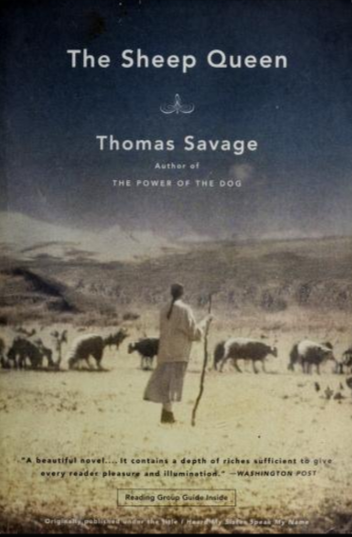
“I believe in myself.” That’s how Emma Yearian responded when the banker asked her why he should lend her a large sum of money for hay during a drought. She seems to have built her life on this statement. A reporter once dubbed her the “Sheep Queen of Idaho,” and the title stuck. Her story inspired one of her grandsons to write a semi-biographical novel titled The Sheep Queen.


She never set out to earn that moniker. As a young woman, she followed in the footsteps of those before her. She went out West to teach school and married a cattle rancher.

Emma Russell was born in Leavenworth, Kansas, in 1866. Soon after, her parents moved the family to Illinois. There, she attended high school and Southern Illinois Normal College. Upon graduation, she went West and eventually found herself in the Lemhi Valley in Idaho, along the Montana border.


During the week, she taught in a one-room, sod-roofed schoolhouse. On weekends, she played piano for local dances. That’s where she met fiddler player and cattle rancher Thomas Yearian.

She married him in 1889, and the couple set up housekeeping in a log cabin with a sod roof. They had six children, and she decided to earn money for their education. She noticed that sheep ranchers made more money than cattle ranchers. So, she tried to convince Thomas to give up the cattle and buy sheep. Instead, he allowed her to add sheep to the existing stock.


She took out a loan and drove 1,200 ewes from Montana to Idaho with her husband and son. Neighboring ranchers didn’t appreciate her decision. Cattle and sheep owners were long-time enemies. She was supposed to keep her sheep at least two miles away from other ranch properties, an impossibility when driving them from one area to another. She was often summoned to court, but never convicted. And no one ever pointed a gun at her.

Emma ran the operation, and everyone thought of it as hers, although Thomas managed the cattle portion of the business. In 1910, they replaced the little cabin with a modern six-bedroom house, including electric lights and indoor plumbing.

She followed national events and predicted World War I years before it started. Realizing the army would need wool for uniforms, she took out another loan to increase production. Then she bought sheep with extra-thick coats. The investment paid off when the United States joined the war.


Through droughts and the Great Depression, she kept the ranch operating. By 1933, she had 2,500 acres and 5,000 head of sheep.

However, ranching wasn’t enough for her. She participated in professional organizations and became a state legislator, running as a Republican even though her husband was a Democrat. She served one term in office.

In her later years, she continued to work with the sheep, using a walking stick. In 1951, she passed away at the age of eighty-five.

Her legacy lives on because she believed in herself and lived life to its fullest.

***


"Mending Sarah’s Heart" in the Thimbles and Threads Collection

Four historical romances celebrating the arts of sewing and quilting. 

Mending Sarah’s Heart by Suzanne Norquist

Rockledge, Colorado, 1884

Sarah seeks a quiet life as a seamstress. She doesn’t need anyone, especially her dead husband’s partner. If only the Emporium of Fashion would stop stealing her customers, and the local hoodlums would leave her sons alone. When she rejects her husband’s share of the mine, his partner Jack seeks to serve her through other means. But will his efforts only push her further away?


Suzanne Norquist is the author of two novellas, “A Song for Rose” in A Bouquet of Brides Collection and “Mending Sarah’s Heart” in the Thimbles and Threads Collection. Everything fascinates her. She has worked as a chemist, professor, financial analyst, and even earned a doctorate in economics. Research feeds her curiosity, and she shares the adventure with her readers. She lives in New Mexico with her mining engineer husband and has two grown children. When not writing, she explores the mountains, hikes, and attends kickboxing class. 


Friday, October 29, 2021

A Cure for What Ails You - Home Remedies Then and Now


I’m a wee under the weather as I write this tonight (back on October 21), so I’m thinking about what I can do to relieve the symptoms of my illness while it runs its course. For that reason, as I sip some chamomile and mint tea, my post this month will be brief.

Image by Fuzzy Rescue from Pixabay

Since the beginning of creation, people have incorporated a wide variety of home remedies to treat illness. In pioneer times, people boiled pine needles into tea and treated colds with it. I don’t know if they even understood Vitamin C, but they knew those needles contained something they needed. If I remember my history correctly, this was also a remedy to abate scurvy. I’m thinking of boiling some fresh pine needles tomorrow.

Our predecessors also made a broth of hot peppers for the same purpose. That doesn’t sound very appealing, so I think I’ll forgo the peppers. I could try a cough syrup from mullein leaves though, as this HHH blogger mentions.

Mint has been ever popular for its soothing effects (which is why I love my Sleepytime tea), and it’s an aid in preventing nausea and kidney stones. It’s also supposed to help with swelling and inflammation—good to know for lots of reasons.

Funny aside: A couple years ago, after I’d had some surgery and was given a powerful pain reliever, I accidentally mixed up the pain reliever with my weekly RA medication of which I was assigned eight tablets, once a week. I usually only took four at a time on that day…thankfully! Yes, I took four of those ONE-ONLY pain pills and got verrrry sleepy and nauseous. I called the poison hotline, and while they didn't think I was likely to keel over, they urged me to have someone sit with me and help me stay awake. My hubby was at work, and I didn’t want to panic him (for which he scolded me later) but my daughter and son-in-law came to sit with me until the effects wore off. Guess what I drank while they were here? Yep, mint tea. It did soothe my upset tummy!

Some home remedies were meant to be used as preventatives. Spring tonics were made up by women in their homes to prevent the seasonal ailments we all know today. When I read about what went into some of those tonics, everything from sarsaparilla (seemed to be a common one) to burdock, sassafras, cherry, and dogwood bark—just to name a few of the ingredients—I could only admire the pioneers’ determination to stock their medicinal chest. Different concoctions of these ingredients were boiled up into a sort of syrupy liquid before being added to whiskey and doled out a spoonful at a time, several times a day, to the woman’s family. Most of those ingredients I’d be hard pressed to find, especially in northern Wisconsin, but if I was a pioneer, I can definitely imagine myself stirring up my botanicals over the cook stove.

I have dried my own raspberry leaves (high in vitamins and antioxidants) and dandelion (preventing bone loss, liver damage, and high blood sugar) and a few things as preventatives like that. It's said that boiled parsley can ease a child’s fever (and supposedly help with jaundice, and gall stones). Hm… I have a parsley plant about to end its season, and I already treat parsley like it's the seasoning to end all seasonings. Maybe I’ll boil it and give the ibuprofen a break.


I won’t go into the turpentine plasters, oatmeal pastes, and urine for use in hand creams—none of which I will ever try, I assure you.

Mold from fruit was used to treat skin infections—but of course! I’m sure that’s why the idea for penicillin seemed a somewhat obvious study to Alexander Fleming.

This could become an extensive blog post, but posts on home herbal remedies abound, so I won’t go on, plus I’m sleepy and I need my box of tissues. There are entire books written for hobby herbalists. Even when writing fiction, I get a little overwhelmed with the choices and study of what my characters might have used to treat an ailment or injury.

What about you? Do you have home remedies you stand by? What’s the most outlandish you’ve come across? Do you enjoy reading about them in fiction? Writers, have you done some research in this area? I’d enjoy hearing about it.


Naomi is a multi-published author whose great love is historical fiction. She will have three new books releasing in 2022. Song for the Hunter and the Lumberjacks and Ladies collection are now available for pre-order. Readers are urged to sign up for her newsletter so they don’t miss a single update on new fiction (or the occasional free read). 

Naomi is at home in the Northwoods with her husband Jeff near their adult children and ever-expanding passel of grandchildren. Visit her website and find her newsletter sign-up form at https://naomimusch.com/

Mark your calendars: Naomi’s novel The Black Rose will be offered FREE November 5th, 6th, and 7th.


When Jesilyn Beaumont betrays her twin in the worst possible way, a fall from grace leads her to a boom town where the living is hard and dangerous. Can a lumber camp preacher rescue her from a life of shame, and will her sister ever be able to forgive?

Monday, August 3, 2015

Linden Lodge: An Eclectic Design Built by a Self-Made Millionaire on Geneva Lake & a Book Giveaway!

Linden Lodge as seen from the lake.
It’s time for another trip back to the late 19th Century for a peek at how the other half lived among the Chicago wealthy who built summer “cottages” in Lake Geneva, Wisconsin.

This month’s featured home, Linden Lodge, is especially interesting to me because the home sat on property that is now within the city limits of the town of Lake Geneva. The land was subdivided in the 1930s and over the next 30 or 40 years, the subdivision known as The Lake Geneva Manor, became one of the town’s higher-priced neighborhoods. Anyone who owned a home there gained rights to a private pier for swimming and opportunity to own a boat slip, even if you weren't privileged to have one of the homes directly on the lakeshore.

Levi I. Leiter came to Chicago in the mid 1850s and worked his way to financial success in the dry goods business. 

A somewhat blurry picture of Levi Leiter
He became partners with a man named Marshall Field and together, they began a department store operation known as Field, Leiter and Company. The partnership suffered through the Great Chicago Fire, when the store burned to the ground, only to be one of the first to recover by opening for business in a railway company’s car barns. You’re likely familiar with the store name, Marshall Fields, which was a mainstay for decades in Chicago, before being taken over by Bloomingdales.

Leiter purchased his 37-acre Lake Geneva property during the 1870s and built his huge 37-room mansion. Labeled as primarily Victorian, many people scratched their heads at the eclecitic  mix of styles. A recent article about the home in the Lake Geneva Regional News referred to a quote said back then about the home as “… a rather weird combination of mid-Victorian, Swiss, Strasbourg Castle, and American what-not.”

The home's barns and it's famous windmill.


Whatever it was, the structure had to have been very impressive to those who passed it by boat or walking along the footpath. Not to mention, the six-story high windmill erected near the home to provide water and a source of power. A story is passed down that the windmill drew so much attention that Leiter purchased a bull to keep on the property to stop people from tramping on his land to look at the windmill. It worked well until he himself had trouble entering his own property because of the bull. The animal was seen no more.

The Leiters had three daughters and a son, and their wealth afforded them acceptance in high society, both in the U.S. and in Europe. They often entertained at their Lake Geneva home by hosting parties, yacht outings, and sailboat races. As the daughters were coming of marital age, they were welcomed into English society at a time when many wealthy American young ladies were marrying British noblemen who had lost their financial underpinnings. The women’s wealth served to help maintain their elaborate manor homes. Think Downton Abbey. On a sidenote, Julian Fellowes, the creator and screenwriter of Downton Abbey is quoted as saying he created Nora Crowley’s character out of his research on this practice which was dubbed "Cash for Coronets."

Back at home in Chicago, the Leiter son squandered much of the family fortune and Leiter was eventually forced to sell his Chicago property to make up for the loss. 

Oh to have been able to peek in at this family’s life of tea parties, yachts, and visiting English noblemen.

Because it's summer and summer is the best time to visit Lake Geneva to view many of the mansions still standing on the shoreline, I am giving away a copy of my book, Love Finds you in Lake Geneva, Wisconsin. Set in 1933, when the Riviera building was built at the lakeshore in the town of Lake Geneva, LFY in Lake Geneva, WI is a love story with much of the history of the town and area at that time woven into the storyline. Please leave your name and contact information by August 11, 2015, and I'll draw names on August 12th. 


I’ll be back on September 4, 2015, with another story of one of Lake Geneva’s mansions that was built under a circus tent.

Resources Used:  
Lake Geneva Regional News, Welcome Home Magazine,7/16/15, Jessica Franzene, author.

Lake Geneva, Newport of the West, Ann Wolfmeyer & Mary   Burns Gage, authors.


A native of Lake Geneva, Wisconsin, author Pamela S. Meyers lives in suburban Chicago with her two rescue cats. Her novels include Thyme for Love, and Love Will Find a Way, contemporary romantic mysteries, and her 1933 historical romance, Love Finds You in Lake Geneva, Wisconsin. When she isn’t at her laptop writing her latest novel, she can often be found nosing around Wisconsin and other midwestern spots for new story ideas.

Sunday, May 4, 2014

When the Lucias Newberry Sunk


 by Pamela S. Meyers

This past week, after a very long and cold winter, the excursion boats on Geneva Lake in Wisconsin returned to their docks in the village of Lake Geneva. Seeing pictures of the Lady of the Lake, a replica of the original Lady of the Lake paddle-wheel steamboat that once plied the same waters back in the 19th century, got me to thinking again about another paddle-wheel boat called the Lucius Newberry.

It may not look elegant in this old drawing, but it was!
Back in the late 1800s the Newberry was the pride of the lake as it toured the waters, carrying both residents and tourists to various points along the 22 miles of shoreline. It was built in 1875 for a man named Lucius Newberry at the cost of $16,000. In 1887, he sold the steamer to another man named John Burton to be added to a fleet of excursion boats that included the original Lady of the Lake and another called the Commodore.

This side-wheeler boat was the showcase of the fleet, decorated to the hilt with Brussels carpeting and exquisite upholstered furniture, plate glass mirrors and an upright piano. It could carry as many as 500 passengers at a time, and during the height of the summer season, it made three daily trips from one end of the lake to the other.

All that changed on a chilly December night when it was tied to its dock home in Lake Geneva. It’s speculated that hobos had sought shelter from the cold by climbing aboard and decided to light
In this old postcard, that's the Newberr docked at the end of the pier.
up some smokes. That night the boat caught fire and, being constructed out of nothing but wood, it didn’t take long for it to be totally consumed. Volunteer firemen tried to save the vessel, but in the end they cut the ropes and the Newberry drifted out over the lake, flames shooting up across the water. Eventually it sank.

For years divers searched in vain for the wreckage and finally, a few years back, they found it. Since the vessel had burned down to the waterline, they were able to collect only a few artifacts such as a fancy ice bucket. But they did bring up the anchor which now sits in the Geneva Lake Museum.
The Lucias Newberry

I’ve always been fascinated about the fire and sinking of the Newberry and hope to include it in a future novel.

The replica paddleboats in the excursion fleet today are not operated by steam, but they do give us a taste of a different way of life back in the 19th century when the boats were used for both pleasure and were the most efficient mode of travel to points on the lakeshore. I’ve often wondered what it would be like to time travel back to that time and live life as it was lived. I doubt I’d want to stay there more than a few days though.

What about you? Would you like to time travel back to another period in history? Where would you go?


 Win a Free Book!


To celebrate the return of spring to the Lake Geneva area, I’m giving away a copy of my book Love Finds You in Lake Geneva, Wisconsin. The story is set in 1933, when the Riviera building was built at the Lake Geneva lake shore. It's become a historical landmark and has been restored to its original design. Leave a comment and your name in the comment by Friday, May 9, 2014. I’ll draw a name on Saturday.


A native of Lake Geneva, Wisconsin, author Pamela S. Meyers lives in suburban Chicago, an hour's drive away from her hometown which she visits often to dig into its historical legacy. Her novels include Thyme for Love, and Love Will Find a Way,  contemporary romantic mysteries and her 1933 historical romance, Love Finds You in Lake Geneva,Wisconsin, released in April, 2013. She can often be found speaking at events around Lake Geneva or nosing in microfilms and historical records about Wisconsin and  other Midwestern spots for new story ideas.