Showing posts with label police. Show all posts

Tuesday, September 18, 2018

The Thin Blue Line: Oklahoma City Police Department

1889 Oklahoma City Police Dept. Flag
Wikimedia Commons, https://goo.gl/images/sf6CXK


By Alanna Radle Rodriguez and Judge Rodriguez


Hello Friends!

Thank you for joining us this month as we continue our series about first responders in our great state of Oklahoma.

First, allow us to say: we wish to pay our respects to the brave men and women of our military, and let them know our thoughts and prayers are with them, particularly those currently on deployment outside our country and away from their families.

However, we also wish to add our gratitude to those that serve outside of our military forces as well. Also called the Thin Blue Line, this group of dedicated public servants serve to keep us, our families, and our property safe. Our hats are off to you, and our gratitude for all you do.

The history of the Oklahoma City Police Department begins even before the city does. In 1887, the Southern Kansas Railroad created a stop on their line called the “Oklahoma Station”, which had two railroad detectives / policemen stationed there. In December of 1887, the US Postal Service established a post office at the rail station.

When the land-run occurred in 1889, there were thousands of settlers that settled around Oklahoma City. At first, as the community was built on federal lands, the railroad detectives and US Cavalry shared the responsibility of “policing” the community.

The city was considered under Martial Law until in 1898, with the commissioning of the Oklahoma Police force. They started with 5 officers, one of which is the department’s first chief, Charles Colcord. They held court in a small tent near California Ave.


Oklahoma City's First Five,
Wikimedia Commons, https://goo.gl/images/YryPeZ


By the end of the century, however, public intoxication had become quite the problem. In the process of statehood, the citizenry approved the prohibition of liquor in Oklahoma City. During that period of Oklahoma City law, the appropriation of alcohol became desirable in foreshadow of the decades to come: the running of alcohol to drinking establishments became quite profitable.

With the signing of a new charter in 1911, The City Of Oklahoma City converted the chief of police to a Commissioner, and changed the position from being an elected position to an appointed position. When the new charter was signed, the city commissioners decided to bring in a well known US Marshall to fill the position of Commissioner of Police, by the name of Bill Tilghman.


Bill Tilghman, 1912
Wikipedia Commons,
https://goo.gl/images/QbNF9g
 

For those familiar with old west history, Tilghman is almost as well known as Wyatt Earp and Bat Masterson. For those that are not quite as familiar, he is known for the capture of Bill Doolin, and his heavy handed approach to law enforcement. For those of us that are not as familiar with old west history, but with cinematic history, Bill Tilghman was the inspiration for the character Rooster Cogburn, in the story / movies of True Grit.


Under Tilghman’s leadership, the Oklahoma City Police Department took a stand against the endemic corruption, booze-running, prostitution filled citizenry of Oklahoma City. During this time, the OCPD was considered one of the most brutal, incorruptible police departments in the nation.


Thank you for you joining us this month as we discuss the earliest roots of the Oklahoma City Police Department, one of the oldest in the state. Please join us next month as we cover more history of the OCPD from the nineteen-teens through to the Great Depression.
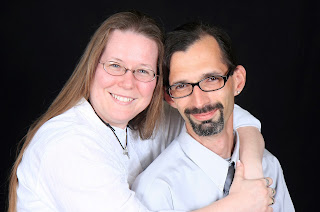


Born and raised in Edmond, Oklahoma, Alanna Radle Rodriguez is the great-great granddaughter of one of the first pioneers to settle in Indian Territory. Alanna loves the history of the state and relishes in volunteering at the 1889 Territorial Schoolhouse in Edmond. Her first published story, part of a collaborative novella titled Legacy Letters, came out September 2016. Alanna lives with her husband and parents in the Edmond area. She is currently working on a historical fiction series that takes place in pre-statehood Waterloo, Oklahoma.
Facebook.com/authorAlannaRadleRodriguez
Pinterest.com/alannaradlerodr/

Amazon

Sunday, July 23, 2017

Fingerprints and a giveaway


Susan Page Davis here. A lot of my books involve fingerprinting, and I had the exciting opportunity to experience it myself a few days ago. Because it involved a travel permit, it was done through a branch of Homeland Security, and they have the latest technology. No ink, no paper cards to be filed. It’s all electronic nowadays. But how did the collection and comparison of fingerprints start?

Herschel

Way back, earlier than 1000 B.C., fingerprints were used on clay tablets to seal business transactions in ancient Babylon.

The Chinese began using thumbprints on clay seals to “sign” documents in the third century B.C. During the T’ang Dynasty, 610 to 907 A.D., fingerprints were used on official documents.

In the 14th Century A.D., in Persia, many government documents had fingerprint impressions, and a government physician noted that no two fingerprints were exactly the same.

In 1686, an Italian professor of anatomy, Marcello Malpighi, used new technology—a microscope—to study fingerprints. He noted the common details of spirals, loops, and ridges. 

In 1823, a Prussian professor of anatomy, Johannes Purkinje, described nine fingerprint patterns. Still no mention was made of using fingerprints as a method of identification.

Herschel
In 1858, Sir William Herschel, who was the chief magistrate of the British District of Jungipoor, India, began requiring a fingerprint and signature on civil contracts completed there with native Indians. He used this to make the people involved feel more bound to the contract, but over time he made the observation that no two were alike, and he said that fingerprints could be used for personal identification purposes. Herschel collected his own fingerprints over more than fifty years and noted that they did not change.

In 1877, The American Journal of Microscopy and Popular Science reported that microscopist Thomas Taylor, with the U.S. Department of Agriculture, proposed that finger and palm prints left on any object might be used to solve crimes.

Dr. Henry Faulds, a British surgeon supervising a hospital in Tokyo, published an article in a scientific journal in 1880. He discussed using printer’s ink as a method of collecting fingerprints for the purpose of personal identification. He developed a system of classifying them and sent his observations to Charles Darwin. Darwin, who was aging and ill, forwarded Dr. Faulds’s data to his cousin, Sir Francis Galton.

In 1882 fingerprints were first known to be used for identification in America by Gilbert Thompson. An employee of the U.S. Geological Survey in New Mexico, he used his own fingerprints on a document to guard against forgery.

Sir Francis Galton
Author Mark Twain was interested in fingerprinting, and he used it in two of his novel plots. In Life on the Mississippi (1883), a murderer was identified by the use of fingerprints. In his 1884 book, Pudd’nhead Wilson, Twain made it a major part of the plot, and fingerprint evidence was included in a courtroom scene.

Darwin’s cousin, Galton, published the first book on fingerprints in 1892. He was a British anthropologist, and he discussed in his book the uniqueness of fingerprints and the individual details they contain.

The first known collection of criminals’ fingerprints began in 1891 in Argentina, initiated by Juan Vucetich, a police official. The first known case in which a fingerprint was used in the solution took place in 1892.

In 1896, the International Association of Chiefs of Police established the National Bureau of Criminal Identification. Its purpose was exchanging arrest information between agencies.

In 1901, back to India: Sir Edward Henry, an inspector general of police in Bengal, developed the first system of classifying fingerprints. It was adopted as the official system in England and eventually spread over the world. He was later the Home Office Secretary and published “The Classification and Use of Fingerprints.” The Fingerprint Branch of New Scotland Yard was established, using Henry’s system.

In 1902, a Paris murder case was solved when police took a fingerprint from the crime scene and matched it to one already on file, belonging to a criminal previously arrested. In America at this time, the systematic use of fingerprints was beginning. In 1905, the U.S. Army began taking members’ fingerprints, and the Navy and Marine Corps began doing so within three years.


In 1910, Frederick Brayley published the first American textbook on fingerprints, "Arrangement of Finger Prints, Identification, and Their Uses."

Fingerprints were first accepted by United States courts as a reliable means of identification in 1911. Thomas Jennings was the first person to be convicted of murder in the U.S. based on fingerprint evidence.

Also in 1911, the first central storage place for fingerprints in North America was established in Ottawa, Canada, maintained by the Royal Canadian Mounted Police.

In 1924, Congress established the Identification Division of the F.B.I. By 1946, the F.B.I.’s fingerprint repository had more than 100 million fingerprint cards.


Fingerprint card of Rosa Parks. Courtesy of National Archives and Records Administration.
The first computer database of fingerprints was developed in 1980. It came to be known as the Automated Fingerprint Identification System (AFIS). Today there are nearly 70 million records (about 700 million individual fingerprints) entered in the AFIS system. Computers can search millions of records in this system in minutes.

In 1996, fingerprinting of children became common in America as a guard against abduction. Parents were given the record card or a home fingerprint kit, maintaining their privacy unless the record was needed. More than 5 million Child ID Fingerprinting Kits had been distributed around the world by 2001.


In 1999, the F.B.I. phased out the use of cards and now uses the integrated AFIS system, based in Clarksburg, W.V., which contains computerized records for approximately 33 million criminals. Older paper cards are still maintained at another facility.

These are just a few of the significant events in the history of fingerprinting. The detectives in my Maine Justice series use fingerprints as one of many tools in solving their cases. If you would like to be entered in a drawing for your choice of books in this series, leave a comment below, including your contact information.

Susan Page Davis is the author of more than seventy novels and novellas in the mystery, romantic suspense, and historical romance genres. A Maine native, she now lives in western Kentucky. She is a winner of the Carol Award, Inspirational Readers’ Choice Award, Will Rogers Medallion, and more. Visit her website at www.susanpagedavis.com, where you can see all her books, sign up for her occasional newsletter, enter a month book drawing, and read a short story on her Romance page.