Showing posts with label readers. Show all posts

Tuesday, June 20, 2023

Standard Register Company


LET'S TALK ABOUT STANDARD REGISTER COMPANY!

BY

Molly Jebber

Author, Amish Historical Romance


I had friends and colleagues who worked for Standard Register, so this company was near and dear to me in Dayton, Ohio.

In 1912, Thomas Schirmer and his brother, John Sherman refined a machine they created so it would produce as many as eight copies of a document at a single writing. The machine kept multiple documents aligned which allowed all the layers of paper to be preprinted with lines, check boxes, and other formats. They rented space and began their company using this machine and others to offer companies preprinted forms and copies for recordkeeping.

In 1913, a great flood happened and nearly destroyed their business due to debt and backlogged orders. But Schirmer and Sherman devised a plan to save the business. They borrowed money against the life insurance policies to fill backorders and to accept new business, and get up-to-date. They had the company back on track in seven months.

In 1916, the company had enough business to erect a purpose built factory.In the 1930's, Sherman applied a pin-fed concept to machine written documents to speed up the process. of continuous forms. The new machine and process added to Standard Register's increased business.


In 1933, the company's business increased to one million dollars, and increased to five millon in 1938. This rapid growth was due to international licensing agreements. The company authorized R. L. Crain Limited, a Canadian firm, to produce its patented forms in 1934, and they formed an affiliation with W.H. Smith & Son (Alacra) Ltd. in England a year later. Thomas Schirmer died, and his brother, John Sherman, ran the company until he died in 1944.


Milford Spayd, who had joined the company in 1933, took over as President. Sales increased to eleven point four million dollars in 1946, and to over forty three million dollars in 1956. Standard Register continued to grow, placing factories in Pennsylvania, Arkansas, and California as well as some international countries.


In 1966, Kenneth Morse took over the company and increased business and increased sales. In the 1970's the business slowed due to weakened supply and fierce competition. In the 1990's, Standard Register filed Chapter 11, and later closed it's doors. It was a sad for many.


Please visit me here to see where I'll be speaking. Will I be near you? I'd love to meet you! Molly's News


Saturday, May 20, 2023

National Cash Register Company


Let's Talk About NCR!

by 

Molly Jebber

Amish Historical Romance Author


I remember when the National Cash Register Company was located in Dayton, Ohio for many years and their beautiful building stretched far and wide with all the flags of countries they did business with lined in front. 

In 1881, a group of investors acquired the Ritty Cash Register Company, and it's patents. The new owners changed the name to National Manufacturing Company.

In the early 1884, James Patterson, who was formerly in the coal and railroad business, became the highest investor and owner of the National Manufacturing Company, and he renamed it the National Cash Register Company where they now made mechanical cash registers. The first office had thirteen employees in the Callahan Power Building in Dayton, Ohio. 


In 1885, when the self-adding cash register was introduced at an exhibit in Chicago, Illinois. J.W. Allison, visiting from England, found out the machine could be adapted to English currency, he became the company's first international agent in Liverpool, England.

In the mid-1880's, James Patterson put together the first sales manual, where he invented guaranteed sales territories, quota and point systems, sales conventions, and dress codes. 


In 1893, James Patterson constructed a daylight factory with very big windows to allow for daylight and better ventilation for employees. He added baths, shower, exercise programs, and hot lunches for workers also.


In 1906, a friend of James Patterson, Charles Kettering, invented the first electric powered cash register. In 1911, Charles Kettering invented the Class 1000 electric register which stayed in production for forty years. He also created the O.K. Credit Authorization service for verifying customers' credit for retail stores. 

In NCR's twenty-seventh year of business, they sold their millionth cash register. They are still in business today, but a few years ago, moved their corporate office to New York. 

I hope you've enjoyed learning the history about the cash register. Another tidbit about Charles Kettering, is that he was a major contributor to Kettering Hospital for which I was once employed. 

Visit me here! Molly's website for my news on books and the movie of Liza's Second Chance that is supposed to release at the end of 2023!


Tuesday, February 21, 2023

World War 11 - Juliana


Juliana - War Heroine


World War 11 has many war heroes, and there are so many things to know about it. Most people remember the battles, attacks, and genocides used. There were also other related battles going on. An example is England. Many bombings happened during this time there, and they lived in fear of further bombings for years. 

But an interesting story about one particular heroine is what we'll talk about today. You may be surprised today that Juliana is a dog and not a person. She's a war heroine, and here's why.

In 1941, during the Blitz in World War 11, was the scariest for England when they were bombed often and suffered much damage and tens of thousands of their people were killed by Germany. It's amazing how Britain stood strong and didn't surrender to Germany. 


But one day during this time, a German bomb was thrown into a European shop owner's store. It didn't detonate, and the owner wasn't sure what to do, and he was frozen with fear. The bomb caught on fire, and his Great Dane, Juliana, leaped into action and urinated on the fire to put it out which also disarmed the bomb. 

Again in 1944, the same shop was bombed and caught fire,. This time, the shop owner was not aware  the bomb had been thrown causing flames until Juliana barked to catch his attention. The fire escalated fast and became serious and too late to extinguish, so they fled for their lives.

Juliana was awarded two Blue Cross medals for her brave acts during World War 11. This was special, because the Blue Cross medals were for horses who had saved lives. But Juliana had proven herself worthy of the awards. Her brave act might have been forgotten once she died, but in 2013 her medals along with a painting of her were found and revived this story about her once again.

I hope you've enjoyed your visit with me today. Thank you for visiting. Do you have a pet? Comment below to tell what animal you have and your pet's name! Please make sure you are commenting on this blog site.


Released January 24, 2023 is Rachael's Decision! Visit Molly's website to learn more!


Saturday, January 21, 2023

History of Esther Price Candy


                       Esther Price Candy - Chocolate, Chocolate, and more Chocolate!


Since I was little, I can remember my family buying Esther Price Candy for gifts and special occasions. To this day, my family looks forward to their favorite kind of candy from Esther Price Candy. They have assortments of milk or dark chocolate creams, pralines, caramels, turtles, and many more.

In the 1920's Esther Rohman married Ralph Price, and they later had twins. She made fudge at home after her children went to sleep, and this gave them extra money. Plus she had made chocolates and gained a good number of customers before she was married. She experimented with dipping fudge in chocolate and making smaller pieces. She used six hot plates in her kitchen, and cooled her creations in the basement on makeshift tables. Then she expanded in her home and decorated the candy in her attic on more makeshift tables. When she was a teenager, she loved making fudge, and she sold it door-to-door while working at Rike's Department Store in Dayton. Then she had to make a decision to stay in high school or quit and start her business. She chose to devote full-time at home to start her chocolate candy business while single, 


By 1926, Esther had expanded her selection of chocolates and fudge in her kitchen, and she couldn't make it fast enough to keep up with the demand. She purchased a building and opened her factory headquarters on Wayne Avenue in Dayton, Ohio close to her home. This is where all the candy is made today! She owned the business for fifty years. She used the finest ingredients for her candy, and the buyer who bought her business in 1976 have held to her high standards today. She has seven locations in Ohio to date. They also have added online ordering to their website. They also have expanded the number of stores who sell their candy to 87, and they have about one million orders per year. During their 30 week production period, they make about 5,000 pounds of chocolates a day.


Many admired and respected Esther Price for starting a business when it was hard for women to do so in the 1920's. But her community supported her, and she sold quality and delicious chocolates. 

Thank you for reading about one of my favorite people, Esther Price. 

Visit me at Molly Jebber's speaking events and news!


Wednesday, December 21, 2022

History of Susan B. Anthony


LET'S TALK ABOUT SUSAN B. ANTHONY!


Susan B. Anthony's full name is Susan Brownell Anthony. She was born February 15, 1820 in Adams, Massachusetts. She made quite a name for herself as an activist for the Women's Suffrage Movement and even served as president of the National Women's Suffrage Association from 1892-1900. Her work was instrumental in the creation of the National Amendment allowing women to vote in 1920, although the amendment wasn't approved until after her death.


Let's delve into Susan's life . . . 

Susan was the second out of eight children and raised as a Quaker independence and her family had a moral zeal.  She was a determined little girl with a mind of her own. At the age of three, she learned to read.  In 1926, her family moved to Battensville, New York  where she attended a district school, and then a school her father set up.  Then a boarding school in Philadelphia. Her next move was to attend a Quaker seminary in Rochelle, New York. From 1846-1849, she taught at a female academy in upstate New York. 

Susan organized the Women's Temperance Union in New York, and advocated for women to vote, have property rights, and she organized an anti-slavery organization. She was targeted by the newspapers with much criticism, but she didn't let the opposition deter her.  Throughout her life, she actively advocated for women's rights, by speaking, forming organizations, and whatever she could do to help. 


By the 1890's, she had worked so hard for most of her life, she became a heroine.  She went from receiving cold receptions to events to being warmly received at them.  One example was the World's Columbian Exposition in Columbia in 1893. 

Susan didn't marry and dedicated her life advocating for women until she died in 1906.  She was a tough cookie!  I hope you've enjoyed learning about Susan today. 

Rachael's Decision will release Jan. 24, 2023! 

Rachael's accident left her with a limp and loss. She's content to live as a spinster, until Caleb sweeps into her life, and they fall in love. But he wants children, and she can't have them. She hasn't told him, and Nathan has two children and he'd like an arranged marriage. She's always wanted children. She has life-changing decisions to make. And then other trouble surfaces.  What does the future hold for them?   

Visit Molly's website for books, movie trailers, and more!


Tuesday, September 20, 2022

Amelia Earhart-FIRST WOMAN TO FLY ACROSS THE ATLANTIC


by

Molly Jebber, Author

Amish Romance

Let's talk about Amelia Earhart . . . 


Amelia Earhart was born July 24, 1897 in Atchison, Kansas. She disappeared July 2, 1937 near Howland Island which was near the central Pacific Ocean. Her father was a railroad lawyer, and her mother came from an affluent family. After her grandparents' deaths, her family struggled financially due to her father's alcoholism. The Earhart family had to move often during her life, and she completed high school in Chicago in 1915. After her mother received an inheritance, she sent Amelia to Ogontz School in Rydal, Pennsylvania.

But when Amelia went to visit her sister in Canada, she became interested in caring wounded soldiers in World War I. In 1918, she left college to become a nurse's aid in Toronto. 

After the war, Amelia entered the premed program at Columbia in New York, but left in 1920 due to her parents insisting she live with them in California. While there, she took her first airplane ride and loved it, and she signed up for flying lessons. In 1921, she bought her first airplane, a Kinner Airster. Two years later, she obtained her pilot's license.


In the mid-1920's, Amelia lived in Massachusetts and worked as a social worker and kept her interest in aviation. In 1928, promoters were looking for a woman to fly across the Atlantic. Amelia Earhart expressed interest and they chose her. Much of the publicity was handled by George Palmer, who she later married in 1931, but she kept her maiden name. She became a celebrity as she traveled across the United States sharing details of her flight in a book she had written called, "Twenty Hours and Forty Minutes". 

In May of 1932, Amelia wanted to cross the Atlantic again. She wrote a book about her record time for this trip, the mechanical difficulties and bad weather she experienced in a book called, The Fun of It". This book also included stories about her life and interest in flying.

In 1929, Amelia formed a club of women pilots called, "The Ninety Nines". And in 1933, she designed a clothing line for active women. She made several notable flights from then on until she disappeared on a flight where she radioed she was running out of fuel. She and her co-pilot were never found. 

Do you like flying? 

I hope you enjoyed our giveaway last month to celebrate hhhistory.com's 
large readership. 


Visit me at Molly Jebber's Website for a full list and "mini movies" of my Amish Romance books. Also visit me on Facebook for giveaways and fun!


Saturday, August 20, 2022

HISTORY OF BABY PACIFIERS


LET'S TALK ABOUT THE HISTORY OF BABY PACIFIERS!

BY

Molly Jebber

Amish Romance Author


For those of you who know me, I had a new grandbaby, and her name is Jolene. She's five months, and pacifiers had me thinking - how did they come into being? When I was little, I sucked my two middle fingers and called them chocolate and vanilla. My daughter chose her thumb, and she finally gave it up to win M&M's.

Babies suck their fingers or thumb in the womb and out of the womb, so this is the first "pacifier" they used. Archeologists have found clay animals with a hole in the the small clay animals mouths used in the second century to put honey into for the baby to satisfy sucking. Not recommended by the dentists!


In the 1680's, a corn cob was used by many mothers as a pacifier for their babies. During the seventeen through nineteen centuries, coral was a term used to describe the type of pacifiers used. Pacifiers were made of coral, bone, or ivory and attached to a piece of silver for the baby to suck.


Over the centuries, pacifiers were constructed out of metal, gold, and silver. Ouch!  


In the turn of the nineteenth century, rubber was molded into a small animal or round or square pacifier for the baby to suck on, but parents didn't like the taste, smell. Other negatives were the sulfuric and lead-based additives that have since been removed from pacifiers. Next pacifiers were made in the shape of a baby bottle nipple or ring, but the same issues I've mentioned were still a problem. A nipple-shaped rubber pacifier was most offered in a maroon, brown, or clear pacifier. It wasn't until the 1980's when dental issues were addressed. 


Now, we have Mr. Browns, Medulla, Playtex (who first branded the name "binky" for a pacifier) and many more who provide safe pacifiers of different shapes and sizes for babies. 


Did you use a pacifier for your babies? 

Thank you for joining me here today! This blog is planning a big book giveaway soon, so stay tuned for more information soon!

Molly Jebber's website  Visit my website to see a book trailer and more about LIZA'S SECOND CHANCE which is being made into a movie by SONY/PUREFLIX. 


To celebrate reaching 3 Million views, HHH is hosting a HUGE giveaway of over 60 books in 18 prizes, so there are many chances to win! One grand prize will consist of 10 books, two readers will win a second prize containing 5 books, and there will be 15 winners of a third prize containing 2 books each. There are several ways to earn entries, such as following, or commenting on the HHH blog each day. Thank you for being part of the HHH community, and best wishes in the giveaway!


http://www.rafflecopter.com/rafl/display/ce16d9c612/?


Monday, June 20, 2022

History of Springboro, Ohio - Underground Railroad


Best-selling and Award-winning Amish Romance Author

Let's talk about the history of Springboro, Ohio!


I went to school in Springboro, Ohio when it housed seventh through twelfth grades in one building. It was a small town then. My parents moved from Dayton, Ohio to Springboro, and built a house in a new subdivision. Now, it's farmlands have turned into many areas of small to large housing, stores, restaurants, bed and breakfast options, and more. My dad served as interim mayor when the mayor became ill and until his recovery. Dad also served on the City Council, as well as working as an analyst for General Motors. Mom was the finance director until she retired. She'll be 91 in July. 


In 1915, Jonathan Wright, his wife, Mary, and five children moved from Pennsylvania to  Springboro. Jonathan Wright used the surveyor skills taught to him by his father, Joel, and platted the small town. He and his family were Quakers and opposed slavery. Their house was a station as part of the underground railroad that provided a safe haven for slaves on their way to freedom. Jonathan and his wife and four of his children are buried in Springboro's Factory Road cemetery. 

Between 1815 - 1864, Springboro had many safe houses for slaves on the underground railroad. Also many agents and conductors were also involved surrounding and in the village. Springboro is in the middle of the Miami Rivers and close to the Ohio River which were also used to transport slaves on the freedom trail. No runaways were ever captured or sent back from the Springboro area during their participation in helping slaves. 


In the 1830's, a woolen factory and two mills were built in Springboro. The town was named for it's many springs. 

Starting in 1960, the town changed from a sleepy little village to a booming hot spot to live. Houses and companies were built, and enough to warrant a main highway (I-75) exit. Springboro rests between Dayton and Cincinnati which is appealing, because you can work and shop in either area within the same distance either way. 

I hope you've enjoyed the history of Springboro. 

Have you read Liza's Second Chance? Special price of $3.99 eBook, $7.99 paperback. Buy Liza's Second Chance link

What hometown did you spend your childhood in?


Friday, May 20, 2022

The History of Buttons


Molly Jebber
Amish Historical Romance Author


Let's talk about the history of buttons!


We all have buttons on some of our clothes. I was surprised Old Order Amish do not use buttons, because they consider them a decoration, and they don't use them as to not draw attention to their clothes, especially since buttons were once considered a sign of prestige. We'll learn more about this below.

The oldest button was found in a region of the Indus Valley, now known as modern day Pakistan. It is estimated to be around 5000 years old, with a decorative flat face that fits into a loop, and is primarily made out of curved shell. These buttons were not used as a closure on clothing or sewn in a straight line. They were used as decorations.


Ancient Romans also made and used buttons. Their garments were loose-fitting and made of heavy material which required thicker buttons made of horn, wood, and bronze. The Middle Ages is when the button really began to take hold as a fastener. Buttons were used for more fitted clothing for men and women.

In the 1600's, button makers became more popular around the globe. During this time, buttons were only affordable to the more wealthy men and women. They were a symbol of prosperity and prestige.

In the 1890s freshwater pearl button manufacturing exploded—in response to the ever-growing demand of the ready-to-wear industry (and to protective tariffs that discouraged imports). In factories from Wisconsin to Iowa to Arkansas, workers used tubular saws to cut round blanks from mussel and clam shells, which were ground to standard thicknesses, then faced, drilled, and polished.

The Industrial Revolution made way for prices of buttons to become affordable and worn by the masses. By the 1920s buttons made of synthetic materials were increasingly common. Because these could be made in larger sizes and different colors, ready-to-wear fashions began to feature them. Charlie Chaplin was obsessed with buttons. The bigger the button on his clothes, the better.


In the twentieth century, plastic buttons even made them more available to everyone since they could really be produced cheap.

Thank you for joining me here today to learn a little more about those buttons we've been wearing!

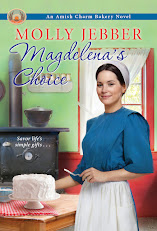
My newest and fifth book in my Amish Charm Bakery Series is MAGDELENA'S CHOICE. On sale for a limited time! Visit me at Molly Jebber to watch a video trailer about this story and visit me on Molly's Facebook page for contest news! The first book in the series, Liza's Second Chance, is being made into a movie by Sony/Pureflix.


Sunday, February 20, 2022

HISTORY OF TRUNKS & SUITCASES

 BY MOLLY JEBBER, AMISH ROMANCE AUTHOR

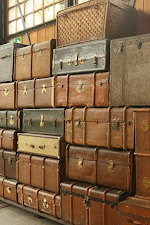
In the 1800’s, heavy trunks were used to travel on boats or by wagon rather than suitcases. Trunks were sturdier, and the ones stored on the boat, train, or wagon would’ve crushed a regular suitcase.


In the 1900’s, a suitcase was literally for suits, and some had a compartment for hats. The average suitcase was made of vinyl stretched over a wood frame with a buckle or lock closure.

Let’s talk about Samsonite for instance. In 1910, Jesse Shwayder founded Samsonite Luggage Company in Denver, Colorado. He had first worked for Seward Trunk Company in New York. After he learned the process of needs of what it would take to have his own manufacturing company, he left and started what he called at the time, Shwayder Trunk Manufacturing Company, March, 1910. He had ten employees and $3,500 to begin his business.

To be set apart from the other trunk manufacturing companies, he made sturdy and stronger trunks and priced them high. He chose Samson after the Bible story about Samson being strong. This approach didn’t work out well for him. He didn’t turn a profit, so he sold door-to-door. By 1911, he was making a profit. In 1912, his brother, Maurice joined his business to help him market his product.  

In 1918, they couldn’t keep up with all their orders to fill. They constructed a second factory and hired more employees to meet the high demand for their trunks and suitcases. In 1929, the Great Depression hit, and the brothers realized traveling would lessen and buying suitcases would not be practical when people were just trying to make ends meet.


To keep their company viable, they began making sandboxes, card tables, and everyday needed things at reasonable prices to keep their employees and to make a profit.

After surviving the worse financial crash and in 1939, they created the suitcase called Samsonite. Over time, the Samsonite brand replaced the name Samson. An interesting fact about Samsonite is that they became a manufacturer of Lego bricks for a while. During World Wars and the Korean War, they converted their factories over to making items the war needed. When the wars were over, they went back to manufacturing suitcases and their other ideas for consumers.

Thank you for joining me here today!

DO YOU HAVE A SUITCASE BRAND YOU REALLY LIKE?

Magdelena’s Choice released January 25, 2022 in stories like Walmart, Target, Barnes & Noble and more. Please visit me at Molly Jebber Amish Books  to learn more about where I’ll be speaking and my books.