
Last month I wrote about the famous hymn writer Isaac Watts. Let’s continue looking at the hymns and writers of the past whose lyrics have touched our hearts and encouraged our souls.Many Christians watching this month’s presidential inauguration of President Trump quickly recognized the hymn Great is They Faithfulness that we heard playing at the beginning of the event in the capitol rotunda. (You can see that here if you missed it.) Such an awe-inspiring hymn it is, as it proclaims God’s faithfulness throughout the world, in every season, and through every circumstance! The lyrics hold great meaning in my own life, and perhaps you find hope, peace, and comfort in them too.Two men combined their talents with earnest prayer to create this classic we’ve now been singing for ¾ of a century.THOMAS O. CHISOLMThomas O. Chisolm was born in 1866, in a cabin in Franklin, Kentucky. Though a frail child, he became a school teacher at sixteen. At twenty-seven, he gave his life to Jesus Christ during a Gospel revival, and he became an ordained minister in 1903. Other than Chisolm’s inclement health which caused him to resign from the pastorate after only a year as a pastor of the Methodist Episcopal Church South, he lived what you might call an ordinary life.

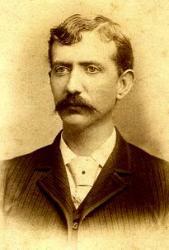
Several years after leaving the ministry, Chisolm took a job as an insurance agent, moving around some. However, he wrote a great deal of sacred poetry during those years, penning over 1200 sacred poems in his lifetime. Many were printed in various Christian periodicals. His writing eventually led him to became the editor of The Pentecostal Christian Herald for a period of time.Some of his poetry he sent in letters he exchanged with friend and little-known musician William M. Runyun. Runyun was particularly drawn to the piece titled Great Is Thy Faithfulness, and he determined to set it to music. Runyun said:
“This particular poem held such an appeal that I prayed most earnestly that my tune might carry over its message in a worthy way, and the subsequent history of its use indicates that God answered that prayer.”
The hymn's broad use didn’t occur right away. But it was published, and eventually, it came to the attention of a professor at Moody Bible Institute. In 1945 George Beverly Shea began singing it at Billy Graham’s evangelistic crusades. Great Is Thy Faithfulness soon swept the world.One reason, I believe, that the hymn has resonated with so many is because of the Scriptural themes winding throughout.
- Verse One reflects James 1:17 where we are told that there is no changing nor shadow of turning with an ever-faithful God.
- Verse Two notes that all of God’s creation heralds His glory, as His Word points out time and again.
- Verse Three speaks of our sin He not only pardons, but then how God grants us a kind of peace that passes our understanding, to endure as no other kind of peace can, 1 John 1:9. He also promises that His presence (the Holy Spirit in us and His Word to us) will cheer and guide us. And finally, how he will give us strength for each day, as it is needed. OH, how I need those things!
- Then there’s that beautiful chorus, the root of the song, which hearkens to Lamentations 3:22-23, reminding us that God’s mercy is new every morning. It also reflects Philippians 4:19, pointing out how our Faithful Father will continue to provide for our every need.
Of the poem itself, Thomas Chisolm said:
“…I must not fail to record here the unfailing faithfulness of a covenant-keeping God and that he has given me many wonderful displays of his providing care, for which I am filled with astonishing gratefulness.”
As an author myself, I am incredibly inspired both by the words of this hymn and by the remarks of these two men who wrote and composed it. First, Chisolm yielded his talents to God. He wrote this poem first as a reminder to himself of God’s faithfulness and to show his own gratefulness to his Savior. Another of his works that has come to be treasured is Living For Jesus, composed by C. Harold Lowden.
For Runyun’s part, the fact that he so carefully bathed the project in prayer in order to give God the utmost glory and for the piece to possibly to bless others, shows me how I should treat every subject and story that God gives me to write about, and it reminds me how I should live my life in even the smallest, most ordinary ways.
In many regards, Chisolm lived an ordinary life. But God can use the most ordinary human to exclaim His glory and goodness. Now don’t you feel like singing along?
________________________________________
New news for an older title! The Deepest Sigh, book one in my Echoes of the Heart series has finally come to audio and is free on Audible!


